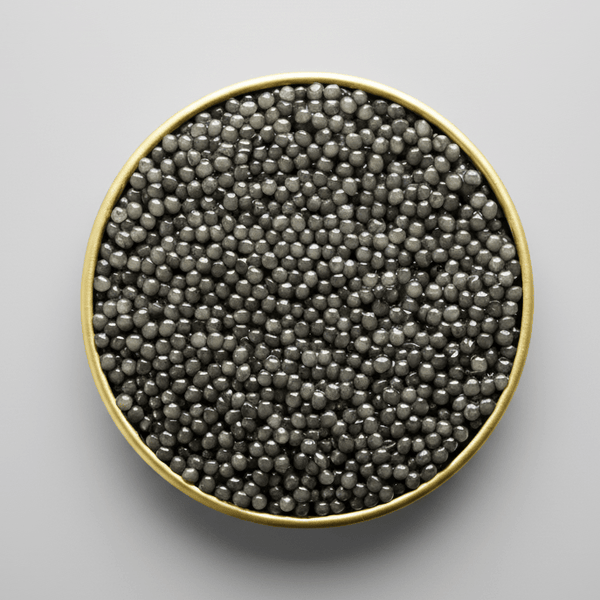


Summary: Spain has become one of the world's leading caviar producers, and buying quality caviar no longer requires an exorbitant budget or exclusive contacts. This guide covers the types of caviar available, actual market prices, how to serve it correctly, national production, and the best channels to buy it with confidence.
Content
- What is caviar and why is it so exclusive
- Types of caviar: species, taste, and characteristics
- Spanish-produced caviar
- How to serve caviar correctly
- Pairing: what to drink and eat with caviar
- Actual caviar prices in Spain
- Caviar as a gourmet gift
- Caviar myths and truths
- How to choose quality caviar
- Where to buy caviar in Spain
- Caviar storage and shelf life
- Frequently asked questions
What is caviar and why is it so exclusive
Caviar is the roe of sturgeon (Acipenseridae family), lightly cured with salt using the method known as malossol (from Russian "little salt"). Only roe from fish of the sturgeon family can legally be called caviar. Everything else, no matter how it is marketed as "salmon caviar," "trout caviar," or "lumpfish caviar," are substitutes that do not share the texture, taste complexity, or production process of authentic caviar.
Sturgeon is a prehistoric fish that has been on Earth for over 200 million years and can live for more than a century. Depending on the species, a female takes between 7 and 20 years to reach sexual maturity and produce roe suitable for caviar. This slow reproduction is the fundamental reason for its price: raising a Beluga sturgeon for two decades before obtaining the first harvest of roe requires an investment in time, space, and food that no other food product can match.
Today, almost all legal caviar on the market comes from aquaculture. Wild sturgeon fishing has been prohibited or severely restricted worldwide since the early 2000s, when overfishing brought several species to the brink of extinction. Modern fish farms have managed to produce caviar of comparable quality to wild, with the advantage of sustainability and traceability.
Types of caviar: species, taste, and characteristics
Not all caviars are the same. The sturgeon species determines the size of the roe, its color, texture, and flavor profile. These are the main varieties you will find on the Spanish market.
| Type | Species | Taste | Color | Price (€/kg) | Texture |
|---|---|---|---|---|---|
| Beluga | Huso huso | Smooth, buttery, long finish | Light gray to dark gray | 3,000-7,000 | Large, creamy roe, gently bursting |
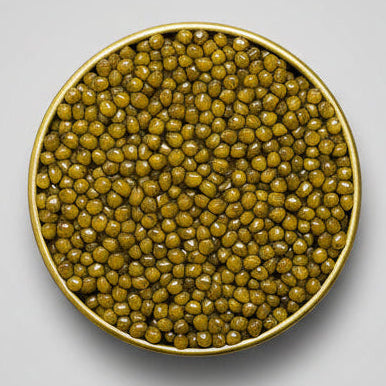
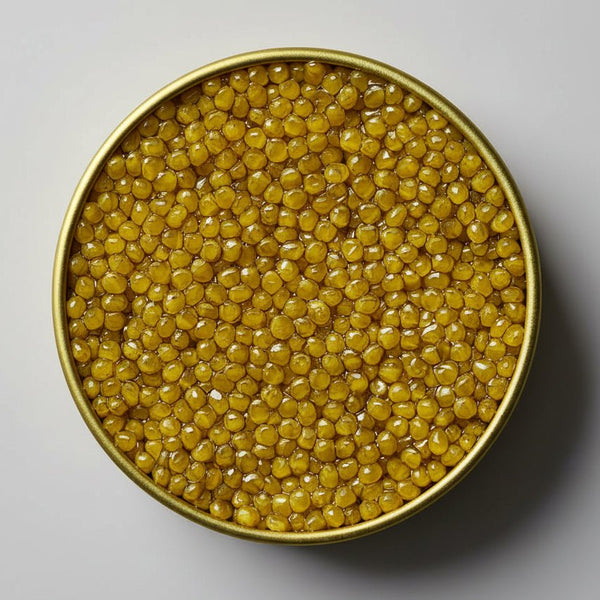
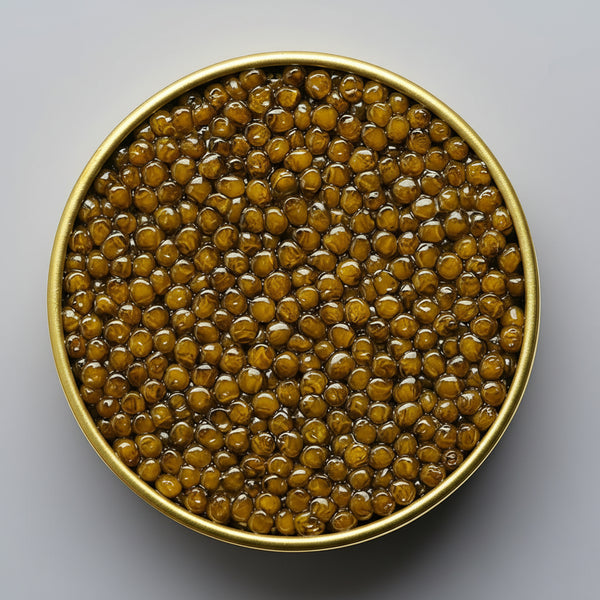
| Osetra | Acipenser gueldenstaedtii | Complex, nutty and marine notes | Golden to dark brown | 1,500-3,500 | Medium-sized, firm roe, crisp pop |
| Baerii (Siberian) | Acipenser baerii | Smooth, clean, slightly hazelnutty | Black to dark gray | 600-1,500 | Small to medium roe, delicate |
| Sevruga | Acipenser stellatus | Intense, marine, the saltiest | Dark gray to black | 1,200-2,500 | Small, firm roe, concentrated flavor |
| Nacarii | Acipenser naccarii | Delicate, mineral, subtle | Medium to dark gray | 800-2,000 | Medium-sized, balanced roe |
For a first caviar experience, Baerii is the perfect entry point: accessible flavor, reasonable price, and sufficient quality to understand what makes this product special. Osetra is a connoisseur's favorite for its flavor complexity, while Beluga remains the ultimate luxury benchmark, reserved for truly special occasions.
Spanish-produced caviar
One of the most surprising facts for consumers is that Spain is one of the world's leading producers of caviar, with internationally recognized quality and awards in top-level gastronomic competitions. Production is mainly concentrated in Andalusia, taking advantage of pure mountain spring waters.
Caviar de Riofrío, in the province of Granada, is the most well-known reference. They produce certified organic caviar from Nacarii sturgeon, an Adriatic species that adapts exceptionally well to the cold, clear waters of the Sierra de Loja. Their caviar has received international recognition and is exported to demanding markets such as Japan and the United Arab Emirates.
Caviar de l'Alt Empordà, in Girona, and other fish farms in the central plateau mainly work with Baerii sturgeon, producing caviar with a softer, more accessible profile. The competitive advantage of Spanish caviar lies in the quality of the water (mountain springs, natural aquifers) and a production approach that prioritizes quality over volume, with lower stocking densities than large industrial producers in China or Italy.
Buying domestically produced caviar has additional benefits: the cold chain is shorter, traceability is complete, and the product reaches the consumer in optimal fresh condition. Furthermore, it supports a sustainable aquaculture industry that contributes to the conservation of threatened sturgeon species.
Related Products from Bacalalo


Recommended Products

Mujol Shikran Selection - Premium Roe with Smo...
6,95 €

Assortment "The Great Beluga Gift"
227,91 €

Black Mullet Shikran 550g - Smoked Herring and...
27,95 €

Sevruga Caviar
100,00 €
Refrigerated shipping 24-48h throughout the Peninsula
How to serve caviar correctly
Serving caviar has a protocol that is not mere snobbery: every detail has a sensory justification. The ideal temperature is between 0 and 4 degrees Celsius. Take the tin out of the refrigerator just before serving and place it on a bed of crushed ice. The cold maintains the firmness of the roe and allows the flavor to unfold gradually on the palate.
Utensils are important: use mother-of-pearl, bone, wood, or quality stainless steel spoons. Never use silver or alpaca, as these metals react with the roe and produce an unpleasant metallic aftertaste. Purists consume caviar directly from the back of the hand, in the hollow between the thumb and forefinger, where body heat slightly warms it and releases all its aromas.
Regarding the quantity per person, the reference is 10 to 15 grams for a tasting, and 25 to 30 grams for a complete experience. A 30-gram tin is perfect for two people as an appetizer; a 50-gram tin allows three or four diners to enjoy a generous portion. It is not necessary to buy large quantities to have a memorable experience.
Pairing: what to drink and eat with caviar
Caviar pairing seeks a clear principle: to accompany without competing. The classic drink is brut nature or extra brut champagne, whose acidity and fine bubbles cleanse the palate between bites without masking the nuances of the caviar. A quality brut nature cava fulfills the same function at a significantly lower price.
Chilled vodka is the traditional Russian pairing and works by temperature contrast: the intense cold of the vodka amplifies the perception of caviar flavors. Choose a neutral, quality vodka, served below zero degrees. Very dry and mineral white wines (Chablis, Muscadet, a good Albariño) are elegant alternatives that add complexity to the pairing.
Classic solid accompaniments are blinis (small Russian buckwheat pancakes) with a spoonful of crème fraîche, thin slices of crustless white bread, and cooked potato slices that serve as a neutral base. For more elaborate gourmet toasts, caviar pairs magnificently with smoked salmon, creating a seafood duo that enhances the flavors of both products.
Actual caviar prices in Spain
Caviar prices can be intimidating when expressed per kilo, but the reality of what it costs to enjoy caviar at home is much more accessible than most imagine. This table shows the actual prices by sales format, which is what really matters to the consumer.
| Caviar type | 30g tin | 50g tin | 100g tin | Price per kilo |
|---|---|---|---|---|
| National Baerii | 18-35 € | 30-55 € | 55-100 € | 600-1,000 € |
| Imported Baerii | 20-40 € | 35-65 € | 65-120 € | 650-1,200 € |
| Osetra | 50-90 € | 80-150 € | 150-280 € | 1,500-2,800 € |
| Nacarii (Spanish) | 30-55 € | 50-90 € | 90-170 € | 900-1,700 € |
| Beluga | 100-200 € | 170-330 € | 300-600 € | 3,000-6,000 € |
The conclusion is clear: a caviar experience for two people costs from 18-35 euros with a 30-gram tin of Baerii. It is comparable to the price of a medium-high quality bottle of wine. Caviar as an occasional experience is not an unattainable luxury; what is expensive is consumption in large quantities.
Caviar as a gourmet gift
Caviar is one of the most impactful gastronomic gifts available. A 30-gram tin accompanied by blinis and a bottle of brut nature cava creates a gift pack for less than 50-60 euros that makes a disproportionate impression relative to its cost. The perception of caviar's exclusivity multiplies the perceived value of the gift.
For special occasions such as Christmas, anniversaries, or corporate celebrations, caviar conveys a message of distinction that few products can match. In our selection of premium caviar, we offer specific formats for gifts, with refrigerated shipping that guarantees the product arrives in optimal condition anywhere in Spain.
A practical tip: if the person receiving the gift is not experienced with caviar, include brief serving instructions (temperature, utensils, accompaniments). This will make the experience complete and prevent an exceptional product from being spoiled due to lack of knowledge. Accompanying caviar with premium smoked salmon elevates the gift to a higher category.
Caviar myths and truths
Myth: "The best caviar is the most expensive." Partial truth. The price mainly reflects the species and scarcity (Beluga takes 20 years to produce roe), but the quality within each category depends on the producer, freshness, and curing. An excellent Baerii can be more pleasing than mediocre Beluga.
Myth: "Spanish caviar cannot compete with Iranian or Russian caviar." False. Spanish production, especially that from Riofrío, has won international awards and is exported to markets historically associated with maximum quality caviar. The spring waters of the Sierra de Granada produce a caviar with a clean and delicate profile that competes head-to-head with any origin.
Myth: "Caviar is an unhealthy food." False. Caviar is a nutritional concentrate: rich in omega-3 (EPA and DHA), vitamins A, D, B12, iron, selenium, and complete proteins. In usual consumption amounts (10-30 grams), it is a true superfood. The only aspect to watch is sodium for people with medical salt restrictions.
Myth: "You have to be an expert to distinguish good caviar." False. An untrained palate can perfectly distinguish good caviar from mediocre. The roe should pop cleanly in the mouth, leave a lingering flavor without bitterness, and not be excessively salty. If, upon tasting it, you think "this just tastes like salt and fish," it's not good caviar.
How to choose quality caviar
Identifying quality caviar before buying it requires paying attention to several indicators. The label should clearly state the sturgeon species: if it just says "caviar" without specifying, be suspicious. The CITES code on the packaging is legally mandatory and guarantees the traceability of the product from the farm to your table.
The packing date is more relevant than the expiration date. Fresh, unpasteurized caviar should be consumed within 3 to 4 months of packing to enjoy it at its best. The indication "malossol" on the label confirms a low-salt curing, which is the highest quality preparation and allows the product's nuances to be appreciated.
When opening the tin, the roe should be loose, firm, and individualized, not crushed or sticky. The color should be uniform within the natural variation of the species. The smell should be fresh, like clean sea, without ammonia or rancid notes. And in the mouth, each roe should burst gently, releasing its creamy content, leaving a prolonged and clean flavor.
Where to buy caviar in Spain
Buying caviar with a guarantee requires a supplier who controls the cold chain from the farm to delivery. Specialized gourmet shops are the first option: they have the appropriate conservation conditions and offer advice on each product. Large supermarkets have incorporated caviar into their gourmet sections, but rotation is usually lower.
Online shopping through specialized suppliers like Bacalalo is an increasingly popular option, as it allows access to curated selections with refrigerated shipping anywhere in Spain. The key when buying caviar online is to ensure that the seller guarantees the cold chain during shipping (isothermal packaging with refrigerant gel or dry ice).
Fish farms with direct sales are another excellent alternative, especially if you are close to the production areas (Granada, Girona). Buying directly from the producer ensures maximum freshness and, in many cases, more competitive prices by eliminating intermediaries. Some even offer guided tours and tastings.
Caviar storage and shelf life
Fresh (unpasteurized) caviar should always be stored in the coldest part of the refrigerator, between 0 and 4 degrees Celsius, ideally at the back, near the motor. Once opened, caviar should be consumed within a maximum of 2 to 3 days. Cover the surface with plastic wrap in direct contact with the roe to minimize oxidation.
Pasteurized caviar, which comes in a vacuum-sealed tin, has a significantly longer shelf life: it can be stored refrigerated for several months without appreciable loss of quality. However, the pasteurization process slightly alters the texture of the roe, making it less explosive in the mouth. It is a good option for those who do not have frequent access to fresh caviar or want to have it available for unforeseen occasions.
Freezing is technically possible but not recommended: the roe tends to break when thawed, losing the texture that defines the caviar experience. If you need to store caviar for long periods, always opt for pasteurized formats rather than freezing fresh product.
🛒 Products mentioned in this article
⭐ 4.9/5 · Cold shipping 24-48h · Since 1990 at Mercat del Ninot
Frequently asked questions
How much caviar per person?
As a tasting or appetizer, between 10 and 15 grams per person is an adequate amount that allows you to appreciate the product without excess. For a complete experience where caviar is the protagonist, calculate 25 to 30 grams per diner. A 50-gram tin is perfect for 3 or 4 people as a starter, and a 30-gram tin is ideal for a couple.
Can caviar be frozen?
Technically it can be frozen, but the result is not satisfactory: the roe breaks when thawed and loses the firm and explosive texture that defines the caviar experience. If you need to store it for long periods, it is preferable to opt for pasteurized caviar in a vacuum-sealed tin, which maintains its properties for months in refrigeration without the need for freezing.
What is the difference between caviar and salmon roe?
The difference is fundamental. Caviar comes exclusively from sturgeon and undergoes a curing process with salt that develops complex flavors. Salmon roe is much larger, intensely orange, with a more direct and marine flavor. Both are valid products, but they do not belong to the same gastronomic or price category: salmon roe costs between 20 and 40 euros per kilo, compared to 600 to 7,000 for caviar.
Why can't you use a silver spoon with caviar?
Silver reacts chemically with sturgeon roe, producing an unpleasant metallic aftertaste that ruins the nuances of caviar. This phenomenon is due to the sulfur compounds present in the roe, which react with silver. That is why mother-of-pearl, bone, wood, or quality stainless steel spoons are used, inert materials that do not interfere with the product's flavor.
Is it worth paying more for Beluga caviar?
Beluga offers a different experience: larger roe, creamier texture, and a longer, more buttery flavor. The difference from a good Osetra or Baerii is real but subtle, and to fully appreciate it, some prior experience with caviar is required. For a first contact, a quality Baerii for 18-35 euros per 30-gram tin is the most sensible option. Beluga makes sense when you already know the product and are looking for the ultimate experience.
Is Spanish caviar good?
Spanish caviar is considered among the best in the world. Production from Riofrío (Granada) has won international awards and is exported to demanding markets such as Japan and the United Arab Emirates. The breeding conditions in mountain spring waters, with low breeding densities and controlled feeding, produce caviar with a clean and delicate profile that competes with any origin in the world.
How long does caviar last once opened?
Fresh (unpasteurized) caviar should be consumed within a maximum of 2 to 3 days after opening the tin, always storing it in the coldest part of the refrigerator and covering the surface with plastic wrap in direct contact with the roe. Pasteurized caviar, once opened, follows the same 2-3 day rule. The key is to minimize exposure to air and maintain the temperature between 0 and 4 degrees Celsius.
Is eating caviar healthy?
Caviar is an exceptionally nutritious food: rich in omega-3 fatty acids (EPA and DHA), vitamins A, D, and B12, iron, selenium, and high-quality biological proteins. In typical consumption amounts, between 10 and 30 grams, it acts as a true superfood. The only aspect to consider is its sodium content, relevant for people with medical salt restrictions.
What does "malossol" mean on the caviar label?
Malossol is a Russian term that literally means "little salt." It indicates that the caviar has been cured with a salt percentage of less than 5%, which allows the natural flavors of the roe to be expressed more clearly. It is the highest quality category and the one connoisseurs seek. Malossol caviar is more delicate, more perishable, and more expensive than one with a higher salt concentration.
Can you cook with caviar?
Although possible, cooking with caviar is not recommended because heat destroys the texture of the roe and eliminates much of the flavor nuances that make the product valuable. Caviar is always added at the end, on the already plated dish, as a cold garnish. For example, on a gourmet toast, a warm blini, or a pasta dish just before serving.
How much caviar to give as a gift?
For an individual gift, a 30-gram tin is the standard format: enough for a personal tasting or to share between two people. For a couple or family gift, 50 grams offer a more generous experience. If you want to create a complete gift pack, combine a 30-50 gram tin with blinis, crème fraîche, and a bottle of brut nature cava for a total budget of 50 to 80 euros.
How to identify fake or poor quality caviar?
Warning signs include: absence of species indication on the label, lack of a CITES code (legally mandatory), crushed or sticky roe when opening the tin, a strong ammonia or rancid fish smell, and a flavor dominated by salt without nuances. Quality caviar has loose, firm, and individualized roe, with a fresh, clean sea smell and a complex flavor that lingers in the mouth after swallowing.
Related guides
- Best Cantabrian anchovies: ranking and prices
- Smoked salmon toasts: gourmet combinations
- 12 gourmet canned food recipes for quick dinners
- Canned sardines: types, brands, and how to choose
- Where to buy quality salted cod online
Discover our selection of premium caviar with refrigerated shipping and cold chain guarantee at Bacalalo. From the sturgeon to your table, without compromising quality.
Products that might interest you
Discover our premium selection
Seafood products selected with discernment since 1990 at Mercat del Ninot, Barcelona. Refrigerated shipping in 24-48h.