Cod chips are the most surprising appetizer you can serve: cod skins and tripe dehydrated at low temperature and then fried until they puff up like pork rinds. Crispy, light, full of sea flavor, and with a zero-waste approach that utilizes parts of the cod that are normally discarded. I'll explain how to make them perfect, what sauces to pair them with, and why this appetizer will revolutionize your snacking.
Content
- What are cod chips
- Skins and tripe: the forgotten parts of cod
- Ingredients and necessary equipment
- Step 1: Low-temperature dehydration
- Step 2: Frying and the crackling effect
- Sauces and accompaniments
- Variations: spices, smoking, and other flavors
- Storage and advance preparation
- Zero-waste cooking with cod
- Frequently asked questions
- Conclusions
What are cod chips
Cod chips are exactly what they sound like: crispy slices of cod eaten as a snack. But unlike typical industrial fish chips, these are made with the skins and tripe of cod, parts that usually end up in the trash in most kitchens.
The process is simple and has two phases: first, the skins and tripe are dehydrated at a low temperature (80 °C) until they are stiff like a cracker, and then they are fried in hot oil for seconds. The effect is spectacular: the pieces puff up, expand, and acquire an airy texture, exactly like pork rinds (chicharrones), but with a sea flavor.
In the pintxos bars of the Basque Country and in Michelin-starred restaurants like Mugaritz or Azurmendi, cod skin chips have been appearing as a surprise appetizer for years. The difference is that you can make them at home at virtually no cost, using cod scraps you already have.
The result is a light, crispy appetizer, full of collagen and with an intense cod flavor that pairs perfectly with beer, white wine, or vermouth. And if you accompany them with a well-thought-out sauce, you have a restaurant-level starter.
Skins and tripe: the forgotten parts of cod
Before we get into the recipe, let's talk about the raw material. Because if you don't know what cod tripe is, you're missing out on one of the most interesting products in the seafood pantry.
Cod skins
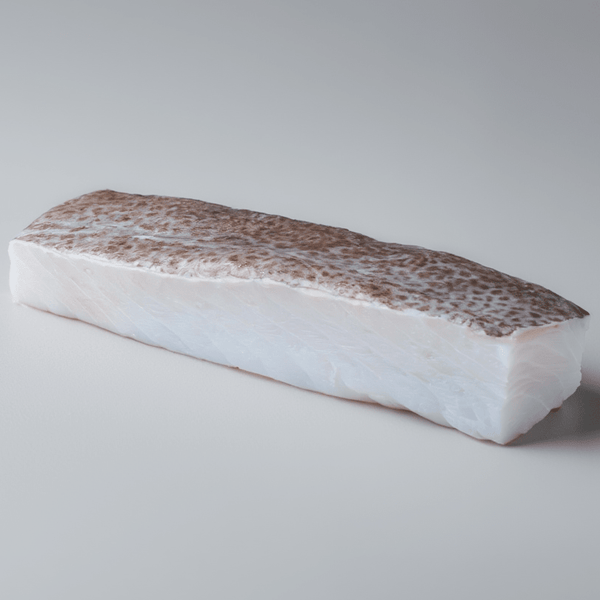
Cod skin is a thick layer, rich in gelatin and collagen. It is responsible for the pil pil emulsifying, for cod stews having that unctuous texture. When you remove it to make a clean loin, the skin is pure gold in the kitchen.
Fresh or desalted, the skin has a rubbery texture that you don't want to eat directly. But when you dehydrate and fry it, that gelatin transforms: it expands with the heat of the oil and creates air bubbles that give it an incredibly crispy and light texture.
Cod tripe
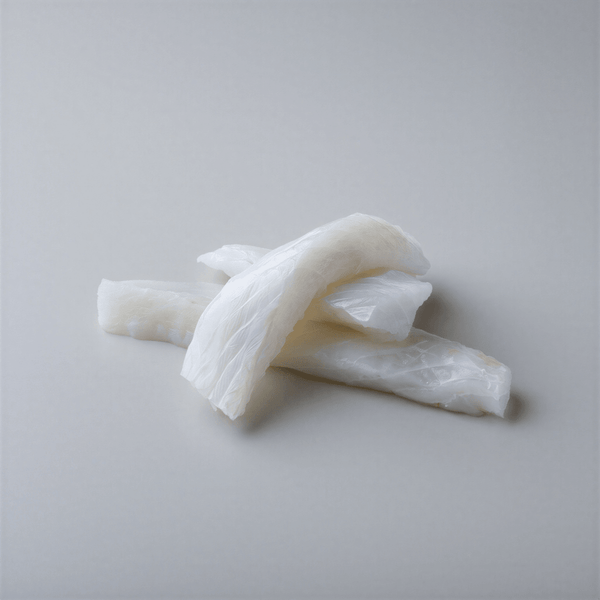
Cod tripe is the stomach and intestines of cod, salted and cured just like the loins. In Basque and Portuguese tradition, they are a delicacy: they are stewed with chickpeas, prepared in Vizcaina sauce, or served in a warm salad. They have a particular texture, somewhere between gelatinous and fleshy, and an intense flavor.
For making chips, tripe works just as well as skins. When dehydrated, they lose all their moisture, and when fried, they puff up with a slightly different texture: less airy than the skin, but more fleshy and with a more pronounced crunch.

Natural Clams 20/30 Rías Gallegas Dardo Premium Preserve - 120ml
Available on Bacalalo.com with refrigerated 24-48h delivery
Ingredients and necessary equipment
For the chips (4-6 appetizer servings)
- 300 g desalted cod skins (or a mix of skins and tripe)
- Sunflower oil for frying (minimum 1 liter, you need depth)
- Flaky salt (Maldon or similar) for finishing
- Paper towels
Equipment
- Oven with fan function (or a dehydrator if you have one)
- Baking sheet with a wire rack
- Deep pot or fryer (minimum 10 cm of oil)
- Kitchen thermometer (essential for controlling frying)
For the sauces (choose one or more)
- Classic aioli: garlic + olive oil + salt
- Brava sauce: tomato + paprika + cayenne pepper
- Yuzu mayonnaise: mayonnaise + yuzu juice + zest
- Sour cream with chives: sour cream + chopped chives + pepper
Step 1: Low-temperature dehydration
This is the most important phase and the one that requires the most patience. Correct dehydration makes the difference between a chip that puffs up perfectly and one that remains flat and hard.
Preparation of the skins (15 minutes)
- Clean the skins: if they come from desalted cod, remove any leftover meat with a knife. The skin should be as clean as possible on both sides. If they have scales, scrape them off with the back of the knife under cold water.
- If using tripe: desalinate them in cold water for 24-48 hours (changing the water every 8 hours) if they come salted. Cut them into pieces about 5 x 3 cm, a comfortable size for eating with your fingers.
- Dry thoroughly with paper towels. The less surface moisture, the faster the dehydration.
- Cut the skins into rectangles about 6 x 4 cm. Don't make them too big: when fried, they expand to double or triple their size.
Dehydration in the oven (3-5 hours)
- Preheat the oven to 80 °C with the fan on. If your oven doesn't go below 100 °C, use 100 °C but leave the door ajar with a cloth or a wooden spoon for air circulation.
- Place the skins and tripe on a wire rack over the baking sheet. They should not touch each other. The rack is key: it allows air to circulate underneath and ensures uniform dehydration.
- Bake for 3-5 hours, checking every hour. The skins are ready when they are completely rigid, dry to the touch, and break with a clean snap when bent. The tripe takes a little longer (4-5 hours).
- Remove and let cool to room temperature. Once cool, you can store them in an airtight container for up to 2 weeks without a problem.
With a dehydrator: if you have an Excalibur-type dehydrator, set it to 70 °C for 6-8 hours. The result is more uniform than in an oven.
Critical point: if the skins are not completely dry, they will spit oil when fried (residual moisture boils and splatters). Make sure they crack when broken before frying. When in doubt, leave them for an extra hour.
Step 2: Frying and the crackling effect
This is where the magic happens. In 5-10 seconds, a rigid, flat sheet transforms into a crispy, puffed cloud. The phenomenon is the same as with pork rinds: the gelatin and residual collagen in the skin, upon contact with very hot oil, expand and create thousands of small air bubbles.
Procedure
- Heat the sunflower oil to 200-210 °C. This is a high temperature, higher than for conventional frying. A thermometer is essential here: if the oil is below 190 °C, the skins absorb fat without puffing up; if it exceeds 220 °C, they burn before expanding.
- Introduce one piece as a test. It should sink for half a second and then rise to the surface, puffing up suddenly. If it doesn't puff up, the oil is not hot enough. If it darkens instantly, it's too hot.
- Fry 2-3 pieces at a time (no more, or the oil temperature will drop). Each piece needs 5-10 seconds. As soon as they are puffed and light golden, remove them with a spider or slotted spoon.
- Place on paper towels and salt immediately with Maldon sea salt flakes. The salt adheres better when the chip still has a film of hot oil.
- Repeat with the remaining pieces, allowing the oil to regain temperature between batches.
Sunflower vs. olive oil: for this frying, sunflower oil is better. It has a higher smoke point (230 °C vs. 210 °C for extra virgin) and a neutral flavor that lets the cod's taste shine. Extra virgin olive oil adds an interesting nuance but runs a greater risk of burning at 200 °C.
Sauces and accompaniments
Cod chips are delicious on their own with a touch of salt, but they truly shine with a contrasting sauce. Here are the ones that work best:
Black garlic aioli (my favorite)
Mash 4-5 cloves of black garlic into a paste. Mix with 150 ml of homemade aioli (raw garlic + oil + salt emulsified). The result is a dark, sweet aioli with deep umami that perfectly complements the marine flavor of the chips. It's the combination that receives the most compliments when I serve it at the Mercat del Ninot.
Mild brava sauce
Sauté onion and garlic, add crushed tomatoes, sweet paprika from La Vera, and a pinch of cayenne pepper. Cook for 15 minutes, blend, and strain. It's the classic sauce for patatas bravas, and it works like a charm with cod chips.
Roasted piquillo pepper cream
Blend 6-8 canned piquillo peppers with a splash of cream, salt, and a teaspoon of Jerez vinegar. Smooth, sweet texture, perfect for dipping. This is the most elegant option if the chips are part of a formal appetizer.
Citrus mayonnaise
Homemade mayonnaise with lemon and orange zest, a splash of lemon juice, and freshly ground black pepper. The acidity cuts through the fat of the frying, and the citrus enhances the cod's sea flavor.
Guacamole
Crushed ripe avocado with lime, cilantro, chopped jalapeño, and salt. Cod chips perfectly replace nachos, and the cod-avocado combination is a flavor marriage that always works.

Natural Japanese Clams Baymar 16/22 Rías Gallegas - 115g
Available on Bacalalo.com with refrigerated 24-48h delivery
Variations: spices, smoking, and other flavors
Once you master the basic technique, the variations are endless. Here are the ones I've tried and that work:
- Paprika chips: before dehydrating, brush the skins with a mixture of olive oil and paprika from La Vera. It caramelizes slightly when fried and leaves an addictive smoky flavor.
- Curry chips: sprinkle Madras curry powder on the freshly fried chips. The heat from the oil activates the spices.
- Garlic and parsley chips: fry sliced garlic separately until golden, crush it with dried parsley, and sprinkle over the hot chips.
- Smoked chips: if you have a smoke gun or a homemade smoker, smoke the dehydrated skins before frying them. 5 minutes with oak chips. The result is spectacular.
- Lime and chili chips: lime zest + crushed dried chili (chipotle or ancho). A Mexican profile that combines wonderfully.
- Squid ink chips: mix a teaspoon of squid ink with oil and brush the skins before dehydrating. The chips come out black, dramatic, with an extra iodized touch.
Storage and advance preparation
Cod chips are perfect for preparing in advance, which makes them an ideal appetizer for parties and dinners.
- Dehydrated skins/tripe (unfried): in an airtight container at room temperature, they last up to 3 weeks. They are stable because they have no moisture. This is the phase you can do weeks in advance.
- Fried chips: they retain their crisp texture for 24-48 hours if stored in an open container (not closed, or condensed moisture will soften them). If they lose texture, 2 minutes in an oven at 180 °C will revive them.
- The key: dehydrate large quantities when you have time, store in jars, and fry only what you are going to serve at the moment. 2 minutes of frying and you have an appetizer for 6 people.
Zero-waste cooking with cod
Cod chips are the perfect example of zero-waste cooking. Every time you buy a whole cod or loins with skin, you have free raw material to make chips. And it's not the only way to take advantage of the "minor" parts of cod:
- Skins: chips (this recipe), pil pil (the gelatin emulsifies the sauce), fish stock (deep flavor).
- Tripe: chips, stew with chickpeas, warm salad with mustard vinaigrette.
- Bones and trimmings: cod stock or fumet, base for soups, rice dishes, and stews.
- Kokotxas: the cod delicacy, in pil pil or battered.
- Liver: candied as a gourmet filling, on toast, or in brandada burrata.
A single whole cod can yield 3-4 different preparations if you know how to use every part. That's smart, sustainable, and economically logical cooking.

Natural Clams Rías Gallegas 28/30 Pieces Dardo Gourmet Preserve - 266g
Available on Bacalalo.com with refrigerated 24-48h delivery
Frequently asked questions
Do cod skins need to be desalted to make chips?
Yes, they must be desalted or at least partially desalted. If you use salted cod skins without desalinating them, the chips will be excessively salty and even bitter. A 24-hour desalting in cold water (changing the water 3 times) is sufficient. If the skins come from already desalted cod, you can use them directly.
Why don't my chips puff up when fried?
The two most common causes are: 1) the skins are not completely dehydrated (they should snap when broken, with no flexibility at all), or 2) the oil is not hot enough (you need 200-210 °C). A third factor is thickness: very thin skins may not have enough gelatin to expand. Thicker cod skins from Iceland or Norway work better.
Can cod chips be made in an air fryer?
An air fryer can dehydrate the skins (80 °C, 3-4 hours), but the frying stage doesn't work well in an air fryer. The chips need to be submerged in hot oil to puff up uniformly. In an air fryer, they toast but do not expand. For the final frying, a pot with oil is essential.
What is the best oil for frying cod chips?
High-oleic sunflower oil is the best option: high smoke point (230 °C), neutral flavor, and good performance. Extra virgin olive oil works but has a lower smoke point and can burn at 200 °C. Peanut oil also works well if there are no allergies. Avoid strong-flavored oils like sesame oil for frying.
Can chips be made with skins from other fish?
Yes, the technique works with skins from any fish that has enough collagen: salmon, hake, monkfish. But cod skins give the best results because they are thicker and more gelatinous. Salmon skins are the second-best option, with a fattier flavor and darker color.
Are cod chips healthy?
Compared to other fried snacks, quite. Cod skins are rich in collagen (good for joints and skin), protein, and omega-3 fatty acids. Frying adds calories (about 150-200 kcal per serving), but since the texture is airy, the amount of oil absorbed is less than in conventional frying. They are more nutritious than industrial potato chips.
How many chips do you get from 300g of skins?
With 300g of fresh skins, you will get about 80-100g of dehydrated skins (they lose 70% of their weight in water). When fried, they expand to double or triple their size. With 300g of fresh skins, you can comfortably serve an appetizer for 4-6 people.
🛒 Related Cod Products
⭐ 4.9/5 · Cold shipping 24-48h · Since 1990 at Mercat del Ninot
Conclusions
Cod chips demonstrate that the best cooking doesn't always come from prime cuts. Skins and tripe, those parts many throw away without thinking, hide enormous potential: with a little patience in dehydrating and a minute of frying, you have an appetizer that rivals any gourmet snack on the market.
The technique is simple, the cost is practically zero if you already buy cod for other recipes, and the surprise effect when you serve them is guaranteed. No one expects a cod skin to turn into a crispy cloud that melts in your mouth. That's the kind of cooking that's worthwhile: the one that transforms the ordinary into the extraordinary.