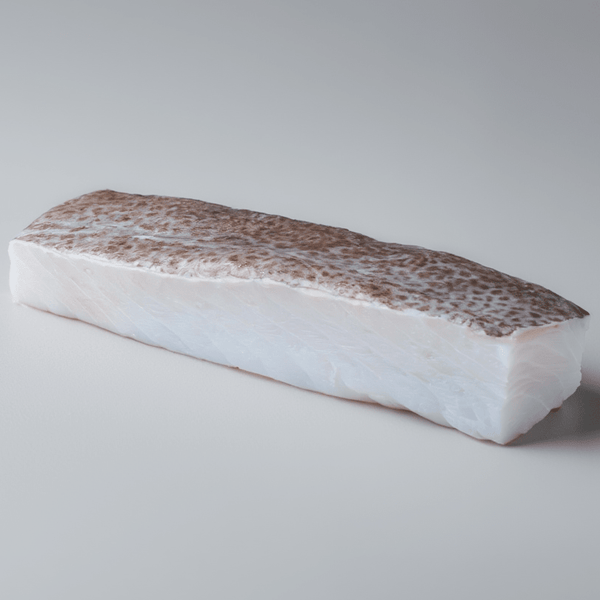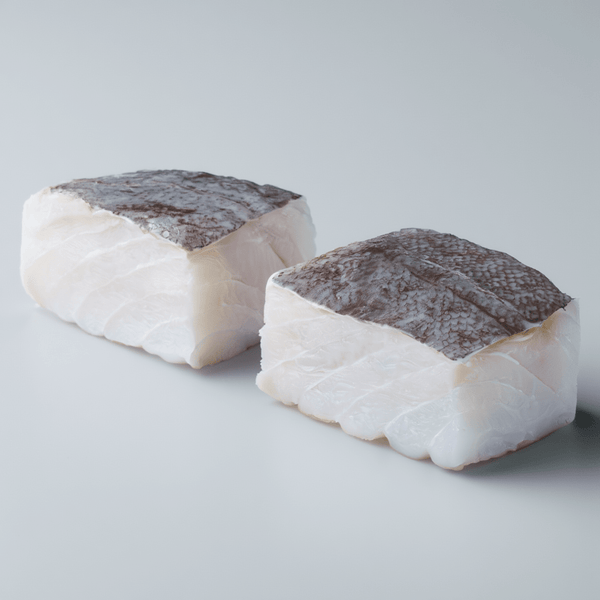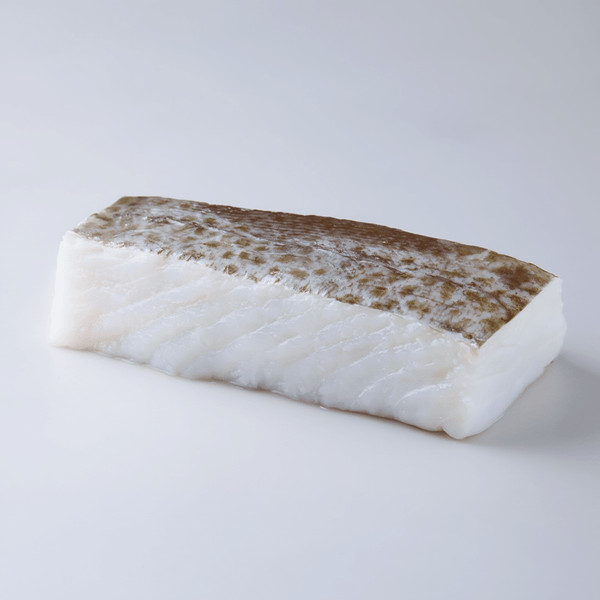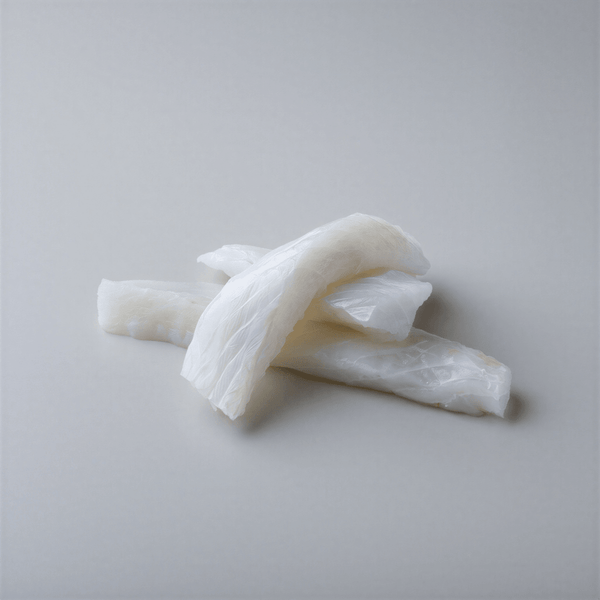
Skrei cod is Norwegian Gadus morhua in its reproductive migratory phase: it travels about 800 km from the Barents Sea to the Lofoten Islands between January and April to spawn. It has PDO certification, athletic white meat due to migration, and a limited season that makes it the most sought-after fresh cod in the North Atlantic. Outside of this 4-month window, it is not marketed as Skrei.
What exactly is Skrei cod?
Skrei cod is the protected designation of the Norwegian Seafood Council (NSC) for adult Gadus morhua from the Northeast Arctic Cod stock, caught during its annual reproductive migration between January and April. The name comes from the Old Norse skrida, "the one who migrates".
It is not a different species from common cod: it is the same species at a specific vital moment. The difference is established by three verifiable criteria audited by the NSC:
- Origin: Norwegian-Arctic stock (Barents Sea), not coastal or other.
- Minimum age: 5 years (reproductive maturity).
- Migratory status: caught during the journey to Lofoten to spawn.
Approximately only 5–7% of the annual catches of the Norwegian-Arctic stock meet the criteria and receive the Skrei label (NSC data 2024–2025).
Lofoten: where and why (geography, 68°N)
Lofoten is a Norwegian archipelago located between 67° and 68° North latitude, within the Arctic Circle. It forms a chain of 7 main islands extending ~160 km out to sea, creating deep bays and fjords protected from the open sea.
Skrei cod chooses Lofoten to spawn for two specific biological reasons:
- Water temperature: warm currents from the Gulf Stream keep the Lofoten fjords at 4–6 °C in mid-winter, compared to -1 to 1 °C in the Barents Sea. This is the optimal temperature for cod egg hatching.
- Continental shelf: the depth of 100–250 m with rocky substrate and abundant prey (capelin, Arctic prawns) supports the reproductive cycle.

Season and migration (January–April, 800 km)
The Skrei migration is one of the most studied in the North Atlantic. Each year, around late December, sexually mature individuals from the Norwegian-Arctic stock begin a journey of approximately 800 km from their feeding grounds in the Barents Sea (off the northeast coast of Norway and western Russia) to the spawning grounds of Lofoten and Vesterålen.
The usual Skrei season calendar:
| Period | Phase |
|---|---|
| Late December | Migration begins from Barents |
| January | Arrival in Senja / Tromsø, first catches |
| February | Peak presence in Lofoten, maximum catch |
| March | Peak spawning, final phase of premium catch |
| April | Return migration, end of Skrei season |
| May–December | Lives in Barents Sea, NOT sold as Skrei |

Distinguishing characteristics (meat, texture, fat)
Three features make Skrei distinguishable when consumed:
- White and firm flesh: due to migratory activity (800 km at arctic temperatures), the muscle develops athletic density. When cut, it shows distinct muscle flakes and clean separation.
- Exceptional leanness: 0.4–0.8 g of fat per 100 g of muscle, compared to 0.7–1.2 g for Icelandic cod and 0.8–1.5 g for Norwegian coastal cod. Fat is concentrated in the liver (which is sold separately).
- Neutral and clean taste: very different from the characteristic cured taste of salted cod. It has a mild flavor that lends itself to multiple seasonings and refined techniques.
Skrei kvalitetsmerke + MSC certification
The designation Skrei is a registered trademark of the Norges Sjømatråd (Norwegian Seafood Council) since 2006. It is not an EU PDO, but its certification requires compliance with:
- Catch in FAO area 27.IIa or 27.I, during the official season January–April.
- Minimum age of 5 years verifiable by otoliths.
- Catch method: handline (juksa), longline or gillnet (garn). No trawling.
- Handling: immediate icing after catch, at plant in less than 12 hours.
- Constant refrigeration at 0–4 °C throughout the chain.
- Individual traceability: each piece has a label with boat code, date, and area.
Additionally, the Norwegian-Arctic cod fishery has MSC (Marine Stewardship Council) certification since 2010, renewed in 2020. The stock is categorized by ICES as within safe biological limits, with a spawning biomass of ~2.3 million tons (2025).
How it compares to other cod
Comparative table with the main origins of Atlantic cod:
| Origin | Season | Fat/100g | Certification | Consumer price |
|---|---|---|---|---|
| Skrei (Arctic Norway) | Jan–Apr | 0.4–0.8 g | MSC + Skrei kvalitetsmerke | 18–28 €/kg fresh |
| Icelandic Cod | Year-round | 1.0–1.4 g | MSC + ITQ | 22–32 €/kg salted-dried |
| Norwegian Coastal Cod | Year-round | 0.8–1.5 g | MSC | 21–30 €/kg salted-dried |
| Faroese Cod | Year-round | 0.9–1.3 g | Partial MSC | 18–26 €/kg salted-dried |
| North Sea Cod | Year-round | 1.0–1.5 g | Recovering | 15–22 €/kg fresh |
Why is it expensive? Wholesale and retail prices
Skrei justifies its premium price for three verifiable economic reasons:
- Short season: 4 months a year concentrate the entire supply. Only ~18,000–25,000 tons of certified Skrei are produced annually (compared to 340,000 tons total stock).
- Individual catch method: hook and longline require more labor per kilo than trawling. Labor cost per kg ~3x higher.
- Handling and cold chain: each piece is individually labeled, refrigerated at 0–4 °C from catch, and exported by air or refrigerated truck.
Price at Norwegian fish market (Lofoten 2025): 65–85 NOK/kg (~6–8 €/kg) whole fish. Wholesaler in Spain: 12–16 €/kg whole fish. Final consumer at premium fishmonger: 18–28 €/kg.

How to cook it if you get it fresh
Skrei has firm and very lean meat. Optimal techniques:
- Confit at low temperature: olive oil at 60 °C, submerge for 18 min. Result: flaky meat, maximum juiciness.
- Pan-fried: 2 min per side over high heat. Golden sear, interior 52 °C.
- Oven: 8 min at 180 °C for a 200 g loin. Do not exceed 10 min or it will dry out.
- Traditional Norwegian: Skrei med lever og rogn — boiled with liver and roe in salted water, 8 min.
Avoid: long cooking times (stew, casserole), salting (not sold salted), intense cooking methods like pan-frying for more than 2 min.
Where to get it in Spain (honesty)
Let's be clear. Fresh Skrei in Spain is very niche:
- Premium fishmongers in Madrid (Pescaderías Coruñesas, Pescadería Ernesto Prieto), Barcelona (Boqueria, Mercat del Ninot — some pieces in season), Bilbao and San Sebastián.
- High-end restaurants: many chefs place direct orders with Norwegian importers for the season.
- B2B importers: Pescaviar, Pesca Fresca, Frismar — sell to HoReCa, not directly to consumers.
📌 Honest note: Outside the January–April season, it is illegal and unethical to sell fish labeled as "Skrei". Any product presented as Skrei in May or August does not meet NSC certification. Be wary of suppliers offering Skrei year-round.
Year-round alternative
For the 75% of the year that is not Skrei season, the premium alternatives available in the Bacalalo catalog are comparable in quality for most uses:
- Extra Cod Cheek, Desalted and Clean 900g: premium desalted piece from the North Atlantic, ready to cook. For confit, oven, pan-frying, or controlled-cooking stews.
- Desalted Cod Loins 500g: center cut, ideal for individual portions, quick techniques.
- Extra Dried Clean Whole Cod Cheek 900g: traditional salted-dried whole piece, requires desalting at home for 36–48 hours. Has the characteristic cured taste that fresh Skrei does not.

Related articles
- Cod from Norway vs. Iceland — an honest comparison
- Types of cod: Gadus morhua, Skrei, Iceland and Faroe
- View the entire Bacalalo cod collection
- Desalted cod ready to cook
- Traditional salted dried cod
Frequently Asked Questions
What exactly does "Skrei" mean?
In Old Norse, "skrida" means "the one who migrates." Skrei (with a capital S and trademarked since 2006 by the Norwegian Seafood Council) designates the adult Gadus morhua from the Norwegian-Arctic stock when it migrates to Lofoten to spawn. Only 5–7% of annual Norwegian catches meet the criteria to carry the Skrei label.
When is the Skrei season?
From January to April, with peak catches between February and March. Outside of this window, it is marketed as Norwegian cod (torsk) but not as Skrei. The season closes when the shoals finish spawning and return to Arctic waters.
Why is Skrei more expensive than regular cod?
Three verifiable reasons: short season (4 months a year), individual hook and net catching method (not mass trawling), and handling process with immediate refrigeration and piece-by-piece traceability. Wholesale price at the fish market: €6–9/kg whole fish; it reaches the end consumer at €18–28/kg in specialized fishmongers.
Is Skrei the same as Icelandic cod?
No. Both are Gadus morhua (same species) but from different stocks. Skrei belongs to the Norwegian-Arctic stock (Barents Sea) and is only called Skrei during its migration to Lofoten. Icelandic cod is from the Icelandic stock and is fished all year round, mainly in the Gulf Stream near the coasts of Vestfirðir.
Does Skrei have a PDO or any official certification?
Skrei uses the "Skrei kvalitetsmerke" (quality seal of the Norwegian Seafood Council), which is not a strict EU PDO, but requires verifiable criteria: caught between January and April, minimum age 5 years, caught with hook or gillnet, handled within 12 hours of capture, refrigerated at 0–4 °C, and individual traceability with a label.
Where can I buy fresh Skrei in Spain?
In season (Jan–Apr): premium fishmongers in Madrid, Barcelona, and the Basque Country. In Barcelona, Mercat del Ninot and La Boqueria usually receive fish. Out of season it is not possible — it is illegal to sell "Skrei" October–December. As an alternative all year round you can turn to premium desalted cod from Iceland or Norway, which at Bacalalo we select piece by piece.
How many kilos of Skrei are caught per year?
Official 2026 quota for the Norwegian-Arctic stock: approximately 340,000 total tonnes, but only between 18,000 and 25,000 tonnes are marketed as Skrei (the catches that meet the program's quality criteria). The rest is sold as standard Norwegian cod.
Is Skrei sustainable?
Yes. The Norwegian-Arctic cod fishery has MSC (Marine Stewardship Council) certification since 2010, renewed in 2020. The stock is classified by ICES (International Council for the Exploration of the Sea) as within safe biological limits, with stable spawning biomass above MSY.
What is the best way to cook Skrei?
Due to its firm flesh and low intramuscular fat (1–2 g per 100 g), Skrei lends itself to short cooking times: confit at low temperature (60 °C, 18 min), pan-fried 2 min per side, oven 8 min at 180 °C. Avoid long cooking times that dry it out. In Norway, it is classically served with liver and roe (Skrei med lever og rogn).
What is the difference between Skrei and salted cod?
Skrei is ALWAYS sold fresh or ultra-frozen, never salted. Salted cod (klippfisk in Norwegian, dried-salted cod in Spain) can come from Skrei or common cod, but the salting process erases the Skrei designation. If you buy salted cod, it will not bear the Skrei label even if it comes from that fishery.