

Summary
Every year it's the same. Holy Week arrives, you go to the market and you find ten different types of cod: loin, tail, flakes, desalted, salted, from Iceland, from Norway... Which do you choose? In this guide: What cod to buy for Holy Week (and not make a mistake), The parts of cod: which is which, How much cod to buy per person.
What cod to buy for Holy Week (and not make a mistake)
Every year it's the same. Holy Week arrives, you go to the market and you find ten different types of cod: loin, tail, flakes, desalted, salted, from Iceland, from Norway... Which do you choose?
The answer depends on what you're going to cook. Buying cod for a stew is not the same as for a pil pil. You don't need the same cut for fritters as for an elegant baked cod.
This guide explains which cut to buy according to the recipe, how much you need per person, how to desalinate it correctly, and how to store it until the day you cook it. If you're looking for information on the tradition and customs of cod during Holy Week, we have a dedicated article: Holy Week and cod: origin and customs.
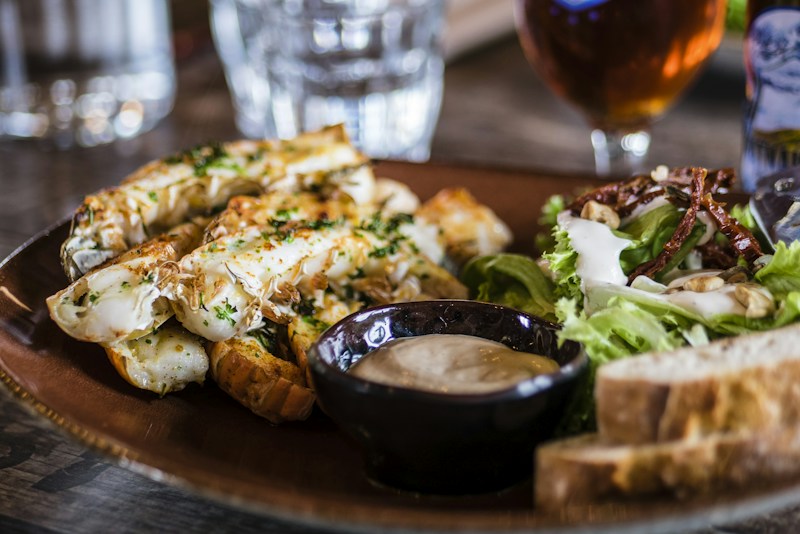
The parts of cod: which is which
A whole cod is divided into several parts, each with its own characteristics:
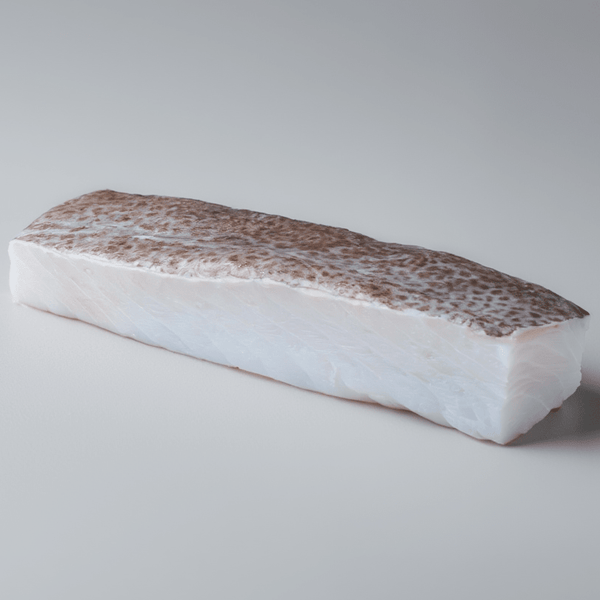
Loin (the star cut)
This is the thickest part of the cod, 3-5 cm thick. It has few bones, firm flesh, and flakes when cooked. It is the premium cut.
Best for: baking, green sauce, pil pil, grilling, confit at low temperature.
Price: the most expensive part of the cod. Worth every penny if you're going to prepare it as a main dish.
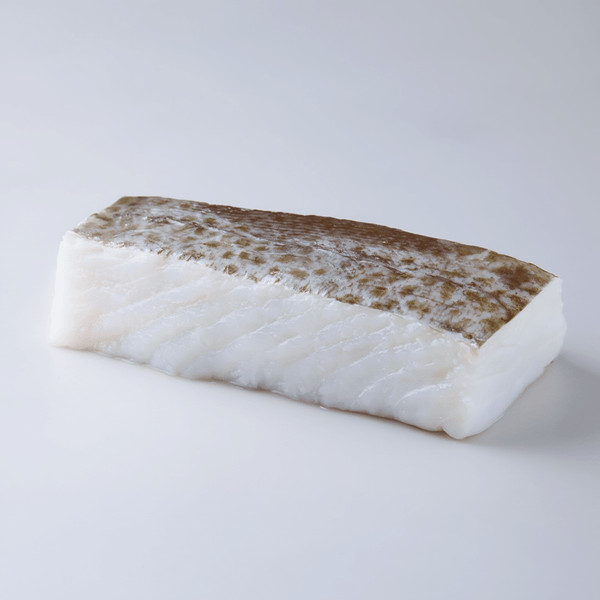
Tail
The narrowest and thinnest part. It has more bones than the loin but also more gelatin, which makes it perfect for sauces that need to thicken (like pil pil).
Best for: stews, hearty soups, pil pil (many Basque chefs prefer the tail to the loin for pil pil), frying.
Price: more economical than the loin. Excellent value for money.
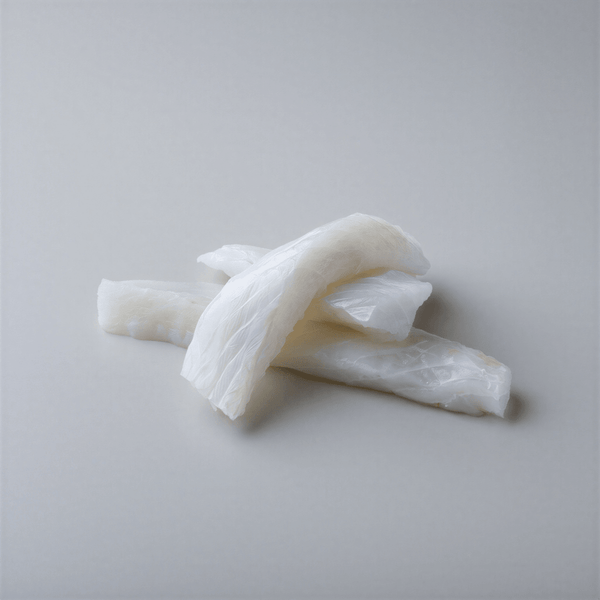
Flakes and shredded cod
Small, shredded pieces of cod. They come from the trimmings of the loin and tail. They don't have the presentation of a whole loin, but the taste is identical.
Best for: fritters, croquettes, omelets, empanadas, salads.
Price: the most economical option. Perfect when the cod is mixed with other ingredients.
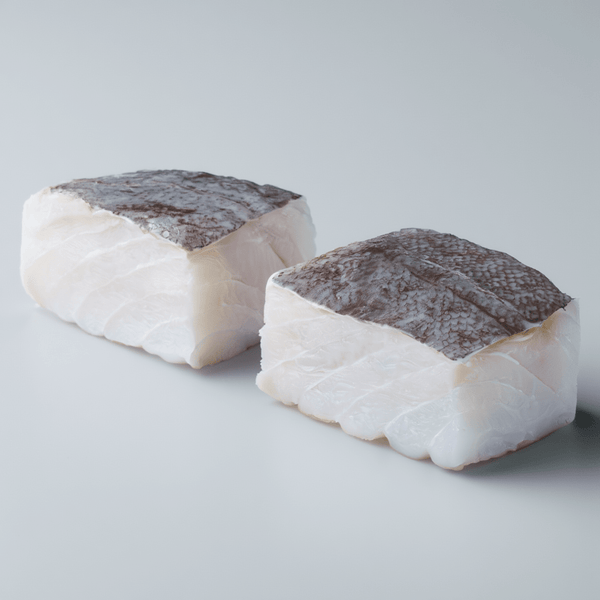
Slices and center cut
Cross-cuts of cod, with their central bone. These are the traditional pieces found in market fishmongers.
Best for: Lenten stews (with chickpeas), traditional stews, fried cod with tomato.
Price: intermediate. The central bone adds a lot of flavor to the broth.
How much cod to buy per person
This is the most frequent question. Cod goes a long way, so don't buy too much:
- Main dish (baked, green sauce, pil pil): 180-200 g of desalted cod per person.
- Stew or casserole (with chickpeas, potatoes): 100-120 g per person.
- Fritters or croquettes (appetizer): 50-60 g per person. 300 g of cod makes 20-25 fritters.
- Salad or omelet: 60-80 g per person.
For a Good Friday meal with 6 people (appetizer fritters + baked cod as main), you will need approximately:
- 300 g of flakes for the fritters
- 1.2 kg of loins for the main dish
- Total: 1.5 kg of desalted cod
Salted vs. pre-desalted: what suits you
Salted cod
Advantages:
- Keeps for months without refrigeration.
- You can control the exact salt level.
- Lower price per kilo (but loses 30% of its weight when desalted).
Disadvantages:
- Needs 48 hours of desalting: change the water every 8 hours, always in the fridge.
- If you desalt too much, it becomes bland. If you desalt too little, it's salty.
- Requires planning.
Pre-desalted cod
Advantages:
- Ready to cook. From package to pan.
- Professionally controlled salt level.
- Vacuum-packed: lasts 5-7 days in the fridge.
Disadvantages:
- Slightly higher price per kilo.
Our recommendation: if you cook cod often and have desalting experience, salted cod is an excellent option. If you only cook cod during Holy Week or don't want to risk it, pre-desalted cod saves you time and mistakes.
How to desalt cod correctly
If you opt for salted cod, follow these steps to the letter:
- Cut the cod into the portions you are going to cook. Small pieces desalt faster and more uniformly than large ones.
- Place the pieces in a large container with cold water. The cod should be completely submerged with at least 3 fingers of water above it.
- Store it in the fridge. Never desalt at room temperature. Salt and humidity create a breeding ground for bacteria.
- Change the water every 8 hours. That's 3 water changes in 24 hours. For thick pieces (loins), you need 48 hours (6 changes).
- Taste before cooking. Cut a small piece from the thickest part and taste it raw. It should have a pleasant saltiness, neither too salty nor too bland.
Desalting times according to the cut:
- Flakes and thin pieces: 24 hours
- Tail and medium slices: 36 hours
- Thick loins (3-5 cm): 48 hours
How to store cod until D-day
You've bought the cod in advance. How do you store it?
- Salted (undesalted): in the fridge, wrapped in kitchen paper and in a closed container. Lasts for weeks.
- Desalted, in the fridge: vacuum-packed, it lasts 5-7 days. Unpacked, 2-3 days maximum. Place it in a covered container on absorbent paper.
- Desalted, frozen: wrap it in cling film and put it in a freezer bag. Lasts 2-3 months. Always thaw in the fridge (12-24 hours), never in the microwave.
If you place your order at Bacalalo on Tuesday, it will arrive on Wednesday or Thursday, and you'll have perfect cod for Good Friday.
Common mistakes when buying cod for Holy Week
- Buying too much. Cod goes a long way. 200 g per person is more than enough as a main course.
- Choosing the wrong cut. Don't use premium loins for fritters (it's a waste of money). Don't use flakes for a baked dish (it lacks presentation).
- Desalting at room temperature. Always in the fridge. In March, it's already warm in many parts of Spain.
- Buying at the last minute. On Maundy Thursday and Good Friday, cod flies off the shelves. Buy 3-4 days in advance.
- Not drying the cod before frying. If you fry it wet, the oil splatters and it won't be crispy. Dry it with kitchen paper, pressing gently.
Premium Seafood — Bacalalo
Since 1990, selecting the best seafood in Mercat del Ninot, Barcelona. Refrigerated shipping 24-48h.
View desalted cod →🛒 Products mentioned in this article
⭐ 4.9/5 · Cold shipping 24-48h · Since 1990 at Mercat del Ninot
Frequently asked questions about buying cod
Which cod is better, from Iceland or Norway?
Both are excellent. Icelandic cod (Gadus morhua) tends to have firmer, whiter flesh. Norwegian cod is usually slightly softer. At Bacalalo, we work exclusively with Icelandic cod, which we prefer for its texture and flavor.
Is it worth buying fresh (unsalted) cod?
Fresh cod is a different product: more delicate, with a milder flavor. It's great for simple preparations (grilled, baked), but it doesn't work for traditional Holy Week recipes like pil pil or fritters, which need the texture and saltiness of desalted salted cod.
How much does quality cod cost?
Premium desalted cod loin costs between €25-€35/kg. Flakes and tail are more affordable, between €15-€22/kg. It's a worthwhile investment: 1 kg of cod feeds 5-6 people.
Can I buy cod for Holy Week online?
Yes. At Bacalalo, we ship Icelandic cod throughout Spain in 24-48 hours, vacuum-packed and chilled. Place your order before Wednesday to receive it on time.
Does desalted cod smell a lot?
Quality cod, properly desalted, has a mild sea smell. If it smells strong or ammoniacal, it's not fresh. Vacuum packaging minimizes odors during transport and storage.
Discover more