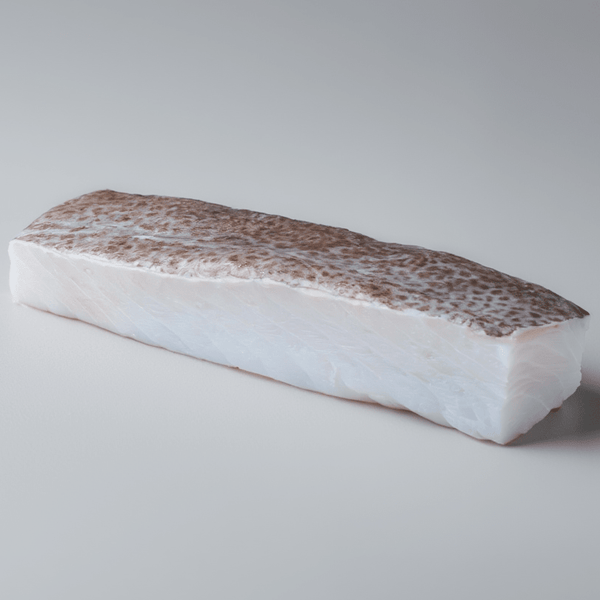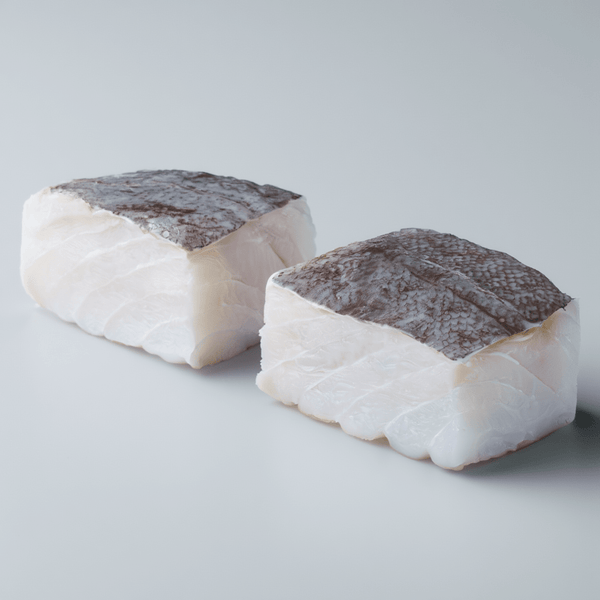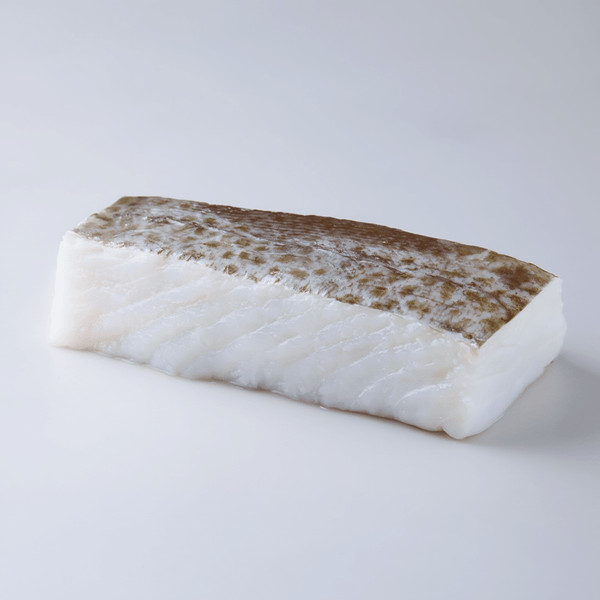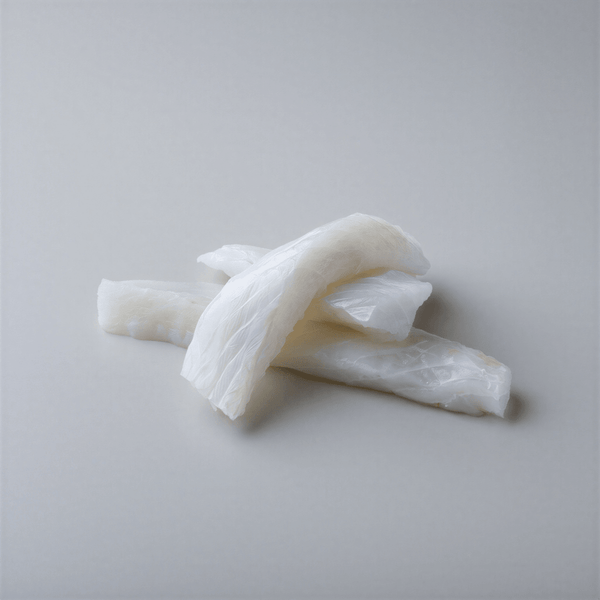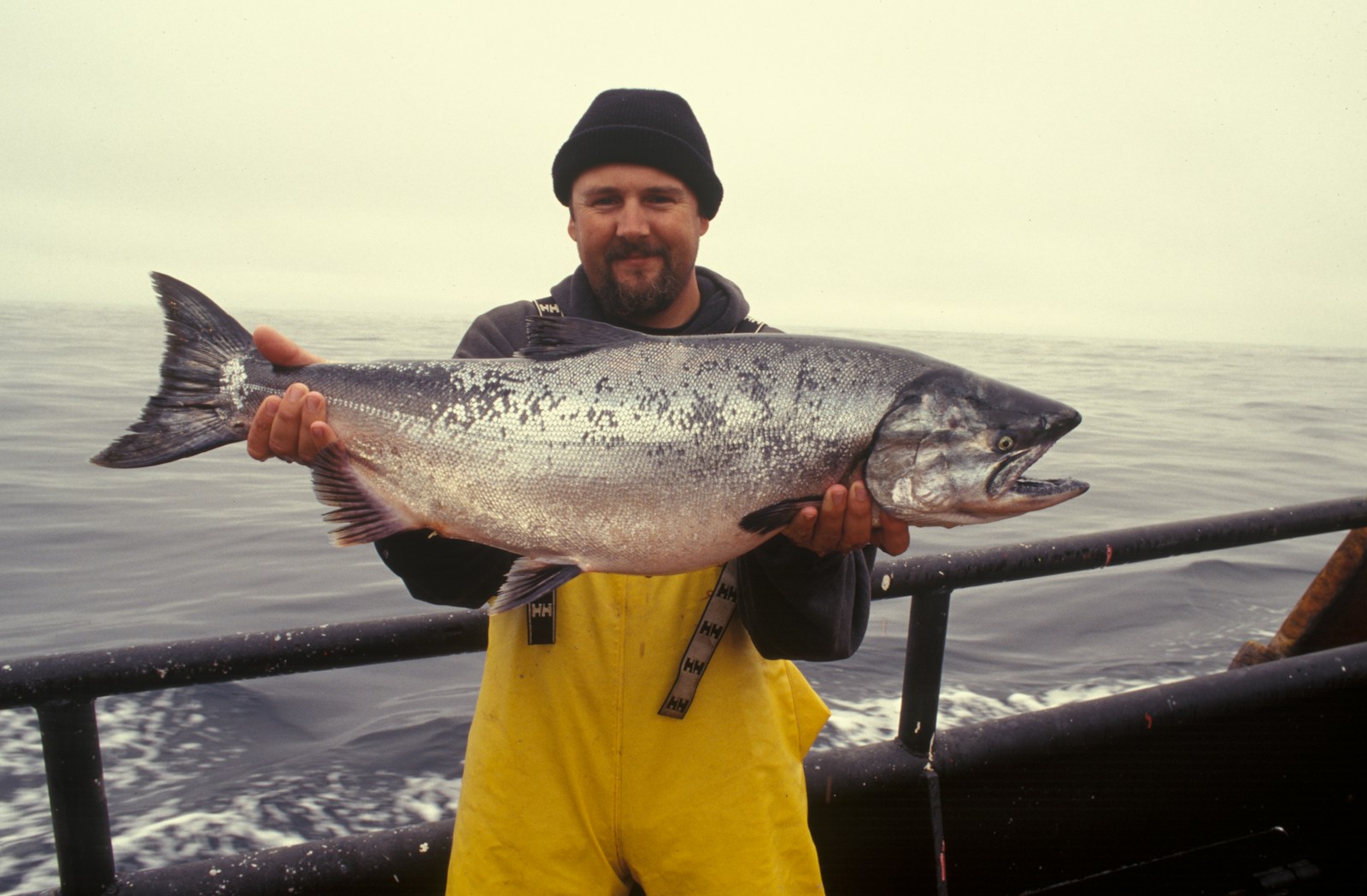
Three formats, three distinct uses. Fresh cod (Skrei, in season Jan–Apr): quick cooking techniques, 1–3 days shelf life. Desalted cod: ready to cook, 5–10 days refrigerated, ideal for weekly use. Traditional salted-dried cod: requires desalting at home for 24–48 h, 12 months shelf life, characteristic cured flavor, base for pil-pil and llauna. Knowing when to use each one is the difference between a good dish and an excellent one.
1. Fresh cod (Skrei): what it is and when
Fresh cod in the Spanish market is almost always Skrei or Norwegian/Icelandic cod blast-frozen at source. Actual availability:
- Fresh Skrei: January to April, in premium fishmongers in large cities.
- Refrigerated fresh cod: very limited, depends on specialized fishmongers.
- IQF blast-frozen cod: available year-round in large chains, variable quality.
Storage of fresh cod: 1–3 days refrigerated at 0–4 °C. Cook immediately after purchase.
2. Desalted cod: ready to cook
Desalted cod starts from a previous salting process. Process:
- It is salted and cured like traditional cod (21–28 days).
- It is rehydrated in cold water for 36–48 h with water changes.
- It is cleaned (bones, skin, inedible parts).
- It is vacuum-packed for refrigerated distribution.
It is the most convenient way to consume traditional cod: it comes ready to cook directly. Storage: 5–10 days refrigerated, up to 3 months frozen vacuum-packed.

3. Traditional salted-dried cod: the classic
Salted-dried cod (klippfisk in Norwegian) is the traditional form since the 15th century. It is salted and dried to preserve it for 12 months without refrigeration. It is the historical basis of Spanish cod dishes.
Characteristics:
- Flavor: characteristic, complex, concentrated cured flavor. Irreplaceable flavor for pil-pil, llauna, vizcaína.
- Texture: firm after desalting, with distinct muscle flakes.
- Storage: 12 months at room temperature, refrigeration optional.
- Preparation required: desalt at home for 24–48 h with water changes.

Complete technical comparison
| Aspect | Fresh | Desalted | Salted-dried |
|---|---|---|---|
| Origin | Fresh Gadus morhua | Salted and desalted Gadus morhua | Salted-dried Gadus morhua |
| Storage | 1–3 days @ 0–4 °C | 5–10 days @ 0–4 °C / 3m frozen | 12 months ambient |
| Residual salt | 80–100 mg/100g | 350–500 mg/100g | After desalting: 400–600 mg/100g |
| Prior preparation | None, ready to cook | None, ready to cook | Desalt 24–48 h |
| Flavor | Neutral, delicate | Balanced, mild cured | Intense cured, complex |
| Availability | Skrei: Jan–Apr / IQF year-round | Year-round | Year-round |
| Consumer price | 18–28 €/kg fresh premium | 35–55 €/kg desalted cleaned | 22–32 €/kg dried whole |
| Cooking yield | Loses ~15% water | Loses ~8% water | Loses ~15% water after desalting |
| Ideal for | Confit, pan-fried, raw | Any recipe | Pil-pil, llauna, esqueixada |
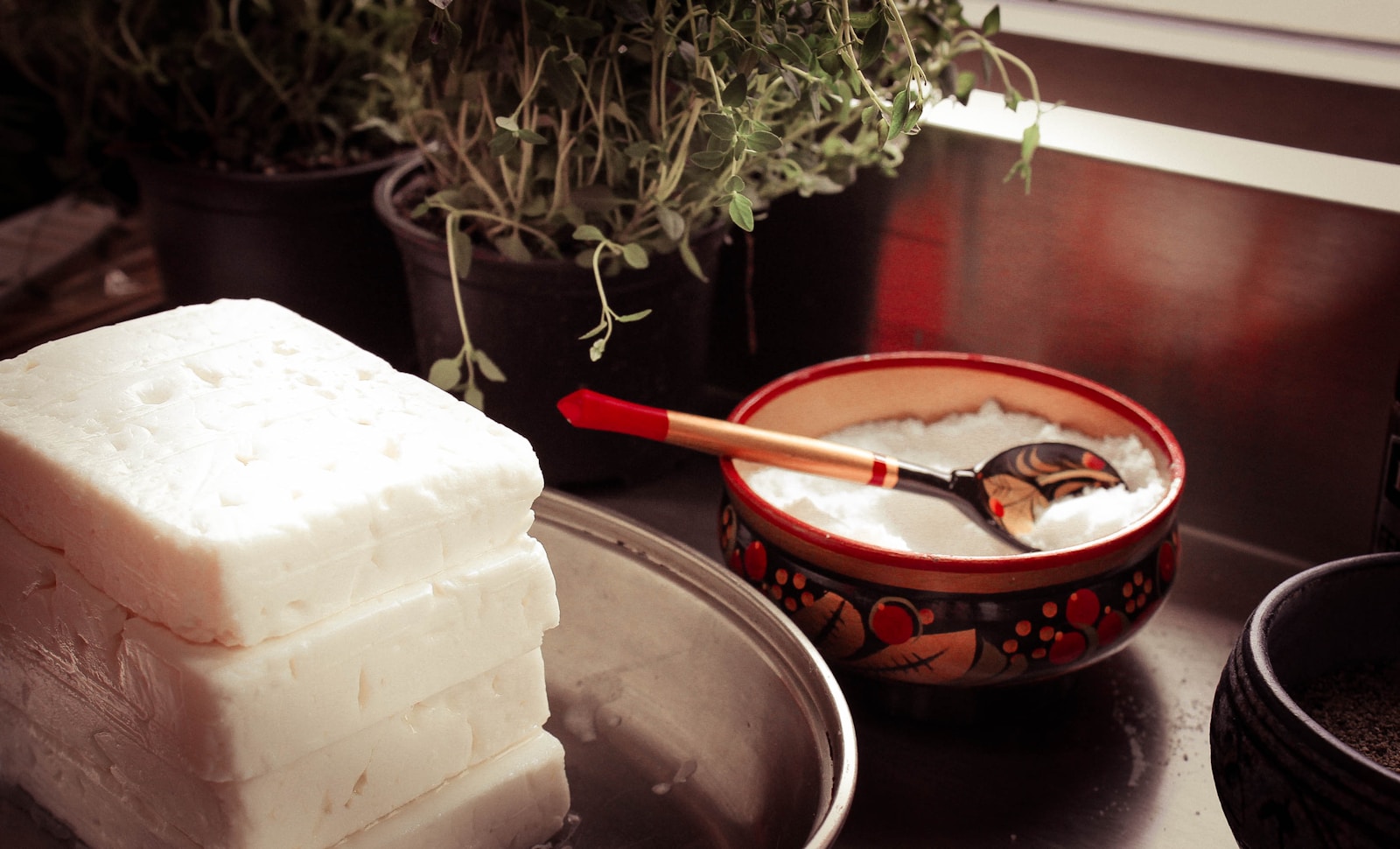
Storage for each format
- Fresh cod: 0–4 °C, maximum 3 days. Covered but ventilated. Freezing and thawing will reduce quality.
- Vacuum-packed desalted cod: refrigerated 5–10 days. Vacuum-packed frozen up to 3 months without noticeable loss, 6 months with slight texture loss.
- Salted-dried cod: in a cool, dry place, up to 12 months. Better in a cold room or refrigerator after opening the package. After desalting, refrigerate and cook within 48 h.
Which format to choose by recipe
| Recipe | Best format | Why |
|---|---|---|
| Pil-pil | Desalted salted-dried | Requires curing for gelatin and flavor |
| A la Vizcaína | Desalted salted-dried or desalted | Tradition, long cooking time |
| Bacalao a la llauna | Desalted | 25 min cooking, cured flavor is key |
| Esqueixada | Shredded salted-dried | Raw, requires curing |
| Brandada | Desalted or shredded dried | Creamy texture when emulsified |
| Catalan fritters | Shredded dried | Cured flavor in the batter |
| Low-temperature confit | Fresh Skrei or premium desalted | Short technique highlights quality |
| Quick pan-fry | Fresh Skrei or desalted loin | Texture is important |
| Suquet | Desalted or desalted salted-dried | Medium cooking, both work |
| Sushi/Tartare | Fresh Skrei (blast-frozen 24 h) | For texture and visual whiteness |
Real nutritional differences
Per 100g of edible product:
| Nutrient | Fresh | Desalted | Salted-dried after desalting |
|---|---|---|---|
| Calories | 82–95 kcal | 88–100 kcal | 110–135 kcal |
| Proteins | 18–20 g | 20–23 g | 21–24 g |
| Fat | 0.4–1.5 g | 0.6–1.5 g | 0.8–1.8 g |
| Omega-3 EPA+DHA | 300–500 mg | 350–550 mg | 400–600 mg |
| Sodium | 80–100 mg | 350–500 mg | 400–600 mg (after desalting) |
| Iodine | 110–160 μg | 120–170 μg | 140–200 μg |
The salting process concentrates nutrients by dehydrating the fish. Once desalted, the nutritional values per gram of product are similar to commercially desalted cod.
Price vs. real yield
The price per kilo is misleading. What's important is the cost per cooked portion:
| Product | Price kg | Cooking loss | Cost per final g |
|---|---|---|---|
| Fresh Skrei | 20 €/kg | 15% | 0.18 €/final g |
| Clean desalted cod | 40 €/kg | 8% | 0.043 €/final g |
| Salted-dried cod | 28 €/kg | +35% due to hydration | 0.021 €/final g after desalting |
Traditional salted-dried cod is ~5x more economical per final gram than fresh Skrei, and ~2x more economical than cleaned desalted cod (the latter already includes the cleaning work).

If you're new to cod: where to start
If you've never cooked cod, here's a recommended learning path:
- Start with clean, desalinated cod (loin or collar). There's no learning curve. Just cook. Guaranteed results.
- Then try salted-dried cod with small pieces (shredded or cheeks). Practice proper desalting.
- Once you master salted-dried cod, move on to larger pieces (whole collar, whole loin).
- Save fresh Skrei for seasonal celebrations, once you have basic techniques under control.
📌 Honest note: An uncomfortable truth: many people get frustrated cooking cod because they start with salted-dried without knowing how to desalt correctly. If you have a bad memory, start fresh with clean, desalinated cod. You'll see that cod is one of the most rewarding fish to cook.
Related articles
- Cod from Norway vs. Iceland — an honest comparison
- Types of cod: Gadus morhua, Skrei, Iceland and Faroe
- View the entire Bacalalo cod collection
- Desalinated cod ready to cook
- Traditional salted dried cod
Frequently Asked Questions
Which tastes better: fresh, desalinated or salted?
Different flavors, no hierarchy. Fresh (Skrei) has a delicate, almost neutral flavor, and needs seasoning. Desalinated cod has a characteristic cod flavor, balanced in salt. Salted-dried cod, when properly desalinated, has a concentrated, cured, complex flavor — unique compared to fresh. For pil-pil and llauna, cured salted cod is irreplaceable.
How long do you desalt salted-dried cod?
It depends on the thickness. Thick loin (3–4 cm): 36–48 h, changing water 3 times. Medium piece (2 cm): 24–36 h. Shredded or cheeks: 12–18 h. Always in the refrigerator at 4 °C, submerged in cold water, skin side up. Taste the water and the fish to adjust.
Is desalinated cod the same as fresh cod?
No. Desalinated cod always starts from a previous salting: it is salted, cured, partially dehydrated, and then rehydrated by desalting. The curing process modifies the proteins and adds a flavor that fresh cod does not have. They are different products even if they seem similar when cooked.
Why isn't fresh cod available all year round in Spain?
Gadus morhua is caught in the North Atlantic (at least 2–3 days of refrigerated transport). The fresh chain is expensive and only commercially viable for seasonal Skrei or minor local fishing. 95% of the cod consumed in Spain is salted-dried or desalinated, precisely because traditional preservation solved the geographical distance since the 15th century.
Which is more expensive: fresh, desalinated or salted?
In 2026, final consumer price: Fresh Skrei: 18–28 €/kg. Whole salted-dried cod: 22–32 €/kg. Clean desalinated cod ready to cook: 35–55 €/kg (higher price because it includes desalting and cleaning labor). Fresh may seem cheaper but yields less: salted-dried cod gains ~35% weight when desalinated, and desalinated cod is already rehydrated.
Can desalinated cod be frozen?
Yes, perfectly. Vacuum freeze in serving portions (200–300 g). Storage: 3 months without appreciable loss, up to 6 months with slight texture loss. Always thaw in the refrigerator, never at room temperature. Do not refreeze after thawing.
What format is best for starting to cook cod?
Clean desalinated cod. It's the most forgiving: it comes properly rehydrated, not overly salty, boneless, ready for any technique. Salted-dried requires correct desalting (learning curve). Fresh requires precise cooking. Start with desalinated loins or collar and work your way up from there.
Are there nutritional differences between the three formats?
Proteins and omega-3: very similar (protein 18–24 g/100 g, omega-3 300–500 mg/100 g). Main difference: sodium. Fresh cod: 80–100 mg/100 g. Desalinated: 350–500 mg/100 g. Salted without desalting: 8,000–15,000 mg/100 g (not consumed this way). After correct desalting of dried-salted: 400–600 mg/100 g.
When to choose fresh Skrei vs desalinated?
Fresh Skrei if: you are in season (Jan–Apr), you have access to a premium fishmonger, you will cook it within 48 hours, you will use a quick technique (confit, grill, steam). Desalinated if: any other circumstance, especially all year round, family meal planning, long cooking technique, controlled budget.
Discover our premium selection
Seafood products carefully selected since 1990 at Mercat del Ninot, Barcelona. Refrigerated shipping in 24-48h.