

Summary: Cod with garlic mousseline is one of the most elegant dishes in Basque cuisine. The mousseline — an emulsified sauce similar to aioli but lighter and more refined — is gratinéed over baked cod, creating an irresistible golden crust. This recipe teaches you how to prepare the mousseline step-by-step, bake the cod to perfection, and combine both elements for a gourmet result in your own home.
Recipe Card
Time: 45 min | Servings: 4 people | Difficulty: Medium
Main ingredients:
4 desalted cod loins (600g), 6 cloves garlic, 2 egg yolks, 200ml mild EVOO, lemon juice, salt, white pepper
What is garlic mousseline and how does it differ from aioli
Garlic mousseline — also spelled mousseline in its original French form — is a hot emulsified sauce born from classic culinary tradition. Although it shares ingredients with Mediterranean aioli (garlic, oil, and egg), mousseline is a fundamentally different preparation in technique, texture, and final result.
Traditional aioli is a cold, dense, and potent emulsion. Raw garlic is crushed in a mortar and emulsified with oil drop by drop until a thick and hearty sauce is obtained. Mousseline, on the other hand, is lighter, smoother, and designed specifically to be gratinéed over fish. It's the difference between a work suit and a tuxedo: both fulfill their function, but in very different contexts.
The key to mousseline lies in three points that distinguish it from aioli:
- Confit garlic, not raw: In classic mousseline, garlic is confited in oil at a low temperature before being incorporated. This eliminates the aggressive pungency of raw garlic and leaves a sweet, round, and deep flavor. Some chefs also blanch the garlic (briefly boil it 2-3 times in water) to soften it.
- Lighter texture: Mousseline incorporates less oil than aioli and is often lightened with a little whipped cream, fish stock, or whipped egg whites. The result is an airy, almost cream-like sauce that melts and gratinates in the oven without being heavy.
- It is gratinéed: Unlike aioli (which is served cold), mousseline is spread over the cod and passed under the oven broiler. The surface browns and forms a thin, crispy crust, while the inside remains creamy. This contrast of textures is the hallmark of mousseline.
In Basque cuisine, cod with garlic mousseline is a classic in restaurants like Arzak, Martín Berasategui, and Zuberoa. It became an iconic dish in the 80s and 90s when new Basque cuisine reinvented tradition with French techniques. Today, it's a dish you can find from the pintxos of San Sebastián to the most exclusive tasting menus in the Basque Country.
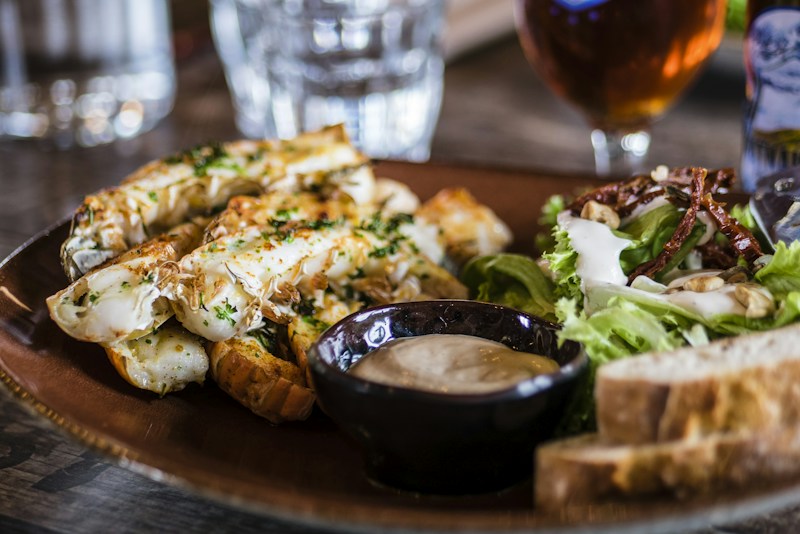
Ingredients for cod with mousseline
For the cod
- 4 desalted cod loins (about 150-180 g each, thick and firm)
- 2 tablespoons extra virgin olive oil
- Salt and white pepper to taste
For the garlic mousseline
- 6 cloves garlic peeled
- 2 egg yolks at room temperature
- 200 ml mild extra virgin olive oil (Arbequina is ideal)
- 1 tablespoon lemon juice
- 2 tablespoons liquid cream (35% fat) — optional but recommended
- Fine salt and white pepper
- 200 ml water (for blanching the garlic)
About the cod
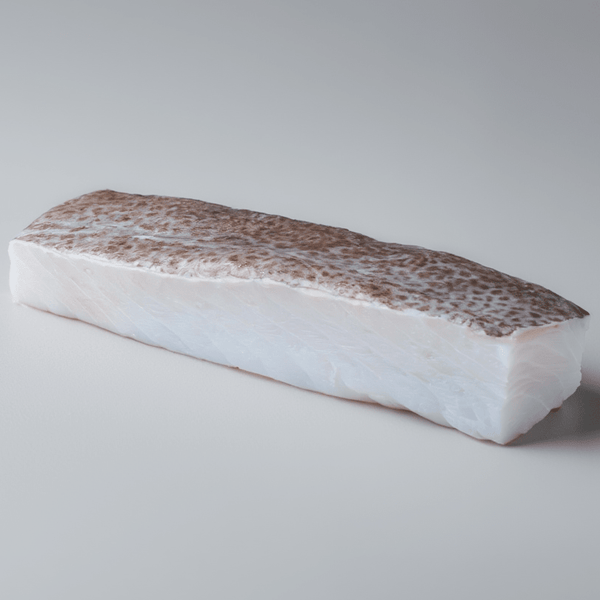
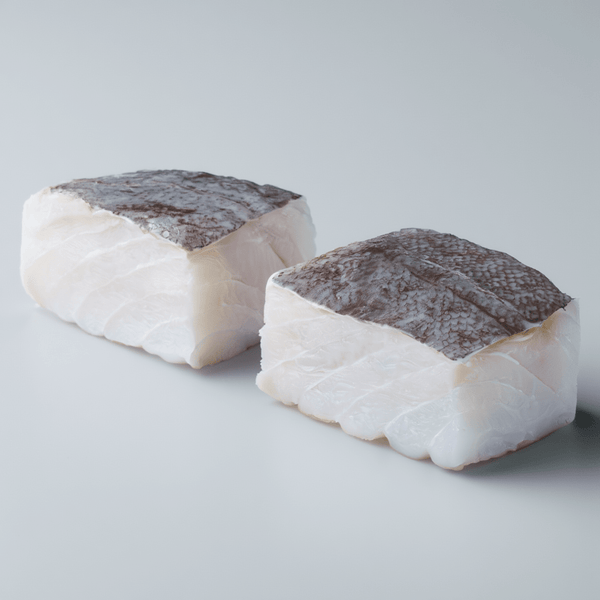
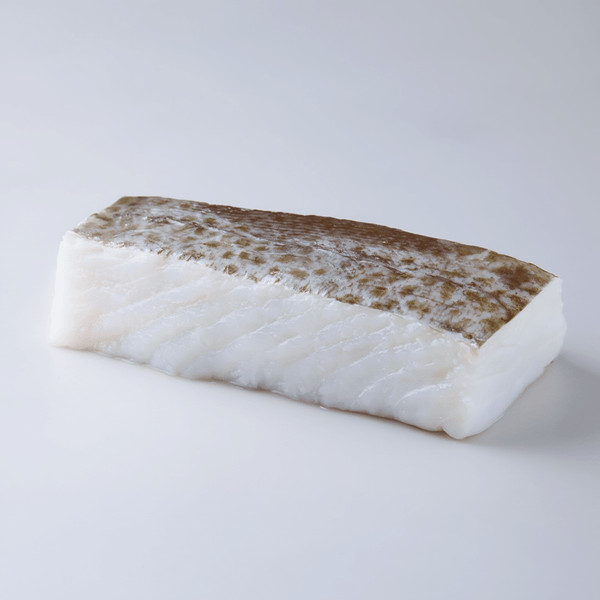
For this recipe, you need thick cod loins, at least 3 cm thick. Thin pieces will dry out in the oven before the mousseline gratinates. First-quality Icelandic cod has the perfect firmness and intramuscular fat to withstand double cooking (oven + broiler) without drying out.
The cod must be completely desalted (24-48 hours in the refrigerator, changing water every 8 hours) and perfectly dry before going into the oven. Surface moisture prevents the mousseline from gratinating correctly.
Premium cod for your mousseline
Bacalalo's Icelandic cod is perfect for this recipe: thick, firm loins with the ideal texture for baking and gratinating.
How to prepare the garlic mousseline step-by-step
The mousseline is prepared before the cod. It can be made 1-2 hours in advance and stored covered in the refrigerator.
Step 1: Blanch the garlic
Place the 6 peeled garlic cloves in a small saucepan with cold water. Bring to a boil, drain, and discard the water. Repeat this process 3 times with new water each time. This triple blanching removes the aggressive pungency of the garlic and leaves a soft, sweet flavor. By the third boil, the garlic will be soft and translucent.
Professional alternative: instead of blanching, confit the garlic in 100 ml of oil at 60°C for 30 minutes. The result is more unctuous but takes longer.
Step 2: Make the garlic purée
Mash the blanched garlic with a fork or pass it through a fine sieve. You need a completely smooth purée, without any lumps. Any untriturated garlic pieces will burn during gratinating and leave bitter spots.
Step 3: Emulsify the mousseline
In a large bowl, mix the 2 egg yolks with the garlic purée and lemon juice. Whisk (manually or electrically) until the mixture is homogeneous and slightly frothy.
Now, exactly as if you were making mayonnaise, add the olive oil in a very thin stream while whisking constantly. At first, drop by drop; when the emulsion begins to thicken (after the first 50 ml), you can slightly increase the stream. Never pour too much oil at once — the emulsion will break.
Once all the oil has been incorporated, the mousseline will have a consistency similar to a thick mayonnaise. Add the liquid cream and mix gently with a spatula. Season with fine salt and white pepper.
The resulting mousseline should be creamy, smooth, pale yellow, and have a mild garlic aroma. If you taste it, it should taste of sweet garlic with a citrus background, without pungency.
What to do if the mousseline breaks?
If the emulsion breaks (separates into lumps and oil), don't throw it away. Put a new egg yolk in a clean bowl, whisk, and gradually add the broken mousseline, as if it were the oil. The new yolk will act as an emulsifier and restore the texture.
Baking the cod: times and temperature
Preheat the oven to 180°C (350°F) with top and bottom heat (no fan). Place the cod loins in an oven-safe dish, skin-side down, lightly greased with olive oil.
Brush the surface of the cod with a little olive oil and season with white pepper (salt depends on how desalted it is — taste a piece first).
Bake in the center of the oven for 10-12 minutes. The cod should be almost done but not completely cooked — the mousseline will finish cooking in the gratinating step. When you take it out, the flesh should be opaque on the outside but still slightly translucent in the center.
This partial cooking point is fundamental. If you bake the cod until it's completely done and then gratinate it, the result will be dry and stringy cod. The double cooking should add up to just the right doneness, not double it.
Gratinating: uniting cod and mousseline
This is the magical moment of the recipe. Remove the dish from the oven and switch to broil function (top heat only, maximum power).
With a spoon or spatula, spread a generous layer of mousseline over each cod loin. The layer should be about 5-7 mm thick — enough for it to gratinate on the outside but remain creamy on the inside.
Place the dish in the upper part of the oven, as close as possible to the broiler, and gratinate for 2-3 minutes, constantly monitoring. The mousseline should brown evenly, forming a crust with golden tones and some more toasted spots. Do not leave the oven — the transition from perfectly golden to burnt is a matter of seconds.
When the surface is uniformly golden and slightly puffed, remove immediately. The mousseline will continue to cook with residual heat.
Serve immediately. The contrast between the crispy, golden crust of the mousseline and the creamy interior of the cod is what makes this dish extraordinary.
Accompaniments for cod with mousseline
Cod with mousseline is a rich dish with personality, so accompaniments should be simple and fresh to balance it:
- Potato dauphinoise: Thinly sliced and baked under the cod for the first 20 minutes. They absorb the fish juices and oil, becoming tender on the inside and slightly crispy on the outside. This is the classic Basque accompaniment.
- Warm pepper salad: Roasted and peeled red peppers, cut into wide strips, seasoned with their own roasting oil and a few drops of cider vinegar.
- Steamed vegetables: Green asparagus, green beans, or snow peas, lightly seasoned with oil and Maldon salt. Their freshness cuts through the richness of the mousseline.
- Choricero pepper purée: Rehydrate dried choricero peppers, scrape out the pulp, and heat it with a little fish stock. A tablespoon under each loin before the mousseline transforms the dish.
- White rice: A loose and simple rice is the best vehicle for absorbing the mousseline that melts on the plate.
To drink, a well-chilled txakoli or a full-bodied verdejo are the perfect combination. The acidity of the wine cuts through the richness of the mousseline and refreshes the palate between bites.
Common mistakes and how to avoid them
After years of preparing this dish and teaching the technique, these are the mistakes I see most frequently:
- Using raw garlic in the mousseline: Serious mistake. Raw emulsified garlic has an aggressive and bitter taste that worsens when gratinating. Always blanch or confit the garlic before incorporating it. This is the step that separates a professional mousseline from a disguised aioli.
- Mousseline too thin: If the layer is less than 5 mm, it burns before gratinating correctly. Be generous — leftover mousseline can be stored for 2 days in the refrigerator for use with other fish or baked vegetables.
- Cod too done before gratinating: Cod is cooked in two phases (oven + broiler). If you bake it completely before gratinating, the result will be dry. Remove it when it is still slightly translucent in the center.
- Not drying the cod: Surface moisture prevents the mousseline from adhering and gratinating. Always dry the loins with paper towels before baking.
- Leaving the oven during gratinating: The broiler operates at extreme temperatures (280-300°C / 535-570°F). The window between perfect golden and burnt is 30-60 seconds. Don't walk away, don't look at your phone, don't answer the phone. Stay and watch.
If you follow these instructions and use premium desalted cod, the result will be spectacular. At Bacalalo, we have been selecting the best pieces of Icelandic cod since 1990 at the Mercat del Ninot, and mousseline is one of the preparations that best honors the quality of the raw material.

Premium Seafood Products — Bacalalo
Since 1990, selecting the best from the sea at Mercat del Ninot, Barcelona. Refrigerated shipping 24-48h.
View desalted cod →🛒 Products mentioned in this article
⭐ 4.9/5 · Cold shipping 24-48h · Since 1990 at Mercat del Ninot
Frequently asked questions
Can I prepare the mousseline in advance?
Yes. The mousseline can be prepared up to 24 hours in advance and stored covered with cling film (touching the surface to prevent a skin from forming) in the refrigerator. Take it out 15 minutes before use so it's not too cold and spreads well over the cod.
Can I use a blender instead of a whisk for the mousseline?
Yes, you can use a hand blender or a stand blender. The key is to add the oil very slowly at first. With an electric blender, the emulsion forms faster and is more stable. However, don't blend at maximum speed — medium power is sufficient and provides more control.
Is cream mandatory in mousseline?
No. Cream is optional and serves to give a lighter, airier texture. Without cream, the mousseline is denser, similar to a garlic mayonnaise, and also works perfectly. With cream, the result is more subtle and gratinates more evenly.
Can I make garlic mousseline for other fish?
Absolutely. Garlic mousseline is versatile and works with hake, monkfish, turbot, or sea bass. It also pairs excellent with roasted vegetables like cauliflower or white asparagus. The gratin technique is the same in all cases.
What is the difference between mousseline and gratinated alioli?
The main difference is the preparation of the garlic. Mousseline uses blanched or confited (mild) garlic, while gratinated alioli uses raw (strong) garlic. Additionally, classic mousseline incorporates cream or egg whites to lighten the texture. The result is more refined and less aggressive than a gratinated alioli.
Can cod with mousseline be frozen?
It is not recommended. Mousseline, like any egg-based emulsion, destabilizes when frozen and thawed, separating and losing texture. It is best to prepare fresh mousseline each time. Desalted cod can be frozen separately if needed.
Products you might be interested in