Summary: Cod vizcaína in Thermomix retains all the character of traditional Basque sauce — choricero pepper, slowly poached onion, and an emulsified base — but saves you the work of sautéing, blending, and straining. Here you have the exact programming (speeds, times, and temperatures) to make a silky vizcaína sauce in the bowl, how to incorporate the desalted cod for juicy flakes, and how it differs from the slow-cooked version.
Why Thermomix makes Bacalao a la Vizcaína easier
Vizcaína sauce is one of the great sauces of Basque cuisine: a red, bright, and deep cream made from choricero pepper, lots of patiently poached onion, and a base that thickens without flour. Made the classic way, it requires you to constantly tend to the stove for over an hour, stirring so the onion doesn't burn, and finally, blending and straining to achieve that characteristic fine texture.
That's where the Thermomix makes a difference. The appliance instantly solves the three most challenging aspects of this sauce:
- Slow poaching without supervision: with controlled temperature (Varoma / 100 °C) and reverse rotation, the onion confits itself without you having to stir or fear it sticking.
- Fine blending: instead of blending and straining, you gradually increase the speed and get a silky sauce in seconds, without any choricero skin lumps.
- Stable emulsion: by blending hot, the fat, the choricero pulp, and the broth emulsify into a homogeneous mixture that won't separate or curdle when served.
The result is the same vizcaína sauce as always — with its choricero and sweet onion flavor — but with half the work and much cleaner. It's the ideal recipe if you want a festive dish without spending the afternoon in front of the stove.
If you're looking for the classic slow-cooked method, in a pot and stirred by hand, you can find the complete step-by-step in our recipe for traditional bacalao a la vizcaína. This page is the Thermomix version of that same sauce.
Choricero pepper, the key to the sauce
There's no vizcaína without choricero pepper. It's a dried, sweet, and fleshy red pepper (not spicy) that provides the color, aroma, and body of the sauce. You can use it in two ways:
- Dried choricero peppers: hydrate them in hot water for about 20-30 minutes, then scrape out the pulp with a spoon. This is the most flavorful and traditional option.
- Choricero pulp or flesh in a jar: already ready to use. More convenient and perfect for Thermomix, as it saves you the hydration and the risk of skins. Estimate about 4-6 tablespoons for this recipe.
Onion is the other pillar: the more well-poached onion, the sweeter and more velvety the sauce will be. The classic proportion is generous, almost equal parts with the reduced choricero pulp. Some versions add a little green pepper and a touch of tomato; in the more purist Basque vizcaína, tomato is minimized or omitted, letting the choricero take center stage.
The right cod for vizcaína
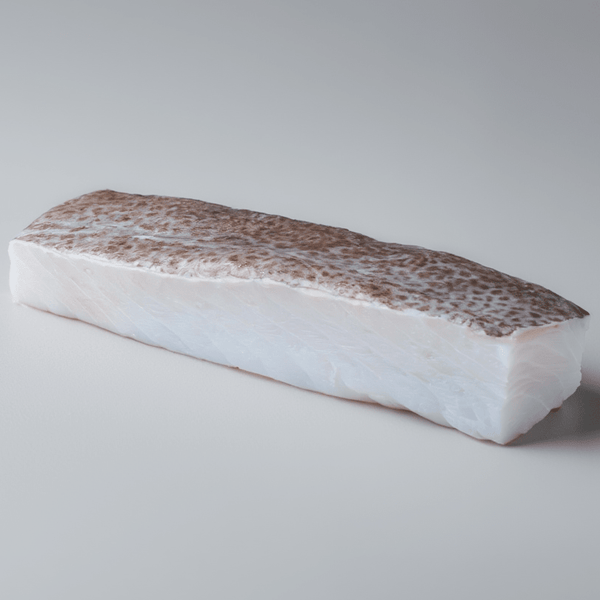
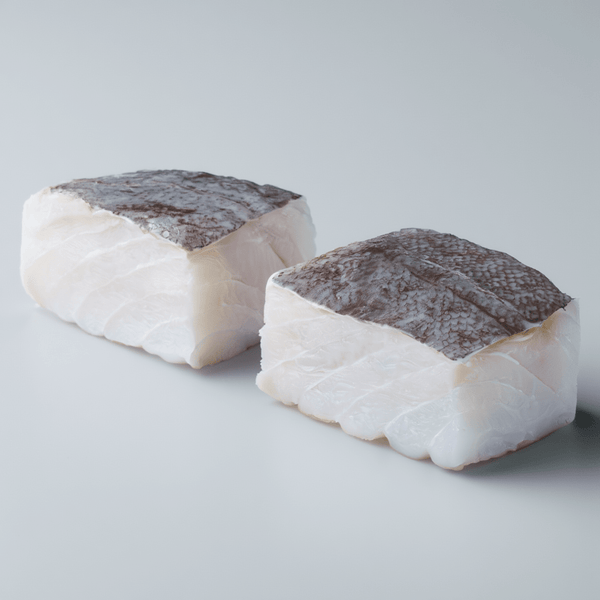
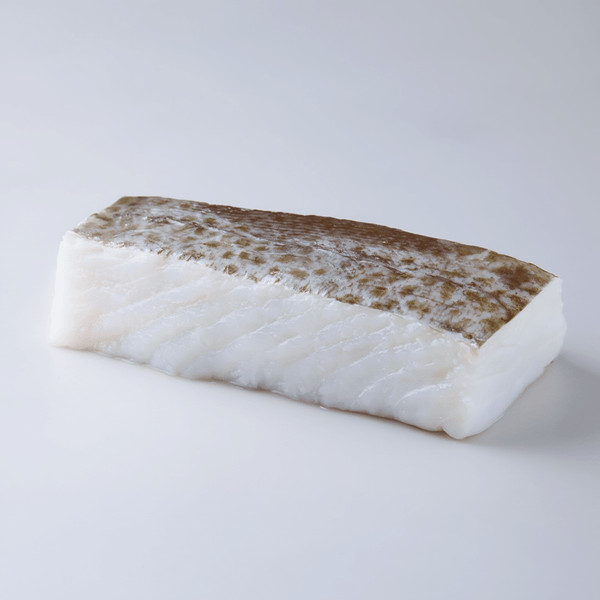
Cod loins or pieces, desalted, with skin and gelatin, that hold up in the sauce without falling apart.
See desalted codIngredients for 4 people
| Ingredient | Quantity |
|---|---|
| Desalted cod steaks or loins with skin | 4 pieces (~800 g) |
| Medium onions | 3 units (~500 g) |
| Choricero pepper pulp (or 4 dried peppers) | 4-6 tablespoons |
| Italian green pepper (optional) | 1/2 unit |
| Garlic cloves | 2 units |
| Extra virgin olive oil | 60 ml |
| Fish broth or water | 300 ml |
| Fried bread or breadcrumbs (for thickening, optional) | 1 small slice |
| Salt | To taste (carefully) |
A note on salt: desalted cod and broth already contain salt, so adjust at the end and with caution. If you want to get the starting point right, review our guide on how to desalt cod.
Step-by-step Thermomix programming
The outline is that of any good sauce: sauté → cook → blend and emulsify → incorporate cod. The Thermomix automates the first three. These times are for the classic bowl; adjust slightly according to your model.
Step 1 — Chop the vegetables
Peel the onions and garlic. Place the quartered onions, garlic, and, if using, the half green pepper in the bowl. Chop for 5 seconds / speed 4. Scrape down anything that remains on the sides with the spatula.
Step 2 — Sauté the onion
Add 60 ml of olive oil. Set for 10 minutes / Varoma temperature / speed 1, without the measuring cup (place the simmering basket on top to allow the onion water to evaporate). This is the key phase: the onion should be well-poached and sweet, not raw. If it looks underdone, add 3-5 more minutes at the same temperature.
Step 3 — Cook with choricero
Add the choricero pepper pulp (or scraped pulp from hydrated dried peppers), the bread if you're using it, and the fish broth. Set for 15 minutes / 100 °C / speed 1, with the simmering basket on top instead of the measuring cup to allow it to reduce slightly. The sauce will acquire an intense red color and choricero aroma.
Step 4 — Blend and emulsify
Remove the simmering basket and place the measuring cup. Blend, gradually increasing the speed from speed 5 to speed 10 for 1 minute. It's important to do this while hot: this way the sauce emulsifies and becomes fine, shiny, and free of skin remnants. If you want it even silkier, blend for another 30 seconds at speed 10. Check the thickness: it should coat the back of a spoon. If it's too thick, add a little broth and blend briefly; if it's liquid, set for 5 minutes / Varoma / speed 1 without the measuring cup to reduce.
Step 5 — Adjust seasoning
Taste and carefully adjust for salt (remember that the cod will season the dish). You now have the vizcaína sauce ready for the cod.
Incorporating the desalted cod
The cod is not blended or cooked inside the bowl: it's finished in the sauce, outside the Thermomix, so that it forms juicy flakes and doesn't fall apart. There are two ways to do this:
- In a pot (the most traditional): pour the vizcaína sauce from the bowl into a large pot. Place the cod pieces skin-side up on the sauce. Cook over low heat for 8-10 minutes, gently shaking the pot back and forth (without a spoon) so that the cod releases its gelatin and the sauce thickens even more. The cod is ready when the flakes begin to separate but are still pearly.
- In the oven: arrange the cod in a baking dish, cover with the sauce, and bake at 180 °C for 12-15 minutes. Convenient if you're preparing portions for several people.
Regardless of the method, do not overcook the cod: the number one mistake is to dry it out. It's better to undercook it slightly and let it rest for a couple of minutes in the hot sauce. Serve with sauce on top and, if desired, a little chopped parsley.
Perfectly desalted cod for your vizcaína
Steaks and loins with skin, properly desalted. The raw material this sauce deserves.
Buy desalted codTips for a perfect vizcaína sauce in Thermomix
- Don't skimp on onion or poaching time: this is what gives sweetness and body. If the onion is raw, the sauce will taste aggressive. Extend step 2 without fear.
- Always blend hot: the emulsion only forms well when the sauce is hot. Cold, it would be coarser and could separate.
- Gradual speed, not sudden: going from 5 to 10 prevents splashing and achieves a finer texture than a single burst at maximum speed.
- Be careful with salt: between the cod and the broth, the sauce can become salty. Adjust at the end, never at the beginning.
- If the sauce tastes bitter: this is usually due to overly browned garlic or choricero with skin/seed remnants. Use clean pulp and don't burn the sofrito.
- For an extra shiny emulsion: add a drizzle of olive oil in the last few seconds of blending at speed 10.
Difference from traditional vizcaína
The intended flavor is the same: choricero and onion sauce, silky and deep. What changes is the process and, in part, the final texture.
| Aspect | Traditional (pot) | Thermomix |
|---|---|---|
| Onion poaching | 45-60 min stirring over low heat | 10-15 min at Varoma, unattended |
| Blending and straining | Blender + pass through chinois | Speed 5-10, no straining |
| Texture | Very fine if well-strained | Fine and emulsified directly |
| Total time | ~75-90 min | ~40 min |
| Attention required | High (stirring, watching heat) | Low (programmed) |
The traditional version allows for more artisanal control and, for many cooks, that nuance of very slowly confited onion has an extra touch. The Thermomix, in turn, offers regularity and convenience: the sauce always turns out equally well and emulsifies without a strainer. If you want to compare, also see our page on vizcaína sauce with its history and authentic recipe.
Approximate nutritional values (per serving)
| Nutrient | Quantity |
|---|---|
| Energy | ~340 kcal |
| Proteins | ~38 g |
| Fats | ~16 g |
| Carbohydrates | ~12 g |
Indicative values that vary depending on the cut of cod, the amount of oil, and the broth used. Cod is an excellent source of lean protein, and the sauce, based on onion and choricero, provides flavor with relatively little fat if the oil is measured.
Frequently asked questions
Can I make the entire recipe, including the cod, inside the Thermomix?
The sauce can be made completely in the bowl. The cod, however, is best finished outside—in a pot or oven—to ensure juicy flakes. Cooked and blended inside, it would lose its texture.
Dried choricero or jarred pulp for Thermomix?
Jarred pulp is the most convenient and clean option, and it works very well for Thermomix because you avoid hydrating and scraping. Dried peppers provide a little more flavor but require hydrating for 20-30 minutes and scraping the pulp beforehand.
Why does my sauce taste bitter?
This is usually due to overly browned garlic in the sofrito or remnants of choricero skin and seeds. Use clean pulp and don't burn the onion or garlic. A pinch of sugar helps correct occasional bitterness.
Do I need to strain the sauce after blending?
No, that's one of the advantages of the Thermomix: by blending from speed 5 to 10 while hot, the sauce becomes fine without needing a chinois. If you used dried peppers with a lot of skin and want an ultra-fine texture, you can strain it, but it's not necessary.
Can I make the sauce a day in advance?
Yes, vizcaína sauce improves overnight. Store it in the refrigerator for up to 3 days and gently reheat it before adding the cod. It also freezes well on its own, without the fish.
Which cod is best for "a la vizcaína"?
Slices or loins of desalted cod with skin, which provide gelatin and hold up to cooking without falling apart. Avoid thin cuts. You can see options in our selection of desalted cod.
How does this differ from "a la vizcaína" made on a slow simmer?
In the process, not the flavor: the Thermomix poaches the onion with controlled temperature and emulsifies when blending, saving time and eliminating the straining step. The final texture is very similar to a well-strained traditional "vizcaína."