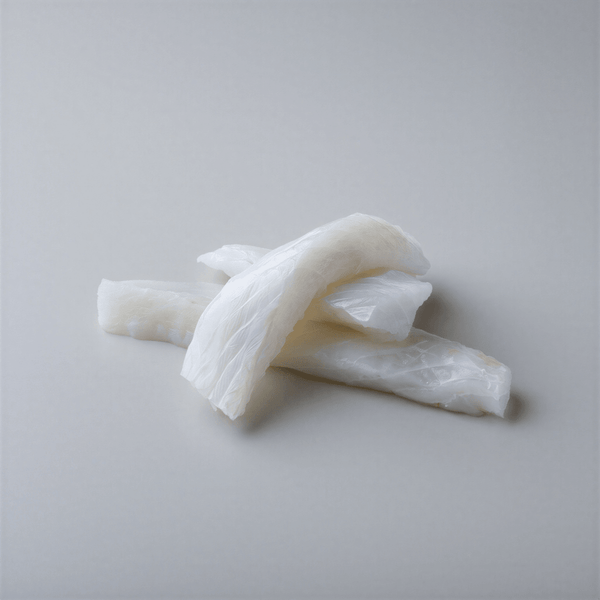
Few fish have had such an impact on the history of food as cod. Before refrigeration, it was one of the few ways Europe could eat fish far from the sea, for months and across borders. But where does cod really come from? What kind of fish is it, in which seas is it caught, and why does it arrive in our kitchens salted instead of fresh? In this guide, we explain it from beginning to end, with criteria and without myths.
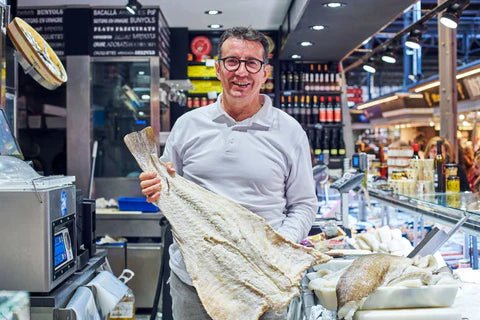
Since we at Mercat del Ninot have been working with salted cod since 1990, we know its entire journey well: from the North Atlantic to the table, passing through salting and desalting. Understanding this journey helps you buy better and cook it more thoughtfully.
What kind of fish is cod: Gadus morhua
When we talk about the quintessential cod—the one that is salted, the one from European tradition—we are referring to a specific species: Gadus morhua, known as Atlantic cod. It is a fish from the Gadidae family, with a robust body, color ranging from greenish to brownish depending on its habitat, a clear lateral line, and a characteristic barbel under the lower jaw which it uses to detect food on the seabed.
Gadus morhua is a cold-water predator that lives near the bottom, typically on continental shelves and in medium-depth areas. It feeds on other fish, crustaceans, and mollusks, and can reach considerable sizes and live for several years when populations are well managed. Its flesh is white, lean, with large flakes and a mild flavor, making it ideal for both salting and fresh cooking.
There is also Pacific cod (Gadus macrocephalus), a related species caught on the other side of the world. It is a perfectly valid fish, but the great European salting tradition—which gave rise to recipes such as bacalao a la vizcaína, bacalao al pil-pil, or brandade—was built on the Gadus morhua of the North Atlantic. If you want to delve deeper, we expand on this in our guide to Gadus morhua and Atlantic cod.
Where cod comes from: the North Atlantic
Cod comes from the North Atlantic, the cold waters stretching between Europe and North America. It is not a warm-water or Mediterranean fish: it needs cold. That is why its historical fishing grounds are concentrated in a few large regions.
- Iceland. One of the most highly valued origins today. Icelandic cod is caught in cold, clean waters, with modern fisheries management based on quotas. For many, it is a benchmark of quality for salting. We explain it in detail in the article on Icelandic cod and its sustainable fishing.
- Norway. Another major cod power in the Northeast Atlantic. Norwegian waters, especially those around the Lofoten Islands, are home to the famous migratory cod that gives rise to skrei in season and a long tradition of dried and salted fish.
- Newfoundland (Northwest Atlantic). Off the coast of Canada, the Grand Banks of Newfoundland were for centuries one of the most abundant cod fishing grounds on the planet and the destination of fleets crossing the Atlantic from Europe. Its history is also a lesson on the limits of fishing, as we will see later.
- Other Atlantic areas. The Faroe Islands, Greenland, and the Barents Sea complete the map of Atlantic cod, each with its nuances of waters, seabeds, and fishing gear.
This cold origin is no minor detail: low-temperature water and the fish's lifestyle influence the firmness of the flesh and how it behaves when salted and desalted. If you are interested in comparing regions, our article Norway vs. Iceland cod analyzes the real differences between two of the most sought-after origins.
Why cod is salted: a history of preservation
The key question to understanding cod is this: if it's a fish from the North Atlantic, why did we first know it salted and not fresh in much of Europe? The answer lies in preservation.
For centuries, there was no refrigeration or rapid transport. Fresh fish caught in the North Sea could not reach the interior of the Iberian Peninsula, Italy, or central Europe in an edible state. Salting solved this problem: salt extracts water from the fish and creates an environment where decomposing bacteria cannot thrive. Well-salted and dried cod can be preserved for a long time at room temperature and withstand long journeys.
Gadus morhua proved to be an almost perfect candidate for this method: its lean flesh, with very little fat, salts and dries much better than that of fatty fish, which tend to go rancid. This combination—abundance in the North Atlantic and flesh ideal for salting—turned cod into a strategic, transportable, and nutritious food, capable of feeding crews, armies, and entire populations far from the coast.
Salting also explains why cod was associated with Lent and Holy Week: on days of meat abstinence, it was a fish available all year round in any corner, without depending on proximity to the sea. This custom is still very much alive, as we explain in the article on Holy Week and cod.
From sea to table: fishing, salting, and desalting
The journey of cod to your kitchen has three main stages. Knowing them helps to understand why good salted cod is not just any industrial product, but the result of a skilled process.
1. Fishing
It all starts in the fishing grounds of the North Atlantic. Cod is caught using different methods depending on the area and the fleet. After capture, the fish is gutted and prepared quickly for processing, because initial freshness determines the quality of the final product, as with any salted product.
2. Salting
Once on land (or on board, in some fleets), the cod is opened, cleaned, and covered with salt. The salt gradually extracts water from the flesh over several days. Depending on the subsequent degree of drying, you get wet salted cod or dry salted cod (the classic "bacalao de bacalada" which is very cured). A good cure results in firm, ivory-colored flesh with a clean aroma, which rehydrates without falling apart when desalted.
3. Desalting
Before cooking, salted cod must be desalted: immerse it in cold water in the refrigerator and change the water periodically to release excess salt and rehydrate the flesh. The time depends on the thickness of the piece—flakes need fewer hours; a thick loin, significantly more—and it's always advisable to taste a corner before cooking. We detail it step by step in our complete guide to desalting cod.
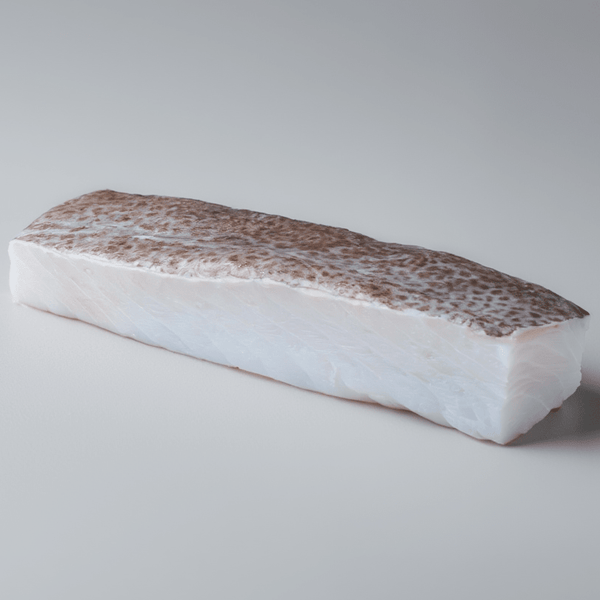
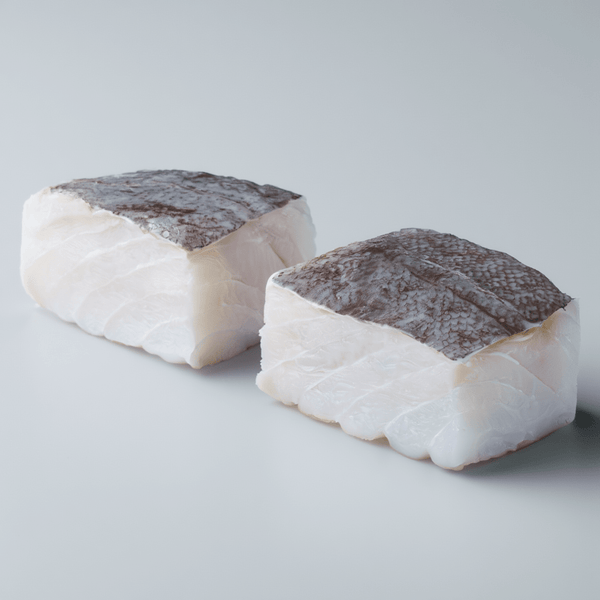
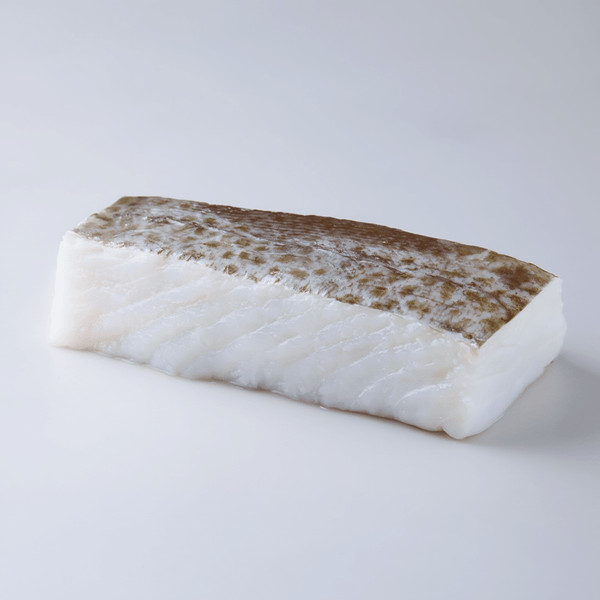
If you prefer to skip the process, you can start with pieces already expertly treated: in our selection of desalted and salted cod you will find loins and flakes ready to cook or to desalt at home with confidence.
Species often confused with cod
Not everything sold as "cod" is Gadus morhua. There are several related or similar-looking species that appear in fish markets and menus, sometimes with commercial names that cause confusion. It is useful to distinguish them:
- Pacific cod (Gadus macrocephalus): a direct relative of Atlantic cod, valid as fish, but with distinct textures and traditions.
- Pollock and saithe (species of the genus Pollachius): close gadids, also with white flesh, sometimes offered as a more economical alternative.
- Blue whiting (Micromesistius poutassou): a small, related fish with much finer flesh, not to be confused with traditional salted cod.
- Ling, hake, and other species that are sometimes salted or dried in a similar way, but are not Gadus morhua.
The most reliable way to know what you are buying is to check the scientific name and origin on the label, not just the commercial name. To recognize true cod versus other species, you have more clues in Gadus morhua vs. other species, and if you want to locate varieties and origins, in types of cod.
Sustainability: quotas, management, and MSC certification
The history of cod includes an important warning. In the Northwest Atlantic, off Newfoundland, decades of intensive fishing led to a collapse of cod populations in the late 20th century, to the point that Canadian authorities had to declare a fishing moratorium. That episode forever changed the way cod fishing is understood: it showed that not even a seemingly inexhaustible resource is inexhaustible if overexploited.
Today, cod management in the Northeast Atlantic relies on tools such as:
- Catch quotas. Annual limits set based on scientific advice on the state of populations, to avoid overfishing.
- National management systems in countries like Iceland and Norway, which regulate who fishes, how much, and how.
- MSC certification (Marine Stewardship Council), an independent label that distinguishes fisheries evaluated according to sustainability criteria. It is not an absolute guarantee of perfection, but it is a useful reference when buying.
For the consumer, the practical conclusion is simple: looking at the origin and, when possible, recognized certifications, helps to choose cod caught responsibly. Origins like Iceland and Norway are now references precisely because they combine water quality with serious fisheries management.
In summary: the journey of cod
The salted cod that arrives in your kitchen is Gadus morhua, a cold-water fish from the North Atlantic—Iceland, Norway, historically Newfoundland, and other Atlantic areas. It is salted because, before refrigeration, salting was the way to preserve and transport a lean and abundant fish for months. Hence its enormous cultural importance, from Lent to recipes that are now gastronomic heritage. Before cooking, it is desalted at home to restore its juiciness. And, as a natural resource, its future depends on fishing with quotas and good management. Knowing where it comes from is the first step to buying and cooking it better.
Frequently asked questions
Where does cod come from?
Cod comes from the North Atlantic, the cold waters between Europe and North America. Its main origins are Iceland and Norway, and historically, the Grand Banks of Newfoundland off Canada, as well as areas such as the Faroe Islands and Greenland.
What kind of fish is cod exactly?
Traditional cod is the species Gadus morhua or Atlantic cod, a fish of the Gadidae family, with white, lean flesh and large flakes, that lives in cold waters near the seabed. There is also Pacific cod (Gadus macrocephalus), a related species.
Why is cod sold salted?
Because salting was for centuries the only way to preserve and transport fish away from the sea, before refrigeration. Salt extracts water from the flesh and prevents its decomposition. The lean flesh of cod salts and dries especially well, making it a durable and transportable food.
What species are confused with cod?
The most common are Pacific cod (Gadus macrocephalus), pollock and saithe (genus Pollachius), and blue whiting. The best way to be sure is to check the scientific name and origin on the label, not just the commercial name.
Is eating cod sustainable?
It can be if it comes from well-managed fisheries. After the collapse of Newfoundland cod in the late 20th century, North Atlantic fishing is managed through quotas based on scientific advice. Choosing origins like Iceland or Norway and looking for certifications such as the MSC label helps to consume responsibly.