


Summary: Bacalao a la llauna is Catalonia's most iconic cod recipe. It is cooked directly in a tin tray (the "llauna") with garlic, paprika, parsley, and olive oil, and then gratinéed in the oven until the cod is golden and juicy. In this comprehensive guide, you'll find the traditional Catalan recipe step-by-step, the version with beans, the history of the llauna, the ideal cut of cod (morro), wine pairings with Catalan wines, a comparative table with other Catalan cod dishes, and 12 frequently asked questions answered.
Contents
- What is bacalao a la llauna?
- The llauna: what it is and why the tray matters
- History of bacalao a la llauna in Barcelona and Catalonia
- El Mercat del Ninot and the cod tradition
- Ingredients for 4 people
- The ideal cut: why "morro" is the king of the llauna
- Traditional recipe step-by-step
- The garlic and paprika base: the secret to the flavor
- Bacalao a la llauna with beans: the complete version
- Comparative table: llauna vs. other Catalan cod dishes
- Variations and modern versions
- Pairing: Catalan wines to accompany it
- Common mistakes and how to avoid them
- How to store and reheat
- Frequently asked questions
Bacalao a la Llauna: Traditional Catalan Recipe Step-by-Step
What is bacalao a la llauna?
Bacalao a la llauna is, without a doubt, Catalonia's most representative cod recipe. Its name comes directly from the way it's cooked: the cod is placed on a llauna (a rectangular tin or thin metal tray) and baked with a topping of garlic, sweet paprika, parsley, and extra virgin olive oil.
What makes this dish special isn't its complexity (it's utterly simple), but the direct relationship between the cod and the dry heat of the oven. The metal llauna conducts heat intensely and uniformly, ensuring the bottom of the cod is lightly toasted while the top gratinates with the paprika and garlic layer. The result is an extraordinary contrast of textures: crispy on the outside, juicy and flaky on the inside.
In Catalan homes, this dish has been the most natural way to cook cod for generations. It doesn't require elaborate sauces, long sofritos, or sophisticated techniques. It needs good desalted cod, finely chopped garlic, and a working oven. That honesty is what makes it an immortal classic.
The llauna: what it is and why the tray matters
The word llauna in Catalan literally means "can" or "tinplate." In a culinary context, it refers to a thin, rectangular metal tray, without high edges, similar to what in Spanish would be called a "baking tin" or roasting pan.
The traditional llauna is not a ceramic dish, nor a glass mold, nor a thick stainless steel tray. It is a piece of thin tinplate, light and with great thermal conductivity. This detail is fundamental: being so thin, the llauna transmits the oven's heat directly to the cod from below, while the radiant heat of the oven acts from above. The result is an enveloping cooking that neither ceramic nor glass can replicate with the same intensity.
Original llaunas were bought in hardware stores and tinsmiths in Barcelona's markets. They were humble, cheap, and functional utensils. Many Catalan families still keep their grandmothers' llauna, slightly warped and darkened by decades of use.
If you don't have an authentic llauna, you can substitute it with a thin metal baking tray (like a cookie sheet or roasting pan). The important thing is that it's metal and not too thick. Avoid ceramic if you want the characteristic toasted effect on the base of the cod.
History of bacalao a la llauna in Barcelona and Catalonia
The history of bacalao a la llauna is intimately linked to the history of salted cod in Catalonia, which dates back at least to the 14th century. Barcelona, as a great Mediterranean port, was for centuries one of the main entry points for salted cod from Iceland, Norway, and Newfoundland into Southern Europe.
Salted cod became a fundamental product of the Catalan diet for practical reasons: it was a long-lasting protein, economically accessible, and compatible with the many days of fasting imposed by the Catholic Church (when eating meat was forbidden). In a city like Barcelona, with a strong religious tradition and a large working class, cod was the perfect protein solution.
The "a la llauna" preparation is probably the oldest and most elemental form of cooking cod in Catalonia. It required nothing more than a metal tray (available in any home), a wood-fired oven, garlic, paprika, and oil. It's a subsistence recipe elevated to culinary art: few ingredients, no waste, exceptional results.
The first Catalan recipe books documenting this preparation date back to the 19th century, but oral tradition places it much earlier. The writer and gastronome Josep Pla (1897-1981), perhaps the most important chronicler of Catalan cuisine, described bacalao a la llauna as one of the dishes that defined Barcelona's gastronomic identity.
In the 20th century, the dish was consolidated as part of the repertoire of Barcelona's municipal markets, where fishmongers not only sold dried and desalted cod, but also offered prepared dishes to take away. The llauna was the perfect format for this: it was prepared in the back of the stall and sold directly in the tray.
El Mercat del Ninot and the cod tradition
At Bacalalo, our history with bacalao a la llauna is very direct. We have been at the Mercat del Ninot in Barcelona, in the heart of the Eixample, since 1990, and this dish has been part of our trade from day one.
El Mercat del Ninot is one of Barcelona's most emblematic markets. Renovated in 2015, it maintains the tradition of Catalan fishmongers: stalls where cod is sold in all its forms (dried, desalted, shredded, in loins, in jowls) and where product knowledge is passed down from generation to generation.
Our Cod Jowl a la Llauna with Beans is the ready-to-heat version of this centuries-old recipe. We prepare it exactly as it has always been done in Barcelona's markets: artisanal desalted Icelandic cod jowl, cooked with a base of garlic, paprika, and parsley, accompanied by tender beans. It is the dish that our customers at El Ninot order week after week.
Ingredients for 4 people
For the bacalao a la llauna
- 4 desalted cod jowls (about 200-250g each). Dried Cod Jowl or Extra Desalted Cod Jowl
- 6 cloves of garlic, peeled and finely chopped
- 1 tablespoon of sweet paprika (from La Vera, if possible)
- Half a teaspoon of hot paprika (optional, for those who like a little kick)
- 1 sprig of fresh parsley, chopped
- 100-120 ml of extra virgin olive oil
- 1 tablespoon of white wine vinegar (optional, traditional in some versions)
- Flour for light dusting (2-3 tablespoons)
- Salt (little or none, the cod already has some)
For the garnish (optional but recommended)
- 400g cooked white beans (such as "mongeta del ganxet" or "judión")
- Lemon slices for serving
The ideal cut: why "morro" is the king of the llauna
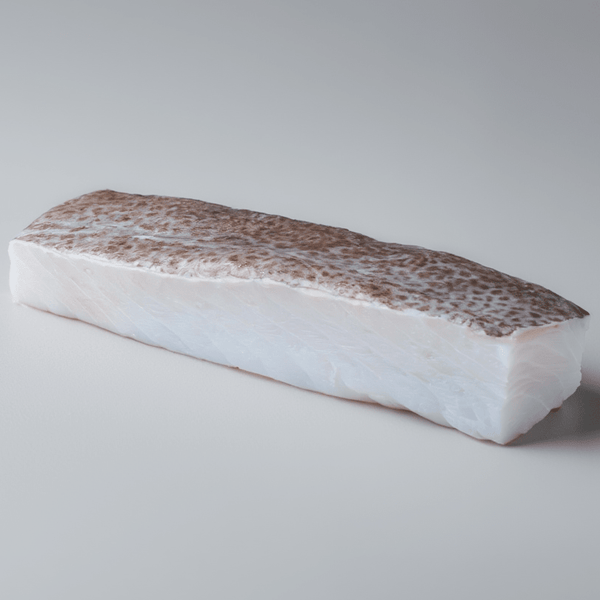
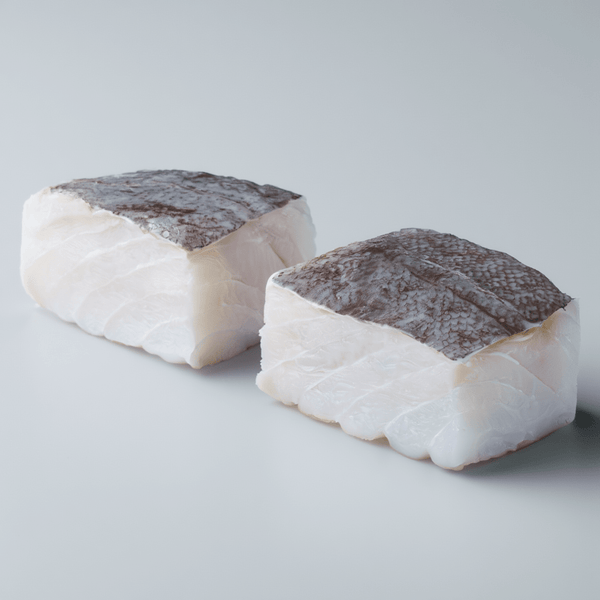
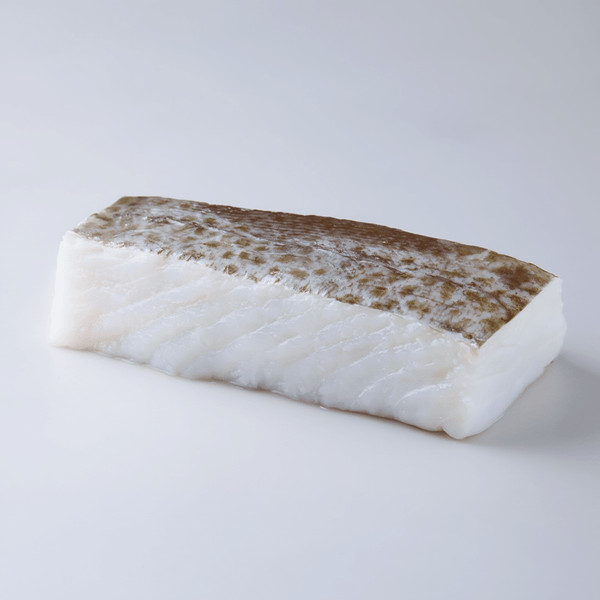
If there's a cut of cod designed by nature for bacalao a la llauna, it's the morro (jowl). The morro is the thickest and meatiest part of the cod loin, the area from the head to the center of the fish. It has these characteristics that make it perfect for the llauna:
- Uniform thickness: The morro has a homogeneous thickness of 3-5 cm, which allows for even cooking in the oven without the ends drying out while the center remains raw.
- Natural gelatin: This area of the cod is rich in collagen, which transforms into gelatin during baking. This gives the dish a creaminess and juiciness that other cuts cannot achieve.
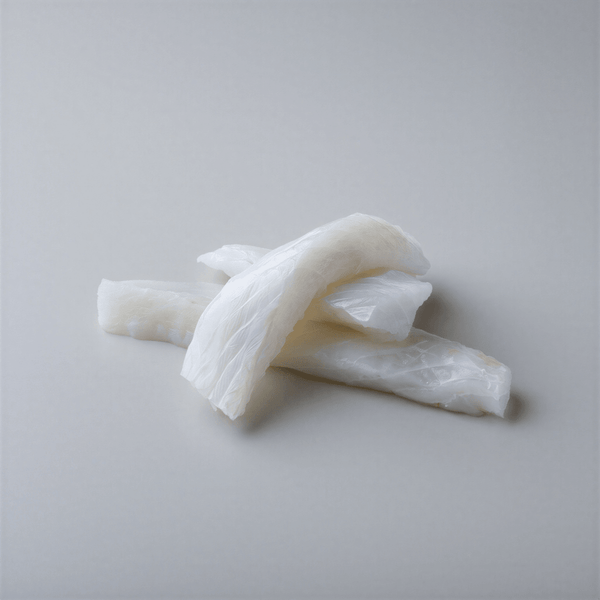
- Flaky structure: The morro breaks down into large, wide, clean flakes. When eating bacalao a la llauna, each bite separates into sheets of white, tender, and flavorful meat.
- Thick skin: The skin of the morro is the thickest part of the cod, and when baked on the llauna, it becomes crispy and golden, providing a textural contrast that is a hallmark of the dish.
Other cuts like the central loin or the "penca" (belly flap) also work, but the result will never be the same. The penca is thinner and tends to dry out, and the central loin doesn't have the same concentration of gelatin. For an authentic bacalao a la llauna, always look for morro.


Traditional recipe step-by-step
This is the bacalao a la llauna recipe as it has always been made in Catalan kitchens. No frills, no modernities, no inventions. The real recipe.
- Preheat the oven to 220 °C (top and bottom heat). The llauna needs strong heat to achieve the toasting effect that defines the dish. If your oven has a fan, reduce to 200 °C.
- Prepare the cod: thoroughly pat dry the desalted cod jowls with kitchen paper, pressing to remove all surface moisture. This step is critical: if the cod is wet, it will steam rather than brown. Make 2-3 shallow cuts in the skin with a sharp knife to help heat penetrate better.
- Light dusting of flour: dredge each jowl in flour, shaking off the excess well. We only want a very thin layer to help form a crust. It's not breading; it's barely a veil of flour.
- Sear the cod: in a large frying pan with 3-4 tablespoons of very hot oil, sear the jowls on both sides: 2 minutes skin-side down, 1 minute flesh-side down. We only want color, not to cook it through. Set aside.
- Prepare the garlic and paprika topping: in the same oil used for searing (reduce the heat to minimum), add the finely chopped garlic. Sauté for 1 minute without letting it brown. Remove from heat, add the sweet paprika (and hot paprika if using) and stir quickly. Paprika burns in seconds if it's in direct contact with high heat, so take it off the heat. Add the chopped parsley and vinegar if using. Mix well.
- Assemble the llauna: place the cod jowls on the metal tray, skin-side down. Spread the garlic, paprika, and parsley mixture over each piece, covering the entire surface well. Pour the remaining oil over the top.
- Bake: bake for 15-18 minutes at 220 °C. The cod will be ready when the surface looks gratinéed (the paprika will have darkened slightly) and when pierced with a knife, the flesh separates into flakes easily. Do not overcook: the jowl should remain juicy inside.
- Brief rest: take the llauna out of the oven and let it rest for 2-3 minutes before serving. During this rest, the cod reabsorbs the juices it has released. Serve directly in the tray (as is traditional) with lemon slices.
The garlic and paprika base: the secret to the flavor
If you had to reduce bacalao a la llauna to its essence, it would be: cod + garlic + paprika + olive oil + oven. There's nothing more. And it's in that simplicity that the dish's genius lies, and also its pitfall, because every ingredient has to be good and treated correctly.
The garlic
The garlic is chopped finely but not crushed. We don't want a garlic paste or thick slices, but small pieces that are evenly distributed over the cod and that brown without burning during baking. Use fresh, purple garlic (white garlic tends to be milder, and here you need presence). Between 6 and 8 cloves for 4 people is the right amount: generous, but not aggressive.
The paprika
Sweet paprika is the ingredient that gives bacalao a la llauna its characteristic dark red color and that unmistakable smoky aroma. Paprika from La Vera (Cáceres) is the first choice, because its drying with holm oak smoke gives it a depth that Murcian paprika lacks.
The key to paprika is never to put it over direct heat. It is added to the oil off the heat or with the heat turned off, stirred quickly, and immediately poured over the cod. Burnt paprika is bitter and inedible, and completely ruins the dish. It is the most common mistake made by inexperienced cooks.
Some traditional versions add a pinch of hot paprika to the sweet. It's not obligatory, but it adds a touch of heat that balances the richness of the cod very well. If you add it, make it a small amount: one-quarter hot to three-quarters sweet.
The parsley
Fresh parsley, flat-leaf (not curly), coarsely chopped. It is added along with the paprika and garlic, and baked with the cod. The oven heat wilts it slightly but respects its aroma. Some versions also add fresh, raw parsley at the end, just before serving.
The olive oil
Extra virgin olive oil, generously. Bacalao a la llauna is not a dry dish: the oil forms a natural sauce with the cod juices and paprika. Estimate about 25-30 ml per person. If, when serving, you see that the tray has a reddish oil base (red from the paprika, with small pieces of golden garlic), it's a sign that you've done it well. That oil is perfect for dipping bread and is arguably the best part of the dish.
Bacalao a la llauna with beans: the complete version
The bean version of bacalao a la llauna is, along with the simple version, the most widespread in Catalonia. The combination of cod and legumes is an absolute classic of Mediterranean cuisine, and in Catalonia, the legume of choice for this recipe is the mongeta del ganxet (a type of white dry bean, with thin skin and a creamy texture) or, failing that, the "judión" type white bean.
How to prepare the version with beans
- Cook the beans beforehand: If using dried beans, soak them for 12 hours and then boil them in water with a couple of bay leaves, half a tomato, and a piece of onion until tender (45-60 minutes in a regular pot, 20 minutes in a pressure cooker). If using canned beans, rinse them well.
- Arrange the beans as a base: In the "llauna" (metal tray), before placing the cod, spread a layer of drained cooked beans. Season lightly with salt and pepper.
- Cod over the beans: Place the seared cod cheeks on top of the bean layer. The beans will absorb the cod juices and the paprika oil during baking, becoming the best possible accompaniment.
- Topping and oven: Pour the mixture of garlic, paprika, and parsley over the cod and beans. Bake as before: 15-18 minutes at 220 °C (425 °F).
The result is a complete dish where the beans are infused with the red paprika oil and the gelatinous juices of the cod. It's a hearty meal, perfect for colder months, and needs nothing more than bread for dipping.
If you want to try it without the hassle, our Cod Cheek a la Llauna with Beans comes already prepared with the traditional recipe: you just need to heat it for 10 minutes in the oven or 5 minutes in the microwave.
Comparison Table: Llauna vs. Other Catalan Cod Dishes
Catalan cuisine boasts a wide repertoire of cod recipes. This table helps you distinguish the most important dishes and understand what makes each one unique:
| Dish | Cooking Method | Key Ingredients | Cod Texture | Difficulty |
|---|---|---|---|---|
| Bacalao a la llauna | Oven (metal tray) | Garlic, paprika, parsley, EVOO | Gratinated, flaked, crispy on the bottom | Low |
| Bacalao con sanfaina | Pan + Pan | Eggplant, bell pepper, zucchini, tomato | Confit or seared, juicy | Medium |
| Bacalao con samfaina y allioli | Pan + Mortar | Sanfaina + homemade allioli | Seared, with emulsified sauce | Medium-high |
| Esqueixada de bacalao | Raw (cold) | Tomato, onion, olives, bell pepper | Shredded raw, firm | Low |
| Bacalao a la barcelonesa | Oven | Raisins, pine nuts, tomato, white wine | Baked with sauce, tender | Medium |
| Baked cod with potatoes | Oven | Potato, onion, tomato | Baked on a bed of potatoes | Low |
| Brandada de bacalao | Mashed + Oven | Potato, milk, garlic, EVOO | Shredded in a cream, gratinated | Medium |
| Buñuelos de bacalao | Fried | Flour, egg, shredded cod | Shredded in fried batter | Medium |
As you can see, bacalao a la llauna stands out for being the most direct and simple of them all. It doesn't hide behind vegetables or sauces: it's a direct dialogue between the cod and the oven, with paprika and garlic as the only intermediaries.
Variations and Modern Versions
The bacalao a la llauna recipe allows for few variations without ceasing to be what it is, but over the years some interesting versions have developed:
With Chili
In some areas of Empordà, spicy paprika is replaced by a fresh chili cut into rings that is baked with the cod. The result is a fresher and more direct spiciness than that of paprika.
With Tomato
Some family recipes add a base of grated tomato under the cod, creating a sauce base that mixes with the oil and paprika. It's not the most orthodox version, but it works especially well in summer when tomatoes are in season.
With "Pimientos Choriceros" (Chorizo Peppers)
A hybrid version between Basque and Catalan cuisine, where part of the paprika is replaced by rehydrated "pimiento choricero" pulp. It provides a natural sweetness and flavor complexity that is very popular.
With "Patata Panadera" (Baker's Potatoes)
A layer of thinly sliced potatoes (like baker's potatoes) is placed under the cod. The potatoes absorb the juices and oil, becoming golden and soaked with flavor. It is heartier than the version with beans.
Grilled (Barbecue)
For the summer months, some Catalan chefs prepare bacalao a la llauna directly on a charcoal grill, placing the metal tray over the embers. The smoke from the charcoal provides a natural smokiness that enhances that of the Pimentón de la Vera.
Pairing: Catalan Wines to Accompany
Bacalao a la llauna, with its smoked paprika, golden garlic, and red oil, calls for full-bodied wines but without excessive oak. Catalonia produces several wines perfect for this dish:
Full-bodied Whites
- Priorat white (Garnacha blanca): wines with volume, minerality, and structure that perfectly stand up to paprika and garlic. Serving temperatures: 10-12 °C (50-54 °F).
- Penedès (Xarel.lo with aging): Xarel.lo is the indigenous white grape of Penedès, and in versions aged in barrels, it has the necessary structure to accompany baked cod without falling short.
- Terra Alta (Garnacha blanca): Mediterranean white wines, glycerin-rich, with good acidity. Excellent value for money for this pairing.
Light Reds
- Montsant (young Garnacha): if you prefer red, a young Garnacha from Montsant has the necessary fruitiness and lightness. Avoid aged wines with too much oak, as they compete with the paprika.
- Empordà rosé: a full-bodied rosé from the Empordà region is a versatile option, especially if serving bacalao a la llauna in spring or summer.
Cavas
A Cava Reserva or Gran Reserva (minimum 15-18 months of aging) is a surprising pairing. The bubbles cleanse the palate of oil and paprika, and the Cava's aging provides toasted notes that complement the gratinated cod. It is probably the most Catalan pairing possible.
Common Mistakes and How to Avoid Them
Bacalao a la llauna is a simple dish, but these mistakes ruin the result:
- Burning the paprika: the number one mistake. If you add the paprika directly to hot oil over the heat, it burns in 5 seconds and becomes bitter. Always off the heat or with the heat turned off. There's no second chance: if it burns, you have to throw away the oil and start over.
- Using cod that is too thin: thin cuts (less than 2 cm thick) dry out quickly in the oven. The cod cheek, with its 3-5 cm thickness, is perfect because it retains internal juiciness while the surface gets crispy.
- Not drying the cod: desalinated cod releases a lot of water. If you put it in the oven wet, it steams instead of baking, and you lose the gratinated finish and crispy texture of the base. Dry it well with paper towels and, if possible, leave it uncovered in the refrigerator for 1-2 hours for the surface to dry.
- Oven too low: bacalao a la llauna needs strong heat (200-220 °C / 390-425 °F). A lukewarm oven cooks the cod slowly, resulting in a soft and crustless outcome. If your oven is not very powerful, activate the grill function for the last 3-4 minutes.
- Overcooking: 15-18 minutes is enough time for normal-sized cod cheeks. Overdoing it means dry and fibrous cod. The cod is ready when it flakes into layers when pricked with a knife but still offers some resistance.
- Using a ceramic tray: ceramic does not conduct heat with the same intensity as metal. If you use ceramic, the cod will bake correctly on top, but you won't achieve the toasted base that defines the dish.
- Skimping on oil: bacalao a la llauna is a dish generous with oil. The paprika oil remaining in the tray is a fundamental part of the dish; if you use too little oil, the result will be dry, and the paprika will burn.
How to Store and Reheat
Bacalao a la llauna is best eaten fresh, but it stores and reheats reasonably well:
- Refrigerator: up to 2 days in a sealed container. The beans, if you've added them, will absorb some of the oil during resting, which benefits them.
- Reheating: always in the oven (180 °C / 350 °F, 8-10 minutes). If you use the microwave, the cod will lose its crispy surface texture; it's edible but not the same. A trick: add a spoonful of olive oil on top before reheating in the oven to refresh the surface.
- Freezing: not recommended. Desalinated cod loses texture when frozen (it becomes fibrous), and the paprika changes flavor. If you need a ready-to-eat bacalao a la llauna without complications, our Cod Cheek a la Llauna with Beans is designed exactly for that: artisanally prepared and packaged so you just have to heat it.


🛒 Products mentioned in this article
⭐ 4.9/5 · Cold delivery 24-48h · Since 1990 at Mercat del Ninot
Frequently Asked Questions
What does "a la llauna" mean?
"Llauna" is the Catalan word for "tin plate" or "can." In cooking, it refers to the thin metal tray (like a baking sheet) on which cod is cooked directly. The dish's name literally comes from the utensil: cod cooked on the tin. It is the oldest and simplest way to bake cod in Catalonia.
Can I use a different cut of cod than the cheek?
You can use the loin or the belly, but the result will not be the same. The cheek is thicker, has more gelatin, and a thicker skin, which gives the dish its characteristic texture (crispy on the outside, flaked and juicy on the inside). If you use a thinner cut, reduce the oven time to 10-12 minutes to prevent it from drying out.
Is it necessary to sear the cod before putting it in the oven?
It's not strictly necessary, but highly recommended. Searing beforehand in a pan creates an initial crust that intensifies in the oven, and adds flavor through the Maillard reaction. If you skip this step, the cod will be softer and lack the toasted texture that defines the dish. If you're in a hurry, at least flour it and grill it for the last 3-4 minutes.
Can bacalao a la llauna be made without an oven?
Technically you can make it in a lidded pan, but then it's no longer "a la llauna" but cod in a pan with garlic and paprika. The oven is essential because the circulating heat gratinates the surface and toasts the base simultaneously. If you don't have an oven, the closest result can be achieved with a heavy cast-iron skillet, a lid, and medium heat: 10-12 minutes without uncovering.
Which beans are best for this recipe?
The most traditional Catalan option is mongeta del ganxet (DOP Vallès-Maresme): a white, flat bean with very thin skin and a creamy texture. If you can't find it, any thin-skinned white bean works well (like Great Northern or cannellini). "Judiones de La Granja" also work well, although their large size changes the proportion to the cod. Avoid red or pinto beans, as their flavors don't pair well with this dish.
How long does bacalao a la llauna take to cook?
Total preparation is less than 40 minutes: 10 minutes for prep (drying cod, chopping garlic, preparing paprika), 5 minutes for searing in a pan, 15-18 minutes in the oven, and 2-3 minutes of resting. If you add the bean version (using pre-cooked canned beans), the time is exactly the same.
Can I prepare "bacalao a la llauna" in advance?
You can prepare the garlic, paprika, and parsley mixture in advance and have it ready in the fridge. You can also sear the cod and leave it on the tray ready for baking. But bake it just before serving: 15 minutes in the oven and it's ready. It's a last-minute dish that cooks quickly.
Does "bacalao a la llauna" contain vinegar?
Some traditional Catalan versions add a tablespoon of white wine vinegar to the garlic and paprika mixture. It's not obligatory, but vinegar provides an acidic touch that balances the fat from the oil and the richness of the cod. If you add it, make sure it's a small amount (one tablespoon) and always off the heat, along with the paprika.
Is "a la llauna" the same as "al horno" (baked)?
No. All "bacalao a la llauna" is baked, but not all baked cod is "a la llauna". The difference lies in three things: the thin metal tray (not ceramic), the specific garlic-paprika-parsley topping (not tomato sauce or other garnishes), and the direct cooking method on the sheet (without a bed of potatoes or vegetables underneath, unless they are beans). Baked cod with potatoes, for example, is a completely different recipe.
Can fresh cod (not salted) be used for this recipe?
Technically yes, but the result is different. The salting and subsequent desalting process changes the texture of the cod: the fibers compact and the flesh acquires that characteristic flaky structure. Fresh cod is softer and has less personality. If you use fresh cod, add salt to the cod and slightly increase the baking time.
How many calories does "bacalao a la llauna" have?
A generous serving of "bacalao a la llauna" without beans is around 350-400 kcal (including the oil from the topping). With beans, it goes up to about 500-550 kcal. Most of the calories come from extra virgin olive oil, which is healthy fat (monounsaturated). Cod itself is a lean fish: barely 80 kcal and 18g of protein per 100g.
Is "bacalao a la llauna" a Lenten dish?
Historically, yes. Cod in all its forms was the star food of Catholic Lent, when eating meat was forbidden. "Bacalao a la llauna", due to its simplicity and speed, was one of the most common preparations on Lenten Fridays. Today it is eaten year-round, but in many Catalan families, it is still a dish that appears more frequently between February and April.
Related recipes
- Cod with Sanfaina: traditional Catalan recipe
- Baked cod with potatoes
- Cod "al pil pil": step-by-step Basque recipe
- 15 recipes with desalted cod
- Cod "a la vizcaina"




![Anisakis en el Pescado: Qué Es, Síntomas y Cómo Evitarlo [2026] - Bacalalo](http://bacalalo.com/cdn/shop/articles/anisakis-en-el-pescado-que-es-sintomas-y-como-evitarlo-2026-4301044.jpg?v=1772706843&width=480)
