Summary: The anchovy toast seems simple, but the difference between a mediocre toast and one that is remembered for days lies in three factors: the quality of the anchovy, the chosen bread, and the accompaniment that balances the saltiness. In this guide, we present 10 anchovy toast combinations, tested and refined at the Mercat del Ninot in Barcelona, with technical criteria on why each combination works and which products to use to get the best result.
Table of Contents
- The fundamentals of a perfect anchovy toast
- The bread matters as much as the anchovy
- Combination 1: Butter and anchovy, the classic French
- Combination 2: Seasonal tomato and olive oil
- Combination 3: Avocado, lemon, and chili pepper
- Combination 4: Goat cheese and fig jam
- Combination 5: Poached egg with anchovies
- Combination 6: Roasted red pepper and anchovy
- Combination 7: Melted Brie, walnut, and anchovy
- Combination 8: Black olive tapenade and Cantabrian anchovy
- Combination 9: Ricotta, sun-dried tomato, and anchovy
- Combination 10: The Gilda toast (deconstructed)
- Common mistakes when making anchovy toasts
- Frequently Asked Questions
The fundamentals of a perfect anchovy toast
An anchovy toast is one of the most representative appetizers in Spanish gastronomy, but it is prepared incorrectly with a frequency that is not justified given how easy it is to do it right. The problem, almost always, is not in the technique — it is in the product.
The anchovy is the absolute protagonist of the toast. Everything else exists to enhance it, balance it, or complement it, never to overshadow it. When the anchovy is of inferior quality — excessively salty, with a rubbery texture, with a metallic taste from a cheap can — no accompanying ingredient can compensate for that basic defect. On the contrary, when the anchovy is good, even a simple toast with butter becomes something memorable.
The three principles that govern these 10 combinations are as follows. First: the anchovy rules. It should never be overshadowed. Second: the balance between saltiness, acidity, and fat is the structural key to any successful toast. Third: the texture must vary — if the anchovy is melting, the bread must be crispy; if the accompaniment is creamy, something on the toast must provide contrast.
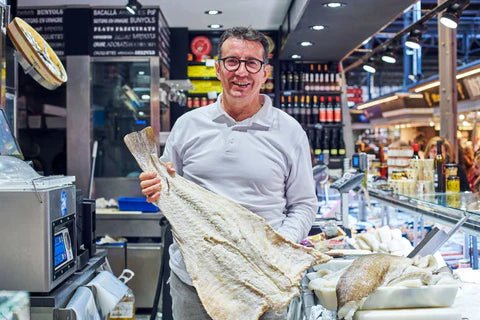
At Bacalalo, we have been working with Cantabrian anchovies for over 35 years at the Mercat del Ninot in Barcelona. The combinations we present here are not improvised — they are the ones we have seen work time and again among customers who come seeking advice on how to serve their anchovies.
The bread matters as much as the anchovy
The bread for an anchovy toast must fulfill two functions: provide a crispy texture and act as a neutral or slightly acidic base that does not compete with the fish's flavor. The options that work best are the following.
Toasted sourdough baguette is the universal option. The acidity of the sourdough acts as a natural counterpoint to the anchovy's fat. Sliced 1.5 cm thick and toasted in a pan with a drop of olive oil, there is no better base for most of the combinations on this list.
Rye bread toast works especially well with combinations that include cheese or avocado. Its more intense flavor holds up well to the anchovy's potency and provides an earthy dimension that contrasts with the fish's marine quality.
Catalan coca de cristal, very thin and crispy, is the choice for special occasions. If you are in Barcelona, you will find coca de cristal in any artisanal bakery. If not, an Andalusian regañá fulfills a similar function: a crispy, neutral base that doesn't steal the spotlight.
What definitely doesn't work: industrial sliced bread (too soft and sweet), whole wheat bread with very fragrant seeds (they compete with the anchovy), and any bread reheated in the microwave (the texture becomes pasty).
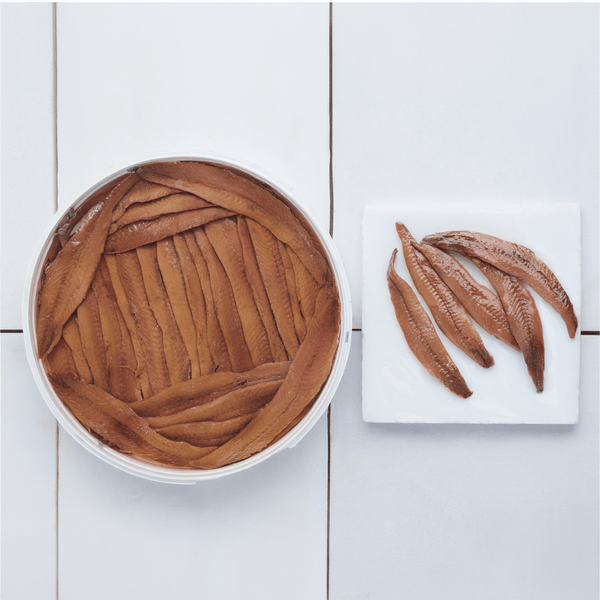
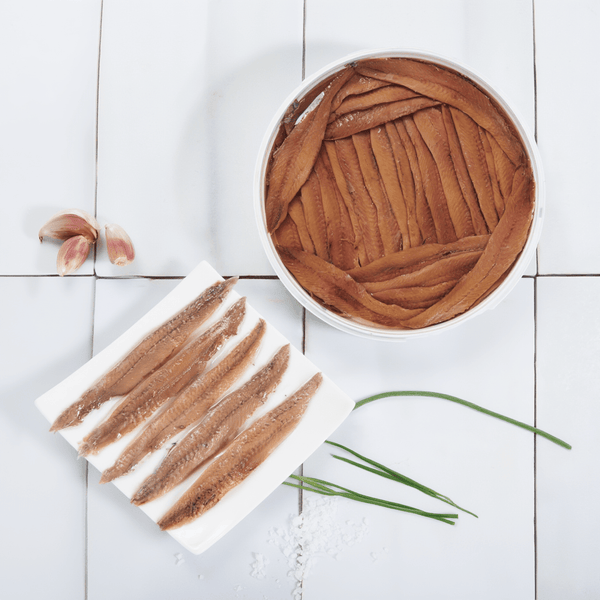
"00" Premium Cantabrian Anchovies — For memorable toasts
Fillets of 8-10 cm, minimum curing of 10-12 months, 100% manual filleting, extra virgin olive oil. The selection we have been offering for 35 years at the Mercat del Ninot in Barcelona. For a toast, you need the best anchovy available.
Combination 1: Butter and anchovy, the classic French
The oldest and most refined combination in the repertoire. Parisian bistros have been serving it for over a century, and the reason for its longevity is that it works with almost mathematical simplicity: the milky fat of the butter cools the anchovy's saltiness and creates a melt-in-your-mouth texture as if the two ingredients were one.
How to make it: toast a slice of sourdough baguette. Spread unsalted butter at room temperature (if it's cold, it breaks the bread and the distribution is uneven). Place a 00 anchovy fillet on top, centered. Finish with half a turn of freshly ground black pepper.
The detail that changes everything: the butter must be unsalted. Quality anchovies already have their own well-adjusted saltiness. Salted butter adds an unnecessary layer of sodium that unbalances the result. Breton butter with salt crystals is the only exception that works, but only if the crystals are large and intentionally placed on the fillet.
For a more elaborate version, prepare a homemade anchovy butter (see our article on anchovies in butter: the recipe for the most elegant appetizer) and spread it generously before placing the fillet on top. The result is an appetizer that looks like it came from a two-star restaurant.
Combination 2: Seasonal tomato and olive oil
In Catalonia, this is not a toast combination — it's almost an institution. Pa amb tomàquet (bread with tomato) is the base upon which the entire aperitif culture in Barcelona is built, and adding a quality Cantabrian anchovy transforms it into something that surpasses any of its separate components.
How to make it: toast the bread, rub it with a room-temperature garlic clove (only if diners tolerate it; if not, omit), rub half a ripe seasonal tomato against the bread's surface until it is impregnated. Add a drizzle of extra virgin olive oil. Place one or two 00 anchovy fillets.
The tomato is critical. In July and August, with real garden tomatoes, this combination will win any toast competition. In winter, with bland greenhouse tomatoes, the result is much lesser. A winter alternative: use preserved hanging tomatoes (penjar), which retain their flavor much better.
The acidity of the tomato perfectly balances the anchovy's fat. The oil acts as a flavor conductor between the two main ingredients. It is the most Mediterranean combination on the list and, well executed, one of the best.
Combination 3: Avocado, lemon, and chili pepper
The contemporary version of anchovy toast. Avocado provides vegetable fat and creamy texture; lemon adds acidity that cuts through the avocado's richness and enhances the anchovy's marine flavor; chili introduces a touch of heat that activates the taste buds and makes the anchovy's flavor perceived more intensely.
How to make it: toast a thick slice of rye or sourdough bread. Mash half a ripe avocado with a fork, add a few drops of lemon juice, salt, and pepper. Spread on the toast. Place a 00 anchovy fillet. Finish with three or four very thin slices of fresh chili or a few cayenne flakes.
An important detail: the avocado must be of creamy, string-free texture. Unripe avocado, even if mashed, has a grainy texture that doesn't work well. To identify ripeness, press gently — it should yield without sinking.
This combination works especially well with anchovies in olive oil in jar format because they can be served directly from the jar without handling the fillets too much.
Combination 4: Goat cheese and fig jam
The most classic sweet-and-sour counterpoint in gourmet tradition. The combination of fresh goat cheese, fig jam, and anchovy may seem daring until you try it — then you immediately understand why it works in Barcelona's best tapas bars.
How to make it: toast a slice of sourdough bread. Spread a generous layer of fresh goat cheese log (the creamy textured variety, not the cured). Add half a teaspoon of fig or quince jam. Place a 00 anchovy fillet over everything. Finish with a drizzle of olive oil.
The mechanism of this combination is as follows: goat cheese provides lactic acidity and creaminess; jam, sweetness and body; anchovy, the saltiness and umami that rounds out the whole and gives it depth. Without the anchovy, it's a good toast. With quality anchovy, it's a toast that people ask how it's made.
Variant: substitute goat cheese with aged brie and fig jam with acacia honey. The result is richer and less acidic, with a rounder, sweeter profile.
Combination 5: Poached egg with anchovies
This is the most substantial combination on the list and the most appropriate for brunch or a light dinner. The poached egg yolk acts as a natural sauce that, when broken, coats the toast and creates a first-class unctuous texture. The anchovy provides the salt and umami that the egg needs to reach its gastronomic potential.
How to make it: poach a fresh egg in water with a splash of white vinegar (the acid helps the white coagulate around the yolk). Toast a thick slice of sourdough bread. Spread a light base of butter or oil. Place the poached egg. Place two crossed anchovy fillets over the yolk. Finish with chopped chives and black pepper.
The order matters: the anchovy goes on top of the egg, not underneath. When the yolk is cut, the mixture of liquid yolk and anchovy oil creates a combination that is one of the best sauces you can get without any kitchen work.
We recommend using "0" Gourmet Selection anchovies in this combination. Their size is ideal for the proportion to the egg, and the quality-price ratio is excellent for such specific gastronomic use.
Combination 6: Roasted red pepper and anchovy
The quintessential Spanish combination outside the Catalan capital. Roasted pepper and anchovy is the classic duo of Aragonese tapas, Murcian salad, and Catalan esqueixada. On toast, it works with the same logic: the sweetness of the roasted pepper balances the anchovy's saltiness and creates a well-rounded and smooth whole.
How to make it: roast red peppers in the oven at 200°C for 40 minutes, turning halfway through cooking. Let them cool inside a sealed bag (the steam makes them easier to peel). Peel them, remove seeds, and cut them into strips. Toast the bread, spread a little olive oil, place the pepper strips, and on top, the anchovy fillets. Finish with a drizzle of the oil from the roasted peppers.
Quality canned roasted pepper (not the industrial jar type) works perfectly if you don't have time to roast them fresh. What doesn't work is standard canned pepper with a preservative taste — it nullifies the anchovy's delicacy.
To understand the Catalan dimension of this combination and its relationship with esqueixada, see our article on the complete guide to Cantabrian anchovies.
Combination 7: Melted Brie, walnut, and anchovy
An autumn and winter combination. Brie, when slightly melted, becomes almost liquid inside while maintaining its rind. The walnut provides a vegetal bitterness and a crunchy texture that contrasts with the cheese's creaminess. The anchovy, on top, adds the marine saltiness that the other two ingredients lack.
How to make it: place a portion of aged brie on toasted bread (the rind can be left on or removed, as preferred). Bake or gratinate for one minute until the cheese begins to melt but doesn't spill. Place two walnut halves on top and finish with an anchovy fillet. Optional: a drizzle of honey.
Timing is important: the anchovy fillet should go on top of the already melted brie, never during baking. Excessive heat destroys the fillet's texture, making it brittle and dry. The anchovy should feel fresh on the warm base — that temperature contrast is part of the appeal.
Combination 8: Black olive tapenade and Cantabrian anchovy
Olivada is a black olive paste (the Catalan version of Provençal tapenade) that shares the same universe of flavors with anchovy: salty, umami, fatty, marine. Placing them together may seem redundant until you try it and understand that they enhance each other instead of canceling each other out.
How to make it: blend quality black olives (Kalamata or ripe Arbequina) with olive oil, a little thyme, and pepper. No extra salt — the tapenade already has its own, and so does the anchovy. Spread the tapenade on the toast. Place an anchovy fillet. Finish with a few flakes of fresh thyme.
Quality tapenade is essential. An industrial canned olive paste has a flat and sometimes astringent taste that ruins the combination. If you don't have quality tapenade, substitute with a few whole Kalamata olives cut into slices — the effect is different but equally good.
This is the most intense flavor combination on the list. It is not for someone trying artisanal anchovies for the first time. It is for the enthusiast who already knows the product and wants to explore its limits.
Combination 9: Ricotta, sun-dried tomato, and anchovy
The Italian combination on the list. Ricotta, sun-dried tomato, and anchovy is the setup you'll find in any Neapolitan or Sicilian tavola calda, and it works because the three ingredients belong to the same family of Mediterranean flavors but provide completely different textures.
How to make it: spread a generous layer of fresh ricotta on the toast (the ricotta should be at room temperature so it's spreadable). Place half a drained sun-dried tomato in oil. Place an anchovy fillet. Finish with a few fresh basil leaves and a drizzle of the oil from the sun-dried tomato.
Industrial fresh ricotta from the supermarket works better than expected in this combination, because its neutral flavor and milky freshness contrast well with the intensity of the sun-dried tomato and anchovy. Sheep's milk ricotta, if you can find it, gives a more complex result.
Sun-dried tomatoes in oil are superior to sun-dried tomatoes without oil for this toast. The tomato oil is a valuable ingredient in itself — it has all the concentrated tomato flavor and serves as the final dressing for the toast.
Cantabrian Anchovies for catering and frequent use — Economical format
If you prepare toasts frequently or serve appetizers for groups, the format for cleaning or the 45-fillet menu gives you the best value for money without sacrificing origin or artisanal curing.
View 45-fillet menu anchovies — €26.95 | View entire collection
Combination 10: The Gilda toast (deconstructed)
The Gilda is the most iconic Basque pintxo: a skewer with anchovy, olive, and pickled chili pepper. Deconstructing it into a toast format means keeping the three components but transferring them from the toothpick to the bread's surface, where each ingredient can express itself more freely.
How to make it: toast the bread (in this case, artisanal white bread slice works well, being more neutral than sourdough). Spread a very thin layer of olive oil. Place an anchovy fillet. Add a large pitted green olive cut in halves. Place half a pickled chili pepper (the Basque guindilla, not jalapeño). Finish with a few drops of the chili pepper vinegar.
The secret of the Gilda — in pintxo and on toast — is the precise balance between the three flavors: the anchovy's saltiness, the olive's vegetal bitterness, and the pungent acidity of the pickled chili pepper. If one dominates over the other two, the whole fails. The size of the ingredients must be proportional.
For this toast, we use "00" Premium anchovies because the Gilda is a tribute to the original pintxo and deserves the best anchovy available. A mediocre anchovy in this combination is an insult to the tradition of the Basque bar.
To explore the culture of Gildas in depth, see our article on recipes with anchovies: easy and gourmet ideas.
Common mistakes when making anchovy toasts
After seeing how anchovy toasts are prepared for 35 years at the Mercat del Ninot in Barcelona, there are mistakes that recur with a consistency that deserves direct attention.
The most frequent mistake is overdoing it with accompanying ingredients. Anchovy toast is not the place to use seven different ingredients. Three well-chosen ingredients are superior to seven poorly combined ones. Each added ingredient must be there for a technical reason (to add acidity, creaminess, crunchiness, sweetness) — not for abundance.
The second mistake is serving anchovies cold from the fridge. Anchovies in oil should be at room temperature so that the fat is fluid and the flavor is fully perceived. If the anchovy is cold, the fat is partially solidified, and the fillet tastes much less. Taking them out of the fridge 20-30 minutes beforehand is enough.
The third mistake is using soft bread. An anchovy toast needs a crispy base because the anchovy and most accompaniments (butter, avocado, cheese, tomato) are soft or creamy. Without the textural contrast of crispy bread, the whole becomes pasty.
The fourth and most important mistake: using low-quality anchovies expecting the accompaniment to compensate. It doesn't work. An anchovy that tastes like industrial sodium and has a rubbery texture does not improve with premium butter or garden tomatoes. The quality of the anchovy has no substitute.
Frequently Asked Questions about anchovy toasts
How many anchovies do you put on a toast?
Usually one or two fillets per toast. With 00 caliber anchovies (8-10 cm), one fillet per toast is sufficient. With 0 caliber anchovies (6-8 cm) or smaller, two fillets look better visually and in flavor proportion. The key is that the anchovy is visible and the protagonist, not hidden under other ingredients.
Do you drain the anchovies before putting them on the toast?
It depends on the accompaniment. If the base is dry (toasted bread with only rubbed garlic), leaving the oil from the can on the fillet adds juiciness. If the base is already fatty (butter, avocado, ricotta), drain the fillet slightly to prevent the whole from being excessively oily. Never rinse with water — the flavor is lost.
Can toasts be made in advance?
Toasted bread loses its crispiness in less than 30 minutes if it has moist ingredients on top. For advance service, toast the bread and keep it separate from the ingredients. Assemble the toasts at the last minute, just before serving.
What drink best accompanies an anchovy toast?
Dry white vermouth or manzanilla are classic Spanish accompaniments. A txakoli or a young albariño also work well. For combinations with cheese and honey, a Catalan brut nature cava is the best option. See our guide to pairing anchovies with wine, beer, and vermouth.
Are anchovies in jars better than canned ones for toasts?
There is no intrinsic quality difference between jar and can in anchovies from the same cannery. The difference is practical: the jar allows you to see the product before buying and makes it easier to remove the fillets without breaking them. For a careful presentation on toast, the jar has an advantage because the fillet arrives on the plate more intact.
Can I make anchovy toasts with salt-cured anchovies not preserved in oil?
Salt-cured anchovies (whole, unfietted, in coarse salt) need preparation before use: cleaning them, removing the spine, and soaking them in cold water for 20-30 minutes to reduce saltiness. Afterwards, they can be used like any anchovy in oil. The flavor difference is notable — salt-cured anchovies have more intensity and texture. Consult our article on how to make homemade anchovies in oil.