Summary
At Bacalalo, a gourmet store at Barcelona's Mercat del Ninot, we receive customers and orders from all over Europe, and the question of how to say premium anchovies in English comes up more often than it seems: In this guide: Anchovy in English: Anchovy, Boquerón in English: Also Anchovy, But..., How to Say "Cantabrian Anchovies" in English.
Anchovies in English: Anchovies and Other Terms
At Bacalalo, a gourmet store at Barcelona's Mercat del Ninot, we receive customers and orders from all over Europe, and the question of how to say anchovies in English comes up more often than it seems: tourists who want to order in a restaurant, people looking for recipes on international websites, or professionals who work with importers and need to use the correct terminology. The main answer is simple, but the vocabulary surrounding the world of anchovies in English is richer than many imagine.
Anchovy in English: Anchovy
The direct translation of anchoa to English is anchovy. The plural is anchovies. The standard English pronunciation is /ˈæntʃəvi/ in American English and /ˈæntʃəvi/ or /ænˈtʃəʊvi/ in British English.
The term "anchovy" is the universally recognized English name for the fish Engraulis encrasicolus and its salt-cured preparations. It is used in all variants of English: British, American, Australian. There are no relevant geographical differences in the use of this word.
Examples of use in English:
- "Can you add anchovies to my pizza?"
- "This pasta has a sauce with anchovies and capers."
- "Anchovy fillets in olive oil"
- "Cantabrian anchovies" (Anchovies in English from Cantabria)
Boquerón in English: Also Anchovy, But...
Here comes the first nuance that confuses many: in English, there is no different term to distinguish "anchoa" (salt-cured, reddish color) from "boquerón" (marinated in vinegar, white color). Both are called "anchovy" or "white anchovy" for the boquerón in vinegar.
The distinctions that do exist in English:
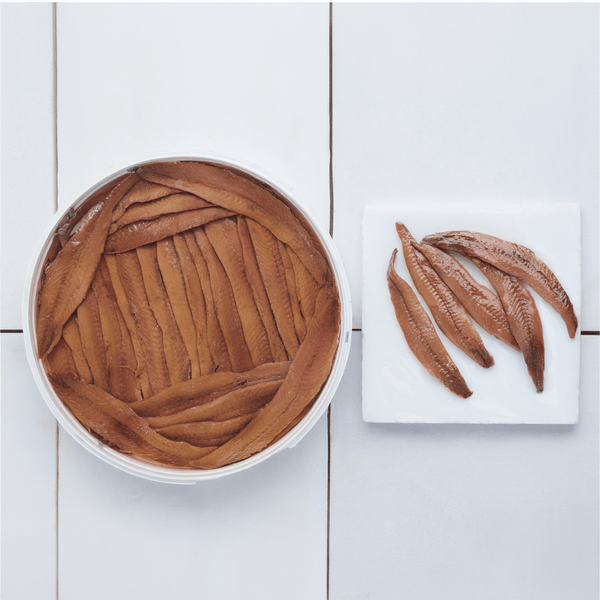
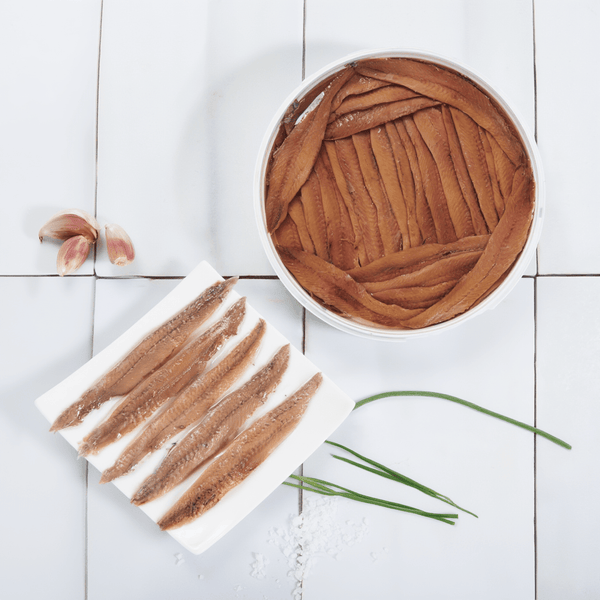
- "Salt-cured anchovies" or "oil-packed anchovies": anchovies cured in salt and preserved in oil, the equivalent of what we call "anchoa" in Spain.
- "White anchovies": the most common English term for boquerones en vinagre. In Anglo-Saxon restaurants and specialized stores, "white anchovies" refers exclusively to anchovies marinated in acetic acid.
- "Fresh anchovies": the fresh fish, uncured or unmarinated. It is used for cooking as well as for making both anchovies and boquerones.
If you read a recipe in English that says "anchovies", it almost always refers to salt-cured anchovies preserved in oil. If it says "white anchovies", it means boquerones en vinagre.
How to Say "Cantabrian Anchovies" in English
The geographical denominations of anchovies in English follow the same pattern as in Spanish:
- Cantabrian anchovies: anchovies from Cantabria. This denomination is widely used in fine dining restaurant menus around the world, where origin is a mark of quality.
- Santoña anchovies: anchovies from Santoña. Less common in English than "Cantabrian", but used by specialized importers.
- Spanish anchovies: Spanish anchovies, a generic term.
- Sicilian anchovies: Sicilian anchovies. Italy is also a major producer.
- Peruvian anchovies: Peruvian anchovies (Engraulis ringens), generally of lower quality, used mainly in industrial production.
Bacalalo Products

Cantabrian Anchovies in Olive Oil - 50g...
3,95 €

"Cantabrian Deluxe" Assortment
67,00 €

Artisanal Cantabrian Anchovy Gilda Handmade...
9,90 €

Northern White Tuna Belly in Olive Oil...
16,95 €
Refrigerated shipping 24-48h throughout the Peninsula
Anchovy vs. Sardine vs. Herring in English: The Differences
Another common confusion when looking for the translation of anchovies in English is the difference between anchovy, sardine, and herring. These are three distinct fish, although they look similar externally and all three are preserved in cans:
- Anchovy (Engraulis encrasicolus): The smallest of the three. Slender body, protruding jaw. Intense, salty flavor when cured. Widely used in sauces (Worcestershire, Caesar), pizzas, and pasta. Maximum 20 cm.
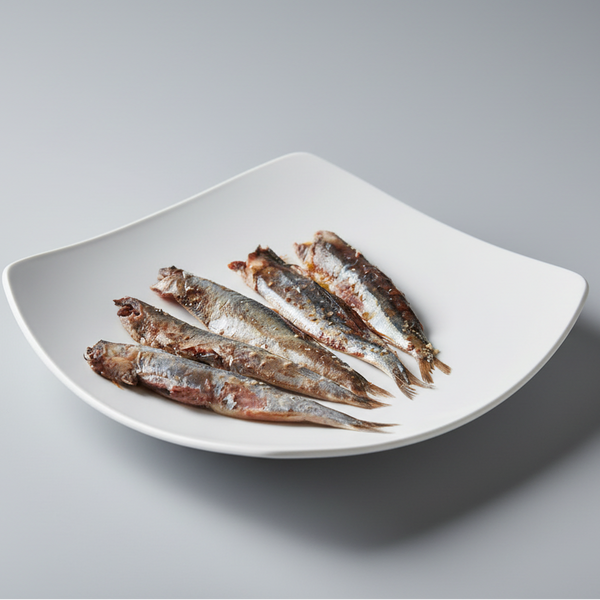
- Sardine (Sardina pilchardus): Larger than the anchovy (up to 25 cm). More robust body with visible scales. Milder flavor. Preserved in oil or tomato. In Spanish, it is also called sardina or parrocha when it is small.
- Herring (Clupea harengus): Arenque in Spanish. Larger (up to 40 cm) and with higher fat content. Very popular in Northern Europe (smoked, pickled). In Spain, it is less common than sardine or anchovy.
A mnemonic trick to avoid confusing them: anchovy is the smallest and most intense, sardine is the medium, herring is the largest and fattiest of the three. In English, if you order "anchovies" in any restaurant in the world, you will receive cured and salted fillets, never sardines.
Anchovy Vocabulary in English for Recipes
If you follow English recipes that include anchovies, this glossary will help you:
- Anchovy fillets: anchovy fillets (the most common form in recipes)
- Anchovy paste: anchovy paste (a product preserved in a tube, widely used in Anglo-Saxon cuisine)
- Anchovy oil: the oil from the anchovy can. Many recipes indicate "reserve the anchovy oil"
- Salt-packed anchovies: anchovies packed in salt, without oil. Require washing and desalting before use.
- Tinned anchovies / canned anchovies: anchovies in a can (same product, tin = can in British English, can = can in American English)
- Boquerones: the Spanish term is used as is in English in many restaurants and stores. "Boquerones en vinagre" is not translated: the Spanish word is used directly.
- Anchoveta: the Peruvian anchovy (Engraulis ringens), used in industrial production. Not to be confused with the European anchovy.
How to Order Anchovies in English in a Restaurant
If you are in a restaurant in an English-speaking country and want to be sure of what you are ordering:
- "Do you have anchovies?"
- "Can I add anchovies to this dish?"
- "Are these salt-cured anchovies or white anchovies?"
- "I'd like the Caesar salad without anchovies, please."
- "What type of anchovies do you use?"
In many Mediterranean restaurants in the UK, the United States or Australia, staff are familiar with the term "Cantabrian anchovies" as a synonym for high-quality anchovies. Mentioning it is a sign that the customer knows what they are ordering.
Anchovies in International Cuisine in English
Anchovies in English appear in international cuisine recipes very frequently, especially in:
- Caesar salad: The original recipe by chef Cesare Cardini (Tijuana, 1924) includes anchovies. Many "modern" versions omit them, but the authentic recipe includes "anchovy fillets".
- Pissaladière: The French Provencal tart with caramelized onions and anchovies. In English recipes, it always appears as "anchovy tart" or the French name is used directly.
- Bagna càuda piamontesa: Hot Italian sauce with garlic and anchovies. It is written the same in English, with an explanatory note of "warm anchovy dip".
- Worcestershire sauce: Worcestershire sauce contains anchovies in its original formulation (Lea & Perrins). "Anchovies" always appear in the ingredients list.
- Pasta puttanesca: Italian pasta with tomato, olives, capers, and anchovies. In English, the recipe always specifies "tinned anchovies" or "oil-packed anchovy fillets".
Bacalalo Products
Cantabrian Anchovies in Olive Oil - 50g...
3,95 €
"Cantabrian Deluxe" Assortment
67,00 €
Artisanal Cantabrian Anchovy Gilda Handmade...
9,90 €
Northern White Tuna Belly in Olive Oil...
16,95 €
Refrigerated shipping 24-48h throughout the Peninsula
🛒 Products mentioned in this article
⭐ 4.9/5 · 24-48h refrigerated shipping · Since 1990 at Mercat del Ninot
Frequently Asked Questions about Anchovies in English
How do you say "anchoa en aceite de oliva" in English?
"Anchovy fillets in olive oil" or "oil-packed anchovies". If the oil is extra virgin, it is specified "in extra virgin olive oil". In the ingredient lists of packaged products, "anchovies in olive oil" is common as the shorter form.
Do "anchovies" and "boquerones" mean the same thing in English?
The term "anchovies" can refer to both, depending on the context. To distinguish them in English, "white anchovies" or "marinated anchovies" are used for boquerones en vinagre, and "salt-cured anchovies", "oil-packed anchovies" or simply "anchovies" for cured anchovies. In many Mediterranean restaurants in the English-speaking world, "boquerones" is used directly for the product in vinegar, without translation.
How do you pronounce "anchovies" in English?
In American English: /ˈæntʃ.oʊ.viz/, with the stress on the first syllable (AN-cho-viz). In British English, /ˈæntʃ.ə.viz/ or /ænˈtʃoʊ.viz/ can be heard with variation depending on the region. The safest way to be understood in any English-speaking context is the American pronunciation: AN-cho-viz.
Is "sardine" in English the same as "sardina" in Spanish?
Yes, but with nuances: in English, "sardine" can refer to the European sardine (Sardina pilchardus) or the Pacific species (Sardinops sagax). In European labeling, "sardine" in English is equivalent to "sardina" in Spanish. What is called "bocarte" or "sardina pequeña" in Spain can be called "pilchard" in British English.
Are anchovies popular in Anglo-Saxon cuisine?
More than many people think. Anchovies are a fundamental ingredient in Italian and Southern French cuisine, which have a great influence on contemporary Anglo-Saxon gastronomy. In the UK, anchovy paste (Gentleman's Relish) has more than 200 years of tradition. In the United States, anchovies are a polarizing but present ingredient in many classic recipes. The rise of Mediterranean cuisine in the Anglo-Saxon world has increased their popularity in the last 20 years.
Is there a difference between "anchovy" in American English and British English?
The term is the same in both variants. The most notable difference is the pronunciation: American English tends to pronounce the "o" in "anchor" more openly (AN-cho-vee), while British English may pronounce it more closed. Regarding the product, Anglo-Saxons prefer anchovies in sunflower oil rather than olive oil, unlike the Spanish and Mediterranean market which demands extra virgin olive oil.
Can the translation "anchoa" be found in any English gastronomic dictionary?
In specialized bilingual gastronomic dictionaries, "anchoa" always appears as "anchovy" without variants. Spanish-English cooking dictionaries such as the Oxford Spanish Dictionary of Cookery or glossaries of Mediterranean cookbooks in English confirm this direct equivalence. There is no commonly used alternative English term to specifically refer to cured Spanish anchovy.