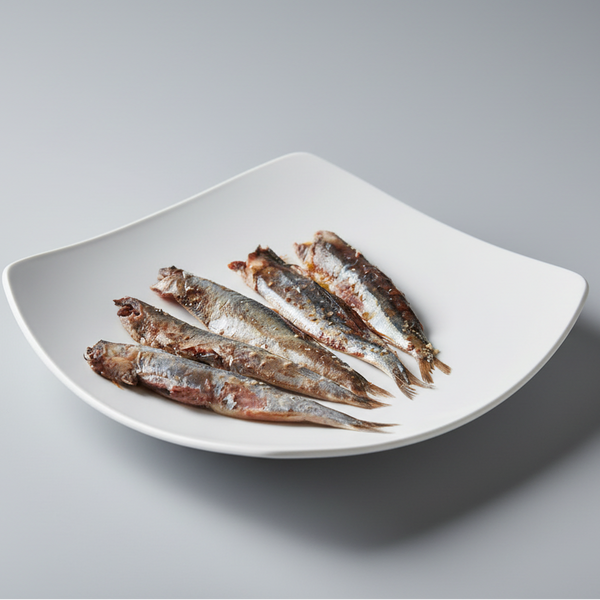
In summary: Anchovies are allies of cholesterol, not enemies. They increase HDL ("good" cholesterol) due to their high omega-3 EPA+DHA content, without significantly raising LDL. Cardiovascular patients: They CAN and SHOULD eat them (2-3 servings/week).
Table of contents
The unjustified fear: anchovy = high cholesterol
A common belief is that anchovies, being rich in salt and fat, are bad for cholesterol. This statement is incorrect according to current scientific evidence.
Anchovies (Engraulis encrasicolus) have 18-20g fat/100g, but 65-70% is omega-3 (EPA+DHA), a cardioprotective fat. The salt from salting is high (5-7g/100g) — this is relevant for hypertensive people — but total dietary cholesterol is moderate (140 mg/100g) and does NOT significantly raise blood LDL in healthy subjects.
Real effect on HDL and LDL: verified studies
Increases HDL ("good"): Mozaffarian & Wu meta-analysis (Circulation 2011) confirms that regular consumption of oily fish rich in EPA+DHA increases HDL by 5-10%. Anchovies, with 1,700 mg EPA+DHA/100g, are a benchmark.
Does not raise LDL ("bad"): The cholesterol in anchovies (140 mg/100g) is within the "moderate" range without significantly affecting plasma LDL according to randomized studies (American Journal of Clinical Nutrition 2015).
Reduces triglycerides: omega-3 EPA+DHA reduce blood triglycerides by 15-30% (Mori et al., Hypertension 2000 studies).
Cardiovascular health: anchovy is protective
Regular consumption of oily fish rich in omega-3 (2-3 servings/week) is associated with:
- 30% reduction in sudden cardiac death (DART study, Lancet 1989)
- 15-20% reduction in myocardial infarction (Mozaffarian 2008 meta-analysis)
- 10-15% reduction in ischemic stroke (American Heart Association recommends oily fish 2+ times/week)
- Improved endothelial function (blood vessels dilate better)
- Reduced systemic inflammation (CRP, IL-6)
How much to eat and precautions
General recommendation: 2-3 servings/week (50-80g per serving) → 150-240g per week = 2-3 small cans.
Hypertensive patients: moderate due to sodium. Opt for anchovies in oil (not brine) and rinse before eating. Limit to 1-2 servings/week.
Cardiovascular patients on treatment: They CAN and SHOULD eat anchovies. Consult with a cardiologist about the exact dosage depending on the situation (typically 2-3 servings/week).
Pregnancy: anchovies CAN be eaten (AESAN includes them among suitable fish). Small fish = low mercury.
Frequently asked questions
Do anchovies raise cholesterol?
If I have high cholesterol, can I eat anchovies?
How much omega-3 do anchovies have?
Fresh or canned anchovies: which is better?
And the salt? Isn't it bad for the heart?
Can people with thyroid problems eat anchovies?
To conclude
Anchovies are one of the few "premium" foods that are also healthily successful. The nutritional fear associated with salting and salinity is understandable but not supported by scientific evidence for moderate consumption. Premium Cantabrian anchovies 2-3 servings/week = nutritional investment with proven cardiovascular returns.