

In summary: B2B HORECA Guide: buying premium fish via wholesale mercabarna (volume), specialized distributor (medium-high quality) or direct fish market (low price but logistics). Pros, cons, minimum prices, and how to choose according to restaurant type.
Table of contents
Wholesalers like Mercabarna: for volume
Who they are: Mercabarna (Barcelona), Mercamadrid, Mercabilbao. Large wholesale distribution platforms for fish and seafood.
How it works: open to professionals with a Tax ID (CIF) + relevant IAE registration. Typical minimum purchase: 10-25 kg per product. Prices set by daily auction or wholesale list.
Advantages: low prices, great variety, available every day, possibility to choose specific lots.
Disadvantages: requires physical attendance (typically 3-7 am), own refrigerated logistics, highly variable quality depending on the stand, no detailed supplier traceability.
For what type of restaurant: high-volume restaurants (>10 tables/shift), chef/sommelier capable of evaluating product, with transport and storage capacity.
Specialized distributors: medium-high quality
Who they are: specialized companies that buy from wholesalers/fish markets and resell to restaurants with added value (selection, traceability, delivery).
How it works: commercial contract with the restaurant, order by email/WhatsApp/app, delivery 1-3 times per week, monthly invoice. Minimum purchase: typically €100-€300 per order.
Advantages: stable quality, documented traceability, refrigerated delivery to the kitchen, possibility of small orders, specialized advice.
Disadvantages: price 30-50% higher than wholesale, dependence on the supplier, less product variety.
For what type: restaurants with 5-15 tables/shift offering tasting menus or premium à la carte, without the time/staff for Mercabarna.
Direct fish market: the heart of fresh fish
Who they are: port fish markets (Cedeira, Vigo, Marín, Santoña, Bermeo, Barbate). Where fish is auctioned between 4-7 am.
How it works: registration as a buyer (requirements vary), participation in in-person auctions or through intermediary bidders, purchase of the entire lot.
Advantages: lowest possible price, absolute freshness (4-6h from catch), direct knowledge of the boat and fishing technique, exclusivity of premium lots.
Disadvantages: complex logistics from fish market to kitchen, requires deep product knowledge, not suitable for small volumes, geographical distance.
For what type: Michelin/premium restaurants with sourcing as a differentiator, developed logistical capacity.
Typical price comparison (kg of cooked Galician octopus)
| Channel | Price €/kg | Min. order | Best for |
|---|---|---|---|
| Mercabarna direct | 14-18 | 10 kg | High-volume restaurant |
| Specialized distributor | 22-28 | 2-3 kg | Medium-sized restaurant |
| Direct fish market Cedeira | 10-13 | 20+ kg | Premium restaurant with sourcing |
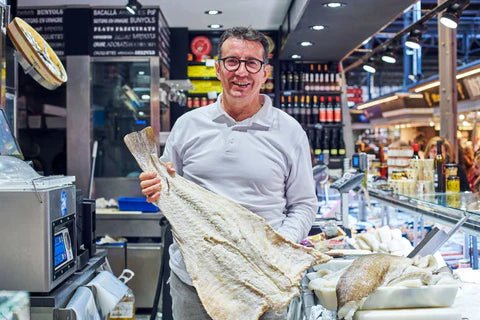
| Retail fishmonger (Bacalalo) | 28-35 | 1 kg | Small HORECA + individual |
Frequently asked questions
Can a small restaurant buy at Mercabarna?
How to know if a distributor is good?
What about vacuum-packed cooking and distributors?
Large purchases for banquets: fish market or distributor?
Does Bacalalo sell to HORECA?
How much fish to calculate per diner?
To conclude
The premium B2B supply chain is complex but profitable when mastered. The rule: your volume and level determine the optimal channel. For a mid-sized Spanish restaurant that wants quality without logistical complications, a specialized distributor with traceable products is the winning option. Bacalalo distributes to HORECA with orders from €300, complete traceability, and coordinated refrigerated delivery.