Cantabrian Anchovies: 15 Tips and Tricks Only Experts Know
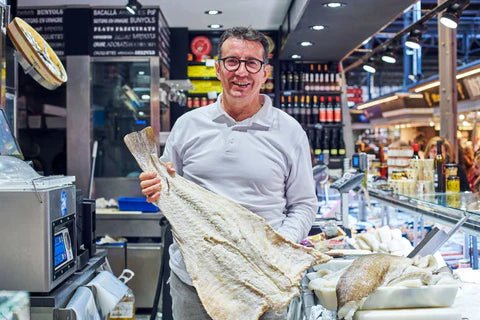
Over 35 years in Barcelona's Mercat del Ninot selling top-quality seafood teaches you things that don't appear in any manual. Cantabrian anchovies are one of those products that, when treated well, offer a first-class gastronomic experience. Treated poorly, they are a waste of money and product.
We've seen it all: people taking the tin straight from the fridge and wondering why they taste metallic, people breaking every fillet when trying to remove them, preserves spoiling within two days of opening. The difference between a memorable tasting and a disappointment is not the brand or the price: it's the knowledge.
These 15 tricks have been distilled from decades of experience, conversations with Cantabrian producers, and observing chefs and gourmets working with the product. These aren't magazine cooking tricks. These are the ones that work.
Trick 1: Take Them Out of the Fridge 15 Minutes Before Serving
Updated March 2026. Every day at Mercat del Ninot, we see what works and what doesn't. This is our real experience.
This is the most common mistake and the one that most ruins a good anchovy. Anchovies cured in oil are designed to be eaten at room temperature, not cold. When cold, the oil partially solidifies, the texture becomes pasty, and the aromatic nuances of the cure are completely blocked.
The correct protocol: take the tin or preserve out of the fridge 10 to 20 minutes before serving. In summer, 10 minutes is enough. In winter, allow 20. The anchovy should be at room temperature or slightly cool, never cold.
The difference in flavor is so noticeable that top chefs consider it a mandatory step in their mise en place. The umami, saltiness, and nuances of virgin oil are fully expressed only when the product is at the right temperature.
Trick 2: How to Open the Tin Without Breaking the Fillets
Cantabrian anchovy fillets are delicate. In premium tins, the fillets are between 8 and 12 centimeters long and only a few millimeters thick. Breaking them when extracting them is easy if you don't know the technique.
The correct method has three steps. First, use a small fork or a wooden skewer, never a large dinner fork or knife. Second, insert the utensil through the narrowest end of the fillet, which is the tail, not the center. Third, gently lift along the length of the fillet, without prying sideways.
If the fillets are stuck together, do not separate them by force. Pour a splash of the tin's own oil between them to lubricate and wait 30 seconds. They will separate on their own with minimal manipulation.
For an impeccable presentation on toast or a plate, place the fillets on kitchen paper for a few seconds to remove excess oil before plating.
Trick 3: Storing the Tin Once Opened
One of the biggest mistakes is leaving the tin open with the fillets exposed. Contact with air oxidizes the oil and quickly deteriorates the product. The golden rule: never leave an anchovy exposed to air longer than necessary.
If you are not going to consume all the fillets in the tin at once, transfer the remaining ones to an airtight glass container along with all the oil from the tin. The oil acts as an oxygen barrier and is essential for preservation. Cover the fillets completely with oil, seal tightly, and store in the fridge.
Maximum duration once opened and properly stored: 5 days in the fridge. Beyond that point, the texture and flavor begin to degrade, even if there are no visible signs of alteration.
Trick 4: The Best Oil for Preservation and Serving
The oil that comes in the tin is good—quality brands use extra virgin olive oil—but it's not always the best oil for serving. A gourmet trick: drain the oil from the tin, transfer the fillets to a plate, and add a drizzle of high-quality extra virgin olive oil just before serving.
The reason is that the oil in the tin has absorbed the intense flavor of the curing and can be excessively salty. A fresh extra virgin olive oil, with a fruity flavor and low bitterness, enhances the anchovy without overpowering it.
For the type of oil: Arbequina or Hojiblanca for milder anchovy flavors; Picual or Cornicabra if you want intensity and want the oil to play a prominent role. Never sunflower oil or seed oils.
If you are preserving anchovies that were already in good quality extra virgin olive oil — like our Cantabrian anchovy fillets — you can use that oil to dress salads or dip bread. It has an extraordinary flavor.
Trick 5: Anchovies in Butter — The French Combination
Little known in Spain, this preparation is classic in France and in the best modern tapas restaurants. It involves mixing finely chopped anchovies with unsalted butter at room temperature until a homogeneous paste is obtained.
Ratio: 4-5 anchovy fillets per 100 grams of butter. Chop the anchovies almost to a paste with a knife and mix vigorously with the butter until no visible pieces remain. The result is an anchovy butter that can be stored in the fridge for up to 2 weeks.
Uses: on toast, to finish pasta, to add umami to grilled meats, to spread on savory croissants. The butter softens the intensity of the anchovy and makes the combination accessible even to those who are not fond of the direct taste of anchovy.
Trick 6: Wine Pairing — White vs. Red
Anchovy has salt, umami, fat, and a characteristic acidity from the curing process. These elements dictate the pairing.
White wine: the classic and most versatile option. Txakoli (the traditional Basque combination, high acidity, light effervescence), Albariño from Rías Baixas (acidity that cuts through fat), Manzanilla or Fino (the Andalusian combination, the saltiness of Fino dialogues with the salt of the anchovy), Chablis or Muscadet if you want to explore French territories.
Cava Brut Nature: the bubbles cleanse the palate between bites. The tannins of young red wines clash with the umami of the anchovy and create an unpleasant metallic aftertaste.
Red wine: if you insist, look for reds with very low tannins and high acidity — Beaujolais villages, light Pinot Noir. Powerful Ribera del Duero and Cabernet Sauvignon are declared enemies of anchovies.
Professional trick: always serve anchovies before the wine has completely warmed up. The ideal point is a combination of white wine at 8-10 degrees with anchovies at room temperature.
Trick 7: The Perfect Anchovy Toast
A well-executed anchovy toast is one of the best tapas in Spanish gastronomy. But there are critical decisions.
The bread: the slice should not be thick. Between 8 and 12 millimeters. Dense crumb sourdough bread is better than porous baguette, which absorbs too much oil. Toast dry, without oil, so that the crust is crispy but the inside retains some elasticity.
The base: rub the toast with a raw garlic clove (without saturating) and then with a ripe tomato cut in half. This base is optional but recommended — it absorbs some of the anchovy's saltiness and provides acidity that balances the whole.
The order: first the tomato base if you use it, then two or three anchovy fillets in parallel, never crossed or overlapping. Finish with a drizzle of extra virgin olive oil and, if you like, half a Gordal olive or a caper for additional acidity.
What not to do: add extra salt, use butter as a base (unless it's the anchovy butter from trick 5), or add ingredients that compete with the anchovy such as avocado or intense cheeses.
Trick 8: How Many Anchovies Per Person
A very frequent question when serving anchovies, especially as appetizers or tapas. The answer depends on the context.
As an appetizer or tapa (one of several items): 3-4 fillets per person is sufficient. As a main course on a platter of anchovies and accompaniments: 8-10 fillets. As an ingredient in a recipe (pasta, pizza, stew): 2-3 fillets per person are enough to give the characteristic flavor without overpowering the dish.
In medium-to-high quality tins, there are between 8 and 14 fillets per 50-gram tin. "00" or extra-large caliber tins may only have 6-8 fillets because each one is larger and thicker. Keep this in mind when buying to calculate how many tins you need.
For an appetizer for 6 people with anchovies as the star, calculate 2 50-gram tins. For 10 people, 3-4 tins.
Trick 9: Choosing the Right Caliber for Each Use
The caliber of an anchovy is measured by the number of fillets per kilogram. The lower the number, the larger the fillet size. This information appears on the label of most quality preserves.
Caliber 00 or "Selección": the largest and meatiest fillets. Ideal for serving alone on toast or a plate, where size and visual presence are important. They are the most expensive and best express the quality of the product.
Caliber 0 or "Extra": large fillets but slightly smaller than 00. The quality-price ratio is excellent. Good both for toast and for incorporating into recipes where the whole fillet is visible.
Calibers 1 and 2: medium and small fillets. Perfect for cooking, for incorporating into sauces, sofritos, or as a flavor enhancer in stews. Their use on toast is less elegant but perfectly valid.
Our recommendation: have a tin of caliber 00 or 0 at home to serve as a tapa or appetizer, and a tin of caliber 1 or 2 for cooking. Two different tools for two different functions.
Trick 10: Production Date vs. Expiration Date
This is a detail most consumers ignore and experts actively seek out. The expiration date of an anchovy preserve can be 4-5 years from production. But the anchovy is not the same in the first year as in the fourth.
High-quality Cantabrian anchovies improve with time, like wine. The best preserves are between 18 months and 3 years from production when consumed. They are more tender, with more integrated flavors and less aggressive saltiness.
Look for the production date or lot number on the label, which allows tracing the year of production. Artisanal brands usually proudly indicate it. An anchovy from the year prior to purchase is generally better than one made that same year.
Attention: this applies to properly stored preserves, without temperature changes or exposure to direct light. A poorly stored preserve deteriorates regardless of time.
Trick 11: Fillet Color as a Quality Indicator
The color of a well-prepared anchovy is one of the most reliable visual indicators of quality. Knowing how to read the color allows you to evaluate the product before tasting it.
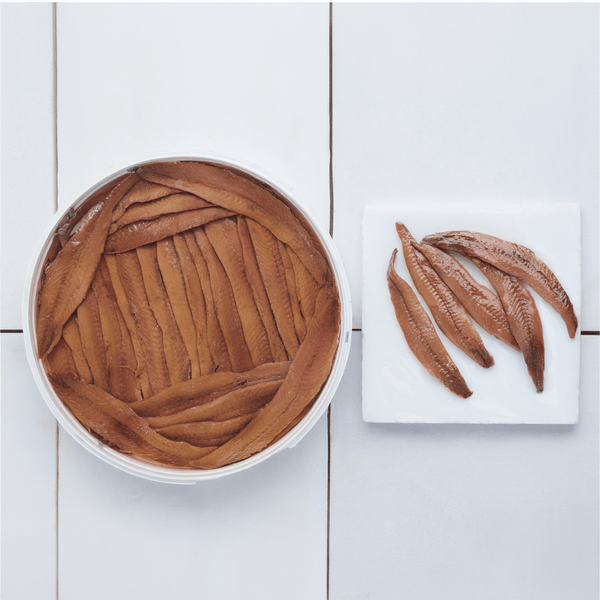
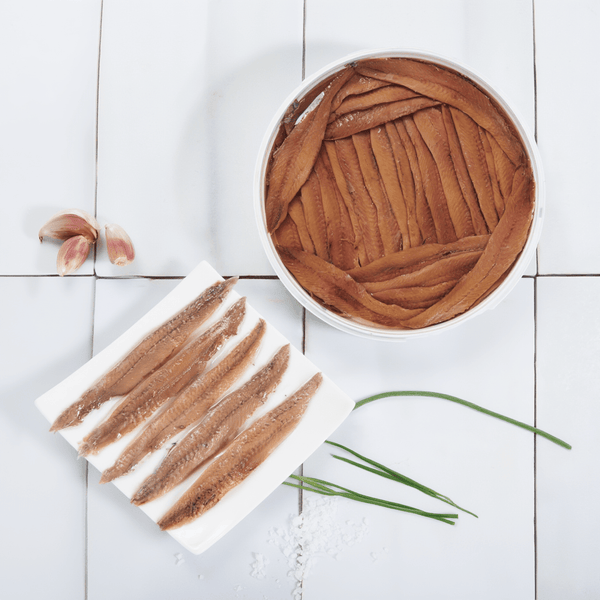
Ideal color: golden brown or intense amber, uniform throughout the fillet. This color indicates a complete and correct curing, with the protein well transformed.
Warning signs: grayish or pale color in the center of the fillet indicates incomplete curing — the anchovy has not had enough time in salt. Very dark, almost black color throughout the fillet may indicate over-ripening or poor raw material.
Streaks of different color: normal. Anchovies have fine side bones that sometimes remain and create lines of different shades. This is not a defect.
Visual texture also matters: a fillet that has a sheen in the oil and does not appear dry or matted indicates a well-cared-for preserve. An opaque and dull fillet may be dry.
Trick 12: Which Bread Works Best with Anchovies
Not all breads are created equal for anchovies. This is the hierarchy we have established in 35 years of experience at Mercat del Ninot:
The best: dense crumb country bread, crispy crust, without too many large air pockets. Slow-fermented sourdough loaves are ideal because their gentle acidity perfectly complements the anchovy.
Very good: Catalan "pan de cristal" (glass bread) or bread with oil. The thin, crispy crust and light crumb make a perfect base for toast.
Good: good quality baguette, thinly sliced. The problem is that the porous crumb absorbs too much oil and can feel heavy.
Avoid: industrial sliced bread (too soft and sweet), cereal bread with large seeds that compete with the anchovy's flavor, bread with rosemary or other herbs that mask the nuances.
The degree of toasting matters as much as the type of bread: golden, not black. Excessive toasting adds bitterness that clashes with the anchovy's umami.
Trick 13: Warm Anchovies — The Chefs' Secret
Anchovies are not only served cold or at room temperature. There's a technique used in haute cuisine that involves gently warming them to completely change the experience.
The method: place the fillets on a heat-resistant plate. Heat the plate for 30 seconds in the microwave at minimum power or briefly rest the plate on a hot pan for 10 seconds. The anchovy should be between 35 and 45 degrees Celsius, no more. It should not cook, only warm up.
The result is an anchovy with a slightly softer texture, more fluid oil, and much more expressive aromas. The umami is noticeably intensified. It's a different experience from cold anchovies and can positively surprise even those who think they know the product well.
This technique works especially well with large caliber anchovies, such as 00 Selection anchovies, where the flesh is thick enough to appreciate the change in texture.
Trick 14: Making Anchovy Paste
Anchovy paste or cream is one of the most versatile ingredients you can have in your fridge. It takes 5 minutes to prepare and lasts up to 10 days if properly stored.
Ingredients for a basic paste: 10-12 anchovy fillets, 50 ml of extra virgin olive oil, 1 small garlic clove (optional), 1 teaspoon of lemon juice. Blend everything with a hand blender or food processor until you get a fine paste. If it's too thick, add oil in a stream while blending.
Variations: French version with 50g of unsalted butter instead of extra oil; version with capers (add 1 tablespoon) for more acidity; spicy version with a pinch of cayenne.
Uses: spread on toast, as a pizza base instead of tomato, to add depth to meat stews, mixed with pasta with a little cooking water, as a sauce for grilled vegetables. Store in an airtight glass jar covered with a thin layer of olive oil.
Trick 15: Anchovies for Cooking vs. Anchovies for Eating Straight
There are two categories of anchovies, and confusing them is both an economic and gastronomic mistake. Anchovies for eating straight — on toast, on a plate, as an appetizer — must be of the highest quality: caliber 00 or 0, a recognized brand, extra virgin olive oil. Here, the product is the star, and every extra euro spent on quality is noticeable.
Anchovies for cooking — for sofritos, for pasta alla puttanesca, for pizzas, to add depth to stews — can be of medium quality. The heat of cooking destroys some of the fine nuances of the product, so paying a premium price for anchovies that will melt into a sofrito is unnecessary.
For cooking, anchovies in salt (in a barrel or jar, not in oil) are often superior. They keep longer, are desalted according to the necessary amount, and the control of the dish's saltiness is more precise. Rinse well under cold water, soak for 10 minutes, pat dry with paper, and use like tinned ones.
In our collection of Cantabrian anchovies, you will find options for both uses, with information on caliber and format for each product.
Knowledge Makes the Difference
These 15 tricks summarize decades of experience with one of the best seafood products produced in Spain. Cantabrian anchovies are an extraordinary product when you understand how to treat them. The difference between a mediocre and a memorable experience isn't always in the price of the tin — often it's in knowing to take them out of the fridge 15 minutes beforehand.
At Bacalalo, since 1990, we have been selecting preserves and seafood products with real discernment at Barcelona's Mercat del Ninot. We don't sell what's trendy. We sell what works and what we have verified to be good.
Taste anchovies with discerning criteria
Explore our selection of Cantabrian anchovies: 00 Selection size for toast and direct tasting, fillets in olive oil for daily use. Artisan production, guaranteed traceability.
🛒 Products mentioned in this article
⭐ 4.9/5 · 24-48h chilled delivery · Since 1990 in Mercat del Ninot
Frequently Asked Questions about Cantabrian Anchovies
How long can canned anchovies be stored?
Anchovy preserves in oil have a shelf life of 3-5 years if stored correctly (cool, dark place, no temperature changes). However, optimal quality is achieved between 12 and 36 months from production.
Is it normal for the oil in the can to be solidified?
Yes. Olive oil partially solidifies at temperatures below 12-15 degrees. This is not a defect nor does it indicate that the product is in bad condition. Take the can out of the fridge and wait for the oil to return to its liquid state before opening.
Is there a difference between Cantabrian anchovies and anchovies from other origins?
Yes, there are notable differences. Cantabrian anchovies (Engraulis encrasicolus) caught in the Cantabrian Sea between April and June have a higher fat concentration, giving them more flavor and a softer texture. The artisanal production process in the region — salt curing for 6-18 months, manual cleaning — is different from the industrial process in other regions.
Why are some anchovies saltier than others?
Salinity depends on the curing time and whether the producer washes the fillets before canning. Long-cured anchovies (more than 12 months) tend to be more intense. If you find an anchovy too salty to eat directly, place it in cold water for 5 minutes — it will lose some salt without losing flavor.
Can anchovies be used in hot recipes?
Yes, and it is one of the best cooking techniques. When heated, anchovies "melt" into the cooking fat and disappear visually but leave all their umami in the dish. This technique is the basis of Italian puttanesca sauce, Piedmontese bagna cauda, and many Mediterranean stews.
How many calories do anchovies have?
Anchovies in oil have approximately 210 kcal per 100 grams. In a typical appetizer serving (30 grams, about 6-8 fillets), we are talking about 60-65 kcal. They are also rich in omega-3, high-quality protein, calcium, and vitamin B12.