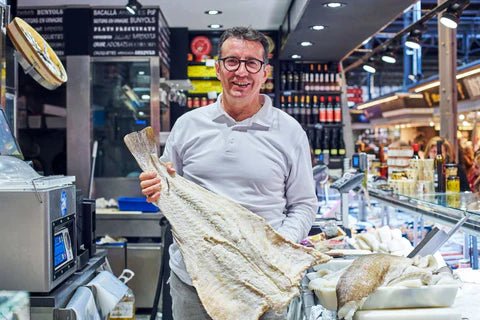


Summary: Smoked fish is one of the oldest ways to preserve and transform fish. What started as a necessity for preservation has become one of the most valued gastronomic techniques in the world. At Mercat del Ninot in Barcelona, we have been selecting the best since 1990...
Content
- What is smoked fish and why is it so highly valued?
- Cold smoking vs. hot smoking: key differences
- Types of smoked fish: characteristics and uses
- How to choose quality smoked fish
- Storing smoked fish
- Culinary uses: beyond toast
- Frequently asked questions about smoked fish
- Frequently asked questions
- Conclusion
What is smoked fish and why is it so highly valued?
Smoked fish is one of the oldest ways to preserve and transform fish. What started as a necessity for preservation has become one of the most valued gastronomic techniques in the world. At the Mercat del Ninot in Barcelona, we have been selecting the best smoked products from Europe since 1990, and we know that a good smoked product has a perfect balance between the natural flavor of the fish and the notes contributed by the smoke.
Smoking not only preserves: it transforms. It changes the texture, intensifies the flavor, and creates nuances ranging from buttery to deeply earthy. Each type of fish reacts differently to smoke, and each smoking technique produces distinct results.
In this guide, we cover everything you need to know: the two main smoking methods, the most popular types of smoked fish, how to use them in cooking, and how to store them correctly.
Cold smoking vs. hot smoking: key differences
There are two fundamental smoking methods, and the difference between them is much more than just temperature.
Cold smoking
Fish is exposed to smoke at a temperature below 30 °C for hours or even days. It is not cooked: the fish maintains a raw, silky, and flexible texture. Before smoking, it is cured with salt (and sometimes sugar) to draw out moisture and prepare the flesh to absorb the smoke.
- Texture: soft, silky, almost raw
- Examples: sliced smoked salmon, smoked cod
- Typical use: eaten uncooked, in thin slices, in salads, on toast
- Storage: longer thanks to prior curing
Hot smoking
Fish is exposed to smoke at temperatures between 60 and 80 °C. This cooks it while smoking, resulting in a firm, flaky texture and a more pronounced smoky flavor.
- Texture: firm, flakes apart
- Examples: smoked trout, smoked eel, smoked sardines
- Typical use: eaten as is, in pâtés, flaked into pastas or salads
- Storage: somewhat shorter than cold-smoked
The wood used also matters. The most common are beech, oak, alder, and apple. Each contributes different nuances: beech gives soft, sweet notes, oak is more intense, and apple adds a fruity touch.
Types of smoked fish: characteristics and uses
Not all smoked fish is the same. Each species has its own personality, and knowing their differences will help you choose the right one for each occasion.
Smoked salmon
The king of smoked products. Usually cold-smoked, it has a silky texture and a delicate flavor with subtle smoky notes. The Norwegian smoked salmon we serve at Bacalalo is hand-cured and smoked with beech wood for over 12 hours.
- Flavor: mild, buttery, slightly salty
- Best use: sliced on bread, rolls, salads, Eggs Benedict
- Pairing: brut cava, Riesling, ice-cold vodka
Smoked cod
Less known but extraordinary. Smoked cod in oil combines the firm, meaty texture of cod with deep smoky notes. It's a versatile product that works both on its own and in recipes.
- Flavor: deep, meaty, more intense smoke than salmon
- Best use: on toasts, flaked in warm salads, risottos
- Pairing: Godello, Verdejo with aging, toasted craft beer
Smoked sardines
An artisanal product with character. Smoked sardine fillets have an intense flavor and a firm texture. They are very popular in Northern European cuisine and are gaining ground in Mediterranean gastronomy.
- Flavor: potent, marine, direct smoky flavor
- Best use: on rye bread, in salads with red onion, pâtés
- Pairing: stout beer, natural cider, young Mencía
Discover more about this product in our guide to smoked sardines: what they are and how to eat them.
Smoked trout
The more accessible alternative to salmon. Sliced smoked trout has a more delicate flavor and a slightly firmer texture. It's excellent for those looking for something more subtle than salmon.
- Flavor: delicate, sweet, very fine smoke
- Best use: canapés, mixed platters, salads with nuts
- Pairing: Albariño, Sauvignon Blanc, white vermouth
Smoked eel
The most exclusive and surprising of all smoked products. Smoked eel has a smooth, almost gelatinous texture, and a deeply smoky flavor unlike anything else.
- Flavor: intense, fatty, umami, deep smoke
- Best use: on its own as a delicacy, in sushi, on blinis with crème fraîche
- Pairing: brut champagne, sake, Dutch jenever
If you want to know more about this special product, read our article on smoked eel: what it is and how to eat it.
Related products from Bacalalo


How to choose quality smoked fish
With so many options on the market, knowing how to distinguish a good smoked product from a mediocre one is essential. These are the quality indicators:
- Uniform color: Salmon should be a consistent orange-pink, without dark spots or dry edges. Trout tends to be a paler pink.
- Texture to the touch: It should be firm but flexible. If it breaks or crumbles when bent (in cold-smoked), it's a sign of excessive drying.
- Surface sheen: Good smoked fish has a slightly shiny surface, a sign that the natural fat is well preserved.
- Aroma: It should smell of clean smoke and fresh fish. If it smells too much like artificial smoke or rancid, avoid it.
- Cut: Hand-cut slices are irregular but thicker and have a better texture than machine-cut ones.
- Ingredients: The best smoked products only contain fish, salt, and natural smoke. Be wary of those that include liquid smoke flavorings, artificial colorings, or preservatives.
At Bacalalo, we only work with producers who smoke artisanally with natural woods. This is the difference between an industrial product and one that truly tastes as it should.
Storing smoked fish
Properly storing smoked fish is essential to maintain its flavor and food safety.
- Unopened: In the refrigerator between 0 and 4 °C, respect the expiration date. Vacuum-sealed packages can last several weeks.
- Once opened: Consume within 3-5 days. Wrap tightly in plastic film or store in an airtight container.
- Freezing: Can be frozen for up to 2-3 months without significant loss of quality. Always thaw in the refrigerator, never at room temperature.
- Serving: Take the smoked fish out of the refrigerator 5-10 minutes before serving. At a slightly cool (not cold) temperature, the aromas and flavors express themselves much better.
Culinary uses: beyond toast
Smoked fish is much more versatile than most people think. Here are some tested ideas:
- Pastas: Flaked smoked salmon or trout in tagliatelle with cream, dill, and lemon. A Scandinavian classic that takes 15 minutes to make.
- Eggs: Scrambled with smoked salmon, Eggs Benedict, or simply on top of a poached egg. Smoked fish and egg are one of the best gastronomic combinations.
- Salads: Smoked sardines with arugula, red onion, and a mustard vinaigrette. Or smoked trout with lentils and a dill vinaigrette.
- Pâtés and rillettes: Blend any smoked fish with cream cheese, lemon, and herbs for a quick and delicious pâté.
- Risottos: Flaked smoked cod added at the end of a leek risotto. The smoke integrates spectacularly.
- Platters and appetizers: Mix various types of smoked fish on a platter with pickles, rye bread, butter, and red onion.
Frequently asked questions
Is smoked fish cooked?
It depends on the method. Hot-smoked fish (trout, eel, sardines) is cooked. Cold-smoked fish (salmon, cod) is not cooked in the traditional sense, but the salt curing makes it safe to consume directly.
Is smoked fish healthy?
Yes. It is rich in protein, omega-3s, and vitamin D. It has more sodium than fresh fish due to salt curing, so people with sodium restrictions should moderate their consumption.
How long does smoked fish last once opened?
Between 3 and 5 days in the refrigerator, well-wrapped. If the surface dries out or the color changes, it's best not to consume it. Viscous texture or a strong ammonia smell are clear signs of spoilage.
Can smoked salmon be frozen?
Yes, for up to 2-3 months. Freeze it in small portions wrapped in film and inside a freezer bag. Always thaw in the refrigerator overnight.
What is the difference between artisanal and industrial smoking?
Artisanal uses real smoke from natural woods and long times (hours or days). Industrial often uses liquid smoke or artificial flavors with much shorter times. The difference in flavor is enormous.
Can children and pregnant women eat smoked fish?
Hot-smoked fish (trout, eel, sardines) is safe for both. Cold-smoked fish (salmon, cod) is not recommended during pregnancy due to the risk of listeria, unless it is cooked beforehand. For children over 1 year old, there is no restriction.
Conclusion
From Mercat del Ninot in Barcelona, we have been selecting the best seafood products for over 35 years. If this guide has been useful to you, explore our catalog at bacalalo.com and receive the same quality we sell at the market since 1990 at home.