Summary: Pan-seared scallops are one of the most elegant dishes you can prepare in under 10 minutes. But achieving that caramelized golden-brown — that crispy, toasted crust contrasting with a creamy, barely cooked interior — is an art that requires understanding the science behind the Maillard reaction...
Contents
- Pan-seared scallops: the sear that changes everything
- How to clean and prepare scallops
- The hot pan: temperature and material
- Butter, oil, or both: the perfect cooking fat
- Exact cooking point for scallops
- Presentation: how to plate scallops like a pro
- Mistakes that ruin pan-seared scallops
- Frequently asked questions
- Conclusion
Pan-seared scallops: the sear that changes everything
Pan-seared scallops are one of the most elegant dishes you can prepare in under 10 minutes. But achieving that caramelized golden-brown — that crispy, toasted crust contrasting with a creamy, barely cooked interior — is an art that requires understanding the science behind the Maillard reaction applied to seafood.
At Mercat del Ninot in Barcelona, where we have selected the best seafood products since 1990, scallops are one of the jewels of our display case during the season. Today, we'll teach you how to prepare them like a professional, with that perfect sear that makes all the difference between a home-cooked meal and a restaurant dish.
How to clean and prepare scallops
Correct preparation is the first step towards perfect scallops:
If you buy scallops in the shell
- Open the shell by inserting a flat knife into the joint and sliding it along the top shell to separate the muscle.
- Remove the top shell and separate the coral (the orange part) and the dark viscera from the white muscle.
- Cut the membrane surrounding the muscle with kitchen shears.
- Remove the tough lateral nerve (a small rectangular tab on one side of the muscle).
- Rinse briefly under cold water and dry thoroughly with paper towels.
If you buy pre-cleaned scallops
Check that they don't have the lateral nerve (remove it if you find one) and dry them meticulously. This step is crucial: a wet scallop will never sear well. Surface moisture creates steam instead of the Maillard reaction we're looking for.
Pro tip: place the scallops on paper towels on a plate and put them uncovered in the refrigerator for 30-60 minutes. The circulating air in the fridge optimally dries the surface.
Is scallop coral edible?
The coral (the orange, crescent-shaped part) is edible and has an intense marine flavor. In France, it's an essential part of the dish; in Spain, it's usually removed. Our recommendation: save it to make a coral sauce or butter, but don't pan-fry it because it hardens quickly.
The hot pan: temperature and material
The type of pan and its temperature are decisive factors:
Ideal pan
| Material | Result | Recommendation |
|---|---|---|
| Cast Iron | Excellent sear, heat retention | The best option. Heavy but superior results |
| Stainless Steel | Good sear, quick heating | Very good alternative to cast iron |
| Carbon Steel | Fast sear, versatile | Option for professional chefs. Lightweight and effective |
| Non-stick | Poor sear, doesn't reach temperature | Avoid for scallops. Does not achieve the Maillard reaction |
Correct temperature
The pan must be very hot, almost smoking. Test with a drop of water: if it evaporates instantly, dancing on the surface, it's ready. If it only sputters, it needs more time.
Heat the empty pan for 2-3 minutes over high heat before adding anything. This ensures even heat distribution across the entire surface.
Butter, oil, or both: the perfect cooking fat
The choice of cooking fat directly affects flavor and browning:
Classic French method (the best)
- Add a tablespoon of mild olive oil or sunflower oil (high smoke point) to the hot pan.
- When the oil begins to lightly smoke, place the scallops.
- After 1 minute, add a knob of butter next to the scallops.
- When the butter foams, tilt the pan and baste the scallops with the butter using a spoon.
This method combines the best of both worlds: the oil allows you to reach the necessary temperature for searing without burning, and the butter added afterwards provides flavor and aids browning with its sugars and milk proteins.
Flavoring the butter
When you add the butter, you can incorporate:
- A crushed garlic clove (not minced, for easy removal)
- A sprig of fresh thyme
- Lemon zest (add at the end, off the heat)
If you're looking for a similar experience with queen scallops (zamburiñas), which are small cousins of the scallop, check out our queen scallops in scallop sauce, perfect as a gourmet appetizer.
Exact cooking point for scallops
Scallops require very little cooking time. Here is the step-by-step process:
- Season just before: salt and pepper the scallops immediately before placing them in the pan, not before. Salt draws out moisture and ruins the sear if left on for too long.
- Place without crowding: leave at least 3 cm between each scallop. If they are too close, they will generate steam and poach instead of searing.
- Do not touch for 2 minutes: resist the urge to move or lift the scallops. They need 2 minutes of continuous contact with the hot pan to form the golden crust.
- Check for browning: gently lift a scallop with a spatula. If it has an intense and even golden color, flip it. If it's still pale, wait another 30 seconds.
- Second side: only 1-1.5 minutes: the second side needs less time. The scallop is already hot inside and cooks faster.
- Resting: remove the scallops to a warm plate and let them rest for 30 seconds before serving.
The sign of a perfectly cooked scallop: dark golden exterior, translucent and slightly creamy interior. If the interior is completely opaque and white, it has been overcooked.
Presentation: how to plate scallops like a pro
The scallop is such a photogenic ingredient that it deserves a presentation to match:
Classic presentation in the shell
Serve each scallop on its own concave shell, with a bed of coarse salt on the plate to stabilize the shells. Drizzle with the pan butter and sprinkle with Maldon sea salt flakes.
Modern presentation on puree
A mirror of cauliflower or pea puree in the center of the plate, with the seared scallops placed on top. A few drops of truffle oil or browned butter around complete the dish.
Visually complementing elements
- Green color: microgreens, peas, green asparagus, parsley oil
- Orange color: sweet potato cream, crumbled chorizo, paprika powder
- Crispy texture: crispy pancetta, toasted slivered almonds, golden breadcrumbs
- Acidic touch: lemon caviar, Cava vinaigrette, Modena vinegar reduction
For a special dinner, combine our Galician scallops pan-seared with a good brut nature Cava. The contrast between the sweetness of the seafood and the dry bubbles of the Cava is a perfect pairing.
Mistakes that ruin pan-seared scallops
After years of advising our customers at Mercat del Ninot, these are the most common mistakes:
- Not drying the scallops: the number one mistake. Surface moisture prevents browning. Always dry thoroughly with paper towels, pressing gently on both sides.
- Cold pan: if the pan is not hot enough, the scallops will poach in their own juices instead of searing. The result is a gray, rubbery scallop.
- Too many scallops at once: overcrowding the pan drastically lowers the temperature. Cook in batches if necessary: maximum 6 scallops in a 28 cm pan.
- Moving the scallops: every time you move a scallop, you interrupt the formation of the golden crust. Place and forget for 2 minutes.
- Using a non-stick pan: non-stick pans do not reach the necessary temperature for the Maillard reaction. Use cast iron or stainless steel.
- Overcooking: an overcooked scallop becomes rubbery and loses all its delicacy. The interior should remain translucent, not opaque.
Scallops are a delicate product that deserves respect in the kitchen. At Bacalalo, we select each piece with the same care we expect you to cook them with. If you're looking for fresh, top-quality scallops or want to discover our premium queen scallops, we've been at Mercat del Ninot since 1990, ready to advise you.
Frequently asked questions
How long do you pan-sear scallops?
Scallops need 2 minutes on the first side to achieve a perfect sear, and only 1-1.5 minutes on the second side. The interior should be translucent and creamy, not completely opaque. Overcooking will make them rubbery.
Why aren't my scallops searing well in the pan?
The three most common causes are: wet scallops (dry them well with paper towels), a pan that isn't hot enough (it should almost be smoking before adding the scallops), and putting too many in at once (maximum 6 in a 28 cm pan). Also, avoid non-stick pans.
What's the best pan for searing scallops?
A cast iron pan is the best option due to its excellent heat retention and ability to reach high temperatures. Stainless steel and carbon steel are good alternatives. Non-stick pans should be avoided because they don't reach the necessary temperature for a good sear.
Is scallop coral edible?
Yes, the coral (the orange, crescent-shaped part) is edible and has an intense marine flavor. In France, it's considered an essential part of the dish. However, it's not ideal for pan-searing because it hardens quickly. It's better to reserve it for sauces or flavored butter.
Is it better to use butter or oil for scallops?
It's ideal to use both: first, high smoke point oil to sear at high temperatures, then add butter once the scallops are already in the pan. Butter adds flavor and aids browning, but it burns if it's the sole cooking fat at high temperatures.
How do you know when scallops are perfectly cooked?
A perfect scallop has a dark, even golden exterior and a translucent, slightly creamy interior. When gently pressed with a finger, it should feel firm on the outside but yield in the center. If the inside is completely white and opaque, it has been overcooked.
Conclusion
From Mercat del Ninot in Barcelona, we have been selecting the best seafood for over 35 years. If this guide has been useful, explore our catalog at bacalalo.com and receive the same quality we've sold in the market since 1990, delivered to your home.
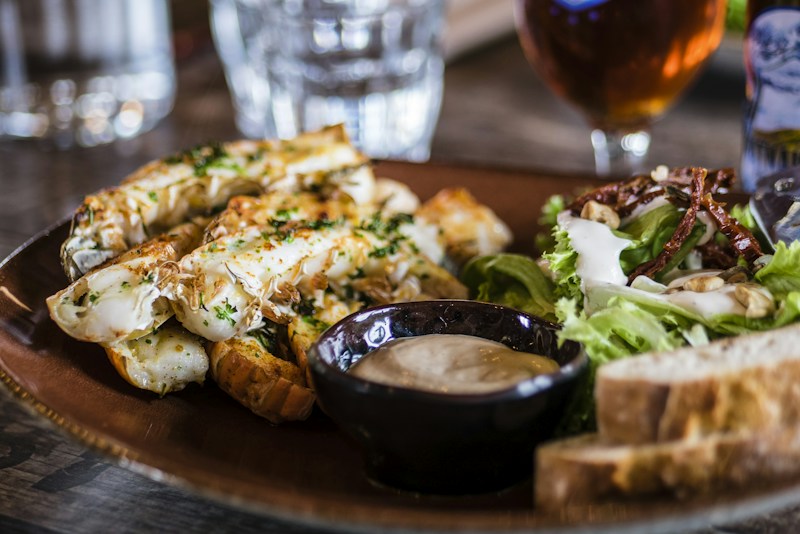
Premium Seafood Products — Bacalalo
Since 1990, selecting the best seafood at Mercat del Ninot, Barcelona. Refrigerated shipping in 24-48h.
See Icelandic cod →Related guides
- Seafood Paella: Traditional Recipe Step-by-Step
- Fish Suquet: Traditional Catalan Recipe
- Fish Ceviche: Classic Recipe
- Galician Seafood: Types and Season
Products you might be interested in