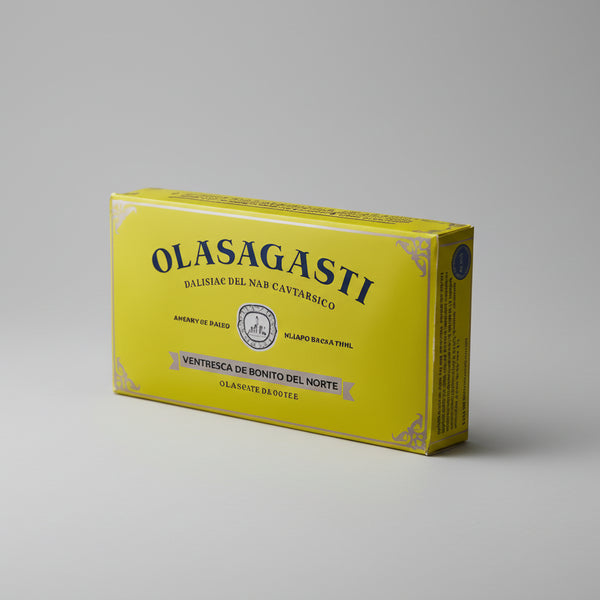
What is ventresca? The noble part of tuna and bonito
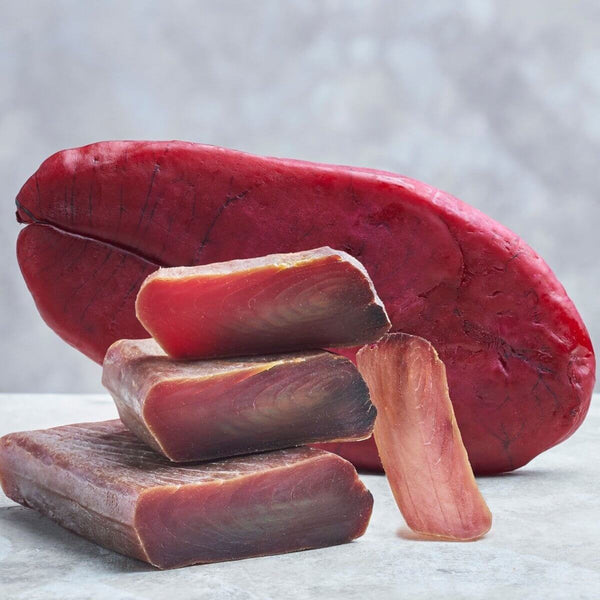
Ventresca (also called "ijar" or "ijada") is the belly part of tuna or bonito, located between the pectoral fins. It is the fattiest, juiciest, and most buttery part of the fish, with a much higher Omega-3 fat content than the loin (12-18% vs. 4-6%).
It is the most valued and expensive part of the preserve. A 120g can of northern bonito ventresca costs between €12-25, while the loin or clear part of the same quality costs €5-12. This difference reflects the low yield (a 30kg tuna yields only 1-2kg of ventresca) and exceptional quality.
Glass vs. Can: The two packaging methods
| Aspect | Glass Jar | Metal Can |
|---|---|---|
| Product Visibility | Excellent | None |
| Aroma Preservation | Better | Good |
| Flavor Transfer | None | Minimal in modern cans |
| Transport Resistance | Fragile | Resistant |
| Typical Size | 120-260g | 110-1000g |
| Price (same product) | +15-25% | Base |
| Shelf Life | 2-5 years | 3-5 years |
| Recyclability | Excellent | Excellent |
| Presentation | Premium / gift | Functional |
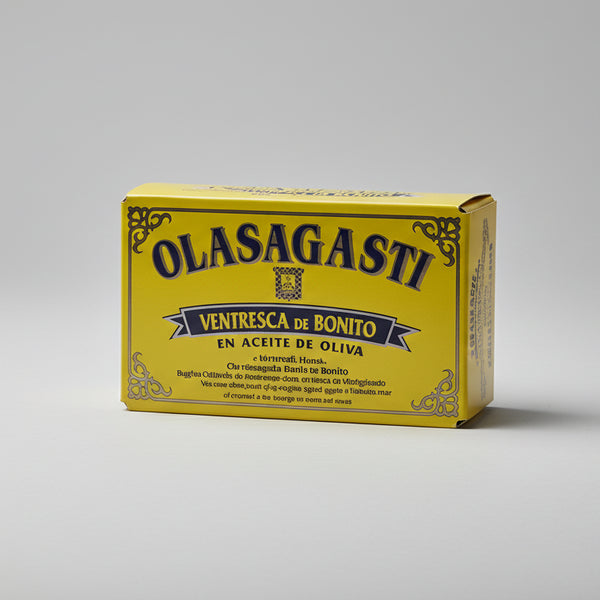
Northern Bonito Ventresca in Olive Oil - 190 g | Olasagasti
Direct selection from Bacalalo, verified quality.
Advantages of glass jars
Glass jars have clear advantages in certain cases:
- See the product: You can inspect the size, oil color, and presentation before buying. Premium brands (Olasagasti, Serrats, Conservas Yurrita) visually capitalize on this.
- Preserved aroma: Glass transfers absolutely nothing to the product. The natural aroma remains pure.
- Preservation after opening: Once opened, you can refrigerate the jar directly in the fridge, keeping it covered, for up to 5-7 days. An open can must be transferred.
- Aesthetics for gifting: A jar with an artisanal label and visible product makes a premium gift. A can, not so much.
- Reusability: Empty jars can be reused for homemade preserves, spices, seeds.
Advantages of metal cans
Cans also have decisive advantages:
- Resistance to transport: It doesn't break, it doesn't splinter. For online shipping, travel, or stocking, cans are unbeatable.
- Large formats: Cans of 500g, 1kg, 1.85kg for hospitality and frequent consumption. In glass, large formats are scarce and very fragile.
- Price: For the same product, cans are 15-25% cheaper. For everyday domestic consumption, value for money wins.
- Light resistance: Modern opaque cans protect the product from light oxidation better than transparent glass.
- Pantry storage: Cans can be stacked, stored in any orientation, and take up less space.
Northern Bonito Ventresca in Olive Oil - 260g | Olasagasti
Direct selection from Bacalalo, verified quality.
The myth of metallic taste: real or false?
A popular belief is that cans give the product a metallic taste. This is partially true, but with caveats:
Modern cans with epoxy internal varnish (most serious brands): They transfer practically no metallic taste. The varnish isolates the contents from the metal. Technical studies show transfers below the perceptive threshold.
Old cans without varnish or with damaged varnish: They can transfer metallic notes, especially with acidic contents. This was more common in cans from the 70s-80s.
Unvarnished tinplate (vintage): Artisan brands that use pure unvarnished tinplate do transfer minimally. But this is an exception, not the norm.
Conclusion: in modern commercial cans, the "metallic taste" is perceived more by suggestion than by real presence. Glass still slightly wins in aromatic purity, but the difference is tiny.
When to choose each format?
A practical decision guide:
Choose a GLASS JAR when:
- It's a gift or courtesy gesture
- You want to see and display the product on the table
- For occasional use at celebrations
- You prefer to preserve it longer after opening
- You live in an area without fragile transport (local shipping)
Choose a CAN when:
- Frequent domestic consumption
- You need a large format (>250g)
- You order online or require long-distance transport
- You want better value for money
- You're in hospitality or professional cooking
Top brands in each format
In premium glass jars:
- Olasagasti (northern bonito)
- Conservas Yurrita
- Serrats
- Don Bocarte
- Codesa
In premium cans:
- Olasagasti (same quality in cans)
- Conservas Frinsa
- BayMar (specialist in large formats)
- El Manjar de los Dioses
- Albo (high-quality mass consumption)
Top brands usually offer their product in both formats, with the same quality. The choice depends on the consumer's use.
Discover our premium selection
Seafood products selected with criteria since 1990 in Mercat del Ninot, Barcelona. Refrigerated shipping in 24-48h.
Conclusion: There's no bad choice, only the right one
The choice between ventresca in glass or in a can is a decision based on use, not quality. The same product can be available in both formats with the same organoleptic quality.
For a gift or elegant presentation: glass. For domestic consumption, transport, large formats, or better value for money: can. For B2B use (hospitality): can for practicality and price.
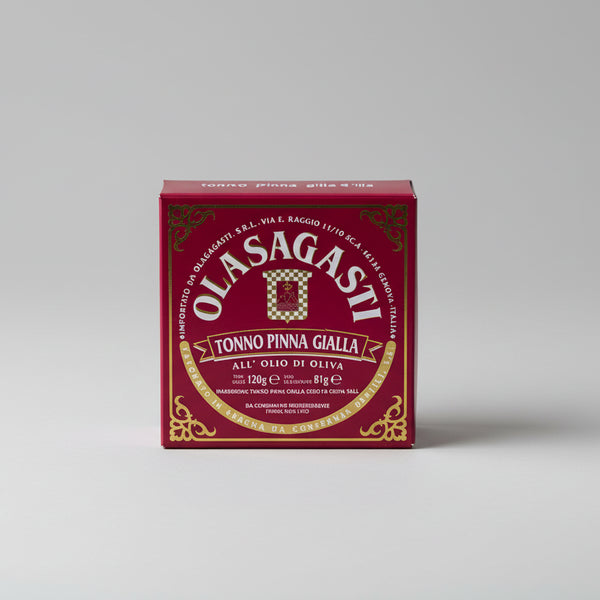
At Bacalalo, we work with Olasagasti ventresca in both formats, BayMar ventresca in large cans for hospitality, and Olasagasti eco ventresca in a premium 120g format. The product quality is the same; the packaging changes according to your needs.
Northern Bonito Ventresca in Olive Oil - 190 g | Olasagasti
Direct selection from Bacalalo, verified quality.
Related articles
Frequently asked questions
Does ventresca in glass taste better than in a can?
In professional tastings, the differences are minuscule (glass slightly better preserves the aroma). In normal domestic consumption, they are imperceptible. Product quality weighs much more than the format.
Why does ventresca cost so much?
Due to low yield (1-2 kg of ventresca for every 30 kg of tuna), artisanal filleting technique, and product traceability. It is the most expensive part of tuna for good reason.
How long does a can of ventresca last once opened?
If transferred to an airtight container in the fridge: 3-4 days. If left in the open can: maximum 24h (oxidizes and reacts with the metal). Always better to transfer.
Can a dented ventresca can oxidize the product?
If the dent is superficial and does not break the seal, the product is safe. If the can has cuts, rust, or a broken seal, DO NOT consume.
What is the difference between bonito ventresca and yellowfin tuna ventresca?
Northern bonito (Thunnus alalunga) is smaller, whiter, butterier, and more expensive. Yellowfin tuna (Thunnus albacares) is larger, pinker, and more affordable. Both are valid but distinct.
Does ventresca have a lot of mercury?
Northern bonito has low-to-medium mercury levels (due to its small size). Large bluefin tuna has more. Bonito ventresca is safe for regular consumption according to ESFA (3-4 servings per week).
Is ventresca the same as ijar or ijada?
Yes, they are synonyms. "Ventresca" is the most commonly used commercial term. "Ijar" or "ijada" are more regional terms (northern Spain, especially Basque Country).
How many years can I store a can of ventresca?
Under ideal conditions (dry, cool, dark place): 3-5 years from the canning date. Some collectors store premium cans for up to 10 years with good results (similar to "aging" wine).