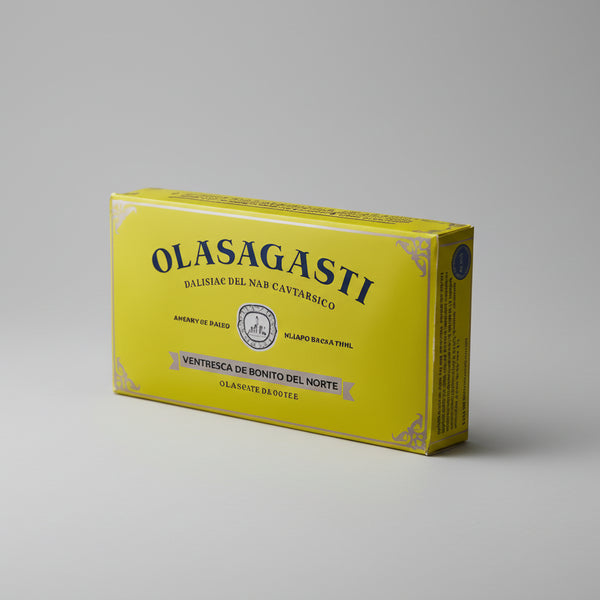


Quick summary: ventresca is the belly part of the fish, the most marbled with fat and the juiciest. Northern albacore ventresca (Thunnus alalunga) is whiter, buttery, and delicate — the top piece of Spanish canning, €60-110/kg. Yellowfin tuna ventresca (Thunnus albacares) is pinker-orange, with a stronger flavor and a more affordable price, €25-45/kg. If you're looking for delicacy and a celebratory dish: albacore. If you're looking for a powerful flavor and better value for money: yellowfin tuna.
In Spanish canning, the word ventresca is used to sell many things that are not actually ventresca. This guide honestly explains the difference between northern albacore ventresca and yellowfin tuna ventresca, two very different products in terms of flavor, texture, price, and origin — but which share a name because both come from the belly area of the fish.

What is ventresca?
Ventresca, also called ijada or vientre (belly), is the abdominal part of the fish — the area surrounding the ventral cavity. In tuna (Scombridae family), this area is especially prized because it concentrates a lot of fat infiltrated in the muscle. This fat is responsible for the buttery texture and deep flavor that distinguishes ventresca from the rest of the loin.
From a 30 kg tuna, approximately 1.5-2 kg of ventresca are obtained. That's why it's the most expensive and most sought-after part. In the almadrabas of Cádiz, the ronqueadores (specialized cutters) separate the ventresca with surgical precision — a badly made cut breaks the piece and devalues it.
Northern albacore ventresca (Thunnus alalunga)
Northern albacore (Thunnus alalunga), also called albacore or white tuna, is the finest and lightest-fleshed species among commercial tunas. It is fished in the Bay of Biscay between June and October using rod-and-reel, one by one (traditional Cantabrian technique), respecting minimum sizes and animal welfare.
Its ventresca has three characteristics that make it unique:
- Color: white-ivory, almost without pink pigmentation. The whiter, the finer.
- Texture: buttery, melts in the mouth, with visible fat streaks.
- Flavor: delicate, unctuous, with a hint of sweetness. It doesn't overpower — it complements.
It is the star piece of premium preserves from Cantabria, Bermeo, and Getaria. Producers like Olasagasti, Ortiz, La Brújula, Conservas Serrats, or Lolín cure it in glass jars with extra virgin olive oil and a traditional low-temperature cooking process.
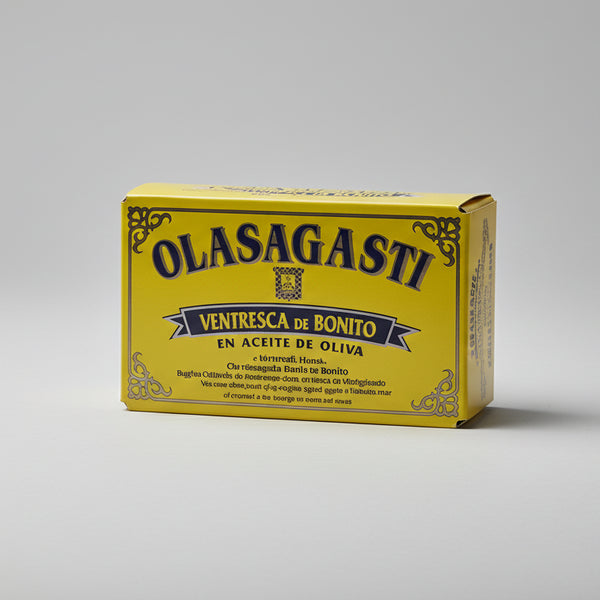
Olasagasti Northern Albacore Ventresca 190g
Fine piece cooked and preserved in extra virgin olive oil. Cantabrian, rod-and-reel caught. The one you'd serve on a celebratory dish.
Yellowfin tuna ventresca (Thunnus albacares)
Yellowfin tuna (Thunnus albacares) is a different species — larger, more migratory, and with pinker-orange flesh. It is mainly fished in Atlantic and Pacific waters using longline or purse seine.
Its ventresca is:
- Color: pinkish-orange, similar to salmon but paler.
- Texture: juicy but less buttery than albacore — more fibrous.
- Flavor: more intense, more "of the sea," with notes reminiscent of fresh tuna.
It is the honest option for those who want quality ventresca without paying albacore prices. At Bacalalo, we work with professional 1 kg formats for hospitality and consumers who cook a lot.
BayMar Yellowfin Tuna Ventresca 1 kg
Large format for hospitality or family consumption. Powerful flavor, juicy texture, honest price.
Comparison table
| Characteristic | Northern albacore ventresca | Yellowfin tuna ventresca |
|---|---|---|
| Species | Thunnus alalunga (white tuna / albacore) | Thunnus albacares (yellowfin tuna) |
| Color | White-ivory | Pinkish-orange |
| Texture | Buttery, melts | Juicy, fibrous |
| Flavor | Delicate, unctuous, sweet | Intense, "of the sea" |
| Typical origin | Bay of Biscay (summer) | Tropical Atlantic, Indian Ocean, Pacific |
| Fishing method | Rod-and-reel, one by one (artisanal) | Longline or purse seine (industrial) |
| Price €/kg (2026) | €60-110/kg | €25-45/kg |
| Best use | Appetizer with just EVOO | Salads, pasta, empanadas |
Flavor and texture: how to distinguish them by taste
In a blind tasting, the difference is noticeable in three steps:
- First bite: albacore ventresca melts when pressed against the palate with the tongue. Yellowfin tuna ventresca requires a minimum of chewing.
- Flavor at 5 seconds: albacore is unctuous and sweet. Yellowfin tuna is saltier and more "fishy."
- Aftertaste: albacore leaves a clean, fatty sensation. Yellowfin tuna leaves a more persistent flavor.
This is the test we do when a client asks us for "a good ventresca" — a direct tasting clarifies everything in less than a minute.
Price €/kg in 2026
Price is one of the factors that most differentiate the two:
- Premium northern albacore ventresca (Olasagasti, Ortiz, Serrats): €75-110/kg in 190-260g glass jars.
- Standard northern albacore ventresca: €55-70/kg in 120g cans.
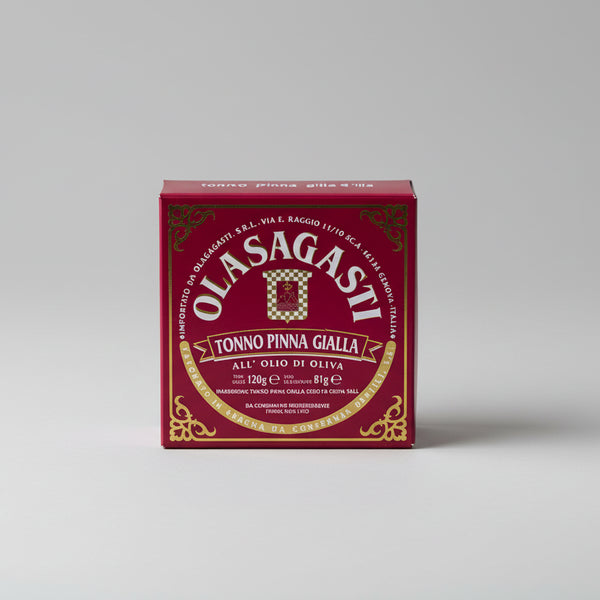
- Premium yellowfin tuna ventresca (Olasagasti, Dardo): €35-45/kg.
- Yellowfin tuna ventresca for hospitality (BayMar, 1 kg): €25-32/kg.
If you see "tuna ventresca" for less than €20/kg, it's almost certainly not real ventresca — it will be loin or mixed pieces labeled as such to increase the price. Always read the ingredient list and the format (the larger and more whole the piece, the more reliable).
When to choose each one?
Choose northern albacore ventresca if:
- You're going to serve it alone, on toast, or as a celebratory appetizer.
- You're looking for the "wow" factor at a Christmas dinner or special meal.
- You want a premium gourmet gift (glass jar serves).
- You prefer artisanal fishing (Cantabrian rod-and-reel).
Choose yellowfin tuna ventresca if:
- You're going to cook it — pasta, salad, empanadas, salpicón.
- You're looking for a powerful flavor that won't get lost in the recipe.
- Quality-price ratio is very important to you.
- You're a restaurateur and need a 1 kg format.
Honesty: for a Russian salad or a salpicón with onion and vinegar, the difference between albacore and yellowfin tuna in taste is 10%. For an appetizer with only EVOO, the difference is 70%. Buy based on use, not on the name.
Which ventrescas do we sell at Bacalalo?
In our collection of canned tuna and albacore, we select directly from three historical brands: Olasagasti (Getaria), BayMar (Cantabria), and Dardo (Galicia). These are the ventresca formats we currently have:
Olasagasti Northern Albacore Ventresca 260g
Large format for sharing. Same artisanal process, better price per kilo. Best seller at Christmas.
All Canned Tuna and Albacore Collection
Ventrescas, loins, chunks, small and hospitality formats. Olasagasti, BayMar, Dardo.
Discover our premium selection
Seafood products carefully selected since 1990 at Mercat del Ninot, Barcelona. Refrigerated shipping in 24-48h.
Conclusion
Northern albacore ventresca and yellowfin tuna ventresca are distinct products that share a name. Albacore is whiter, butterier, more expensive, and finer — perfect for appetizers with just oil. Yellowfin tuna is pinker, tastier, more affordable, and more versatile — perfect for cooked dishes. Both are good choices if you buy real format (glass jar or small can, not industrial batch) and check the ingredient list. At Bacalalo, we work with both because for each use there is a correct answer — and we want you to choose wisely, not by a slogan.
Frequently asked questions
Are albacore ventresca and bluefin tuna ventresca the same?
What does "ventresca" actually mean?
Why is albacore ventresca whiter?
Which has more omega-3?
How much salt does canned ventresca have?
Is it worth paying €100/kg for albacore ventresca?
What is the best brand of tuna belly?
Can tuna belly be frozen?
Related articles
- Anchovy vs. White Anchovy: flavor, price differences, and when to use
- Bonito del Norte vs. Skipjack Tuna: differences and price
- Mojama de atún (salted cured tuna): complete guide to types, recipes, and price
- Collection: canned tuna and bonito
About the author — Lalo González Rodríguez
Third generation of Bacalalo at Mercat del Ninot (Barcelona). He has worked with cod since 1990 and personally selects suppliers in Iceland, Norway, Cantabria, and the Caspian Sea. He writes about the identity and true origin of seafood products.