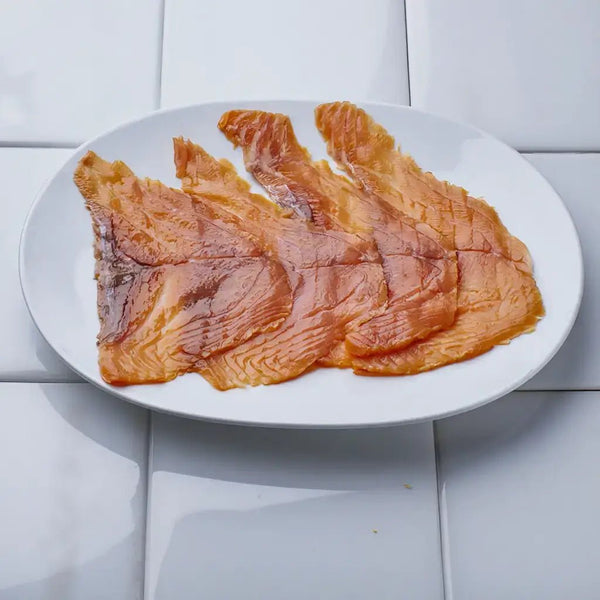
In a nutshell: A guide to 7 essential cured seafood products: mojama, bottarga, salted cod, anchovies, tuna belly, cured tuna roe, and cured octopus. Origin, flavor, price, and how to use each one.
Table of contents
Cured seafood: 3,000 years of history
Salt as a preservation method is one of the oldest culinary discoveries. The Phoenicians founded Cádiz (Gadir) 3,000 years ago precisely to produce cured tuna from the Strait, which they then exported throughout the Mediterranean.
The Romans elevated cured fish to the category of gastronomic delicacies: "garum" (fermented fish sauce) was the Empire's most coveted ingredient, along with salsamenta (salted fish). The almadrabas (traditional tuna fishing traps) of southern Spain and northern Morocco are direct heirs to that tradition.
Today, traditional Spanish cured seafood is a gastronomic heritage and shares shelves with gourmet products from Italy (bottarga), Portugal (salted cod), and Nordic countries (gravlax, smörgåsbord).
Mojama: the "ham of the sea"
Mojama is cured tuna loin. It is salted for 24-48 hours, rinsed, pressed, and sun-dried for 15-20 days. The result is a firm, dark, intense product, cut into very thin slices.
Traditional origin: Barbate (Cádiz). Also produced in Isla Cristina (Huelva), Tarifa, and the Portuguese coast.
Flavor: concentrated umami, medium-high salinity, long persistence.
Price: €80-150/kg for red tuna mojama. White tuna mojama is more affordable (€50-80/kg).
How to serve: very thin slices with EVOO and toasted almonds. Pure Mediterranean.
Bottarga: cured mullet roe
Bottarga (boutargue in French, batarekh in Arabic) is salted, pressed, and sun-dried mullet or tuna roe. It is one of the most expensive seafood products.
Origin: Sardinia (Italy) is the world reference. It is also produced in Greece (avgotaracho), Tunisia, and the Spanish Levante coast.
Flavor: intensely marine, slightly spicy finish, almost creamy if well-cured.
Price: €100-300/kg. Sardinian bottarga di muggine is the most prized.
How to serve: grated over pasta (the Italian "carbonara di bottarga") or cut into thin slices on crackers with EVOO.
Salted cod: the most versatile cured fish
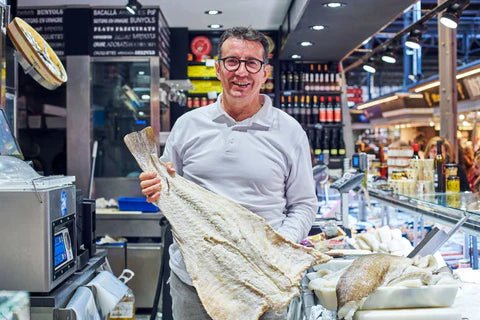
Salted cod is the most common and versatile cured fish. Fresh fish is salted in cold rooms for 4-8 weeks, then dried or kept in salt. To use, it must be desalted for 24-36 hours with water changes.
Origin: Iceland, Norway, Faroe Islands. Spain imports and crafts it in Mercat del Ninot Barcelona, Galicia, and northern areas.
Flavor: deep and clean umami, concentrated salinity, fine texture if from Iceland.
Price: €15-35/kg.
How to cook: countless recipes — pil pil, vizcaína, riojana, brandade, ajoarriero, à Brás, croquettes.
Cured tuna roe
Salted tuna roe is a lesser-known but equally traditional cured product. It is salted for 12-24 hours, pressed, and sun-dried.
Origin: Almadrabas of the South (Cádiz, Tarifa).
Flavor: intense, maritime, similar to bottarga but stronger.
Price: €60-100/kg.
How to serve: grated over pasta or salads, or in thin slices as an appetizer.
Salted and desalted Bacalalo cod
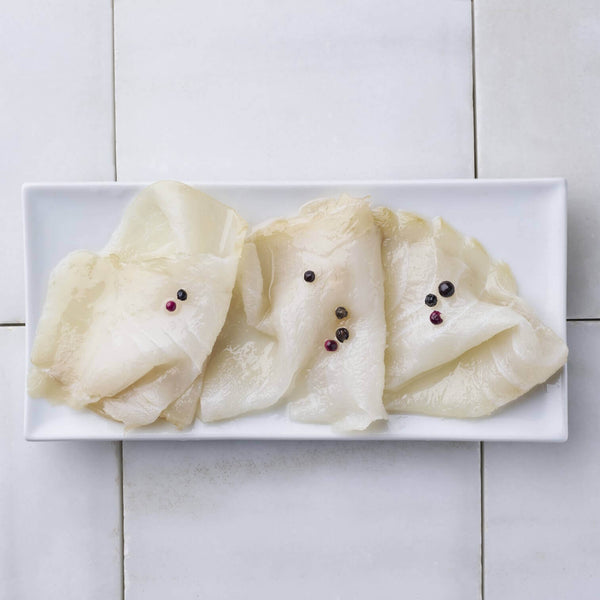
The most versatile cured fish of all: Gadus morhua cod from Iceland, salted or vacuum-packed desalted. Artisan selection from Mercat del Ninot.
Frequently asked questions
What exactly is "cured seafood"?
Which is the most expensive cured seafood?
Are anchovies cured seafood?
What are the traditional Spanish cured seafood products?
Do they need refrigeration?
How are they desalted?
To conclude
Cured seafood products are a fundamental part of Spanish gastronomic heritage. If you want to get started, begin with the two most versatile: Cantabrian anchovies (daily use) and salted cod (infinite recipes). Mojama and bottarga are for special occasions due to their price.
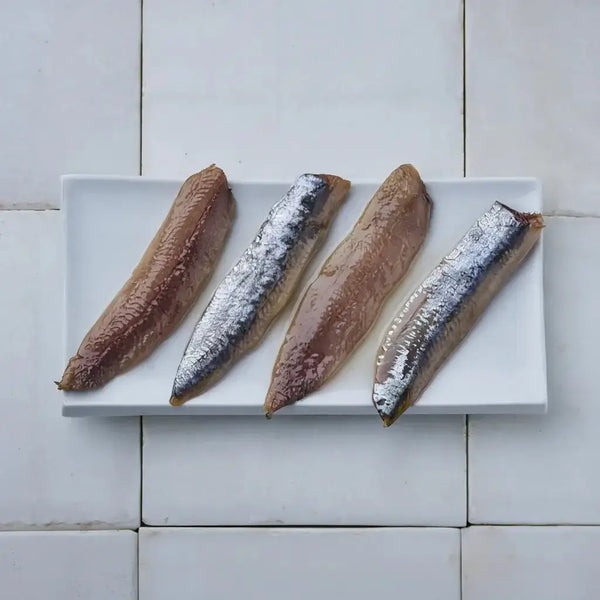
Premium Cantabrian anchovies
The "model cured fish" of Mediterranean cuisine: 00-grade anchovies cured for 12 months. The one that defines the genre.