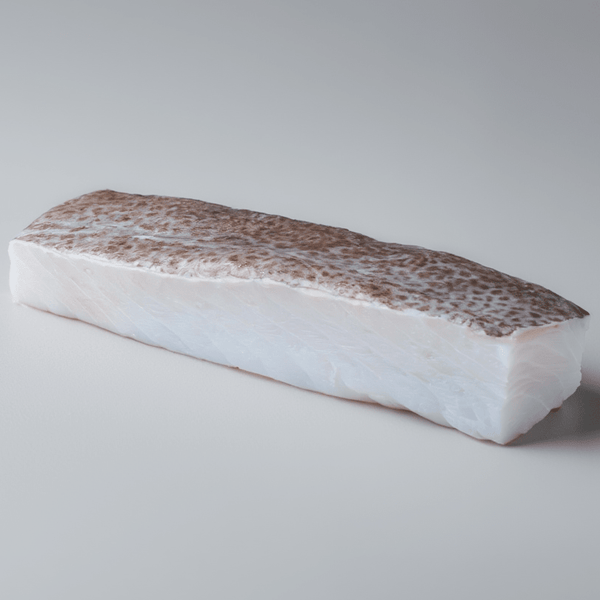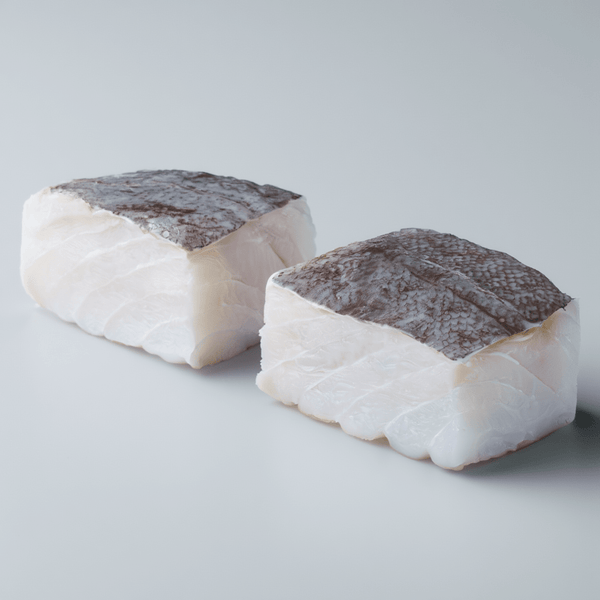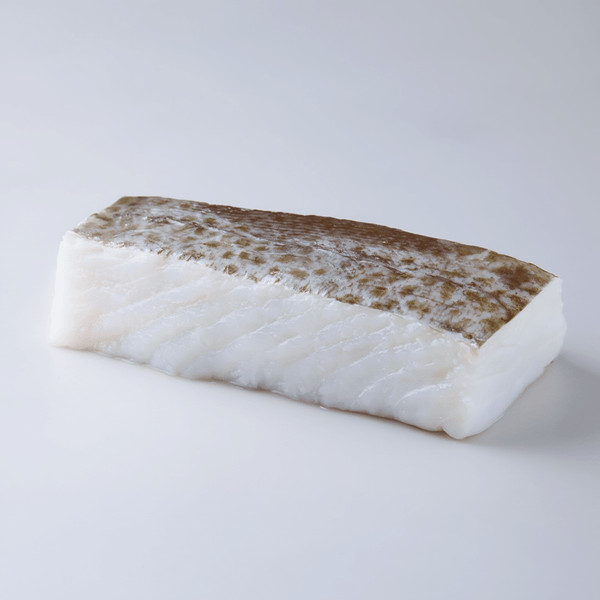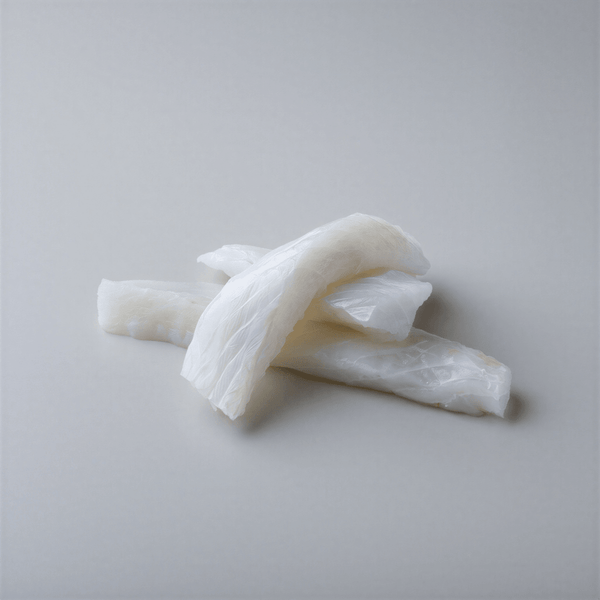


Salt is not a mere preservative in cod: it is a transformer of flavor, texture, and character. The type of salt used in curing, its grain size, its mineral content, and even its geographical origin directly influence the quality of the final product. In this article, we discover why salt changes everything in the world of cod, from salting to desalting and final serving.
Salt as a preservative: how it works at a molecular level
Preserving cod with salt is one of the oldest food technologies in the world, and it works thanks to a simple yet powerful physical principle: osmosis. When cod is covered with salt, a concentration difference is created between the outside (high salt concentration) and the inside of the fish (low concentration). Water from inside the cod migrates to the outside to equalize this difference.
This dehydration process has two fundamental effects:
- Reduces water activity (aw): Bacteria, yeasts, and molds need available water to grow. When the water activity of cod drops below 0.75 (thanks to salt and dehydration), most pathogenic microorganisms cannot survive or reproduce.
- Creates a hyperosmotic environment: The high salt concentration in the cod's tissues destroys bacterial cells through plasmolysis (cells dehydrate and die). It is a hostile environment for virtually any microorganism.
The result is a product that can be preserved for months (and even years) without refrigeration, maintaining a nutritional value comparable to fresh fish. This was the revolutionary discovery that made global cod trade possible for centuries.

Types of salt used in cod curing
Not all salts are created equal, and the choice of salt is one of the most important decisions a cured cod producer makes.
Coarse sea salt
This is the traditional salt for cod. Obtained by evaporating seawater, it has large, irregular crystals that adhere well to the fish's surface. Its mineral content (magnesium, calcium, potassium) provides a complexity of flavor that refined salt lacks. The best salt pans for cod are found in Portugal (Aveiro, Algarve), Spain (Cádiz, Ibiza, Torrevieja), and France (Guérande).
Rock salt (halite)
Extracted from underground deposits, rock salt is purer than sea salt (fewer trace minerals) and has more regular crystals. Some Icelandic and Norwegian producers prefer it because its composition is more predictable, which facilitates control of the curing process. Its flavor is more "clean" and direct.
Refined solar salt
Sea salt refined through industrial processes that remove most trace minerals. It is the most economical and the most used in industrial cod production. It works well as a preservative but provides less flavor complexity than unrefined sea salt.
Guérande salt (fleur de sel included)
Guérande salt (Brittany, France) is considered one of the best in the world for its complex mineral profile. Some artisanal producers of high-end cod use it for premium curing. It is not the most economical choice, but the resulting flavor is notably superior.
The salting process: step by step
Cod salting is a process that combines artisanal tradition with industrial control:
- Reception and evisceration: Fresh cod is eviscerated and cleaned immediately after capture. On many Icelandic and Norwegian boats, this process is done on board.
- Opening and cleaning: The cod is opened "butterfly style" (split down the middle) or cut into loins. The central bone and remaining viscera are removed.
- First salting: It is generously covered with coarse salt, ensuring that the entire surface of the fish is in contact with the salt. The usual ratio is 1 part salt for every 3-4 parts cod (by weight).
- Stacking: The salted cod are stacked in alternating layers (cod-salt-cod-salt) in containers or on sloped surfaces to allow for liquid drainage.
- Draining (1-2 weeks): During the first few days, the cod loses a huge amount of water by osmosis. This liquid (brine) is continuously drained. The cod can lose up to 40-50% of its weight in this phase.
- Salt replenishment: After the initial drainage, fresh salt can be added to replenish what has dissolved in the drained brine.
- Maturation (2-4 additional weeks): The cod remains in contact with the salt for an additional period during which the fish's natural enzymes transform proteins and develop the characteristic flavor of cured cod.
- Drying (optional): Some producers add an air-drying phase to further reduce moisture and concentrate flavors.

What salt does to cod: the transformation
Salting not only preserves cod: it transforms it into a fundamentally different product from fresh cod.
Changes in proteins
Salt partially denatures the muscle proteins of cod, modifying their three-dimensional structure. This causes changes in texture: muscle fibers compact and become firmer. When subsequently desalted and cooked, these modified proteins separate into the characteristic flakes of cured cod, something that does not happen with fresh cod.
Flavor concentration
By losing between 40 and 60% of its water, all of the cod's flavor compounds are proportionally concentrated. The result is a product with a more intense, more complex, and more "deep" flavor than fresh cod.
Enzymatic development
The endogenous enzymes of cod (proteases, lipases) remain active during curing, slowly breaking down proteins and fats into smaller compounds (amino acids, peptides, free fatty acids) that contribute to the flavor. It is a process similar to what happens in the maturation of cheese or ham. The longer the curing, the more complex these flavors.
Gelatin transformation
The collagen in cod is partially transformed into gelatin during curing. This gelatin is responsible for the ability of cured cod to form emulsions (like pil-pil) that are impossible with fresh cod. Salt enhances this collagen transformation.
How salt determines the quality of cured cod
The difference between a top-quality cod and a mediocre one can literally be in the salt:
Granulometry
Too fine crystals penetrate too quickly, curing the surface before the center has lost enough water. The result is cod that is dry on the outside and moist on the inside, with an uneven texture. Too coarse crystals take time to dissolve and create uneven salt concentration points. The optimal grain size is medium to coarse crystals (2-5 mm), which dissolve at a rate that allows for uniform curing.
Purity
Salt with high magnesium chloride content (common in some unrefined sea salts) can give cod a bitter taste. The best curing salts have a sodium chloride content above 95% with controlled trace amounts of other minerals that provide flavor without bitterness.
Salt humidity
Moist salt dissolves faster than dry salt, which affects the curing speed. Professional producers carefully control the humidity of the salt they use to ensure consistent results.
The importance of salt in desalting
Desalting is the inverse process of salting: immersing in cold water to extract excess salt from the cod. But it's not about removing all the salt, but about reaching the perfect balance where the cod has a slightly salty but pleasant taste.
The physics of desalting
Desalting works again by osmosis, but in the opposite direction. The salt inside the cod migrates to the outside water. Changing the water periodically (every 8-12 hours) accelerates the process because it maintains a high concentration gradient.
Desalting times according to thickness
- Flakes and thin pieces (less than 1 cm): 12-24 hours with 2 water changes.
- Medium loins (2-3 cm): 36-48 hours with 3-4 water changes.
- Thick loins (more than 4 cm): 48-72 hours with 4-6 water changes.
The perfect salt point
Professional chefs check the salt level by cutting a thin piece from the center of the thickest loin and tasting it raw. The cod should have a slightly salty taste that enhances its natural flavor without being aggressive. If it is still too salty, it needs more time. If it has lost all its salty taste, you have overdone it (but you can correct it by adding salt when cooking).
Salt when cooking cod: types and timing
If your desalted cod has the right amount of salt, you probably don't need to add more salt during cooking. But if you need to adjust, these are the most suitable types of salt for each preparation:
For confits and gentle cooking
Fine table salt or fine sea salt, dissolved in oil or broth. It integrates uniformly without creating concentration points.
For roasts and ovens
Coarse salt or flake salt on the surface before baking. The crystals partially dissolve during cooking, creating small points of concentrated salinity that add interest.
For pil-pil
Generally does not need additional salt if the cod is well desalted. Pil-pil sauce concentrates the flavor by emulsifying. If you need it, a pinch of fine salt mixed into the oil before starting to cook.
Finishing salt: the perfect final touch
Finishing salt is not a cooking condiment but an element of presentation and final texture. It is added just before serving, on the already finished dish.
Maldon Salt
The star of finishing salts. Its pyramidal, crunchy flakes with a clean taste are perfect on baked or confited cod. They dissolve slowly in the mouth, creating small explosions of saltiness that contrast with the cod's softness.
Fleur de sel
Delicate crystals collected from the surface of salt marshes. It has a more complex flavor than refined salt, with subtle mineral notes. Excellent on raw or lightly cooked cod where you can appreciate its nuances.
Hawaiian Black Salt
Sea salt mixed with activated charcoal. It provides a spectacular visual contrast on white cod and a slight earthy taste. It is more an aesthetic element than a taste one, but it works in haute cuisine presentations.
Himalayan Pink Salt
It has a slightly milder flavor than conventional sea salt and an attractive pink color. It works well as a finishing salt, although its taste differences from other salts are subtle.
Premium quality salt-cured cod
The salt used in curing determines the final flavor of the cod. Our suppliers use selected sea salt with optimal granulometry and purity for uniform curing and a clean taste. The result is noticeable in every bite.
Frequently Asked Questions
Why does salted cod taste different from fresh cod if the salt is removed?
Because salt doesn't just preserve: it transforms. During curing, proteins denature, gelatin develops, amino acids are released, and flavor concentrates. Even if you remove all the salt by desalting, cured cod is already a chemically different product from fresh cod. It's like asking why cured cheese tastes different from milk.
Can cod be cured at home?
Yes, it is possible to do a basic home cure. You need quality fresh cod, coarse salt (1:3 salt:fish ratio), and a cool place (2-5°C). Cover the cod with salt, place it on a rack with a tray underneath for drainage, and leave it in the refrigerator for 3 to 7 days, changing the salt if it gets too wet. The result will not be the same as an industrial cure lasting weeks, but it is an interesting culinary experiment.
Does the salt in cod lose properties with desalting?
The salt that comes out of the cod during desalting dissolves in the water and is discarded. But the changes that salt has produced in the proteins, texture, and gelatin of the cod are permanent. They do not "undo" when desalting. What the cod loses when desalting is excess salinity, but it retains the molecular transformations that make it unique.
Can I use iodized salt to cure cod?
It is not recommended. Iodized salt can impart a slight metallic or bitter taste to cod during long cures. In addition, anti-caking agents present in many table salts can affect the curing process. For curing, always use coarse sea salt without additives or rock salt.
Why does my desalted cod sometimes taste bland?
If you desalinate for too long, the cod loses too much salt and can become bland. The solution is to taste the cod before cooking: cut a thin piece from the center and taste it raw. It should have a slightly salty taste. If it's already over-desalted, there's no going back, but you can compensate by seasoning generously during cooking.

Premium Seafood Products — Bacalalo
Since 1990, selecting the best from the sea at Mercat del Ninot, Barcelona. Refrigerated shipping 24-48h.
See Icelandic cod →🛒 Recommended products in this guide
⭐ 4.9/5 · 24-48h chilled delivery · Since 1990 at Mercat del Ninot
Conclusions
Salt is much more than a preservative in the world of cod. It is a transformer that converts fresh fish into a completely different product: with more flavor, more texture, more complexity, and more culinary possibilities. From the type of salt used in curing to the finishing salt you sprinkle just before serving, every decision about salt directly affects the final result.
Understanding the relationship between salt and cod is not an academic exercise: it is practical knowledge that makes the difference between a correct dish and an extraordinary one. Knowing how to desalt correctly, choose the appropriate cooking salt, and use a finishing salt judiciously are skills that elevate any cod recipe.
At Mercat del Ninot, since 1990, we select salted cod of the highest quality and proper curing. Because salt changes everything, and we know it.