Summary
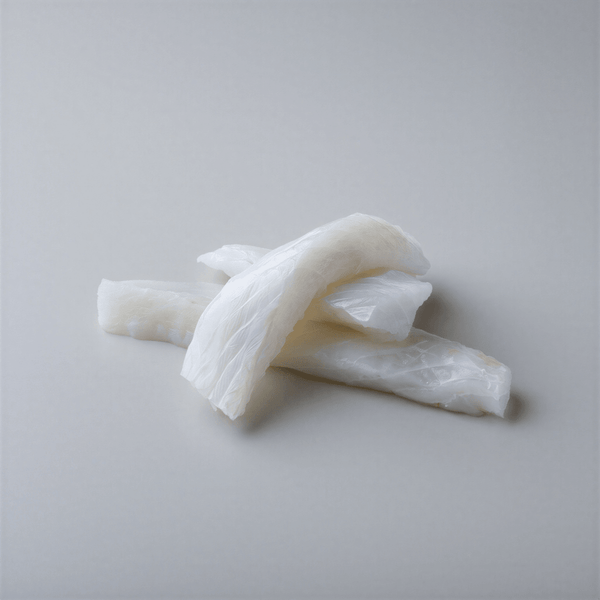
Icelandic cod is, for many professional chefs, the benchmark of quality in Spanish gastronomy. In this guide: Why do the best restaurants prefer Icelandic cod? Differences between Icelandic, Norwegian, and Atlantic cod. Cuts and presentations available for the hospitality industry.
Icelandic cod is, for many professional chefs, the benchmark of quality in Spanish gastronomy. This is no coincidence: the cold, deep waters of the North Atlantic produce cod with superior organoleptic characteristics that make it the preferred choice for demanding chefs and high-end restaurants.
In this guide, we explain everything you need to know about Icelandic cod if you are a chef or purchasing manager for a restaurant, hotel, or catering service.
Why do the best restaurants prefer Icelandic cod?
Choosing the origin of cod is not just a matter of gastronomic trends. Icelandic cod (Gadus morhua) has concrete technical advantages that justify its use in professional kitchens:
- Colder and deeper waters: The extreme temperatures of the North Atlantic mean that cod grows more slowly, developing denser muscle and a firmer texture that withstands prolonged cooking better.
- Higher intramuscular fat content: This translates into more flavor and a texture that, when confited or prepared "al pil pil," produces more abundant and flavorful gelatin.
- Certified sustainable fishing: Iceland has strictly regulated fishing quotas and MSC certifications for most of its fleets. This is not only an ethical advantage but also a selling point for your menu.
- Complete traceability: The Icelandic control system allows every piece to be tracked from the boat to your kitchen, a requirement increasingly valued by health inspections and customers.
- Larger and more uniform sizes: Icelandic pieces are usually larger, making it easier to obtain clean loins of uniform weight with less waste.
Differences between Icelandic, Norwegian, and Atlantic cod
The three main origins you will find in the Spanish market have important practical differences for professional kitchens:
| Characteristic | Icelandic Cod | Norwegian Cod | Atlantic Cod (others) |
|---|---|---|---|
| Texture | Very firm, dense fiber | Firm, somewhat softer | Variable, can be softer |
| Gelatin (pil pil) | Very abundant | Good | Moderate |
| Color after desalting | Pearlescent white | White-ivory | Variable |
| Size | Large, uniform | Medium-large | Variable |
| Sustainability | MSC certified | MSC certified | Depends on origin |
| Price | Premium | Medium-high | Medium |
| Ideal use | Haute cuisine, pil pil, confit | Traditional cuisine, roasted | Preparations, stuffings |
For restaurants that prepare signature dishes or traditional Catalan and Basque cuisine, Icelandic cod is the option that performs best in the kitchen and best justifies its price on the menu.
Cuts and presentations available for the hospitality industry
In the hospitality industry, the cut is everything. A cod supplier for restaurants should be able to offer you the exact cut your kitchen needs, without forcing you to adapt your menu to what they have available. These are the most demanded cuts by the hospitality industry:
Desalted cod
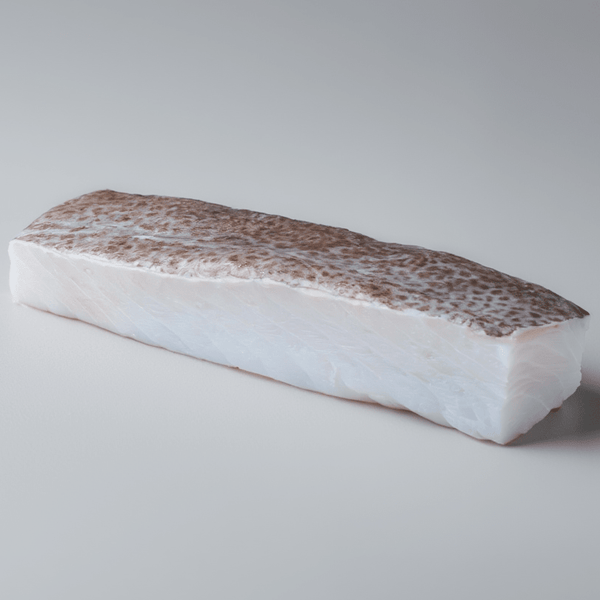
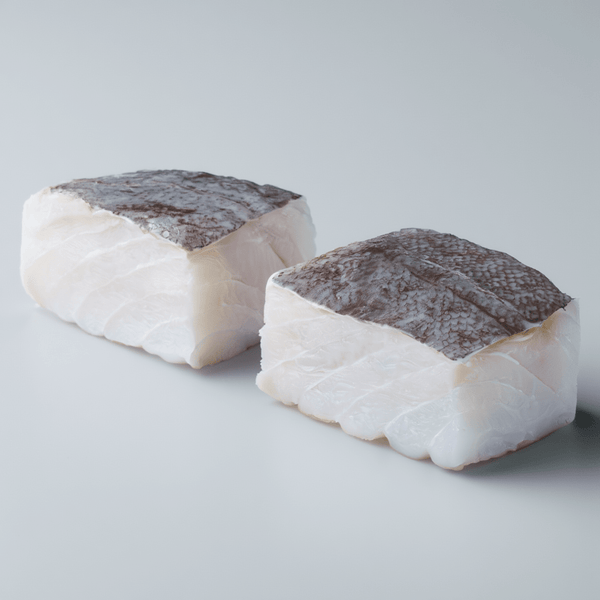
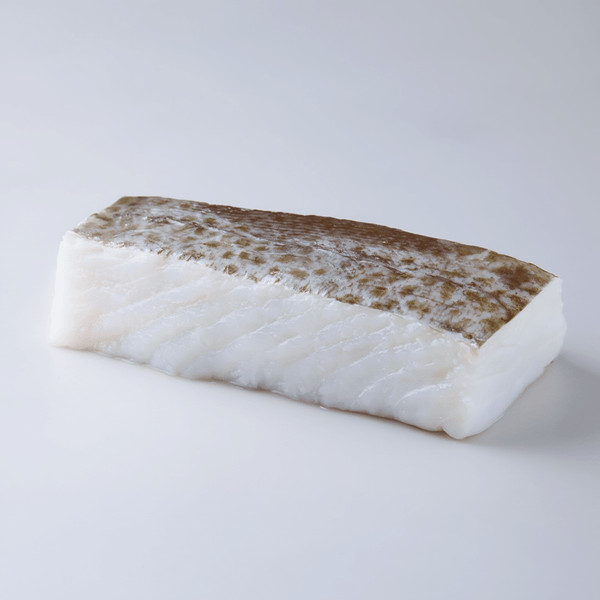
- Special loin (150-200g): The star cut for individual portions. Ideal for pil pil, a la llauna, confit, baked. Uniform weight for precise mise en place.
- Extra small loin (80-120g): For tapas, pintxos, and tasting menus. Presents well in high-end plating.
- Desalted jowl: The most gelatinous part of the cod. Essential for stews, brandade, and creamy dishes.
- Penca (belly flap): The softest part of the lower loin. Excellent for croquettes, fritters, and preparations.
- Desalted kokotxas (cheeks): The most prized product for high-end cuisine dishes. Pil pil, green sauce, breaded.
- Flakes (shredded): For croquettes, esqueixada, empanadas, and all kinds of preparations that do not require a whole piece.
- Tail: Economical and flavorful. Good for stews, potages, and casseroles.
Dried cod
- Extra dry jowl: For desalting in the restaurant kitchen to control the exact salt point.
- Dry large loins: Large pieces for establishments with high volume.
- Cod leaf: For breaded items, fritters, and preparations that require a thin piece.
How to store cod in a professional kitchen
Proper cod storage is essential to maintain product quality and comply with health regulations:
Desalted cod
- Temperature: between 0°C and 4°C
- Shelf life: 3-5 days from opening the package
- Storage: in an airtight container or well covered with film in the cold room
- Important: Do not freeze desalted cod once received (if it does not arrive frozen)
- Strict FIFO (First In, First Out) rotation
Dried cod
- Temperature: between 4°C and 8°C in a dry cold room
- Relative humidity: below 75%
- Shelf life: several months if stored correctly in a cool, dry place
- Avoid direct exposure to sunlight or heat sources
The desalting process in a professional kitchen
If you buy dried cod, desalting is a critical phase. General guidelines indicate:
- Jowls and thick loins: 48-72 hours in cold water, changing the water every 8 hours
- Pencas and medium pieces: 36-48 hours
- Flakes and small pieces: 24 hours maximum
- Desalting water temperature: always in a refrigerated chamber (never at room temperature)
Many restaurants prefer to buy desalted cod directly to eliminate this phase and have greater control over the final quality of the dish.
Bacalalo: Your Icelandic cod supplier in Barcelona
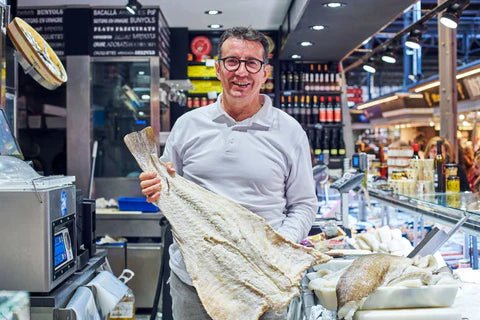
Bacalalo is the cod fishmonger of Mercat del Ninot in Barcelona, specializing in Icelandic cod for over 35 years. We are suppliers to restaurants, hotels, and caterers throughout Spain, with the following advantages for the hospitality industry:
- Certified origin Icelandic cod with complete traceability
- 174 seafood product references in our professional catalog
- Custom cuts according to your menu: loins, jowls, kokotxas, flakes, pencas
- Refrigerated delivery in 24-48h throughout the peninsula
- No minimum order to start
- Direct prices without intermediaries, with professional invoicing
- Personalized attention: direct phone and WhatsApp with your account manager
In addition to Icelandic cod, we supply Cantabrian anchovies, Norwegian smoked salmon, Caspian caviar, salted fish, gourmet preserves, and everything a demanding professional kitchen needs.
Premium Seafood Products — Bacalalo
Since 1990, selecting the best from the sea at Mercat del Ninot, Barcelona. Refrigerated shipping 24-48h.
View desalted cod →🛒 Products mentioned in this article
⭐ 4.9/5 · Refrigerated shipping 24-48h · Since 1990 in Mercat del Ninot
Frequently Asked Questions about Icelandic Cod for Restaurants
Is Icelandic cod sustainably certified?
Yes. Most Icelandic cod fishing is MSC (Marine Stewardship Council) certified, which guarantees sustainable fishing practices. We can provide you with the corresponding documentation.
What is the price difference between Icelandic and Norwegian cod?
Icelandic cod is usually slightly more expensive than Norwegian cod, justified by its larger size, firmer texture, and better yield in the kitchen. For haute cuisine restaurants or mid-to-high-end menus, the price difference is offset by less waste and better plate presentation.
Can I order specific cuts for my tasting menu?
Absolutely. We work with many restaurants that offer tasting menus and require exact portions. Tell us the weight, cut, and number of servings, and we will prepare it according to your specifications.
How does the HORECA catalog work?
Request the catalog through the form on our professionals page. We will send you the complete PDF catalog with all available references, professional prices, and delivery conditions within 48 hours.
Premium Icelandic cod for your restaurant
Request the professional HORECA catalog or contact our team directly. Refrigerated delivery in 24-48h throughout Spain. No minimum order to start.
View HORECA catalog → 📞 638 305 955 · ✉️ bacalalo@bacalalo.comDiscover more