

Chickpea stew with cod tripe and spinach is one of the most comforting dishes in Spanish cuisine: a slow-cooked stew, humble in origin but sophisticated in flavor, that combines the creaminess of chickpeas, the gelatinous texture of cod tripe, and the subtle bitterness of spinach. It is the quintessential Lenten dish, but it deserves to be eaten all year round. Here is the complete recipe, with all the tricks to ensure the chickpeas are tender, the broth is thick, and the cod tripe is perfectly cooked.
Contents
- Lenten Stew: History and Tradition
- What is Cod Tripe and Why Use This Cut?
- Complete Ingredients
- Step 1: Soaking the Chickpeas
- Step 2: Cooking the Chickpeas
- Step 3: Sofrito (Sauté) and Stew Base
- Step 4: Cod Tripe and Spinach
- Step 5: Finishing, Resting, and Serving
- Regional and Modern Variations
- Tips for a Perfect Stew
- Frequently Asked Questions
- Conclusions
Lenten Stew: History and Tradition
Chickpea and cod stew is a dish born of necessity and faith. During the 40 days of Lent, Catholic tradition prohibited the consumption of meat. In a Spain where animal protein was already scarce for the working classes, salted cod and legumes became the pillars of their diet.
What began as a religious restriction eventually gave rise to one of the most deeply rooted dishes in Spanish gastronomy. Each region has its own version: in Andalusia, it includes hard-boiled egg and saffron; in Castile, it is thickened with fried bread; in the Basque Country, kokotxas (hake cheeks) are added; and in Catalonia, Lenten botifarra sausage is incorporated. But the basic structure is always the same: chickpeas + cod + spinach + a well-made sofrito.
At Mercat del Ninot, we have seen for more than 30 years how the consumption of cod tripe and salted cod soars every March. It is a dish that lives on, passed down from generation to generation, and possesses a flavor that no gastronomic innovation has managed to improve.

What is Cod Tripe and Why Use This Cut?
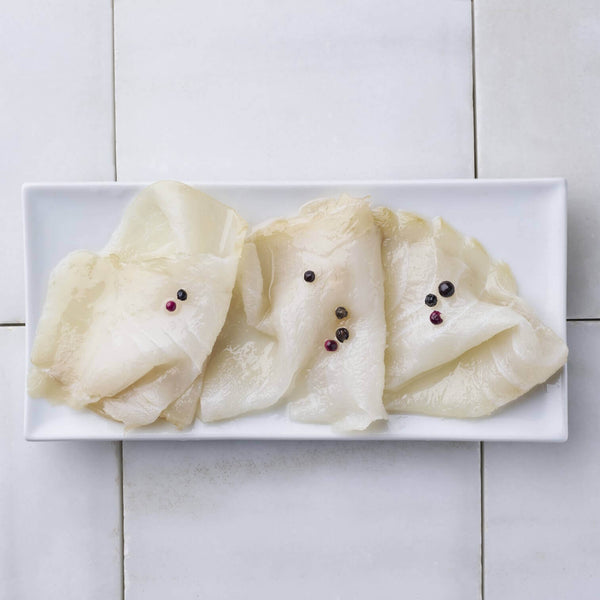
Cod tripe refers to the viscera of the cod: the stomach and intestines, cured in salt like the rest of the fish. They have a unique texture, somewhere between gelatinous and meaty, with a more intense flavor than the loin and an ability to absorb flavors from the stew, making them the perfect ingredient for a stew.
Traditional stew uses flaked cod (loins), which is fine. But tripe brings something that the loin cannot: gelatin. This gelatin slowly dissolves during cooking and naturally thickens the stew broth, without the need for flour or thickeners. The result is a full-bodied, unctuous broth that coats each chickpea.
Furthermore, tripe is significantly more economical than loins. A chickpea stew with cod tripe is a luxurious dish at an everyday price.
Our cod tripe is of premium quality, salt-cured for months to achieve its characteristic gelatinous texture. It is the star ingredient for stews, casseroles, and warm salads. If you've never tried it, this stew is the best way to discover it.
Complete Ingredients (6 servings)
Main Ingredients
- 400 g dried chickpeas (Lechoso or Castellano variety, whichever you prefer)
- 300 g cod tripe (desalted; see instructions below)
- 300 g fresh spinach (or 200 g frozen)
- 100 g Iberian bacon (or cured pancetta; optional for non-Lenten version)
For the Sofrito
- 1 large onion, finely chopped
- 4 cloves garlic
- 2 ripe tomatoes, grated
- 1 teaspoon sweet paprika from La Vera
- 1 bay leaf
- Extra virgin olive oil
To Enhance the Broth
- 1 ham bone (small; optional for non-Lenten version)
- 1 medium potato (peeled and diced; thickens the broth)
- A few saffron threads (or food coloring)
- Ground cumin (a pinch)
- Black pepper
- Salt (carefully: the tripe is already salted)
To Serve
- 2 hard-boiled eggs (chopped; traditional in Andalusia)
- Rustic bread (for dipping, non-negotiable)
- Extra virgin olive oil, raw, for finishing

Step 1: Soaking the Chickpeas
Chickpeas need a minimum 12-hour soak in lukewarm water with a teaspoon of salt. This is not optional: without soaking, chickpeas take twice as long to cook, remain hard inside, and their skin peels off.
- Water: Use lukewarm water (not cold). At 20-25 °C (68-77 °F), soaking is 30% more efficient than with cold refrigerator water.
- Ratio: 3 parts water to 1 part chickpeas. They swell a lot.
- Salt in soaking water: Yes. Contrary to popular myth, salt in the soaking water helps soften the chickpea skin. Chickpeas soaked with salt become more tender and have a better texture.
- Simultaneous cod tripe desalting: Take the opportunity to desalinate the cod tripe at the same time. They need 36-48 hours in cold water, changing the water every 8 hours. Plan ahead.
Step 2: Cooking the Chickpeas
Chickpea cooking has a golden rule that many people are unaware of: always start with hot water. If you put chickpeas in cold water and bring it to a boil, the abrupt change in temperature hardens the skin and causes them to peel.
- Drain the chickpeas from the soaking water. Discard that water.
- In a large pot, heat 2 liters of water until hot but not boiling (about 60-70 °C or 140-158 °F).
- Add the chickpeas, bay leaf, ham bone (if using), and diced potato.
- Increase heat. When it comes to a boil, reduce to medium-low heat. Skim off any impurities that rise to the surface.
- Cook for 1.5-2 hours over gentle heat (never at a rolling boil) until the chickpeas are tender when bitten. The exact time depends on the variety and freshness of the chickpea (those from the current year cook faster).
The "shock" trick: every 30 minutes, add half a glass of cold water to the pot. This thermal change causes the chickpea skin to contract and then relax, softening it. It's a grandmother's trick that really works.
In a pressure cooker: 25-30 minutes from when the valve rises. Faster, but you lose control over the texture.
Step 3: Sofrito (Sauté) and Stew Base
While the chickpeas are cooking, prepare the sofrito that will give character to the stew.
- In a large pan, heat olive oil over medium heat. If using Iberian bacon, cut it into small cubes and sauté first until it renders its fat and turns golden (5 minutes). Remove and set aside.
- In the same fat, sauté the chopped onion over medium-low heat for 10-12 minutes until well-poached and sweet.
- Add the chopped garlic (3 of them chopped; 1 whole crushed) and sauté for 2 minutes.
- Add the grated tomato and cook for 8-10 minutes until the tomato water evaporates and the sofrito darkens. This is the "concentrating" phase: the longer you cook the tomato, the deeper the flavor of the stew will be.
- Remove from heat and add the paprika from La Vera. Mix quickly: paprika burns in seconds if it touches hot oil directly. Off the heat, it toasts gently without becoming bitter.
- Pour the sofrito into the chickpea pot. Add the saffron threads (previously toasted for 10 seconds in a dry pan) and the pinch of cumin.
Step 4: Cod Tripe and Spinach
Cod tripe is added 30 minutes before the end of cooking. Don't add it from the beginning, or it will completely fall apart and lose its texture. We want it to retain some shape, to be noticeable in each spoonful.
- Cut the desalted tripe into pieces about 3-4 cm (1.2-1.6 inches). Similar size to the chickpeas, so everything can be eaten comfortably with a spoon.
- When the chickpeas have been cooking for 1-1.5 hours (depending on whether they are almost tender), add the tripe to the pot. Stir gently.
- Cook for 20 minutes over gentle heat. The tripe will release gelatin that will thicken the broth. You will see how the liquid changes from watery to unctuous.
- Add the fresh spinach (washed and with thick stems removed). If frozen, no need to thaw: they go directly into the pot.
- Cook for 5-8 more minutes until the spinach is tender but still green (if overcooked, it turns brown and bitter).
- Adjust salt and pepper. Be careful with the salt: the cod tripe and ham bone already add saltiness. Taste before adding anything.
If you've reserved the golden bacon, add it now along with the spinach. The contrast of crispy bacon with tender chickpeas and gelatinous tripe is one of the secrets of a good stew.
Step 5: Finishing, Resting, and Serving
A stew always tastes better the next day. The flavors meld, the chickpeas absorb more broth, and the gelatin from the tripe thickens the sauce when cold and then releases it when reheated, creating an even more unctuous texture.
- Turn off the heat and let the stew rest for a minimum of 15 minutes, covered, before serving. If possible, prepare it the day before and reheat it the next day.
- Serve in deep plates or bowls, topped with a chopped hard-boiled egg, a generous drizzle of raw extra virgin olive oil, and freshly ground black pepper.
- Accompany with thickly sliced rustic bread. Bread is part of the dish, not an accompaniment: it's used to soak up the broth, and a stew without bread is like paella without rice.
Broth texture: A good chickpea stew is neither a soup nor a dry casserole. The broth should be thick but fluid, capable of coating the back of a spoon. If it's too liquid, mash 4-5 chickpeas against the side of the pot with a fork and mix: the released starch will thicken the broth. If it's too thick, add a little hot water.
Regional and Modern Variations
Chickpea and cod stew has as many versions as there are provinces in Spain. Here are the most relevant ones:
- Andalusian stew: Add a paste of almonds, fried garlic, and saffron, which is ground in a mortar and incorporated at the end. The result is thicker and has a nutty touch.
- Manchego stew: Substitute spinach with chard and add a sofrito of mashed fried garlic (ajada).
- Galician stew: Incorporates grelos (turnip greens) instead of spinach and uses cod loins instead of tripe.
- Modern version (restaurant): Serve the chickpeas as a cream (puréed), with a confit cod tripe on top and raw baby spinach. Same flavor, 21st-century presentation.
- Strict Lenten version: No bacon or ham bone. Substitute the bacon fat with good extra virgin olive oil and the umami of the bone with a pinch of kombu seaweed in the chickpea cooking.
Tips for a Perfect Stew
- Potatoes thicken: A diced potato cooked with the chickpeas partially breaks down and thickens the broth naturally. It's a better thickener than flour.
- Never add salt at the beginning of chickpea cooking (except during soaking). Salt during cooking hardens the skin. Season at the end, when the chickpeas are already tender.
- Paprika always off the heat: Paprika from La Vera burns in 3 seconds in hot oil and turns bitter. Remove the pan from the heat before adding it.
- Current year's chickpeas: If you can, buy chickpeas from the current year's harvest. Chickpeas that are 2-3 years old take much longer to cook and never get as tender.
- Don't stir excessively: Chickpeas break easily if stirred with a spoon. Move the pot in gentle circles, without using utensils.
For a truly authentic stew, the quality of the tripe makes all the difference. Our cod tripe has the texture and gelatin you need for a thick broth and a flavorful bite. If you prefer a stew with loin, our salted cod is the classic option. All from Mercat del Ninot, Barcelona.
Frequently Asked Questions
How long should cod tripe be desalted for stew?
Between 36 and 48 hours in cold water, changing the water every 8 hours. Tripe is thicker and denser than loins, so it needs more desalting time. To check, cut a piece and taste it: it should be salty but not unpleasantly so. Keep in mind that during the stew's cooking, the salt will dilute even further.
Can the stew be made with canned chickpeas?
Yes, and it's a perfectly valid solution when you're short on time. With canned chickpeas, you skip the soaking and long cooking. Simply add them already cooked in step 4, along with the tripe, and cook everything together for 25-30 minutes so they absorb the sofrito flavors. The result is not identical (dried cooked chickpeas absorb more flavor), but it's a very decent stew.
Can I use cod loins instead of tripe?
Yes, it's the most common version. Use 300 g of desalted cod in large pieces, added in the last 10-15 minutes of cooking (the loin cooks faster than the tripe). The difference is that the loin doesn't contribute the same gelatin to the broth, so the stew will be less unctuous. To compensate, you can add a tablespoon of powdered gelatin or a piece of cod skin.
Can the stew be frozen?
Yes, it freezes well for up to 3 months. The chickpeas maintain their texture when thawed, and so does the tripe. The only ingredient that suffers is the spinach (it gets softer), but since it's already cooked in the stew, the difference is minimal. Freeze in individual portions so you can reheat only what you need.
What is the difference between potaje, cocido, and puchero?
Cocido is a complete stew with chickpeas, various meats (chicken, beef, blood sausage), vegetables, and soup, served in three courses. Puchero is the Andalusian version of cocido, somewhat lighter. Potaje is simpler: chickpeas or lentils with a couple of main ingredients (cod, spinach, egg) and a sofrito. It does not contain multiple meats or is served in courses.
Can it be made in a slow cooker?
Yes, and it turns out spectacular. Put the soaked chickpeas, pre-made sofrito, ham hock, potato, and hot water in the slow cooker. Cook on high for 4 hours or low for 8 hours. Add the cod tripe in the last 2 hours and the spinach in the last 30 minutes. Slow cooking results in exceptionally tender chickpeas.
Why does my potaje lack flavor?
Three main reasons: 1) the sofrito was not cooked long enough (tomatoes need a minimum of 8 minutes to concentrate), 2) lack of gelatin (add more cod tripe or a cod skin), 3) lack of fat (finishing olive oil is essential, do not omit it). A potaje without a good drizzle of raw oil when serving loses half of its perceived flavor.
Discover our premium selection
Seafood products carefully selected since 1990 at Mercat del Ninot, Barcelona. Refrigerated shipping 24-48h.

Premium Seafood Products — Bacalalo
Since 1990, selecting the best from the sea at Mercat del Ninot, Barcelona. Refrigerated shipping 24-48h.
View Icelandic cod →🛒 Related Bacalalo Products
"Discover Bacalalo" Assortment
Our best-selling pack — ideal for first-time buyers
€19.90
View product →⭐ 4.9/5 · Chilled shipping 24-48h · Since 1990 at Mercat del Ninot
Conclusions
Chickpea stew with cod tripe and spinach is real cooking: born from humble ingredients transformed by time and fire into something that comforts body and soul. It doesn't need avant-garde techniques or exotic ingredients. Just quality chickpeas, good cod tripe, fresh spinach, and a patiently made sofrito.
It's a dish that gets better the next day, freezes well, feeds an entire family for less than the cost of a pizza, and has a flavor that no modern dish has managed to surpass. If you've never tried cod tripe in a stew, now is the time.