Cod with choricero pepper skin is one of the most elegant trompe-l'oeils in Basque haute cuisine: a confited cod loin wrapped in an artificial "skin" made with choricero pepper puree gelled with agar-agar. The visual result mimics a stuffed pepper, but when cut, it reveals a perfect, silky cod interior that contrasts with the red, sweet, and slightly smoky choricero layer. It's a dish that demands technique, but once mastered, it becomes your calling card at any dinner party. Here's the complete recipe.
What is a culinary trompe-l'oeil?
A trompe-l'oeil is a culinary technique that involves presenting a dish with the appearance of something it is not. The name comes from pictorial art ("trompe-l'œil" in French: "deceives the eye") and in cooking, it is used to surprise the diner: what looks like an olive is actually an oil sphere, what looks like a fried egg is a mango and yogurt dessert.
In the case of cod with choricero pepper skin, the trompe-l'oeil works on two levels. At first glance, it looks like a classic stuffed pepper: red, shiny, with a convex shape. But when cut with a knife, instead of finding minced meat or rice, a confit cod loin appears, white, silky, which dramatically contrasts with the red outer layer.
This dish originated in avant-garde Basque cuisine, where chefs like Martín Berasategui and Eneko Atxa have explored the relationship between cod and choricero pepper (already a classic pairing in Basque cuisine) taking it to a higher technical level. Bacalao a la vizcaína is the traditional version; the trompe-l'oeil is the 21st-century version.

Choricero pepper: The taste of the Basque Country
The choricero pepper is a variety of red pepper that is air-dried for weeks until all its moisture is lost. The result is a wrinkled, almost crunchy skin, with a sweet, smoky, and deep flavor unlike any other pepper.
It is called "choricero" because it is traditionally used to give color and flavor to Basque chorizo, but its use in cooking goes much further. It is the star ingredient of vizcaína sauce (which does not contain tomato, but choricero), marmitako, Tolosa beans, and dozens of stews from northern Spain.
For this recipe, we need the choricero pulp: that red flesh that remains after scraping the inside of the rehydrated pepper. It is the base of the puree that we will gel to create the fake skin. Buy quality choriceros (those from Ibarra or Gernika are the best) or, failing that, pre-packaged choricero pulp, which saves work.
Full ingredients list (4 servings)
For the choricero skin (gelled)
- 12 dried choricero peppers (or 200 g of packaged choricero pulp)
- 200 ml of water from soaking the peppers
- 4 g agar-agar powder (2% of the total liquid weight)
- 1 teaspoon olive oil
- A pinch of salt
For the confit cod
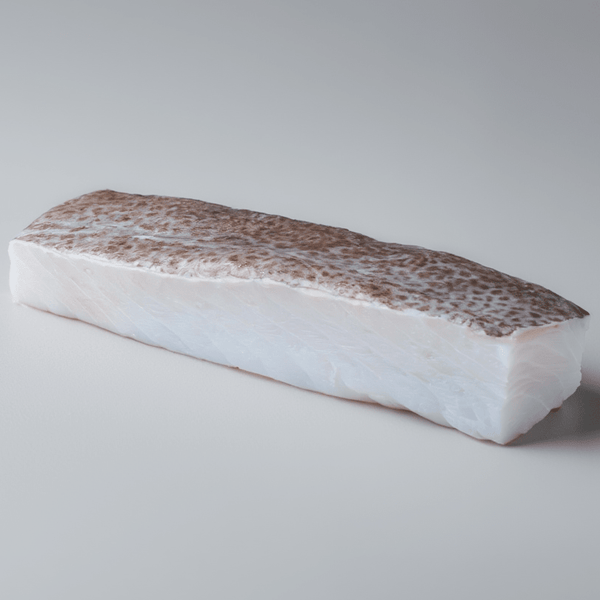
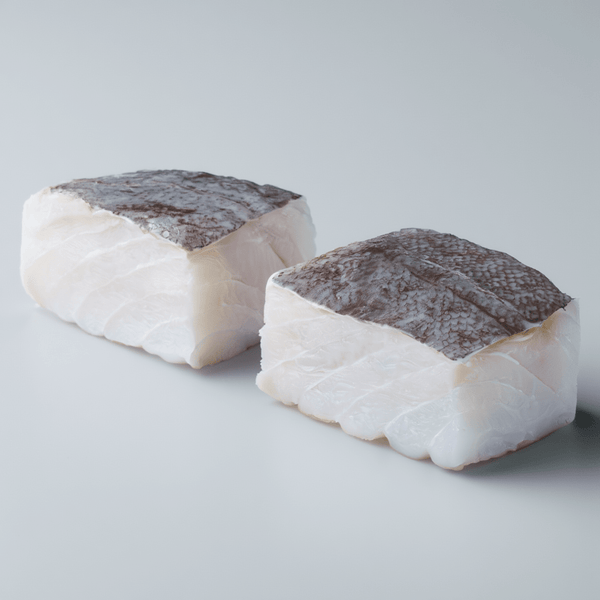
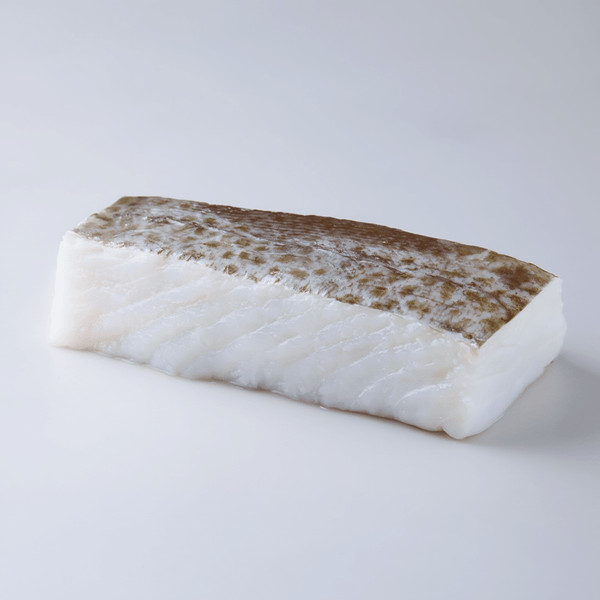
- 4 desalted cod loins, 180-200 g each (uniform thickness)
- 300 ml extra virgin olive oil (mild, Arbequina)
- 2 crushed garlic cloves
- 1 dried chili pepper (optional)
For the accompanying sauce
- 100 ml of cod cooking liquid (or fish stock)
- 50 g choricero pulp (reserved from step 1)
- 30 ml of oil from the cod confit
- Salt, pepper
Garnish
- Confit potatoes (diced, confit in oil at 80 °C)
- Grilled spring onion
- Fresh parsley leaves

Step 1: Choricero pepper puree
If you use dried choricero peppers (recommended, better flavor than packaged pulp):
- Rehydrate the peppers: place them in a bowl with hot (not boiling) water for 30 minutes. They should be soft and flexible.
- Scrape the pulp: open each pepper in half, remove the seeds, and with a spoon, scrape the red flesh from the inside of the skin. Discard the skins (or save them for broths). You should get about 200 g of pulp.
- Reserve the soaking water: filter it through a fine sieve (it may have seeds or impurities). You need 200 ml.
- Blend the pulp with the 200 ml of soaking water until you get a completely smooth, lump-free puree. Pass it through a fine sieve or chinois if necessary: for gelling, the texture must be perfectly homogeneous.
If you use packaged choricero pulp, simply dilute it with 200 ml of hot water and blend until homogeneous.
Step 2: Gelling with agar-agar (the false skin)
This is the most technical phase of the recipe. Agar-agar is a plant-based gelling agent (extracted from red algae) that forms firm but elastic gels when cooled. Unlike animal gelatin, agar-agar gels at room temperature and remains solid up to 85 °C, which allows us to wrap hot cod without the skin melting.
- Place the choricero puree in a saucepan and heat over medium heat until it begins to bubble gently.
- Add the agar-agar powder (4 g) little by little, stirring constantly with a whisk. Agar-agar must boil for at least 2 minutes to fully activate. If it doesn't boil enough, it won't gel.
- Add the teaspoon of oil and a pinch of salt. Mix well.
- Pour immediately onto a baking tray lined with acetate paper or very taut cling film. The thickness of the layer should be 2-3 mm: not thicker (it would be gummy) nor thinner (it would break when wrapping).
- To achieve uniform thickness, tilt the tray to distribute the liquid. Work quickly: agar-agar begins to gel from 40 °C.
- Let cool at room temperature for 15-20 minutes. The surface will go from liquid to firm. When you can lift a corner without it breaking, it's ready.
Critical point: the proportion of agar-agar determines the texture. With 2% (4 g per 200 ml) you get a flexible sheet that can be folded and wrapped. With 1% it would be too soft; with 3%, rigid and brittle. If it's your first time, do a small test first.
Step 3: Confit cod at low temperature
The cod is confited while the choricero pepper skin cools. Low-temperature confit is the perfect technique for this dish because it achieves a silky, moist, and flaky interior that contrasts with the firm outer layer.
- Put the olive oil in a saucepan with the garlic cloves and the chili pepper. Heat to 65 °C.
- Submerge the cod loins completely.
- Cook for 12-15 minutes, maintaining the temperature between 62 and 68 °C. Use a thermometer.
- Remove the loins and let them rest on absorbent paper for 2 minutes. Reserve the confit oil (you will use it for the sauce).
The cod should be cooked but slightly translucent in the center. When wrapped with the skin and briefly reheated, it will finish cooking. If you overcook it now, it will be dry when served.
Step 4: Wrapping the cod with the skin
- Cut the choricero sheet into rectangles large enough to wrap each cod loin: calculate the perimeter of the loin + 1 cm overlap on each side.
- Place a cod loin in the center of each choricero rectangle. The "pretty" side of the cod (the one that was skin) should be against the red sheet.
- Wrap carefully, gently pressing the choricero sheet against the cod. The gelatin on the surface of the cod (still warm) helps the skin adhere. Fold the ends as if wrapping a gift.
- Seal with heat: briefly pass each piece through a hot pan (without oil) for 10-15 seconds per side. The heat slightly melts the surface of the agar-agar and seals it against the cod. Don't overdo it: if the agar exceeds 85 °C, it will melt.
- Reserve the pieces in an oven at 60 °C while preparing the sauce.
Step 5: Plating and garnishes
The sauce (3 minutes)
- In a saucepan, mix the cooking liquid (or stock), the reserved choricero pulp, and the confit oil.
- Heat and emulsify with an immersion blender until you get a homogeneous, shiny, orange-red sauce.
- Adjust salt to taste. It should be intense but not aggressive: it's an accompaniment, not the main event.
Assembly
- Pour 2-3 tablespoons of sauce onto the base of the plate.
- Place the wrapped loin in the center, with the cut visible: that is, cut a corner of the wrapped cod so that the red exterior / white interior contrast is visible. This is the "reveal" of the trompe-l'oeil.
- Arrange the confit potatoes and grilled spring onion around.
- Finish with parsley leaves and a drizzle of the confit oil.
The moment of serving is the moment of truth: when the diner cuts the piece and discovers the white interior wrapped in the red sheet, the effect is immediate. It's a dish that sparks conversation, that gets photographed, and that shows that cod cuisine can be as sophisticated as any luxury protein.
The science of agar-agar: How it works
Understanding agar-agar will help you master not only this recipe but any gelling technique.
- Origin: it is extracted from red algae of the Gelidium and Gracilaria genera. It is 100% plant-based (suitable for vegans).
- Activation: it needs to boil for at least 2 minutes at 85-100 °C for the molecules to unfold and form the gelling network.
- Gelling: it forms a gel when cooled below 40 °C. Unlike animal gelatin (which gels at 15 °C), agar-agar is much more robust.
- Melting: agar-agar gel melts at 85 °C. This means you can reheat a dish without the gel dissolving, as long as you don't exceed that temperature.
- Texture: firm, clean, slightly brittle. It is not elastic like gelatin. That's why the proportion matters: too little agar and it won't gel; too much and it will be like plastic.
- Standard dosage: 1-2% for soft gels (flexible sheets), 2-3% for firm gels (spheres, cubes), 0.5-1% for thickening liquids without completely gelling.
Variations and other edible skins
- Squid ink skin: replace the choricero puree with squid ink diluted in fish stock. The sheet comes out black, shiny, with an intense marine flavor. The contrast with the white cod is dramatic.
- Piquillo pepper skin: blend canned piquillo peppers with their juice, gel in the same way. Sweeter and milder result than choricero.
- Beetroot skin: gelled cooked beetroot puree. Intense magenta color, earthy flavor that combines surprisingly well with cod.
- Saffron skin: concentrated saffron infusion in gelled stock. Golden color, floral flavor. For gala presentations.
- Without agar-agar: if you don't want to use gelling agents, you can make a simplified version: confit the cod, place it on a bed of thick choricero puree and gratin for 2 minutes so that the puree adheres to the surface. It's not a true trompe-l'oeil, but the flavor is very similar.
Frequently asked questions
Where can I buy agar-agar and how much does it cost?
Agar-agar powder can be found in supermarkets (baking or organic product section), health food stores, and online stores. Brands like Vahiné, Naturgreen, or Biovegan sell it in 4-8 g packets. A 4 g packet costs between €1.50-€2.50 and is enough for this recipe. You can also find it in bulk and cheaper in Asian stores. Make sure it's powder (not strips, which are harder to measure).
Can the gelled choricero pepper skin be made in advance?
Yes, you can make it up to 48 hours in advance. Store it in the refrigerator on the acetate, covered with cling film so it doesn't dry out. Before using it, take it out for 15 minutes at room temperature to regain flexibility. If you use it directly from the refrigerator, it may be too stiff and break when wrapping the cod.
Can I substitute agar-agar with regular gelatin?
It is not recommended for this recipe. Animal gelatin melts at 30-35 °C, which means the "skin" would melt with the heat of the confit cod (which is at 60-65 °C). Agar-agar is essential here precisely because it resists up to 85 °C. If you don't have agar, the simplified version without gelling agent (thick gratinéed choricero puree) is a better alternative.
Can paprika be used instead of choricero pepper?
Not with the same result. Paprika de la Vera is a dry powder that does not have the fleshy pulp of the choricero, necessary to create the gellable puree. However, you can make a hybrid version: use roasted red pepper puree (canned or fresh) and add 2 teaspoons of sweet paprika de la Vera to bring the flavor closer to choricero. It's not identical, but it works well.
At what temperature should this dish be served?
The cod should be at 55-60 °C (warm-hot), the choricero pepper skin at the same temperature (it maintains its integrity up to 85 °C), and the sauce hot. It's a dish that doesn't wait: serve it as soon as it's plated. Plates should be preheated. If you need to keep it warm, the oven at 60 °C is your ally.
Is this dish suitable for a company dinner or catering?
It's a perfect dish to impress, but logistically complex if there are more than 8-10 diners. The key is to prepare all components separately in advance (jellied puree, confit cod, potatoes, sauce) and only do the wrapping and plating at the moment of serving. For more than 10 people, I recommend the simplified version without agar-agar: confit cod over gratinated choricero puree.

Premium Seafood Products — Bacalalo
Since 1990, selecting the best from the sea at Mercat del Ninot, Barcelona. Refrigerated shipping 24-48h.
View Icelandic cod →🛒 Related products from Bacalalo
⭐ 4.9/5 · Cold shipping 24-48h · Since 1990 at Mercat del Ninot
Conclusions
Cod with choricero skin is the natural evolution of classic Basque cuisine: it takes traditional flavors (cod + choricero) and presents them with a technique that surprises and excites. It's not a dish for a regular Tuesday; it's a dish for when you want to show that cod cuisine can go as far as any high-end gastronomy dish.
The agar-agar technique, once mastered, opens up a world of creative possibilities. Colored skins, textures, encapsulated flavors: it's accessible molecular gastronomy that you can make at home with ingredients bought at any supermarket. And the result, when the diner cuts into the piece and discovers the contrast, is priceless.