Summary: Spoiled or rotten fish is responsible for around 60,000 food poisoning cases annually in the EU. Detecting it in time means knowing 5 sensory cues (smell, texture, color, eyes, gills) and understanding the difference between "expiration date" and "best before date". Here are the real indicators, without myths.
Table of contents
Expiration date vs. best before date for fish
There's a huge legal and practical difference between these two concepts, and confusing them is the number one cause of unnecessary food waste.
Expiration date ("Use by..."): Applies to microbiologically very perishable foods — fresh fish, fresh meat, fresh dairy products. After this date, the food can be dangerous to health. It's not a suggestion: it's a safety limit calculated by the manufacturer/distributor.
Best before date ("Best before..."): Applies to stable products — canned goods, frozen foods, salted fish, vacuum-packed smoked fish. After this date, the product may lose organoleptic quality (taste, texture, aroma) but is not necessarily dangerous.
In practice:
- A fresh hake fillet with an expiration date of yesterday: do not consume it.
- A can of sardines with a best before date 3 months ago: probably perfect.
- Dried cod (salted): with a best before date weeks past, it can be perfect if stored correctly.
The 5 signs to detect spoiled fish
Your nose, your eyes, and your fingers are better than any printed date. These are the signs professionals use:
1. Smell
Fresh fish smells like the sea — sea breeze, seaweed, salt water. It's a fresh, clean, and pleasant smell. Decomposing fish produces trimethylamine (TMA), a chemical compound with a characteristic "rotten fish" smell. If it smells like ammonia, sour, or just "bad", it's not fresh. The detection threshold for TMA in humans is 1 ppm — your nose is an extremely sensitive detector.
2. Texture of the flesh
Press the flesh with your finger. In fresh fish, the flesh is firm and elastic — the finger mark disappears immediately. In decomposing fish, the flesh is soft, flabby, and the finger mark remains sunken. Additionally, if the surface is slimy or sticky (bacterial biofilm), the fish is clearly spoiled.
3. Color
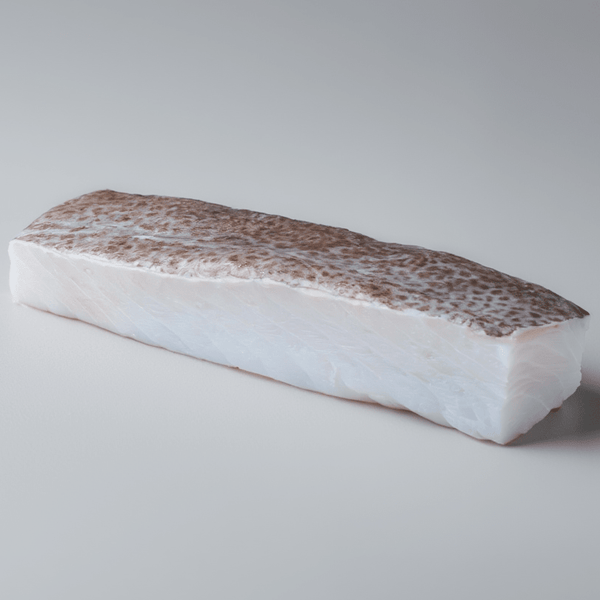
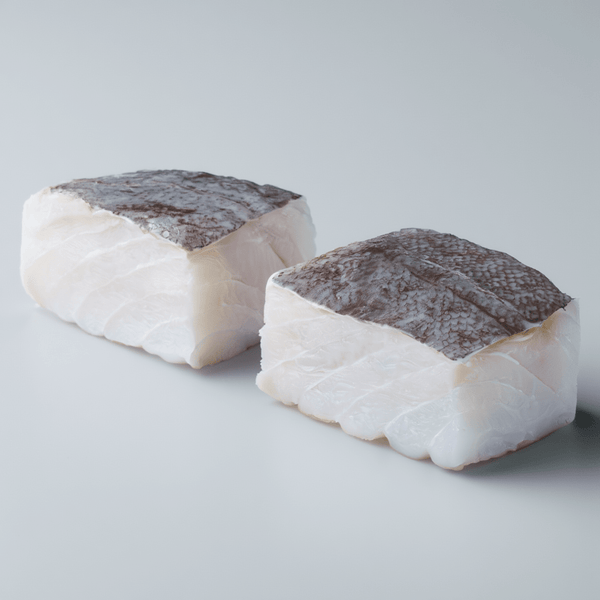
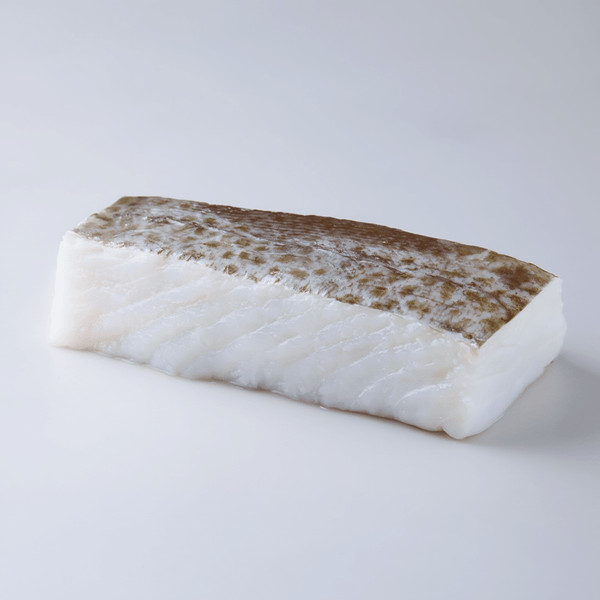
Fresh fish has vibrant and defined colors. White flesh (hake, cod) should be translucent and bright. Pink flesh (salmon, trout) should be uniform in color without brown spots. Fresh red tuna is bright cherry red. When fish deteriorates, the colors fade: the flesh becomes opaque, yellowish, or grayish. Green or bluish spots = mold.
4. Eyes (on whole fish)
The eyes are the most reliable indicator on whole fish. Fresh: convex (bulging), bright eyes, with a black pupil and transparent cornea. In deterioration: sunken, opaque eyes, gray pupil, milky cornea. The more sunken and opaque, the longer it has been dead.
5. Gills (on whole fish)
Lift the operculum and look at the gills. Fresh: bright red, clean, without mucus. In deterioration: brown, gray, or greenish color, with thick mucus and a strong smell. Gills change color before the flesh, so they are an early indicator.
Prefer to avoid the risk? Gourmet canned goods have a shelf life of 3-5 years and are microbiologically safe from the day of manufacture. And our dried cod is one of the most stable fish products available.
Specific signs by type of fish
| Product | Sign of freshness | Sign of spoilage |
|---|---|---|
| Fresh cod | Firm, white-translucent flesh, clean smell | Soft, yellowish flesh, ammonia smell |
| Fresh salmon | Uniform orange color, visible fat between fibers | Brown spots, sticky texture, discoloration |
| Mussels | Closed shells or shells that close when tapped, sea smell | Open shells that don't close, strong smell, broken |
| Shrimp/prawns | Gray-translucent color, attached shell, mild smell | Black spots (melanosis), detached shell, strong smell |
| Fresh tuna | Bright cherry red, firm when cut | Dark brown, oxidized surface, soft |
| Dried/salted cod | Uniform yellow-beige, rigid texture, salty smell | Pink spots (halophilic bacteria), rancid smell, mold |
Real risks: what happens if you eat spoiled fish
Decomposing fish can cause two main types of poisoning:
1. Scombroid poisoning (histamine poisoning)
Mainly affects fish with high histidine content: tuna, mackerel, bonito, sardines. Bacteria convert histidine in fish into histamine when the cold chain is broken. Histamine is heat-stable — neither cooking nor freezing destroys it once formed. Symptoms (appear in 10-60 minutes): facial flushing, hives, headache, diarrhea, vomiting. Treatment: antihistamines. EFSA sets the safety limit at 200 mg/kg for fresh fish.
2. General bacterial poisoning
By Salmonella, Listeria monocytogenes, Vibrio spp., Staphylococcus aureus. Variable symptoms: diarrhea, vomiting, fever, abdominal pain. Appear 2-72 hours post-ingestion. At-risk populations (pregnant women, immunocompromised individuals, over 65, young children) should exercise extreme caution.
Real severity: Most fish poisonings are self-limiting and resolve within 24-48 hours. But in vulnerable individuals, they may require hospitalization. In Europe, Listeria causes about 2,500 annual infections with a mortality rate of 15-20%.
Correct storage times
| Product | Refrigerator (0-4°C) | Freezer (-18°C) | Pantry |
|---|---|---|---|
| Fresh fish (fillet) | 1-2 days | 3-6 months | N/A |
| Fresh fish (whole) | 2-3 days | 4-6 months | N/A |
| Fresh seafood | 1-2 days | 3-4 months | N/A |
| Smoked fish (packaged) | 2-3 weeks (unopened) | 2-3 months | N/A |
| Dried/salted cod | 6-12 months | 12+ months | 3-6 months (dry, dark) |
| Canned goods (unopened) | N/A | N/A | 3-5 years |
| Canned goods (opened) | 2-3 days (in non-metallic container) | N/A | N/A |
Canned goods: the exception to the rule
Canned fish (tuna, sardines, mussels, cockles, anchovies) are the most stable and safest fish products available. The autoclave sterilization process eliminates all pathogenic microorganisms and their spores. As long as the packaging is intact (no deep dents, rust, swelling, or leaks), a canned good is safe for years beyond its best before date.
In fact, many canned goods improve over time. Anchovies in olive oil develop more complex flavors after 12-18 months of maturation. Marinated mussels gain flavor depth over time. In the canning industry, there is talk of "vintage canned goods" similar to wine.
When to definitely discard a canned good:
- Swollen can (indicates gas production by bacteria — possible Clostridium)
- Can with leaks or breaks in the weld
- Upon opening, the contents bubble or have a putrid smell
- Deep rust that perforates the metal (surface rust is only cosmetic)
At Bacalalo.com, we work with canneries that guarantee complete traceability. Explore our gourmet canned goods or our dried cod — products designed to last, with discernment.
When to throw away and when it's salvageable
| Situation | Verdict | Explanation |
|---|---|---|
| Fresh fish that smells like ammonia | Throw away | Advanced decomposition, not reversible |
| Smoked salmon 2 days past expiration date | Evaluate | If it doesn't smell bad or have a sticky texture, it might be fine |
| Canned goods 6 months past "best before" date | Safe | If the can is intact, it's perfectly edible |
| Dried cod with pink spots | Throw away | Halophilic bacteria — compromised product |
| Shrimp with slight melanosis (black spots) | Evaluate | Melanosis ≠ spoilage. If they don't smell bad, they are safe |
| Frozen fish with freezer burn | Safe but bad | Not dangerous, but texture and flavor are deteriorated |
Frequently asked questions
Is it dangerous one day after the expiration date?
It depends on the product and how it has been stored. Fresh fish one day past its expiration date that has always been kept at 2-4°C might be fine — evaluate it sensually (smell, texture, color). But if it has had cold chain disruptions (was out of the fridge for a while), it can be dangerous even BEFORE the expiration date. The date is a reference, not an absolute guarantee.
Does the smell of fish mean it's bad?
Not necessarily. Fish, even fresh, has a smell — but it's a clean, mild sea smell. What indicates spoilage is the intense smell of amines (ammonia, trimethylamine): a pungent, chemical smell that makes you recoil. If it "smells like fish" mildly, it's normal. If it "stinks like fish," it's not.
Can I cook fish that smells a bit off to "kill the bacteria"?
Cooking kills bacteria, yes, but it does NOT destroy all the toxins that bacteria have already produced. Histamine, for example, is heat-stable — it is not destroyed at 100°C. If the fish smells bad, the toxins are already there. Cooking it does not make it safe. Simple rule: if in doubt, throw it out.
Are dented canned goods dangerous?
It depends on the type of dent. A superficial (cosmetic) dent that does not affect the seams or perforate the metal is safe. A deep dent in the seam or weld may have compromised the hermetic seal — discard it. If the can is swollen (bulging), do not open it under any circumstances: it may contain botulinum toxin.
Does frozen fish expire?
Technically it doesn't expire (microorganisms do not multiply at -18°C), but it progressively loses quality due to dehydration and fat oxidation. White fish frozen maintains good quality for 6 months. Fatty fish (salmon, mackerel), 3-4 months. After that time, it is safe but with deteriorated taste and texture.
Are shrimp with black spots bad?
Not necessarily. Black spots on shrimp and prawns are called melanosis and are an enzymatic (not bacterial) reaction that occurs naturally after the crustacean's death. It is a cosmetic defect, not an indicator of spoilage. If the shrimp do not smell bad and the texture is firm, they are safe. Many commercial shrimp are treated with sulfites to prevent melanosis.
Keep exploring
Gourmet canned goods · Dried cod · Desalted cod · Smoked salmon · Smoked, salted, and pickled products