Table of contents
What is marinated fish and why it works
Fish marinade is a marinating technique that predates refrigerators. Andalusian fishermen developed it out of necessity: spices and vinegar preserved fish for days without refrigeration and, as a glorious side effect, created an addictive flavor.
The principle is simple. The acid from the vinegar partially denatures the fish's surface proteins—essentially "cooking" it slightly. The spices (cumin, paprika, oregano) penetrate the flesh during marination. And when you fry that marinated fish, the Maillard reaction of the breading combines with the deep flavor of the marinade. The result is crispy on the outside, juicy and spicy on the inside.
It's not strictly an Andalusian invention—the Romans already marinated fish with vinegar and spices (garum is a close cousin). But the Andalusian version, perfected over centuries in the ports of Cadiz, Huelva, and Malaga, is the one that has transcended as a gastronomic benchmark.
In the beach bars of southern Spain, it's called "bienmesabe" for obvious reasons. In Cadiz, it's simply "pescaíto en adobo" (fried marinated fish). Whatever the name, the technique is the same.
Andalusian marinade: essential spices
Authentic Andalusian marinade uses exactly these ingredients. No more, no less. Versions with soy sauce, ginger, or "Asian touches" might be good, but they are not Andalusian marinade.
For 1 kg of fish:
- White wine vinegar: 150-200 ml. Sherry vinegar works spectacularly. Apple cider vinegar NO—it completely changes the flavor profile.
- Water: 100 ml (reduces acidity without losing preservative effect).
- Ground cumin: 1 heaping tablespoon. This is the star spice—no cumin, no marinade.
- Sweet paprika (or bittersweet): 1 teaspoon. Adds color and a smoky touch. Use Pimentón de la Vera if you can.
- Dried oregano: 1 teaspoon. Real oregano (Origanum vulgare), not marjoram.
- Garlic: 4-6 cloves, crushed with skin in a mortar. Crushed, not sliced or minced.
- Coarse salt: 1 tablespoon.
- Fresh parsley: A handful, roughly chopped (optional in tradition, but improves it).
- Bay leaves: 2 leaves (optional).
The working proportion: 2 parts vinegar to 1 part water, with the spices well dissolved. The marinade should smell intense, almost aggressive—the fish will absorb only a fraction.
Which fish to use for marinating
Not all fish handle marination well. You need pieces with firm flesh that won't fall apart with the vinegar's acid and are flavorful enough to compete with the spices.
| Fish | Scientific name | Suitability | Approx. price |
|---|---|---|---|
| Cazón (smooth-hound) | Galeorhinus galeus | The absolute classic | €8-12/kg |
| Dogfish / Pintarroja (small-spotted catshark) | Scyliorhinus canicula | Excellent, firm flesh | €5-8/kg |
| Fresh cod | Gadus morhua | Very good, flakes easily | €12-18/kg |
| Hake | Merluccius merluccius | Good but delicate | €10-18/kg |
| Rosada (Kingklip) | Genypterus capensis | Good economical alternative | €7-10/kg |
| Anchovy | Engraulis encrasicolus | Whole, headless | €4-8/kg |
| Choco / Sepia (cuttlefish) | Sepia officinalis | Not fish, but works | €10-15/kg |
The undisputed king is cazón (smooth-hound). It's a small shark with firm, white, boneless flesh and a neutral flavor that absorbs the marinade like a sponge. In Cadiz, "adobo" without specification means cazón en adobo. Period.
Avoid: very fatty fish (sardines, mackerel—they disintegrate with vinegar), very delicate fish (sole, John Dory), and anything frozen that hasn't been properly thawed and dried.
Step-by-step recipe: Andalusian marinated fish
Ingredients (4 servings):
- 1 kg cazón (smooth-hound) cut into 3-4 cm chunks (or your chosen fish)
- Complete marinade (see previous section)
- Wheat flour for coating (or chickpea flour for gluten-free)
- Mild olive oil or sunflower oil for frying (minimum 1 liter)
Step 1 — Prepare the marinade (5 min): Crush the garlic with the salt in a mortar until it forms a paste. Add the cumin, paprika, and oregano. Mix. Pour in the vinegar and water and stir well. Add the bay leaves.
Step 2 — Marinate (2-24 hours): Cut the fish into uniform chunks. Submerge them in the marinade in a glass or ceramic container (never metal—it reacts with vinegar). Cover and refrigerate. Minimum 2 hours, ideally 8-12 hours, maximum 24. More than 24 hours and the vinegar will "cook" the fish too much, leaving the texture mushy.
Step 3 — Drain (10 min): Remove the fish from the marinade and drain it well in a colander. DO NOT rinse it—you want the spices to adhere. Lightly pat dry with paper towels. This step is critical: if the fish is wet, the breading won't stick.
Step 4 — Flour (5 min): Place flour in a deep dish. Dredge each chunk in the flour, pressing lightly. Shake off excess. The layer should be thin and even.
Step 5 — Fry (15-20 min): Heat the oil to 180-190 °C (if you don't have a thermometer, drop a small piece of bread: it should bubble immediately but not burn). Fry in small batches—no more than 5-6 chunks at a time to avoid dropping the oil temperature. 3-4 minutes per batch, turning once.
Step 6 — Drain and serve: Place on a wire rack (better than paper towels—paper returns moisture). Lightly salt. Serve immediately with a lemon wedge.
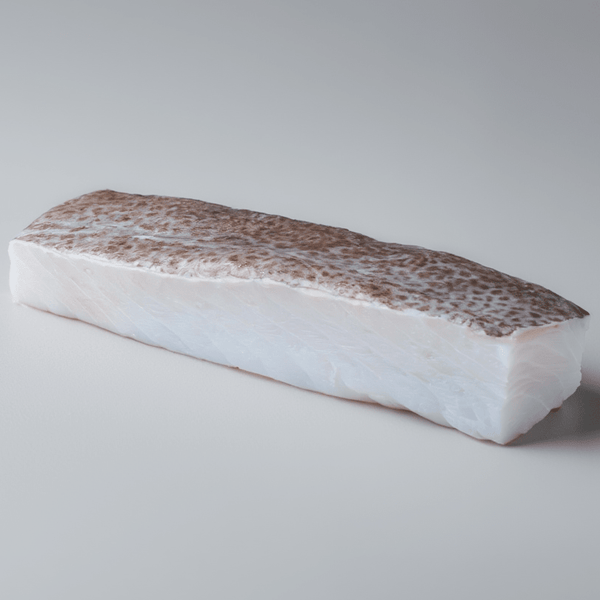
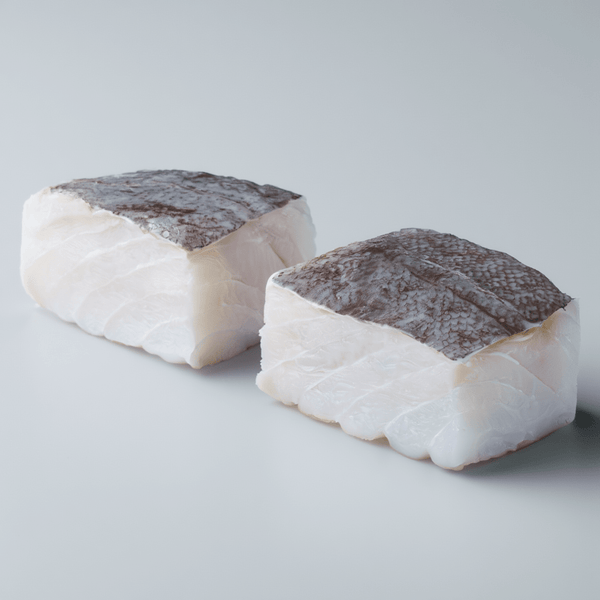
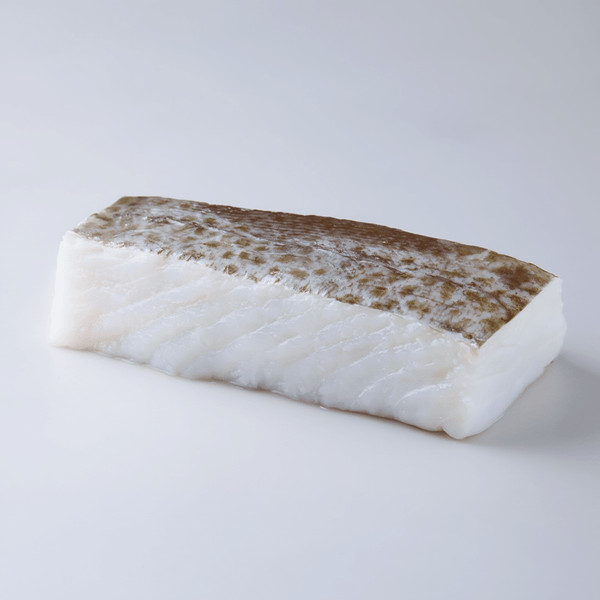
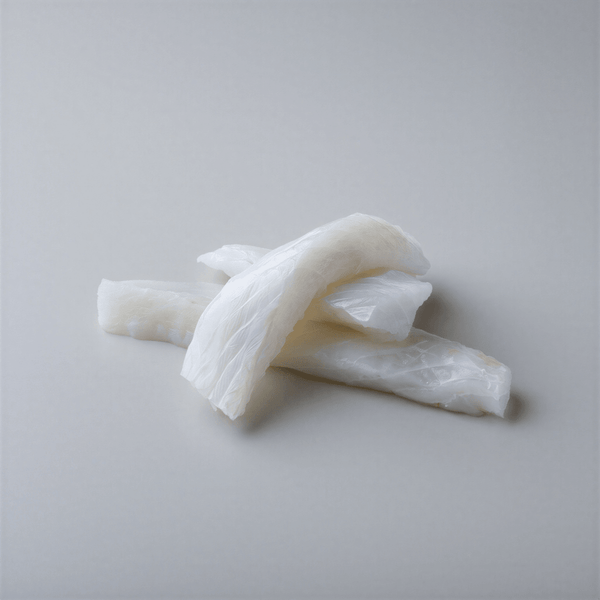
Fresh cod takes to marinating wonderfully—its flesh absorbs the spices and maintains a firm texture after frying. If you prefer the more traditional version, try our artisanal desalted cod, which also works marinated (reduce the vinegar by half).
Frying tips that make a difference
1. Constant temperature: The number one mistake is putting too much fish in at once. Each chunk lowers the oil temperature by 10-15 °C. If it drops below 160 °C, the breading absorbs oil instead of sealing. Result: oily and soft fish.
2. Enough oil: The fish should float. Minimum 3-4 cm deep. If the oil doesn't cover the chunks, the bottom breading gets soaked while the top dries out.
3. Don't touch: Once you drop the chunk into the oil, don't touch it for 90 seconds. If you try to turn it earlier, the breading will come off. Once golden brown on the bottom, a gentle flip with tongs. Just one flip.
4. Mild olive oil, not extra virgin: EVOO has a smoke point of 160-180 °C—too low for frying at 190 °C. Use mild olive oil (smoke point 210-230 °C) or high oleic sunflower oil. The marinade flavor is already enough—you don't need the oil to add more.
5. Cold flour: Put the flour in the fridge 30 minutes beforehand. The temperature difference between cold flour and hot oil creates a thermal shock that produces a crispier coating.
Frying times by fish type
| Fish | Cut | Oil Temp. | Total time | Visual indicator |
|---|---|---|---|---|
| Cazón (smooth-hound) | 3 cm chunks | 185 °C | 3-4 min | Deep golden, floats |
| Cod | 3-4 cm chunks | 180 °C | 4-5 min | Medium golden, crispy |
| Hake | 3 cm chunks | 180 °C | 3 min | Light golden (overcooks fast) |
| Anchovy | Whole, headless | 190 °C | 2-2.5 min | Dark golden, very crispy |
| Choco / Sepia (cuttlefish) | Strips or rings | 190 °C | 1.5-2 min | Quick golden (gets tough) |
| Rosada (Kingklip) | 3 cm chunks | 185 °C | 3-4 min | Even golden |
| Pintarroja (small-spotted catshark) | 3 cm chunks | 185 °C | 3-4 min | Similar to cazón |
Keep exploring
Perfect fried fish technique · Griddled fish · Artisanal desalted cod
Frequently asked questions
How long should I marinate the fish?
Minimum 2 hours for the spices to penetrate. Ideally 8-12 hours (overnight in the fridge). Maximum 24 hours—any longer and the vinegar will "cook" the proteins excessively, leaving the texture mushy. For anchovies, 2-4 hours is sufficient due to their small size.
Can I make adobo without vinegar?
Technically you can substitute vinegar with lemon, but it won't be Andalusian adobo anymore—it's something else. Wine vinegar (ideally Sherry vinegar) provides a round, warm acidity that lemon cannot replicate. If you hate vinegar, try a half-vinegar, half-lemon mix as a transition.
What flour is best for adobo coating?
Regular all-purpose wheat flour. Strong flours (high gluten) create a gummy coating. Chickpea flour is a gluten-free alternative that also provides an excellent extra crispness—it's widely used in Cadiz. Cornstarch alone makes it too dry.
Can I freeze marinated fish?
Yes, but freeze BEFORE flouring. Place the marinated fish in a bag with its marinade and freeze for up to 3 months. To use: thaw in the refrigerator for 24 hours, drain, flour, and fry. The texture will be slightly inferior to fresh but the flavor remains good.
Can I reuse frying oil for adobo?
You can reuse it 2-3 times if you filter it well after each use. The spices from the coating will darken the oil but not necessarily degrade it. Discard the oil when it smells rancid, smokes at normal temperature, or has a very dark color. Never mix used oil with new.
Can desalted cod be marinated?
Yes, and it's spectacular. Reduce the vinegar by half (desalted cod already has residual salt that enhances flavors) and marinate for only 2-4 hours. The firm texture of desalted cod holds up well to frying. Use 3-4 cm chunks so they don't fall apart.