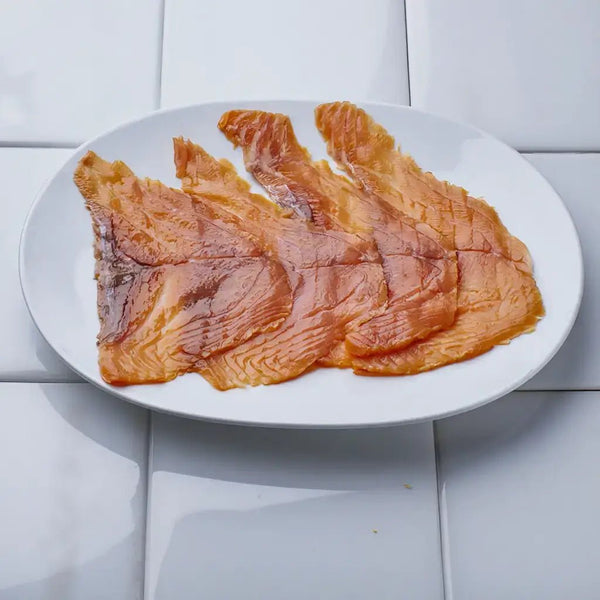
Summary: Mojama is one of the most prized gourmet products in Spanish gastronomy, but also one of the most confusing when it comes to buying it. Prices range from €30 to over €200/kg, and quality varies enormously. This guide explains why mojama is expensive, how to distinguish different qualities, what price ranges are reasonable for each category, and where to buy authentic mojama without falling for industrial versions that do not do justice to this seafood delicacy.
Table of contents
- What is mojama and why it is a delicacy
- Why mojama is so expensive: the artisanal process
- The 4 qualities of mojama: from industrial to premium
- Mojama price chart by quality
- How to distinguish qualities: visual and sensory guide
- Where to buy quality mojama
- How to serve and eat mojama correctly
- Frequently asked questions
- Conclusion
What is mojama and why it is a delicacy
Mojama is tuna loin cured in salt and air-dried for months. Its name comes from the Arabic musama ("waxed"), and it is known as "the ham of the sea" — a comparison that goes beyond marketing: just like Iberian ham, mojama transforms a raw piece of meat into a complex-flavored cured product through a long and meticulous artisanal process.
Mojama has been a staple food on the southern Spanish coast for centuries. The Phoenicians already salted tuna on the Gaditan coasts, and the tradition has continued uninterrupted to this day. However, in the last two decades, mojama has gone from being a regional product of fishermen to a star ingredient in high-end Spanish cuisine, which has driven up both its demand and its price.
What makes mojama special is not only its flavor — intense, saline, with notes of dried fruits and a long aftertaste — but also its versatility. It works as a main tapa, as an ingredient in salads and pasta, as an accompaniment to cheeses, and as a luxury appetizer. A piece of quality mojama, well preserved, can last for months in the refrigerator and provide exceptional gastronomic moments with each cut.
Why mojama is so expensive: the artisanal process
Understanding why mojama costs what it does requires knowing its production process. It is not an expensive product out of whim — every production factor adds to the final price.
Production timeline: from whole tuna to mojama
The complete process takes between 3 and 4 months, and each phase involves costs and shrinkage:
- Tuna capture (high cost, limited availability): Atlantic and Mediterranean bluefin tuna are subject to strict ICCAT (International Commission for the Conservation of Atlantic Tunas) quotas. These quotas, necessary for the sustainability of the species, drastically limit supply. A whole bluefin tuna at market can cost between €20 and €50/kg, depending on the season and quality.
- Filleting and loin selection (80-85% shrinkage): From a 200 kg tuna, only 30-40 kg of loin suitable for mojama is obtained — the noblest and cleanest part. The rest (head, tail, belly, bones, offal) has other uses, but the yield for mojama is low. This shrinkage explains a large part of the price.
- Salting (7-10 days, cost of salt and labor): The loins are covered with coarse sea salt in stone or stainless steel tanks. The process requires daily supervision and adjustments according to ambient humidity and the thickness of the piece.
- Washing, pressing, and shaping (1-2 days): Each piece is individually washed, pressed to remove liquid, and manually shaped. It is artisanal work, piece by piece.
- Air drying (2-3 months, additional 30-40% shrinkage): The loins are hung in ventilated drying rooms where they lose between 30% and 40% of their weight due to water evaporation. That is, 1 kg of fresh loin produces only 600-700 g of mojama. Natural drying requires specific climatic conditions (wind, humidity, temperature) that are only found in certain coastal areas.
Doing the math: if tuna costs €35/kg at market, 17% is used for loin, and the loin loses 35% in drying, the raw material cost per kg of mojama already exceeds €100. To that must be added the salt, artisanal labor, months of drying, storage, packaging, and the producer's margin.
Artisanal vs. industrial mojama: the difference is in the time
Industrial versions shorten drying to 2-4 weeks using drying chambers with controlled temperature and humidity. The result is a product that looks like mojama but has not developed the aromatic complexity of natural drying. It is the difference between a ham cured for 24 months in a natural cellar and one cured for 8 months in an industrial chamber — technically both are ham, but the experience in the mouth is radically different.
The 4 qualities of mojama: from industrial to premium
Not all mojama is the same. There are four clearly differentiated categories by tuna species, production method, and final result:
1. Industrial skipjack tuna mojama (low end)
Made with skipjack tuna (Thunnus albacares, yellowfin) or bonitos (Katsuwonus pelamis). Accelerated drying in industrial chambers for 2-4 weeks. Lighter and more homogeneous color, softer texture, and flat, one-dimensional flavor. This is what is usually found in supermarkets, vacuum-packed in small trays.
2. Semi-artisanal skipjack tuna mojama (mid-low end)
Skipjack tuna but with a longer drying process (4-6 weeks) and greater care in loin selection. Better than industrial, but without the complexity of tuna mojama. Some quality producers in this range offer a decent product at an affordable price.
3. Artisanal bluefin tuna mojama (high end)
Made with bluefin tuna (Thunnus thynnus) caught by almadraba or longline, with natural drying for 2-3 months. Dark garnet color, firm and elastic texture, complex flavor with notes of dried fruits and a long aftertaste. This is the "real" mojama that connoisseurs seek.
4. Premium almadraba bluefin tuna mojama (premium range)
The top level: bluefin tuna caught exclusively in the almadrabas of Barbate, Zahara de los Atunes, Conil or Tarifa during the migration season (May-June). Natural drying for 3-4 months in traditional drying rooms with Levante winds. Very limited production — some almadrabas produce less than 500 kg of mojama per year. It is a gastronomic collector's item.
Mojama price chart by quality
Mojama prices vary significantly depending on quality. This table reflects typical ranges in the Spanish market in 2026:
| Quality | Species | Price/kg | Price per 100g portion | Where to find it |
|---|---|---|---|---|
| Industrial | Skipjack / bonitos | 30-50 €/kg | 3-5 € | Supermarkets, large stores |
| Semi-artisanal | Selected skipjack tuna | 50-80 €/kg | 5-8 € | Gourmet stores, online |
| Artisanal | Bluefin tuna | 80-150 €/kg | 8-15 € | Specialty stores, markets, online |
| Premium almadraba | Almadraba bluefin tuna | 150-220 €/kg | 15-22 € | Direct producers, select online stores |
Important note: Be wary of "bluefin tuna mojama" at skipjack tuna prices. If you see bluefin tuna mojama below €70-80/kg, it probably isn't authentic bluefin tuna or the production process has been significantly shortened. As with all gourmet products, a suspiciously low price usually hides a suspiciously low quality.
How to distinguish qualities: visual and sensory guide
It is not always easy to distinguish mojama qualities, especially when bought packaged. These are the most reliable indicators:
Visual indicators
- Color: Bluefin tuna mojama is dark garnet, almost burgundy. Skipjack tuna mojama is lighter, tending to reddish-brown. If the color is pink or orange, it is not quality mojama.
- Sheen: Well-cured mojama has a natural sheen on the surface, as if it were slightly varnished (hence the name "musama"/waxed). A dull, matte surface indicates poor drying.
- Homogeneity: The piece should have a uniform color. Light spots, grayish areas, or whitish edges indicate oxidation, poor filleting, or irregular drying.
- Marbling: Bluefin tuna mojama presents subtle intramuscular fat marbling visible when cut, similar to the marbling of quality meat. Skipjack tuna mojama is more uniform and without marbling.
Texture indicators
- Firmness: When pressed with a finger, quality mojama should yield slightly but regain its shape. If it is hard as a rock, it is dry. If it sinks easily, the drying was insufficient.
- Cut: When slicing with a sharp knife, the slices should maintain their integrity without crumbling or breaking. A clean cut and a slice that can be lifted whole are signs of good curing.
- Chew: In the mouth, quality mojama is slightly elastic, melts progressively, and releases flavor in waves. If it is fibrous, sticks to the teeth, or is swallowed without further ado, the quality is inferior.
Flavor and aroma indicators
- Aroma: Intense marine, with notes of toasted dried fruits (almond, hazelnut). No rancid, ammonia, or raw fish smell. A clean and inviting aroma.
- Flavor: Balanced saltiness — never aggressively salty. The aftertaste should be long and evolve from saline to notes of dried fruits and an elegant marine background. If the only flavor is "salt," the mojama is of low quality or poorly desalted.
- Aftertaste: Premium mojama leaves an aftertaste that lasts 30-60 seconds after swallowing. Industrial versions have a short and flat aftertaste.
Where to buy quality mojama
The purchase channel greatly influences the quality you will receive. Here are the options ordered from most to least reliable:
1. Direct producers and almadrabas
The most reliable option for premium mojama. Producers in Barbate, Zahara de los Atunes, and Isla Cristina sell directly to the public, both in their physical stores and online. Buying from the producer guarantees complete traceability and a fair price (without intermediaries). Some references: Conservas de Barbate, Gadira, Petaca Chico.
2. Specialty stores and markets
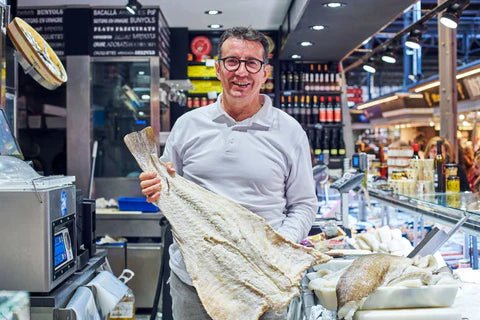
Seafood stores in municipal markets are an excellent option. Specialized vendors know their product, can advise you on qualities, and usually cut the mojama on the spot, which guarantees freshness. In Barcelona, at the Mercat del Ninot, we have been selecting the best seafood products, including premium salted fish, since 1990.
3. Trusted online gourmet stores
Online commerce has democratized access to quality mojama. The key is to buy from specialized stores that detail the tuna species, origin, and production method. Be wary of stores that do not specify whether the tuna is bluefin or skipjack — if they don't say, it's probably skipjack.
At Bacalalo, we select premium canned and salted seafood with the same exacting standards we have applied to our Icelandic cod since 1990. Each product goes through our personal selection before reaching the store.
4. Supermarkets (with caution)
Supermarket mojama is almost always low or mid-low range: skipjack tuna, industrial drying, in small vacuum-packed portions. It can be used to try mojama for the first time, but it does not represent what this product can be. If your only experience with mojama is from the supermarket, you are missing out on a world of difference.
What to look for on the label
- Species: It should state "bluefin tuna" or Thunnus thynnus. If it only says "tuna" or "tuna mojama" without specifying, it is skipjack tuna.
- Origin: Barbate, Isla Cristina, Zahara, Ayamonte, Tarifa are the areas with the greatest tradition and quality.
- Catch method: "Almadraba" or "almadraba art" indicates traditional sustainable fishing and usually correlates with higher quality.
- Ingredients: It should only contain tuna and sea salt. Nothing else. If you see preservatives, colorings, or any other additive, move on.
How to serve and eat mojama correctly
Mojama is a simple product to serve, but there are details that make the difference between a good and a memorable experience:
Temperature
Take the mojama out of the refrigerator 15-20 minutes before serving. At refrigerator temperature (4°C), the aromas are dormant and the texture is too firm. At room temperature (18-22°C), the aromas fully unfold and the texture becomes more silky and pleasant.
The cut
Cut into slices as thin as possible, at a 45° angle to the piece. A ham knife or a sharp, long-bladed knife are ideal. Thick slices are excessively salty and difficult to chew — the thinness of the cut is what allows the mojama to be appreciated in all its complexity.
Classic accompaniments
- Toasted Marcona almonds: The star accompaniment. The crunch and sweetness of the almonds balance the saltiness of the mojama. It is the combination requested in Cadiz.
- Extra virgin olive oil: A drizzle of quality EVOO over the slices enhances the flavors and adds a fruity note.
- Cherry tomatoes: Cut in half, they provide freshness and acidity that cleanse the palate.
- Bread with tomato (pa amb tomàquet): Perfect base for serving mojama slices on toast.
- Regañás: The thin, crispy bread crackers from Cadiz are the classic support in Andalusia.
Uses in cooking
Mojama is not just a tapa — it is a versatile ingredient that elevates simple dishes:
- Salad with mojama: Arugula, tomato, thin strips of mojama, Parmesan shavings, oil, and Jerez vinegar.
- Pasta with grated mojama: Spaghetti with garlic, oil, and grated mojama on top — the Spanish version of pasta with bottarga.
- Fried eggs with mojama: Over fried eggs with potatoes, thin strips of mojama provide a spectacular marine contrast.
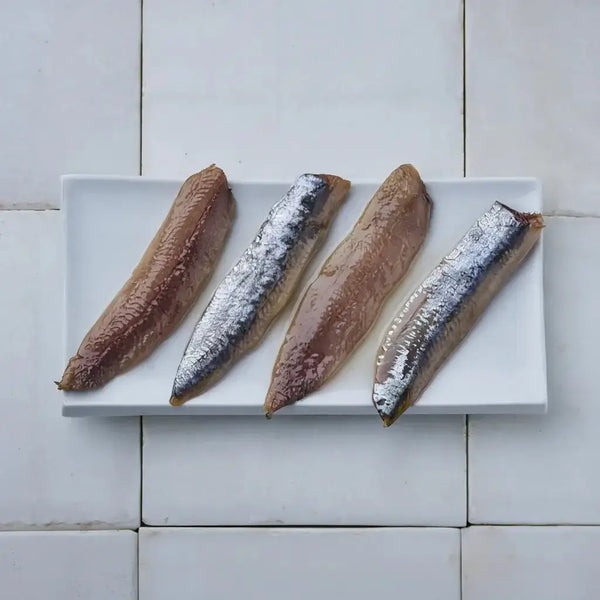
- Cured fish platter: Combine mojama with Cantabrian anchovies, tuna roe, and smoked sardines for a premium appetizer platter.
Frequently asked questions
Why is there such a price difference between mojamas?
The difference is due to three factors: the tuna species (bluefin vs skipjack — bluefin costs 3-5 times more), the production method (artisanal with natural drying for months vs industrial with accelerated drying for weeks), and the origin (almadraba vs conventional fishing). An almadraba bluefin tuna mojama at €180/kg and an industrial skipjack tuna mojama at €35/kg are radically different products.
How much does a serving of mojama cost in a restaurant?
In restaurants, a serving of mojama (80-120 g) usually costs between €12 and €25, depending on the quality and the establishment. In tapas bars in Cadiz, a tapa of mojama with almonds can cost €6-10. In fine dining restaurants, dishes with mojama can exceed €30. The price reflects both the quality of the product and the restaurant's markup.
Does mojama cause significant weight gain?
Mojama is a protein-rich food with an excellent nutritional profile. It provides approximately 250-280 kcal per 100g, with a high protein content (40-45%), low fat (8-12%), and is rich in omega-3, iron, and vitamin B12. Its main nutritional drawback is the high sodium content due to the salting process, so people with hypertension should moderate their consumption.
How long does mojama last once opened?
Wrapped in plastic film and refrigerated at 2-4°C, mojama can be stored for up to 3 months without significant loss of quality. A whole piece lasts longer than pre-sliced mojama. If you buy vacuum-packed sliced mojama, consume it within 5-7 days once opened. Never freeze mojama — freezing destroys its characteristic texture.
How do I know if the mojama is authentic red tuna?
Three indicators: the color (dark garnet, never light brown), the visible intramuscular fat marbling when cut (like quality meat marbling), and a long aftertaste with nutty notes. Additionally, the label should specify Thunnus thynnus or "red tuna". If it only says "tuna" without specifying the species, it's skipjack tuna.
Is it better to buy mojama as a whole piece or sliced?
A whole piece is always better: it keeps longer, you can control the thickness of the cut, and oxidation is minimal. Vacuum-packed sliced mojama is more convenient but deteriorates faster after opening the package. If you buy a whole piece, invest in a good knife and slice thin pieces just before serving — the difference is noticeable.
Is mojama suitable for coeliacs?
Yes, artisan mojama is naturally gluten-free — its only ingredients are tuna and sea salt. However, always check the label on industrial mojamas, as some may contain traces due to processing in shared facilities. Mojama that only lists "tuna" and "salt" in the ingredients is safe for coeliacs.
What is the difference between mojama and tuna cecina?
They are the same product. "Cecina de atún" (tuna cecina) is a less common term but equivalent to "mojama," used mainly outside Andalusia. Both refer to tuna loin cured in salt and air-dried. The term "mojama" (from Arabic musama) is the most widespread and recognized, especially in the producing areas of southern Spain.
🛒 Products mentioned in this article
⭐ 4.9/5 · 24-48h cold shipping · Since 1990 at Mercat del Ninot
Conclusion
Mojama is a product where quality and price are directly correlated. The difference between an industrial supermarket mojama and an artisanal red tuna almadraba mojama is as vast as the difference between a cellar-aged serrano ham and an Iberian bellota ham from Jabugo — technically they are the same type of product, but the gastronomic experience is in another universe.
If you've never tried artisanal red tuna mojama, it's worth investing once in a small portion (100-150g) from a trusted producer to discover what this product is capable of. Slice it very thinly, accompany it with Marcona almonds and good olive oil, serve it with a very cold Manzanilla from Sanlúcar, and you'll understand why it's called "the ham of the sea."
At Bacalalo, from our stall in Barcelona's Mercat del Ninot, we have been selecting the best seafood products since 1990. If you are looking for quality mojama and other premium cured products, check out our selection of gourmet preserves and cured products — every product has passed our personal selection before reaching you.
Products you might be interested in
Discover more