Anchovies have starred in some of the most memorable moments of MasterChef Spain. From gourmet toasts that made the judges cry to creative pintxos that reinvented a classic ingredient, anchovies have proven season after season that they are one of the most versatile products in Spanish cuisine. In this article, we've compiled the 5 best anchovy recipes inspired by MasterChef, adapted so you can prepare them at home with competition-worthy results. Marc González Sáez, from Mercat del Ninot in Barcelona, guides you step by step.
Table of Contents
- Anchovies in MasterChef: an ingredient to respect
- 1. Gourmet anchovy toast with confit tomato and burrata
- 2. Anchovy butter: the secret of chefs
- 3. Pasta with anchovies, capers, and lemon
- 4. Tempura anchovies with lime aioli
- 5. Creative anchovy pintxo with mango and sesame
- How to choose quality anchovies for these recipes
- Storage and use of anchovies
- Frequently asked questions
Anchovies in MasterChef: an ingredient to respect
In MasterChef Spain, anchovies hold a special place. When the judges bring out a jar of Cantabrian anchovies, the contestants know they are facing an ingredient that demands respect. It's not a product to mask; it's a product to enhance.
Jordi Cruz has said on more than one occasion: "Anchovies are one of Spain's great products. Don't mistreat them." Indeed, the temptation for many contestants is to use anchovies as just another ingredient, mixing them with strong flavors that overpower their delicacy. The best MasterChef anchovy recipes are those that place them at the center, as the absolute star.
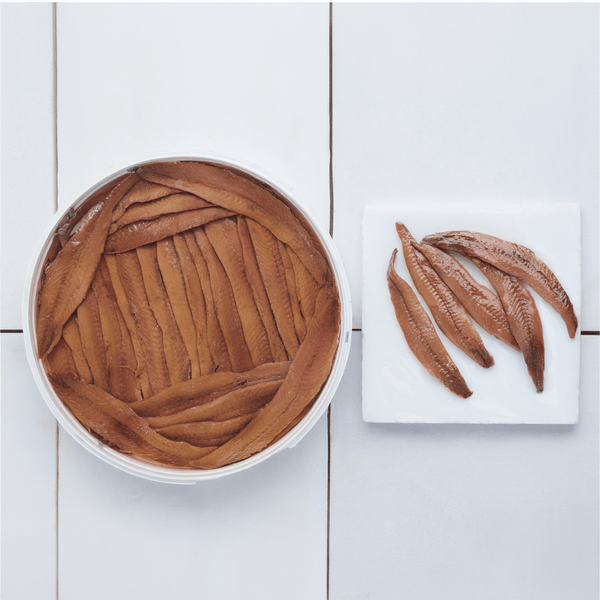
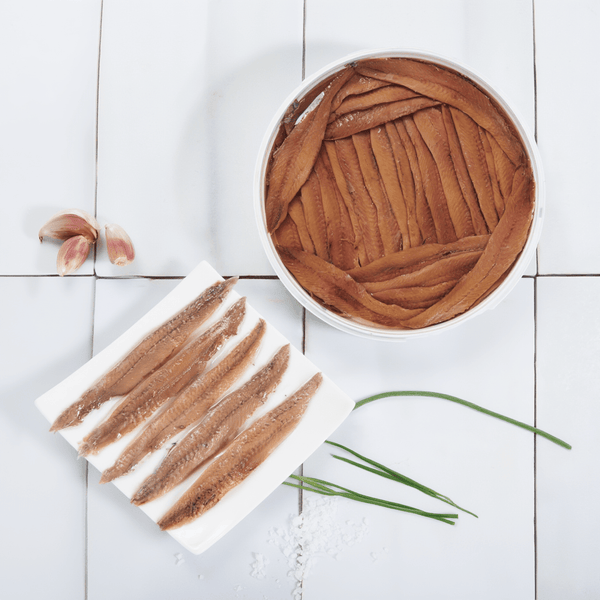
Cantabrian anchovies — the authentic kind, cured in salt for months and hand-filleted in olive oil — are an artisanal product with a complexity of flavor that few ingredients can match. Salty, umami, marine, buttery: all in one bite. These 5 recipes are designed to honor that flavor.
1. Gourmet anchovy toast with confit tomato and burrata
This recipe is inspired by a MasterChef gourmet appetizer challenge where contestants had to create signature toasts with premium products. The combination of anchovy, confit tomato, and burrata is a modern classic that always works.
Ingredients (4 toasts)
- 4 slices of crystal bread or artisan ciabatta
- 8 Cantabrian anchovy fillets in olive oil
- 1 fresh 125g burrata
- 8 cherry tomatoes
- 2 tablespoons extra virgin olive oil
- 1 teaspoon sugar
- Fresh basil leaves
- Freshly ground black pepper
Preparation
- Confit the tomatoes: Cut the cherry tomatoes in half, place them on a tray cut-side up, drizzle with oil, sugar, and a pinch of salt. Bake at 120 °C (250 °F) for 1 hour until they are wrinkled, concentrated, and sweet.
- Toast the bread: On a griddle or in a toaster, until golden and crispy on the outside but still soft on the inside.
- Assemble the toast: On the bread, first place a couple of spoonfuls of burrata torn by hand. Add the confit tomatoes. Top with 2 anchovies per toast, crossed.
- Finish: Drizzle with a little of the anchovy oil (yes, from the jar itself), a few fresh basil leaves, and black pepper. No extra salt needed: the anchovy provides all you require.
The contrast of temperatures (warm toast, cold burrata, lukewarm tomato, room temperature anchovy) is part of the magic of this dish. Serve immediately.
2. Anchovy butter: the secret of chefs
Anchovy butter appeared on MasterChef as part of a French cooking masterclass. The guest chefs explained that in Michelin-starred restaurants, it is used as a universal umami enhancer: on grilled meats, on baked fish, melted over roasted vegetables, or simply spread on bread.
Ingredients
- 250g unsalted butter, at room temperature
- 8 Cantabrian anchovy fillets, well drained
- 1 tablespoon finely chopped fresh parsley
- 1 teaspoon lemon zest
- ½ teaspoon black pepper
Preparation
- Finely chop the anchovies until they form almost a paste.
- In a bowl, mix the soft butter with the anchovy paste, parsley, zest, and pepper. Work with a fork until fully integrated.
- Place the mixture on a piece of plastic wrap and roll it into a cylinder about 3 cm (1.2 inches) in diameter. Twist the ends like a candy wrapper.
- Refrigerate for at least 2 hours until firm.
Uses: Slice 1 cm (0.4 inch) thick rounds and place on a freshly grilled entrecote (the butter melts over the meat, creating an instant sauce), on roasted potatoes, on grilled asparagus, or simply on hot toasted bread. It keeps for 2 weeks in the refrigerator and 3 months in the freezer.

The anchovy defines the result.
Available at Bacalalo.com with refrigerated 24-48h shipping
3. Pasta with anchovies, capers, and lemon
This recipe appeared on MasterChef as an example of how Italian cuisine transforms simple ingredients into extraordinary dishes. The anchovy dissolves in hot oil, creating an umami base that enhances all other flavors.
Ingredients (4 servings)
- 400g quality spaghetti or linguine
- 10 anchovy fillets in olive oil
- 3 cloves garlic, sliced
- 2 tablespoons capers (rinsed if salted)
- Zest and juice of 1 lemon
- 1 dried chili pepper
- 80ml extra virgin olive oil
- Fresh chopped parsley
- Toasted breadcrumbs (optional, for pangrattato)
Preparation
- Cook the pasta in plenty of salted water. Reserve a cup of the cooking water before draining.
- Melt the anchovies: In a large skillet over low heat, warm the oil. Add the sliced garlic and chili. When the garlic begins to brown, add the anchovies. Stir with a wooden spoon: in 2-3 minutes, the anchovies will completely dissolve into the oil, creating a concentrated umami sauce.
- Add the capers and sauté for 1 minute.
- Combine pasta and sauce: Add the drained pasta to the skillet. Add the lemon zest and juice. Mix well, adding cooking water spoonful by spoonful until you achieve a sauce that coats the pasta without being dry or soggy.
- Serve with fresh parsley and, if you want the MasterChef touch, pangrattato (breadcrumbs toasted in a pan with oil) on top for crunch.
4. Tempura anchovies with lime aioli
Tempura anchovies were one of the riskiest preparations seen on MasterChef: frying a delicate product without it losing its essence. The trick lies in the tempura batter, which must be ultra-light so as not to mask the anchovy flavor.
Ingredients
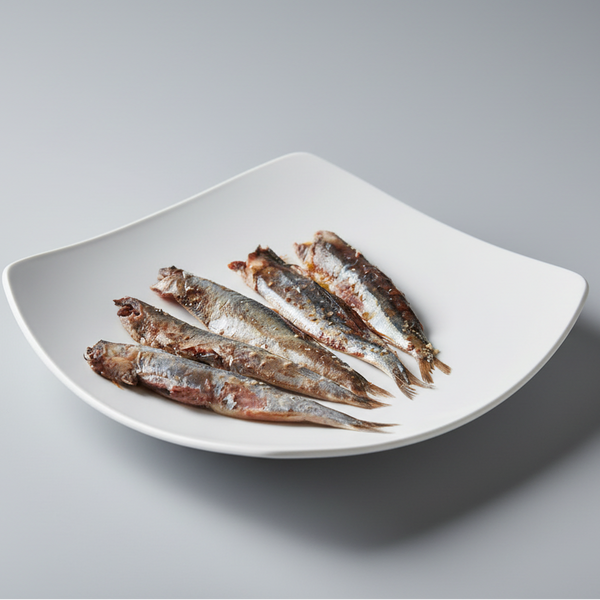
- 12 fresh anchovies (large boquerones), cleaned and deboned
- 100g tempura flour (or a mix of equal parts flour and cornstarch)
- 150ml very cold sparkling water
- Sunflower oil for frying
For the lime aioli
- 4 tablespoons homemade aioli or mayonnaise
- Zest and juice of ½ lime
- 1 finely grated garlic clove
Preparation
- Prepare the lime aioli: Mix all ingredients and refrigerate.
- Tempura batter: Mix the flour with the cold sparkling water. Do not overmix: there should be lumps. Overworked tempura batter becomes heavy. Sparkling water and cold are the keys to lightness.
- Fry: Heat the oil to 180 °C (350 °F). Dip each anchovy in the tempura batter and fry for 1-2 minutes until golden and crispy. Do not fry more than 3-4 at a time to avoid lowering the oil temperature.
- Drain on absorbent paper and serve immediately with the lime aioli on the side.
Important note: this recipe uses fresh anchovies (boquerones), not preserved anchovies. Preserved anchovies are already cured and do not need cooking; tempura would ruin them.
5. Creative anchovy pintxo with mango and sesame
In MasterChef, creative pintxos are a common challenge. This combination of anchovy with mango surprised the judges with its balance between the intense saltiness of the anchovy, the tropical sweetness of the mango, and the toasted touch of sesame.
Ingredients (8 pintxos)
- 8 Cantabrian anchovy fillets in oil
- 1 ripe but firm mango
- Toasted sesame seeds (white and black)
- Balsamic glaze
- Shiso sprouts or micro cilantro
- 8 thin toasted bread bases or rice crackers
Preparation
- Slice the mango into thin slices (3 mm) with a peeler or sharp knife.
- On each bread base, place a folded slice of mango.
- Roll the anchovy into a cylinder and place it on the mango.
- Sprinkle with mixed toasted sesame.
- Add a dab of balsamic glaze and a few fresh sprouts.
The key is the contrast: salty (anchovy), sweet (mango), acidic (vinegar), toasted (sesame), and fresh (sprouts). All five flavors in one bite.
How to choose quality anchovies for these recipes
Not all anchovies are created equal. The difference between an artisanal Cantabrian anchovy and an industrial anchovy is the same as between a bellota Iberian ham and packaged cooked ham. They share a name, but little else.
Signs of quality:
- Color: dark pink to reddish-brown. Never gray or pale pink.
- Texture: firm but tender. It breaks cleanly, neither falling apart nor being rubbery.
- Fillet size: quality anchovies have wide, thick fillets. If the fillet is paper-thin, the anchovy was small or of poor quality.
- Oil: it should be extra virgin olive oil, not sunflower oil. Quality oil adds flavor; sunflower oil only adds fat.
- Origin: Santoña, Laredo, Castro Urdiales, Getaria. The major salting areas of the Cantabrian Sea.
- Curing: minimum 6 months in salt. The best anchovies are cured for 12-18 months.
Storage and use of anchovies
Anchovies in oil, once opened, can be stored in the refrigerator for up to 2 weeks as long as they are completely covered in oil. If you buy anchovies in salt (the traditional format), they should be stored in a cool, dry place; once cleaned and filleted, store them in olive oil in the refrigerator.
Tips for use:
- Take the anchovies out of the refrigerator 10 minutes before consuming. At room temperature, they fully release their aroma.
- Do not cook preserved anchovies: they are already cured. If you heat them too much, they will harden and lose nuances. The exception is melting them in oil over low heat (as in pasta), where they integrate without actually cooking.
- The oil from anchovies is liquid gold. Use it to dress salads, toasts, or as a base for vinaigrettes. Never throw it away.
🛒 Products used in this recipe
Cantabrian Anchovies "00" Gourmet Selection
Premium "00" caliber, artisanal production
€38.90
View product →⭐ 4.9/5 · Cold shipping 24-48h · Since 1990 at Mercat del Ninot
Conclusion: anchovies are the ingredient for chefs who know
What MasterChef has taught season after season is that anchovies are not a minor ingredient: they are one of the great products of Spanish gastronomy. These 5 recipes demonstrate their versatility: from an elegant toast to an avant-garde pintxo, including an Italian pasta and a Japanese tempura. Anchovies adapt to everything without losing their identity. The only requirement is to start with quality anchovies. At Mercat del Ninot in Barcelona, we have been selecting the best Cantabrian anchovies since 1990, and the difference is noticeable in every bite.
What is the difference between anchovies and boquerones?
They are the same fish (Engraulis encrasicolus), but prepared differently. Anchovies are cured in salt for months and preserved in olive oil: intense flavor, dark color. Boquerones are marinated in vinegar: fresher flavor, white color. The recipes in this article use anchovies in oil except for the tempura, which uses fresh fish.
How many anchovies are needed per person?
As an appetizer or tapa, estimate 3-4 fillets per person. As an ingredient in a recipe (pasta, butter), 2-3 fillets per person are usually enough. Anchovies have a powerful flavor: more is not always better.
Can anchovies be frozen?
It is not recommended to freeze preserved anchovies: the texture changes upon thawing. However, anchovy butter can be frozen for up to 3 months without loss of quality. Fresh anchovies (boquerones) can be frozen before preparation.
Are anchovies healthy?
Very healthy. Anchovies are rich in omega-3, high-quality proteins, calcium (if consumed with the bone), vitamin D, and B12. Their salt content is high, so people with high blood pressure should moderate their consumption. But as an ingredient in recipes, the amount per serving is small and the nutritional contribution is significant.
What anchovies did they use on MasterChef?
On MasterChef Spain, they usually use Cantabrian anchovies from artisanal salting houses. In several seasons, anchovies from Santoña and the Basque coast have been mentioned, always long-cured and hand-filleted. This is the same type of premium anchovy that we offer at Bacalalo.