

Summary: Marmitako is a Basque seafood stew made with albacore tuna, potatoes, choricero peppers, onion, tomato, and garlic. It's cooked in a pot ("marmita") over low heat so the potatoes absorb all the broth's flavor. The albacore is added at the end, off the heat, to cook with residual heat without toughening. Time: 45 minutes for 4 people.
Origin of Marmitako
Marmitako ("from the pot" in Basque) originated on Basque fishing boats that pursued albacore tuna along the Cantabrian coast. The arrantzales (fishermen) cooked freshly caught tuna with the ingredients they had on board: potatoes, onion, dried peppers, and oil. It was a subsistence dish that turned out to be extraordinary.
Today, it is one of the most emblematic dishes of Basque and Cantabrian cuisine, especially during the "bonito season" (June-October). In the Basque Country, marmitako competitions are held where each cook defends their version as the authentic one.
The version we present to you is the traditional land-based one, with ingredients that the fishermen didn't have on the boat (tomato, true choricero pepper) but that families gradually added to improve the original dish.
Ingredients for 4 people
- 500 g fresh albacore tuna (loins or belly, in large cubes)
- 600 g potatoes
- 1 large onion, finely chopped
- 1 Italian green pepper, chopped
- 2-3 dried choricero peppers (or 2 tablespoons choricero pepper pulp)
- 2 ripe tomatoes, grated
- 3 cloves garlic, minced
- 1 dried chili (optional)
- 150 ml white wine
- Water or fish stock (to cover)
- Extra virgin olive oil
- Salt
Step-by-step preparation
Step 1: Choricero peppers (the night before). Soak the choricero peppers in hot water for at least 30 minutes (preferably overnight). Once soft, scrape out the pulp with a spoon and discard the skin and seeds. This red pulp is the soul of marmitako.
Step 2: "Cracking" the potatoes. Peel the potatoes and instead of cutting them, "crack" them: stick the knife in and twist to break them into irregular pieces. This releases starch that thickens the broth and adds texture. Pieces should be about 3-4 cm.
Step 3: Sofrito (10 min). In a large pot, heat olive oil and sauté the onion over medium-low heat for 8 minutes. Add the green pepper and garlic, cook for another 3 minutes. Stir in the grated tomato and cook for 5 minutes until the water evaporates and it concentrates.
Step 4: Choricero pepper and potatoes. Add the choricero pepper pulp and stir for 1 minute. Add the "cracked" potatoes and the chili. Cover with water or fish stock (it should be about 2 fingers above the potatoes). Season with salt to taste.
Step 5: Slow cooking (20-25 min). Bring to a boil, then reduce to medium-low heat and simmer uncovered for 20-25 minutes until the potatoes are tender but not falling apart. The broth should reduce and thicken naturally with the starch from the potatoes.
Step 6: The tuna (off the heat). Season the tuna cubes with salt and pepper. Remove the pot from the heat. Place the tuna cubes on top of the hot potatoes. Cover and let rest for 5-8 minutes. The residual heat gently cooks the tuna, keeping it juicy and pink inside.
Step 7: Rest and serve. Let rest for 10 minutes before serving — like all stews, marmitako improves with resting. Serve in the same pot.
The choricero pepper: an essential ingredient
Without choricero pepper, there is no authentic marmitako. This dried pepper from the Gernika variety provides an intense red color, a unique smoky sweetness, and creaminess to the sauce. It cannot be substituted with paprika (which adds bitterness) or regular red bell pepper (which lacks the same complexity).
If you can't find dried choricero peppers, look for choricero pepper pulp in a jar — it's sold in supermarkets in northern Spain and online. Two tablespoons are equivalent to 2-3 dried peppers.
Tips for a perfect marmitako
- Crack, don't cut: Cracked potatoes release starch that thickens the broth. This is the difference between a watery broth and a creamy one.
- Tuna off the heat: NEVER cook the tuna in boiling broth. It will overcook in seconds and become dry. Residual heat is sufficient.
- Mandatory resting: At least 10 minutes. The broth settles, the potatoes absorb flavor, and the tuna finishes cooking.
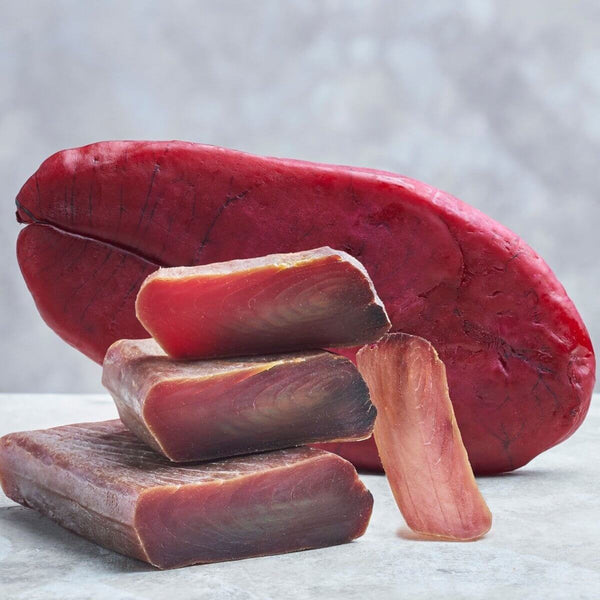
- Belly for luxury: If you want the premium version, use albacore tuna belly instead of loin. Fattier, juicier, more flavorful.
- The next day: Marmitako is even better the next day (reheat without the tuna, adding it at the end and warming it only with residual heat).
Regional variants
- Tuna Marmitako: Outside the Basque Country, especially in Cantabria and Asturias, it is made with red tuna instead of albacore. Stronger in flavor, fattier. If you prefer a year-round version, try salt cod marmitako.
- Marmitako with Txakoli: Substituting white wine with txakoli adds a fresher, very Basque acidity.
- Version with Gernika pepper: Some chefs add fried Gernika peppers as a garnish on the finished dish.
- Cantabrian Sorropotún: A close relative of marmitako, with tuna and potatoes but without choricero pepper, with more tomato and bay leaf.
Nutritional information (per serving)
| Nutrient | Per serving |
|---|---|
| Calories | 420 kcal |
| Protein | 32 g |
| Fat | 14 g |
| Omega-3 | 1.8 g |
| Carbohydrates | 38 g |
Discover more albacore tuna recipes: pickled tuna and tuna with onions, Arguiñano style.
Conclusion
Marmitako is real cooking: simple ingredients, precise technique, and patience. The two secrets you can't skip are "cracking" the potatoes (not cutting them) and adding the tuna off the heat. With these two tricks and a good choricero pepper, your marmitako will be better than most restaurants'.
Make the potato and sofrito base the night before, and the next day you'll only need to heat it up and add the tuna. A comforting stew with restaurant-quality that can be made in 45 minutes.
Frequently Asked Questions
Can marmitako be made with canned tuna?
Yes, and it's an excellent alternative off-season. Use albacore tuna loins in olive oil. Add them flaked at the end, off the heat, just like fresh tuna. The result is different but very good.
What does it mean to "crack" potatoes?
To stick a knife into the potato and twist to break it into irregular pieces instead of cleanly cutting it. The irregular edges release more starch, which thickens the broth and gives it a silky texture.
Can marmitako be frozen?
The potato and sauce base can be frozen for up to 3 months. The tuna cannot — freeze it separately or, better yet, add it fresh when reheating the base.
Can I substitute choricero pepper?
In a pinch, use 1 tablespoon of sweet paprika de la Vera + 1 tablespoon of tomato paste. It's not the same, but it's close. Ñora peppers also work as a partial substitute.
What is the season for albacore tuna?
From June to October, with a peak in July-August. This is when the albacore season takes place in the Cantabrian Sea. Off-season, use quality canned tuna.
What is the difference between marmitako and sorropotún?
Marmitako is Basque and features choricero pepper as a key ingredient. Sorropotún is Cantabrian, without choricero pepper, and with more tomato and bay leaf. Both are tuna and potato stews, but the flavor is distinct.
What does marmitako mean in Basque?
Marmitako means "from the pot" in Basque (from marmita, the pot or cauldron it's cooked in, and the suffix -ko, "from"). The name refers to it being the stew fishermen prepared in a single pot on board the boat.
Which part of the tuna is best for marmitako?
Albacore tuna loin cut into large cubes is most common. For a juicier and more flavorful version, use the belly (the fattier part). Avoid small pieces: they dry out when cooked with residual heat.
María José Sáez Pastor
More than 35 years selecting and preparing seafood products at Mercat del Ninot in Barcelona. She knows every recipe because she has cooked them all — and improves them with professional judgment.