Salmon Roe (Ikura): Usage Guide and Recipes
Salmon roe is one of those products that divides people between those who have tasted it well-prepared and those who only know it poorly used. At Bacalalo, from Barcelona's Mercat del Ninot, we see customers who discover ikura in sushi and wonder how to incorporate it into their regular cooking. The answer is: in many ways, and easier than it seems.
This guide covers everything you need to know about salmon roe: what it is, how it's processed, how to buy it, how to store it, and most importantly, how to use it to get the most gastronomic benefit. Ikura is versatile, visually appealing, and has a flavor that most people find immediately attractive, even those who are hesitant about other types of roe or caviar.
What is salmon roe and what is ikura?
Salmon roe are the eggs of female salmon, extracted before spawning, treated with salt and in some cases with other preservatives. The term ikura comes from Japanese, which in turn borrowed it from the Russian "ikra" (which simply means roe). In Japanese cuisine, ikura specifically refers to salmon roe, while "tobiko" is flying fish roe and "masago" is capelin roe.
What makes salmon roe visually recognizable is its size and color. The grains are between 4 and 7 mm in diameter, much larger than sturgeon caviar (2-3 mm for sevruga, up to 3-4 mm for beluga). The color varies from intense orange to reddish-orange depending on the salmon species and the animal's diet. Fresh roe has a translucency that allows you to see inside the grain.
When bitten, they release a saline and fatty liquid with a distinctly marine flavor, with less intense iodine notes than sturgeon caviar, and a saltiness that varies depending on the curing process. The best roe has a clean burst in the mouth, is not viscous, and does not have a mealy texture.
Varieties and qualities: not all salmon roe is the same
There are significant differences between varieties of salmon roe that directly affect the culinary outcome.
Sockeye salmon (Oncorhynchus nerka): Produces some of the most prized roe, with an intense red color and medium-large grains. The flavor is more pronounced than other varieties.
Chum salmon or keta (Oncorhynchus keta): This is the most common source of commercial ikura. The grains are large, between 5 and 7 mm, bright orange. They are the most visible in sushi photos. The flavor is milder and the outer membrane is firmer, making preparation easier.
Atlantic salmon (Salmo salar): The main source in Europe. The roe is slightly smaller, orange, with a balanced flavor. Farmed salmon produce roe of acceptable quality but inferior to wild salmon in terms of flavor intensity.
Coho salmon or silver salmon (Oncorhynchus kisutch): Medium-sized roe, pinkish-orange color, delicate flavor. Especially valued in Japan for high-end preparations.
The difference between premium ikura roe and standard roe is detected in: uniform grain size, firmness of the outer membrane (which should hold without breaking until consumption), intensity and balance of flavor (not just salt, but real marine flavor), and absence of bitter or rancid oil aftertastes.
How to buy salmon roe: what to check
When buying salmon roe, whether in a physical store or online, there are several aspects to check.
The format. Salmon roe is sold in three main formats: fresh refrigerated (the best, with a shelf life of 2-4 weeks from production), pasteurized (shelf life of months, slight loss of texture) and frozen (excellent for storage, texture recovers well after proper thawing). For home use, frozen is a very practical option.
The color. Good roe has a uniform bright orange or red. If you see darkened grains, with gray spots or loss of translucency, the product is spoiled or old.
Salt content. On the label, look for products with less than 4% salt. The malossol style ("lightly salted" in Russian) applied to ikura indicates between 3% and 3.5% salt, which better preserves the salmon flavor. Some cheaper products have up to 6-8% salt to compensate for lower raw material quality.
Additives. Quality ikura contains only salmon, salt, and sometimes a preservative like potassium sorbate (E202). Be wary of products with artificial colors, flavor enhancers, or multiple preservatives.
Bacalalo Products

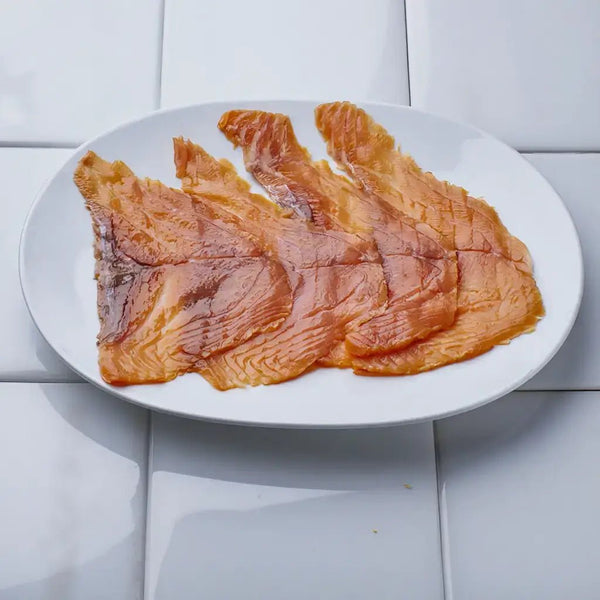
Supreme Gourmet Smoked Salmon Domínguez Thin Sli...
€8.90

Whole Smoked Salmon Domínguez Uncut - 2.2kg | Artisanal Piece
€145.00

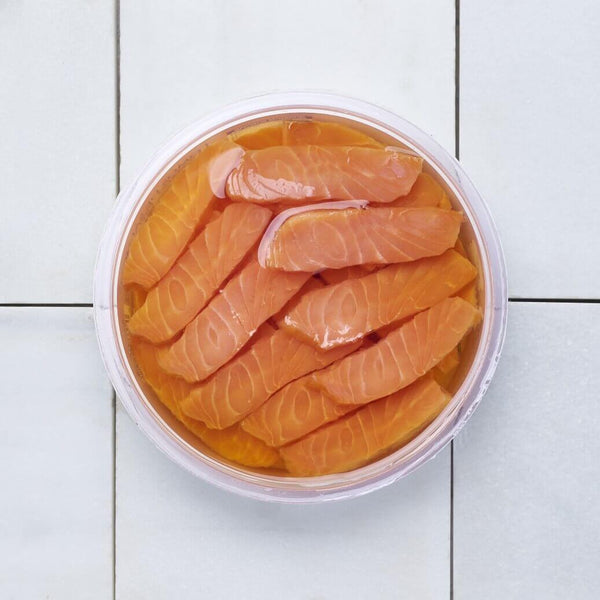
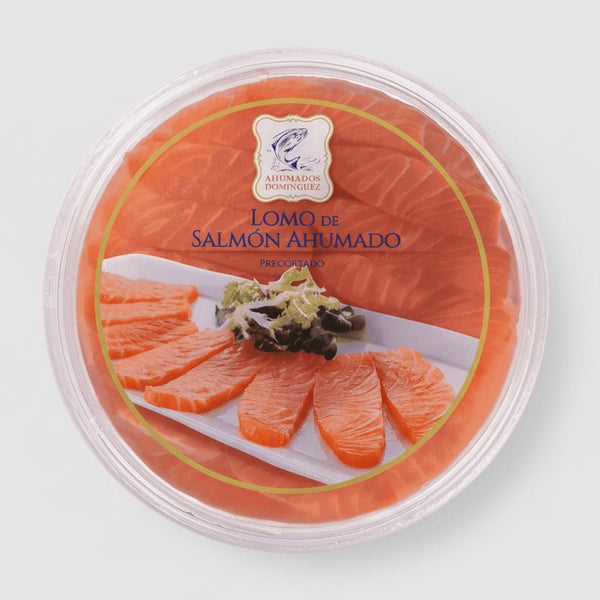
Smoked salmon loins, soft and buttery texture
€24.90

Sliced Smoked Salmon Celebration Format | 1.5 kg
€89.95
Refrigerated shipping 24-48h to all of Peninsular Spain
How to store salmon roe
Salmon roe is more delicate than it seems. A few basic rules ensure it reaches the table in perfect condition.
Unopened: store between 0°C and 4°C. Always check the expiration date. Fresh roe lasts 2-3 weeks; pasteurized, up to 3-4 months unopened.
Once opened: consume within a maximum of 3 days. Store in an airtight container in the coldest part of the refrigerator. Do not refreeze roe that has already been thawed.
Thawing: if using frozen ikura, thaw in the refrigerator for 12-24 hours. Never at room temperature or in the microwave. Slow thawing preserves the integrity of the grain membrane.
Serving: always serve cold, between 2°C and 8°C. If the roe is warm, the fat will separate and the texture will be ruined. Use mother-of-pearl, ceramic, wood, or quality plastic utensils. Metal (including silver) can impart metallic flavors that interfere with the delicate profile of ikura.
Recipes and gastronomic uses: ikura beyond sushi
The most common use of salmon roe in Spain is as a sushi garnish, especially in temaki (cone-shaped roll) or on salmon nigiri. But ikura has much broader applications.
Rye bread toast: The combination of dark bread, sour cream or crème fraîche, and salmon roe is a Scandinavian classic. The contrast between the dairy acidity, the bitterness of the rye, and the marine saltiness of the roe is impeccable. Adding fresh dill or chives is optional but recommended.
Pasta with ikura: Cook spaghetti al dente, emulsify with cold butter, a little cream or crème fraîche, and lemon zest. Add the salmon roe off the heat and stir gently. The residual heat is enough for them to integrate without cooking. The result is a dish with intense marine flavor and creamy texture.
Salmon tartare: A tartare of smoked or fresh salmon with avocado, capers, and Dijon mustard greatly benefits from a spoonful of ikura on top. The roe adds saltiness, texture, and a high-impact visual touch.
Boiled egg with ikura: A perfectly boiled egg (creamy yolk, between 6 and 7 minutes), cut in half, with a teaspoon of salmon roe on top. Flaky salt and a few drops of extra virgin olive oil. A 10-minute appetizer that always surprises.
Blinis with smoked salmon and ikura: The classic triad of Russian haute cuisine. Buckwheat blini, smoked salmon on top, and salmon roe as a finishing touch. Adding crème fraîche and dill completes the preparation. Perfect for Christmas or celebrations.
The correct amount per person for an appetizer is between 20 and 30 grams. For main dishes or as a cooking ingredient, 15-25 grams per serving is usually enough, given its intense flavor.
Bacalalo Products
Supreme Gourmet Smoked Salmon Domínguez Thin Sli...
€8.90
Whole Smoked Salmon Domínguez Uncut - 2.2kg | Artisanal Piece
€145.00
Smoked salmon loins, soft and buttery texture
€24.90
Sliced Smoked Salmon Celebration Format | 1.5 kg
€89.95
Refrigerated shipping 24-48h to all of Peninsular Spain
🛒 Products mentioned in this article
⭐ 4.9/5 · Cold shipping 24-48h · Since 1990 in Mercat del Ninot
Frequently Asked Questions
What is the difference between salmon roe and ikura?
They are the same. Ikura is the Japanese term (borrowed from Russian) for salted salmon roe. In Spain, both terms are used interchangeably. The difference may lie in the context: "salmon roe" is more general and can refer to fresh or cured product; "ikura" usually evokes the product ready to eat as we know it in sushi.
Is salmon roe caviar?
Technically no. In strict nomenclature, the term "caviar" is reserved for the roe of sturgeon (Acipenser spp. and Huso spp.). Salmon roe is a different product, although it is sometimes colloquially marketed as "red caviar". The price difference is significant: sturgeon caviar costs 10-50 times more per gram.
Can pregnant women eat salmon roe?
Health authorities recommend avoiding unpasteurized roe and caviar products during pregnancy due to the risk of listeria. Pasteurized salmon roe has a lower risk. Always consult your doctor; recommendations vary between countries and guide updates.
How much does quality salmon roe cost?
Quality salmon roe in Spain costs between €15 and €35 per 100g depending on the origin (wild or aquaculture), the species, and the supplier. Good quality wild Alaskan chum salmon ikura is around €20-25 per 100g. Prices in conventional supermarkets are usually between €8 and €12 per 100g but correspond to lower quality and origin.
What drinks pair best with salmon roe?
The classic pairing is brut nature champagne or cava, whose acidity and bubbles cleanse the palate between bites. White wines aged on lees (Chablis Premier Cru, Albariño with light oak) and pure cold vodka, which is the Russian tradition, also work very well. Avoid red wines with high tannins, which clash with the marine salinity.
How do I know if salmon roe is bad?
Warning signs are: ammonia or very acidic smell beyond normal marine, crushed grains or with broken membrane before consumption, brownish or grayish coloration, and a persistent bitter taste. Fresh salmon roe smells like clean sea and its taste is salty but balanced, without bitterness or unpleasant acidity.
Is fresh or frozen ikura better?
Recently fresh is unbeatable in texture and flavor, but its consumption window is short. Properly frozen (at -18°C or lower from production) recovers texture well if thawed slowly in the refrigerator. For domestic use where it is not consumed regularly, frozen is a very practical option that does not noticeably sacrifice quality.
Discover more