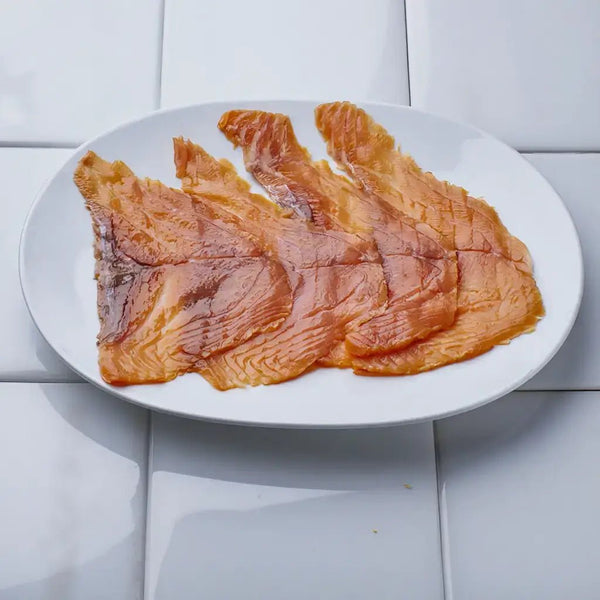
What is mullet bottarga
Bottarga is mullet roe (also called lisa, mugil, or llissa in Catalan) that is extracted whole, salted, and pressed for weeks until it forms a solid, firm piece with a translucent golden amber color. The result is a concentrated taste of the sea that has earned it the nickname "the caviar of the Mediterranean", although its use and tradition are completely different.
Unlike caviar, which is eaten in grains and fresh, bottarga is a cured product that is grated or thinly sliced to be used as a condiment. Its flavor is difficult to describe to someone who hasn't tried it: salty, marine, with a subtle sweetness and a long aftertaste reminiscent of toasted nuts.
Mullet is a saltwater and brackish fish that inhabits coastal lagoons, estuaries, and river mouths of the Mediterranean. Its roe, when extracted at the right moment of ripeness, contains millions of microscopic eggs that, when pressed and cured, create that characteristic waxy texture.
History and Mediterranean origin: 3,000 years of tradition
Bottarga is not a recent invention of haute cuisine. Its history dates back at least to ancient Egypt, where Phoenicians already produced cured mullet roe as food for long sea voyages. The word "bottarga" has Arabic roots: batarikh (بطارخ), meaning "salted roe."
Historical production centers
- Sardinia (Italy): Bottarga di muggine from Cabras and Oristano is considered the best in the world. The Cabras lagoon produces mullets that feed on specific microalgae, giving it a unique flavor.
- Tunisia and Libya: North Africa was the cradle of commercial production. Tunisia remains one of the largest global producers.
- Japan: Karasumi (唐墨) from Nagasaki is the Japanese version, introduced by Chinese merchants in the 17th century. It is considered one of Japan's three great delicacies (chinmi).
- Spain and the Levant: In the Ebro Delta, the Albufera of Valencia, and the Mar Menor of Murcia, mullet roe has been produced artisanally since Roman times. It is called "cured mullet roe" or "mojama de hueva."
- Greece and Turkey: Avgotarako from Messolonghi (Greece) has a PDO and is another benchmark of quality.
Types of bottarga: mullet vs. tuna vs. cod
Not all bottarga is the same. The type of fish determines flavor, texture, color, and price.
| Characteristic | Mullet (Mugil) | Bluefin Tuna | Cod |
|---|---|---|---|
| Color | Translucent golden amber | Dark reddish-brown | Pale pink |
| Flavor | Delicate, sweet, balanced | Intense, powerful, salty | Mild, smoky |
| Texture | Waxy, firm, grateable | Granular, drier | Soft, creamy |
| Price (€/kg) | 80-180 € | 40-80 € | 20-40 € |
| Main Use | Grated over pasta, toast | Sliced, diced | Spread, canapés |
Mullet bottarga is the undisputed queen for gastronomic purists. But if you're just starting to explore the world of cured roe, tuna roe is a good gateway due to its more accessible price and more direct flavor.
To explore other types of roe — from Japanese ikura to classic caviar — check out our complete guide to fish roe.
How to choose quality mullet bottarga
The bottarga market has a lot of quality variation. These are the indicators that distinguish an exceptional bottarga from a mediocre one:
- Uniform color: Translucent golden amber is a sign of optimal ripeness and good curing. Discard pieces with dark spots, greenish areas, or excessively light coloring (insufficient curing).
- Firmness: It should be firm to the touch, like a wax candle, but not rock hard. If it yields easily when pressed, the curing was insufficient.
- Aroma: Clean sea smell, slightly sweet, without rancid or ammoniacal notes. A hint of nuts is a sign of quality.
- Certified origin: Bottarga from Cabras (Sardinia) and avgotarako from Messolonghi (PDO) are benchmarks of verifiable quality.
- Vacuum-sealed packaging: Quality bottarga is sold vacuum-sealed to preserve flavor and texture. Be wary of pieces exposed to air.
Price of bottarga in Spain (2026)
The price of bottarga varies enormously depending on origin, quality, and format:
| Product | Estimated Price | Comment |
|---|---|---|
| Sardinian mullet bottarga (Cabras) | 150-180 €/kg | The global benchmark for quality |
| Tunisian mullet bottarga | 80-120 €/kg | Good value for money |
| Spanish mullet roe (Levant) | 90-140 €/kg | Limited artisanal production |
| Tuna bottarga | 40-80 €/kg | More economical alternative |
| Grated bottarga (jar) | 8-15 € (50 g) | Convenient but loses aroma quickly |
For those who want to try it without a big investment, a small 100g piece (15-20 €) yields 6-8 generous pasta servings. The cost per dish is less than 3 €, making bottarga a surprisingly affordable luxury.
Explore our selection of premium roe — from mullet, salmon, cod and more
View roe collectionHow to use bottarga: techniques and recipes
The golden rule for bottarga is: never cook it. Heat destroys its nuanced flavors and ruins the texture. It is always added at the end, raw, over the plated dish.
Technique 1: Grate with a microplane
The most common and versatile method. Use a fine microplane grater to create a golden snow of bottarga over pasta, salads, eggs, or toast. This is the technique for classic spaghetti alla bottarga.
Technique 2: Slice thinly
Cut the bottarga into translucent slices 1-2 mm thick with a very sharp knife. Perfect for toast with butter, fish carpaccios, or salads. The slices showcase the product's amber beauty.
Technique 3: Diced or cubed
Cut into 5 mm cubes for hearty salads or as an appetizer with olive oil and lemon. This presentation highlights the waxy texture of the bottarga.
Classic recipe: Spaghetti alla bottarga
The most iconic Mediterranean recipe. For 4 people:
- Cook 400g of spaghetti al dente in well-salted water.
- In a large pan, heat 80ml of extra virgin olive oil with 2 thinly sliced garlic cloves over low heat. Remove the garlic when golden.
- Add the drained pasta (reserve a glass of cooking water) to the pan with the oil.
- Mix over very low heat, adding cooking water to create an emulsified sauce.
- Off the heat, generously grate bottarga over the pasta (about 60-80g for 4 people).
- Finish with fresh chopped parsley and a drizzle of raw olive oil.
More ideas with bottarga
- Toast with butter and bottarga: Toasted sourdough bread, quality butter at room temperature, thin slices of bottarga, and a few drops of lemon.
- Scrambled eggs with bottarga: Prepare creamy scrambled eggs (French style, low heat) and grate bottarga when serving.
- Arugula and bottarga salad: Arugula, cherry tomatoes, shaved parmesan, olive oil, lemon, and grated bottarga.
- Ceviche with bottarga: Diced corvina, tiger's milk, red onion, and grated bottarga on top.
If you're interested in more ways to use roe in cooking, our complete caviar guide explores the differences between all types of premium roe.
Storage and shelf life of bottarga
Bottarga is a cured product that, when properly stored, lasts for months. But once opened, its flavor degrades quickly if not protected.
| Condition | Duration | How to Store |
|---|---|---|
| Whole, vacuum-sealed, refrigerated | 6-12 months | Unopened, between 2-6 °C |
| Opened, wrapped in film | 3-4 weeks | Wrap well after each use |
| Grated, in airtight jar | 5-7 days | Loses aroma quickly |
| Frozen (grated/whole) | 6 months | Small portions in a bag |
Professional tip: If you buy a whole piece, wrap it first in wax paper (not direct film) and then in plastic wrap. The wax paper absorbs residual moisture without sticking, and the film protects from air. This way, the bottarga maintains its texture and flavor for weeks.
Nutritional properties of bottarga
Bottarga is a miniature marine superfood. In small quantities (10-20g per serving), it provides essential nutrients:
| Nutrient | Per 100 g | Per Serving (15 g) |
|---|---|---|
| Calories | 373 kcal | 56 kcal |
| Protein | 36 g | 5.4 g |
| Fat (total) | 25 g | 3.7 g |
| Omega-3 (EPA+DHA) | 5.6 g | 0.8 g |
| Sodium | 2,800 mg | 420 mg |
| Vitamin B12 | 12 µg (480% RDI) | 1.8 µg |
The omega-3 content of bottarga is one of the highest of any food: 5.6 g per 100 g surpasses wild salmon (2.2 g/100 g). However, the high sodium content makes it not recommended for low-salt diets.
🛒 Recommended products in this guide
⭐ 4.9/5 · 24-48h refrigerated delivery · Since 1990 at Mercat del Ninot
Conclusion
Mullet bottarga is one of those products that justify the gastronomic journey. An ancient ingredient, with more than 3,000 years of Mediterranean history, that transforms a simple pasta dish into a memorable experience.
It is not an expensive product if you think about it per serving: a 100g piece makes 6-8 pasta dishes, which results in less than €3 per serving of a flavor impossible to replicate with any other ingredient. The secret is to treat it with respect: never cook it, grate it fresh, and choose a quality piece.
If you are exploring the world of premium roe, in our roe collection you will find selected options for every level of experience and budget.
Mullet, salmon, cod roe, caviar and more — direct selection from producers
Explore roe collectionFrequently Asked Questions
What exactly is bottarga?
Bottarga is pressed, salted, and cured mullet (or flathead mullet) roe for weeks until it obtains a firm texture and an intense concentrated sea flavor. It is an ancient Mediterranean product, especially from Sardinia (Italy), Tunisia, Japan (karasumi), and the Spanish Levantine coast. It is grated over pasta, salads, and toast as a high-end umami condiment.
How much does mullet bottarga cost?
Quality mullet bottarga ranges from €80 to €180/kg, depending on origin and quality. A whole piece (100-200g) costs between €15 and €35. Sardinian bottarga (Cabras, Oristano) is the most valued and expensive. Tuna bottarga is more economical (€40-€80/kg) but has a stronger and less delicate flavor.
What is the difference between mullet and tuna bottarga?
Mullet bottarga has a more delicate, sweet, and balanced flavor, with a waxy texture and golden amber color. Tuna bottarga is darker (brownish-red), with a more intense, salty, and marine flavor, and a more granular texture. Purists prefer mullet; tuna is more potent and economical.
How is bottarga eaten?
The most classic way is grated over pasta (spaghetti alla bottarga with garlic, oil, and parsley). It is also sliced thin on toast with butter, grated over scrambled eggs, arugula salads, or carpaccios. The key is never to cook it — it is always added at the end, raw, to preserve its flavor.
How long does bottarga last?
Whole and vacuum-sealed, bottarga lasts 6-12 months in the refrigerator. Once opened, wrap it in waxed paper or film and use it within 3-4 weeks. You can freeze it grated in small portions (it lasts 6 months frozen). Never leave it at room temperature for more than a few hours.
Is bottarga healthy?
Yes. Bottarga is rich in omega-3 (EPA and DHA), high-quality protein, vitamin A, D, and B12. It provides about 370 kcal per 100g, but is consumed in small quantities (10-20g per serving). Its main drawback is its high salt and cholesterol content, so people with high blood pressure should consume it in moderation.
Can you make homemade bottarga?
Technically yes, but it is a 4-6 week process that requires perfect fresh mullet roe, sea salt, controlled pressing, and curing in a cool, ventilated place. The risk of contamination is real if humidity is not controlled. For most people, buying quality artisanal bottarga is safer and more practical.
Does bottarga have substitutes?
For marine umami flavor, the closest substitutes are: salmon roe (fresh, not cured), grated tuna mojama, colatura di alici (liquid anchovy extract), or dried bonito flakes (katsuobushi). None exactly replicate the waxy texture and sweetness of mullet bottarga, but they provide similar depth.
About the author: Marc González Sáez manages Bacalalo.com from Mercat del Ninot in Barcelona, where his family has been selecting the best seafood products since 1990. His criterion: verifiable quality, without slogans.