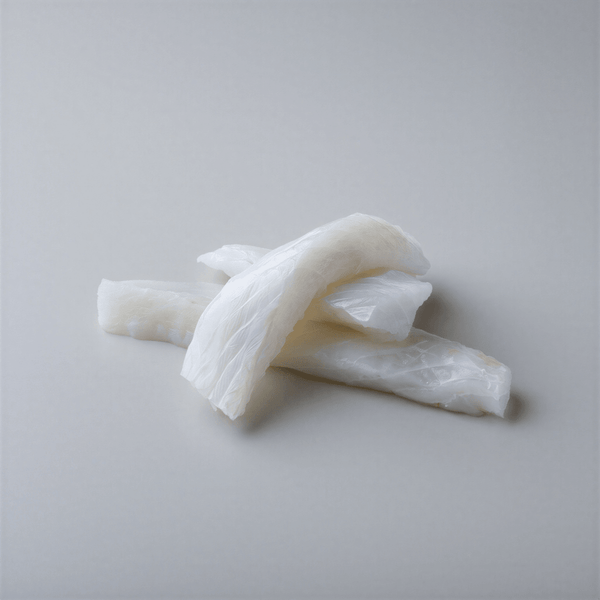
Cod (Gadus morhua) arrived in the Iberian Peninsula via the Vikings, became an essential food during Catholic Lent, was the driving force behind Basque expeditions to Newfoundland from 1527, and today is one of the most beloved ingredients in Spanish and Portuguese cuisine. This is its 1,000-year history in 8 chapters.
Table of contents
- The Vikings and the first cod
- The Basques in Newfoundland (1527-1790)
- The etymon: from "bacajuk" to "bacalao"
- Salting: the invention that changed everything
- The Treaty of Utrecht and the loss of Newfoundland
- Norway-Spain: 300 years of trade
- Cod in Spanish cuisine
- From Lent to gourmet product
- Frequently asked questions
The Vikings and the first cod
The history of cod in Europe begins in the 9th century with the Norwegian Vikings. Fishermen from the Lofoten Islands (northern Norway, within the Arctic Circle) discovered that Atlantic cod (Gadus morhua) could be air-dried in the cold winter for weeks until it became a rigid, light board: stockfisk (stick fish).
Stockfisk was the perfect food for Viking voyages: light (dehydration reduces weight by 80%), durable (months without preservatives), nutritious (65-80% dry protein), and easy to transport. Without stockfisk, Viking expeditions to Iceland (874), Greenland (985), and Vinland/America (1000) would have been logistically impossible.
The Vikings brought stockfisk to all the ports they touched — and they touched many. Through trade and Viking incursions into the Iberian Peninsula (9th-10th centuries), dried cod first reached the coasts of what is now Spain and Portugal. But it remained a rare and marginal product for centuries.
The Basques in Newfoundland (1527-1790)
If the Vikings discovered cod, the Basques turned it into an industry. Historical documentation confirms the presence of Basque fishermen on the banks of Newfoundland (present-day Canada) from at least 1527, when the first documented expedition was recorded. There are indications that they arrived earlier — possibly as early as the 15th century, before Columbus — but the documentary evidence is weak.
What is documented is the scale of the operation. In the 16th century, a fleet of 50-100 Basque ships crossed the Atlantic every spring to fish for cod in the Grand Banks of Newfoundland. The Basques not only fished — they also processed the cod on-site, in temporary stations on the coast of Newfoundland and Labrador. They salted and sun-dried it before loading it into the holds for the return journey.
The Basque ports of Bermeo, Lekeitio, Pasajes (Pasaia), and San Sebastian became centers of the cod trade. From there, salted cod was distributed throughout the Peninsula and into inland Europe.
The company PYSBE (Pesquerías y Secaderos de Bacalao de España), founded in 1927 and based in Pasajes, was the largest Spanish cod company. It operated until the 1970s and had a fleet of over 50 ships. Its legacy is still visible in the buildings of Pasaia.
The etymon: from "bacajuk" to "bacalao"
The word "bacalao" has a disputed but fascinating etymological origin. The most accepted theory currently traces this evolution:
Medieval Dutch: bakeljauw or bacajuk (from Low German bakeljau), which in turn could derive from Gaelic or Basque bacailao (documented in the 14th century).
Portuguese: bacalhau (the Portuguese adaptation, which became the standard word in the Iberian Peninsula).
Spanish: bacalao (Castilianization of the Portuguese form).
There are more than 25 subspecies and local names for Gadus morhua depending on the fishing region: Iceland cod, Norwegian cod (skrei), Newfoundland cod, Faroese cod. The species is the same, but size, fat content, and texture vary significantly depending on the waters.
An interesting fact: in Norwegian, bacalao is spelled exactly the same as in Spanish and pronounced similarly. It is a direct linguistic borrowing from the Hispano-Norwegian trade of the 17th century. In Kristiansund (Norway), the most popular dish is bacalao a la vizcaína — a Basque dish that the Norwegians adopted 300 years ago.
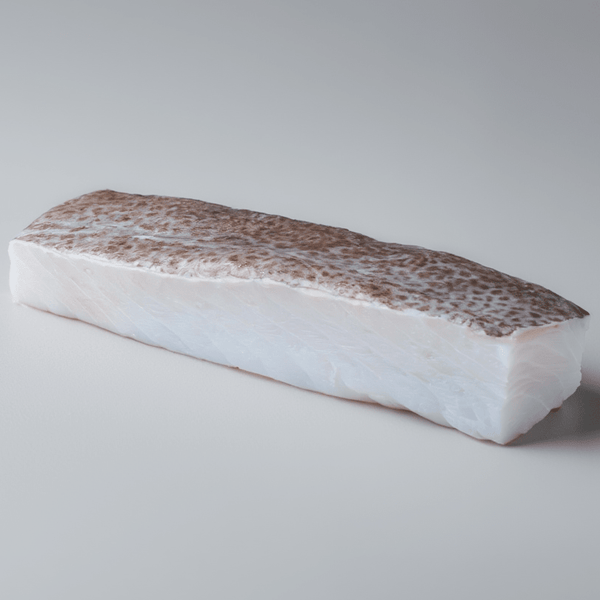
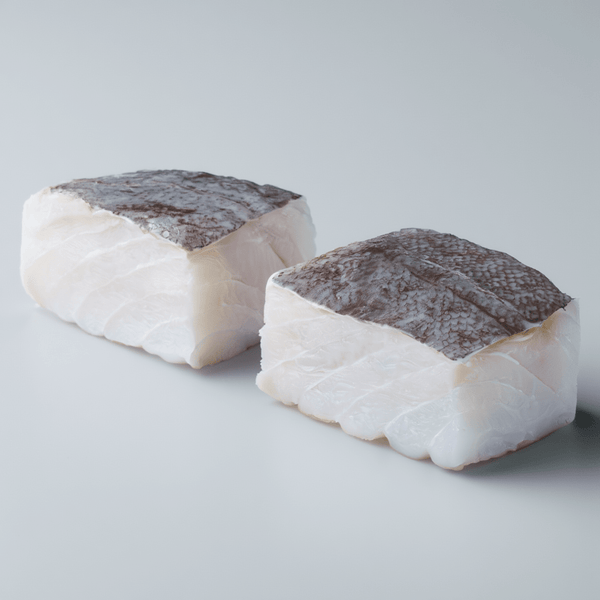
Icelandic cod, selected for its thickness and texture. The same species traded by the Basques 500 years ago. See Icelandic cod at Bacalalo
Salting: the invention that changed everything
The Vikings air-dried cod (stockfisk). The Basques added a step: salting. And that step changed everything.
Salt, abundant in the salt flats of the Iberian Peninsula (Torrevieja, Cadiz, Aveiro), allowed cod to be preserved more quickly and reliably than air-drying. Salted cod did not depend on the cold, dry climate of Norway — it could be processed anywhere with access to salt.
The Basque process was: eviscerate and butterfly the cod, cover with coarse salt (30-35% of the fish's weight), stack in layers alternating fish and salt, press for 3-6 weeks, and air-dry for another 2-4 weeks. The result: a product that lasted for months, was easy to transport, and rehydrated with water before cooking.
Spain was one of the first countries to receive Norwegian salted cod — the first documented export dates back to 1692, from Kristiansund (Norway) to the Cantabrian ports. This trade transformed the Spanish diet: salted cod became the most accessible protein for the interior of the Peninsula, where fresh fish was impossible to obtain.
The Treaty of Utrecht and the loss of Newfoundland
The Treaty of Utrecht (1713) changed the cod map. Spain ceded its rights over Gibraltar and Menorca to Great Britain, but also lost privileged access to the Newfoundland banks. France retained limited fishing rights (the "French Shore" of Newfoundland), but Spain was formally excluded.
In practice, the Basques continued fishing in Newfoundland for decades more — the waters were vast and British control limited. But gradually, the Basque fleet reduced its presence. By the end of the 18th century, Basque fishing in Newfoundland was marginal.
The direct consequence: Spain went from being a cod-fishing nation to an importer. Norway and Iceland became the main suppliers. This commercial dependence — Spain buying Norwegian and Icelandic cod — has lasted until today, more than 300 years later.
Norway-Spain: 300 years of trade
The commercial relationship between Norway and Spain concerning cod is one of the longest and most stable in the history of European trade. Since 1692, Norway has exported salted cod to Spain almost continuously.
Kristiansund, on the west coast of Norway, became the "cod capital" of Norway. In the 19th century, 80% of the city's exports were salted cod destined for Spain, Portugal, and Italy. Norwegian merchants learned Spanish and Portuguese to negotiate directly. Even today, Kristiansund celebrates a bacalao a la vizcaína festival.
Norwegian cod is mainly caught in the Arctic waters of the Lofoten Islands, Vesterålen, and the Barents Sea. Skrei (migratory Arctic cod, which travels from the Barents Sea to the Lofoten for spawning between January and April) is the most prized variety: firm, white flesh, with large flakes and a clean taste.
Iceland entered the trade with Spain later, but has become the highest quality supplier. Icelandic waters (2-8°C, clean, and rich in plankton) produce exceptionally firm and white cod. Icelandic cod is the reference standard for Basque Country and Catalonia kitchens.
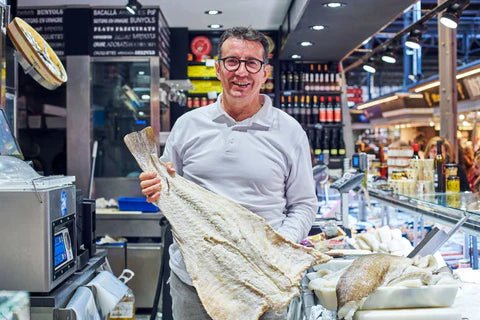
Dried cod from Iceland and Norway, imported directly. 35 years selecting the best pieces. See dried cod at Bacalalo
Cod in Spanish cuisine
Spain has more cod recipes than any other country except Portugal (which claims to have 1,001). Each region has its emblematic dishes:
| Region | Emblematic dish | Technique |
|---|---|---|
| Basque Country | Bacalao al pil-pil | Gelatin and oil emulsion |
| Basque Country | Bacalao a la vizcaína | Choricero pepper sauce |
| Basque Country | Bacalao al Club Ranero | With peppers and tomato sauce |
| Catalonia | Bacallà a la llauna | Baked with paprika and garlic |
| Catalonia | Esqueixada | Shredded raw cod in salad |
| Catalonia | Buñuelos de bacalao | Fried batter with shredded cod |
| Catalonia/Provence | Brandada | Emulsion with oil and milk |
| Galicia | Bacalao con grelos | Cooked with turnip greens and potatoes |
| Andalusia | Soldaditos de Pavía | Battered and fried cod |
| Castile | Bacalao en salsa | Stewed with tomato and onion |
| Navarre | Bacalao ajoarriero | Shredded with peppers and tomato |
This diversity is unique. No other Spanish ingredient has such a wide regional repertoire. And they all start from the same product: rehydrated salted and dried cod.
From Lent to gourmet product
Salted cod entered the Spanish diet as a Lenten food. The Catholic Church prohibited the consumption of meat during the 40 days of Lent, the Fridays of the year, and various vigils — in total, up to 166 meatless days a year in the Middle Ages. Fish was the obligatory alternative, and salted cod was the most accessible fish in the interior of the peninsula.
This association with penance marked cod for centuries as a "poor man's" or "obligatory" food. It was what you ate when you couldn't eat meat. The upper classes disdained it: "food for friars and peasants."
The rehabilitation of cod as a gourmet product began in the Basque Country in the mid-20th century, led by the new Basque cuisine (Juan Mari Arzak, Pedro Subijana, Martín Berasategui). Pil-pil, vizcaína, and Club Ranero moved from farmhouse kitchens to Michelin-starred restaurant menus.
Today, a good desalted cod from Iceland can cost €25-40/kg — more than many fresh fish. The penitential ingredient has become a celebratory one. What hasn't changed is the product: it is still the same Gadus morhua that the Vikings dried in the Arctic wind a thousand years ago.
Frequently asked questions
Is it true that the Basques reached America before Columbus?
There are indications but no firm documentary evidence. The Basques had the technical capacity to cross the Atlantic (they sailed to Iceland since the 14th century) and there are ambiguous references in 15th-century documents. The first documented presence is from 1527. It is possible but not demonstrable with current data.
How many cod subspecies are there?
Gadus morhua (Atlantic cod) does not have formally recognized subspecies, but there are more than 25 geographically distinct populations: Norwegian Arctic cod (skrei), Icelandic cod, Newfoundland cod, North Sea cod, etc. Each population has different characteristics of size, fat, and texture.
Why is Icelandic cod the most valued?
Cold (2-8°C), clean, and plankton-rich waters produce cod with firm, white flesh and exceptional texture. Furthermore, Iceland manages its stocks sustainably — something not all countries can say. The result is a consistent and high-quality product.
Is stockfisk still made?
Yes. The Lofoten Islands (Norway) still produce stockfisk (tørrfisk) from January to June, air-dried in the Arctic wind. Most of it is exported to Italy (where it is called stoccafisso) and Nigeria. It has no tradition in Spain — here it was always salted cod.
Why do they eat cod à la vizcaína in Norway?
Because 300 years of trade leave their mark. The Basque merchants who traveled to Kristiansund brought their recipes. Vizcaína became so rooted that today it is a Christmas dish in many Norwegian families. The Norwegian recipe is very faithful to the original Basque: desalted cod in choricero pepper sauce.
Is cod endangered?
Atlantic cod suffered a collapse in the Grand Banks of Newfoundland in 1992 — overfishing destroyed one of the world's largest populations. Canada imposed a moratorium that is still partially in effect. However, the populations of Norway and Iceland are well-managed and sustainable. The cod we market comes from certified fisheries.
Keep exploring
Discover our premium selection
Seafood products carefully selected since 1990 at Mercat del Ninot, Barcelona. Refrigerated shipping in 24-48h.