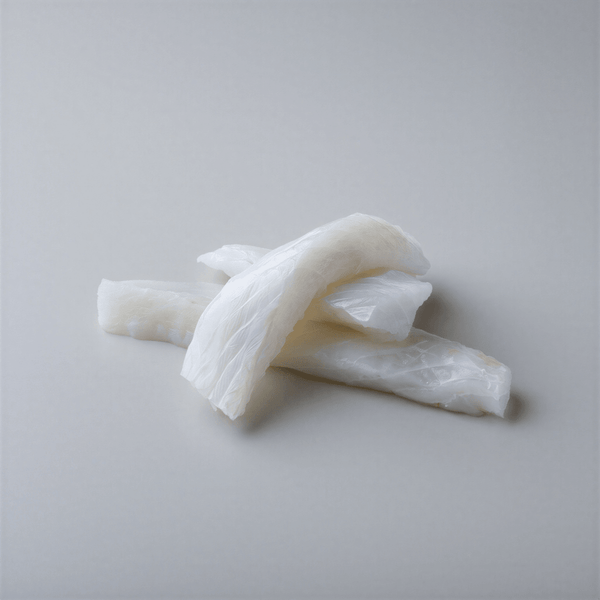
Gadus Morhua: All About Atlantic Cod
Gadus morhua is the scientific name for Atlantic cod, the fish that has fed Europe for over a thousand years and remains one of the most important species in the world. But not everything sold as "cod" is Gadus morhua — and the differences between species determine the flavor, texture, price, and nutritional value of what reaches your table. This guide brings together biology, gastronomy, and verifiable data so you know exactly what you're buying.
What is Gadus morhua
Updated March 2026. What we tell you here comes from serving thousands of customers in Barcelona.
Gadus morhua is the scientific name for Atlantic cod, a species of the Gadidae family that inhabits the cold waters of the North Atlantic. It is the "true" cod — the species that gave rise to a fishing industry that transformed the European economy for centuries and still represents one of the largest fish markets in the world today.
The genus Gadus includes three main species of cod, but it is morhua that is considered superior in all gastronomic metrics: size, texture, flavor, and versatility in cooking. It is the cod that is salted and dried on the racks of Norway and Iceland, the one that reaches the tables of Portugal, Spain, Italy, and Brazil, and the one that chefs around the world consider the benchmark for quality white fish.
In Spain, legislation requires species identification on labeling. When you see "cod" without further specification, it should be Gadus morhua. But in practice, there are frequent substitutions with lower quality species — especially in frozen products and in hospitality. Knowing what is and what is not Gadus morhua protects you as a consumer.
Biology and habitat
Gadus morhua is a demersal fish — it lives near the seabed — inhabiting the cold waters of the North Atlantic at temperatures between 0 °C and 12 °C, with a preference for 2-8 °C. It is found from the Arctic to the Bay of Biscay on the European side, and from Labrador to North Carolina on the American side.
Physical characteristics
- Size: Adults measure between 60 and 120 cm. Exceptional specimens can exceed 150 cm and 40 kg, although they are rare today due to fishing pressure.
- Color: Greenish-brown on the back with darker spots, silvery-white on the belly. Coloration varies by habitat.
- Barbel: A fleshy appendage under the lower jaw, used as a sensory organ to detect food on the bottom.
- Three dorsal and two anal fins: A distinctive feature of gadids, allowing stable swimming in deep waters.
- Longevity: Can live more than 25 years, although most are caught between 3 and 6 years of age.
Feeding and behavior
Gadus morhua is omnivorous and opportunistic. It feeds on crustaceans, mollusks, marine worms, and other fish (herring, capelin, mackerel). Adults are active predators that can consume prey up to a third of their own length. This varied diet contributes to the complexity of flavor that characterizes its flesh.
It is a migratory species: it moves between feeding grounds and spawning grounds. Norwegian Arctic cod, for example, travels up to 1,500 km between its feeding ground in the Barents Sea and its spawning areas in the Lofoten Islands.
Main fishing grounds
| Area | Location | Characteristics |
|---|---|---|
| Lofoten (Norway) | North Atlantic, Arctic | The largest and most valued cod. Traditional line fishing. Origin of skrei. |
| Iceland | North Atlantic | Cold, clean waters. Strict quotas. Excellent quality cod. |
| Faroe Islands | North Atlantic | Sustainable fishing with managed quotas. Quality comparable to Iceland. |
| Barents Sea | Arctic, Norway-Russia | The largest Gadus morhua population in the world. Jointly managed. |
| Newfoundland | Northwest Atlantic | Historically the most productive bank. Collapsed in 1992. Slow recovery. |
| North Sea | Northern Europe | Population reduced by overfishing. Restrictive EU quotas. |
Cod species: Gadus morhua vs others
Not everything called "cod" is Gadus morhua. Several species are marketed as cod but belong to other families or genera. The differences matter — and a lot.
| Species | Scientific Name | Origin | Quality vs Gadus morhua |
|---|---|---|---|
| Atlantic Cod | Gadus morhua | North Atlantic | Benchmark. Firm texture, delicate flavor, large flakes. |
| Pacific Cod | Gadus macrocephalus | North Pacific | Similar but smaller, less flavor, softer texture. |
| Greenland Cod | Gadus ogac | Western Arctic | Smaller size, darker flesh, stronger flavor. |
| Alaska Pollock | Gadus chalcogrammus | North Pacific | Much inferior. Soft texture, bland flavor. Used in surimi and crab sticks. |
| Ling / Cusk | Molva molva | North Atlantic | Another family. Sold as salted cod. Fibrous texture, acceptable flavor. |
| Blue Whiting | Micromesistius poutassou | North Atlantic | Much inferior. Small fish, soft flesh. Not real cod. |
The difference on the plate is remarkable. A well-salted and desalted Gadus morhua produces firm, pearly white flakes that separate into defined layers. A Pacific cod or, worse, a pollock, produces a soft mass with no visible structure. If you buy quality desalted cod, the species must be Gadus morhua. Anything else is a substitute.

Salted Cod Brandade - 250g
All our cod is Gadus morhua, caught in North Atlantic waters (Iceland, Norway, Faroe Islands). No substitutions, no mixtures, no surprises. Professional 48-hour desalting with controlled water changes.
History of cod trade
Gadus morhua is not just a fish: it is a central player in the economic history of the West. Its ability to be salted and dried — preserved for months without refrigeration — made it the most accessible protein in Europe for centuries.
The Vikings and the first drying racks
The Vikings were the first to systematically exploit cod, drying it in the cold Arctic air into the famous stockfish (stick fish) that are still produced in the Lofoten Islands. This dried cod was light, nutritious, and virtually imperishable — the perfect food for long Viking voyages.
The Hanseatic trade
In the Middle Ages, the Hanseatic League made Bergen (Norway) the center of the cod trade. Norwegian tørrfisk was exchanged for grain, salt, and wine from Southern Europe. This trade generated fortunes and established routes that endure today.
Newfoundland and the Cod Wars
The discovery of the Grand Banks of Newfoundland in the 15th century multiplied the supply. Basque, Portuguese, French, English, and Spanish fishermen crossed the Atlantic to catch cod in industrial quantities. Disputes over these fishing grounds fueled diplomatic conflicts for centuries — including the so-called "Cod Wars" between Iceland and the United Kingdom in the 20th century.
The 1992 collapse
In 1992, the Canadian government declared a moratorium on cod fishing in Newfoundland. The population had fallen by 99% compared to historical levels. More than 40,000 fishermen lost their jobs in the largest fishing crisis in history. Thirty years later, the population has not fully recovered. It is a reminder that sustainability is not a slogan — it is a necessity.
Nutritional value of Gadus morhua
Gadus morhua is one of the most nutritious white fish. Its nutritional profile per 100 g of fresh meat:
| Nutrient | Amount | % Daily Value |
|---|---|---|
| Calories | 82 kcal | 4% |
| Protein | 18 g | 36% |
| Total Fat | 0.7 g | 1% |
| Omega 3 (EPA + DHA) | 0.2 g | 10% |
| Vitamin B12 | 1.0 µg | 42% |
| Vitamin D | 1.0 µg | 7% |
| Selenium | 33 µg | 60% |
| Phosphorus | 203 mg | 29% |
| Iodine | 110 µg | 73% |
| Sodium (fresh) | 54 mg | 2% |
Most notably is the protein/calorie ratio: 18 g of protein for only 82 kcal. It is one of the highest ratios in the animal kingdom. Additionally, cod is an exceptional source of iodine (covering 73% with 100 g), selenium, and B vitamins.
Historically, cod liver oil was the main source of vitamins A and D in Northern Europe. A tablespoon of cod liver oil contains 4,500 IU of vitamin A and 450 IU of vitamin D — amounts that prevented rickets in generations of Scandinavians.
Sustainability and responsible fishing
After the Newfoundland disaster, the management of Gadus morhua populations has become a model of fisheries regulation — at least in some countries.
Well-managed populations
- Barents Sea (Norwegian skrei): The largest population in the world, jointly managed by Norway and Russia. Quotas based on ICES scientific data. MSC certification.
- Iceland: Individual transferable quota (ITQ) system considered one of the most effective in the world. Stable population.
- Faroe Islands: Strict quotas with continuous scientific monitoring.
Populations at risk
- North Sea: Slow recovery after decades of overfishing. Restrictive EU quotas.
- Newfoundland: Partial moratorium in effect since 1992. Insufficient recovery.
- Baltic Sea: Declining population due to a combination of overfishing, warming waters, and pollution.
When buying cod, look for MSC (Marine Stewardship Council) or ASC (Aquaculture Stewardship Council) certification. It's not empty marketing — it's the best available verification that the fish comes from a sustainable fishery.
Preservation methods
One of the reasons for the historical importance of Gadus morhua is its exceptional suitability for preservation. The lean flesh of cod — with less than 1% fat — dehydrates without becoming rancid, which does not happen with fatty fish like salmon or tuna.
Salted dried cod (salazón)
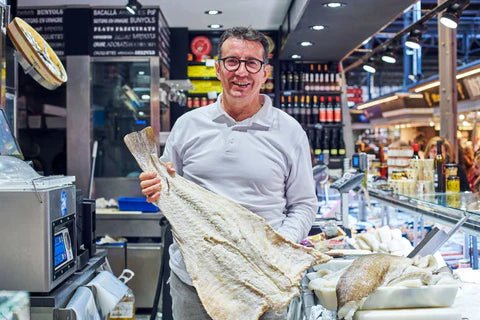
The most widespread method on the Iberian Peninsula. The cod is gutted, butterflied, salted in piles for weeks, and then air-dried or in industrial dryers. The result is a product with only 15-20% moisture that can be stored for months at room temperature. To use it, it needs a desalting process of 24-48 hours. If you want to delve deeper into this format, read our complete guide to salted dried cod.
Stockfish (dried unsalted cod)
The original Scandinavian method. Cod is air-dried in the cold without added salt, hung on wooden racks exposed to the Arctic wind. The result is a very hard product that needs soaking for 5-7 days before cooking. It is the oldest way to preserve cod and remains popular in Norway, Italy, and West Africa.
Frozen cod
The modern method. Cod is frozen on board the ship at -30 °C, which preserves freshness and texture. It is the most convenient form for the consumer, but it lacks the complexity of flavor that salting develops in the flesh.

Universal Dried Shredded Cod - 500g
Our salted dried cod is 100% Gadus morhua from the North Atlantic, cured with the traditional salting technique that concentrates the flavor. Available in multiple cuts: loins, center cuts, tails, and flakes. The base of all great cod recipes.
Gadus morhua in gastronomy
Gadus morhua is probably the most versatile fish in the world in cooking. Its white, firm, and mild-flavored flesh adapts to virtually any culinary technique and gastronomic tradition.
Traditions by country
- Portugal: More than 365 documented recipes. Bacalhau à Brás, bacalhau com natas, pastéis de bacalhau, bacalhau à Gomes de Sá.
- Spain: Pil pil, bacalao al ajoarriero, bacalao a la vizcaína, bacalao en salsa verde, brandada, croquettes.
- Italy: Baccalà alla vicentina, baccalà mantecato (Venice), stoccafisso alla messinese (Sicily).
- Norway: lutefisk (lactic-treated cod), fresh steamed cod, cod with brown butter.
- United Kingdom: fish and chips — the British national dish is, originally, battered Gadus morhua.
- Brazil: bolinhos de bacalhau, bacalhoada (Christmas stew with potatoes and olives).
This universality is no coincidence. The meat of Gadus morhua has three properties that make it ideal for cooking: it flakes cleanly (making plating easy), it does not have a strong taste (it absorbs sauces and spices), and its collagen content produces gelatin when cooked (the basis of Basque pil pil sauce).
How to choose authentic cod
Identifying real Gadus morhua at the point of sale is not difficult if you know what to look for:
- Labeling: European regulations require the scientific name (Gadus morhua) and the FAO capture zone to be indicated. If it is not present, be suspicious.
- Color: dried salted Gadus morhua cod is yellowish-white, with golden tones if air-dried. Never grayish or translucent.
- Dry texture: firm to the touch, with no soft or wet areas. The flakes of the meat should be visible.
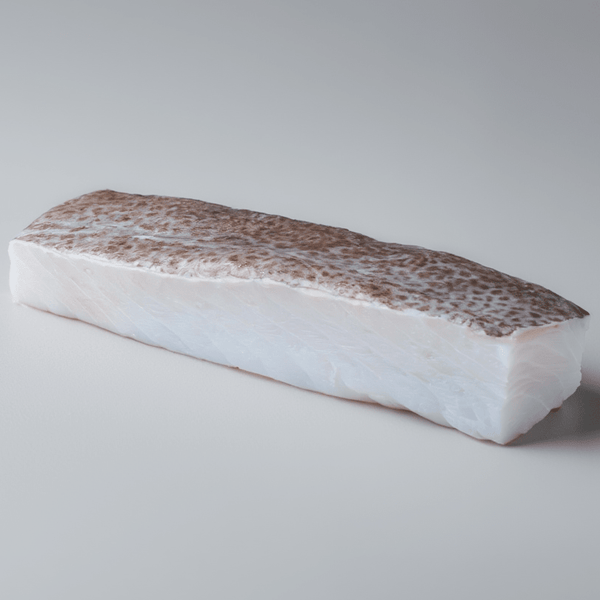
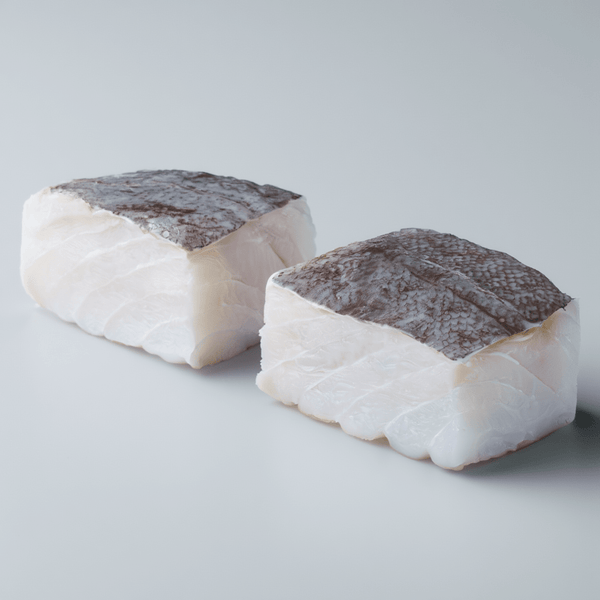
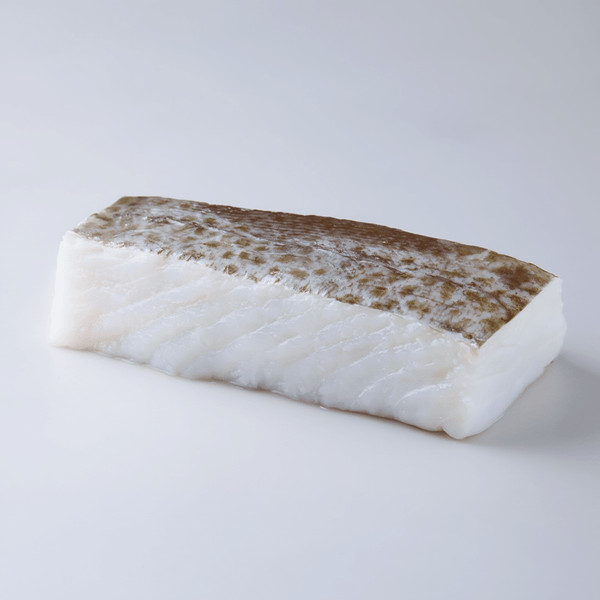
- Thickness: Gadus morhua produces thick pieces — loins 4-6 cm thick. Thin, flat pieces are usually other species.
- Smell: pleasant, of sea and salt. Never ammoniacal or rancid.
- Price: Gadus morhua costs between €15-30/kg dry. If you find "cod" at €8/kg, it is not Gadus morhua.
Frequently asked questions
Are Gadus morhua and Atlantic cod the same?
Yes. Gadus morhua is the scientific name for Atlantic cod. In Spanish it is simply called "bacalao", in Portuguese "bacalhau", in Italian "baccalà", in Norwegian "torsk" and in English "Atlantic cod". All refer to the same species.
How much does an adult cod weigh?
A typical adult Gadus morhua weighs between 5 and 12 kg, with exceptional specimens exceeding 40 kg. The verified record is 96 kg, caught in Norwegian waters in 2013. However, most commercial cod are caught between 2 and 8 kg.
What is the difference between Gadus morhua and Gadus macrocephalus?
Gadus morhua (Atlantic) is larger, has firmer flesh, more delicate flavor, and produces more defined flakes when cooked. Gadus macrocephalus (Pacific) is smaller, with softer and more watery flesh, less defined flavor, and poorer suitability for salting. In the market, Pacific cod is significantly cheaper.
Does cod have many bones?
Gadus morhua has a relatively simple skeleton with large, easy-to-remove bones. In commercial cuts (loins, centers), the bones are removed during processing. Tails and sides may have fine bones that should be checked. Professionally desalted cod is usually sold practically boneless.
Does cod contain mercury?
Gadus morhua has low levels of mercury — between 0.05 and 0.15 mg/kg, well below the 0.5 mg/kg limit established by the EU. Being a demersal fish that feeds mainly on invertebrates (not other large fish), it accumulates less mercury than predators such as bluefin tuna or swordfish. It is safe for pregnant women and children in normal consumption.
Where is the best cod caught?
Experts agree that Norwegian Arctic cod (skrei) and Icelandic cod are of the highest quality. Cold, clean waters produce large specimens with firm flesh and delicate flavor. Cod from the Faroe Islands also has an excellent reputation. In general, the colder and cleaner the water, the better the cod.
What is skrei?
Skrei is Norwegian Arctic cod (Gadus morhua) caught during its spawning migration between January and April. It is the same fish as common Norwegian cod, but caught at a specific time when its flesh is particularly firm and lean. It is sold fresh, never salted, and has controlled origin certification by Norway.
Brandada de Bacalao Desalado - 250g
Every piece we sell has full traceability: species (Gadus morhua), catch area (North Atlantic) and preservation method. No substitutions, no ambiguous marketing. The cod that Marc has selected at Mercat del Ninot since 1990.
Conclusion
Gadus morhua is not just a scientific name — it is the guarantee that you are buying real cod, the one that has defined the gastronomy of half the world for over a thousand years. The differences with other species are verifiable: texture, flavor, flaking, size of the piece, ability to absorb salt.
In a market where species substitution is frequent, knowing the basic biology of Gadus morhua makes you an informed consumer. Look at the labeling, check the species, observe the texture. The data does not lie.