In short: Cantabrian anchovies are not "cured" — they are FERMENTED through enzymatic autolysis for 8-14 months in dry salt. The fish's own enzymes break down proteins, creating free glutamate (umami) and aromatic amino acids. It's the same technique as Iberian ham applied to the sea.
Table of contents
The fermentation process step by step
What we call "cured anchovy" is technically fermented anchovy through enzymatic autolysis. Steps:
- Heading and evisceration of fresh anchovy (Engraulis encrasicolus) within the first 24-48 hours after fishing.
- Dry salting: alternating layers of anchovy and sea salt in a barrel/vat. Compression by weight (stones) on top.
- Fermentation 8-14 months: at a controlled temperature of 18-22°C. The fish's natural enzymes (cathepsin, trypsin) break down muscle proteins.
- Biochemical result: free amino acids (glutamate = umami), small peptides, aromatic volatile fatty acids.
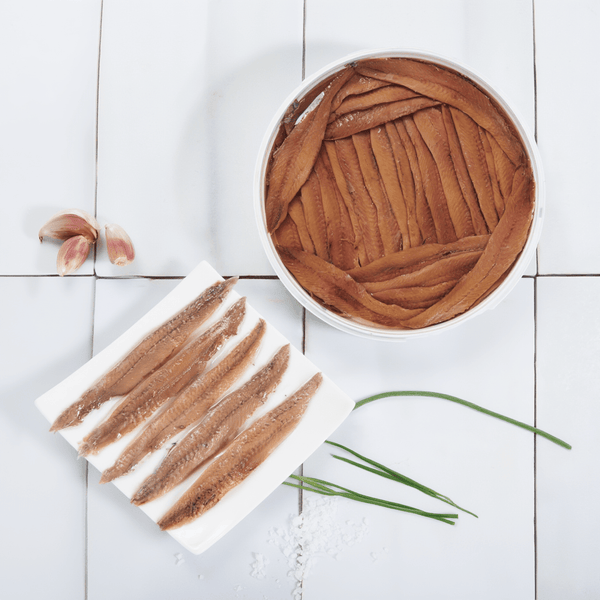
- Final cleaning: remove skin, central bone, residue. Clean fillet.
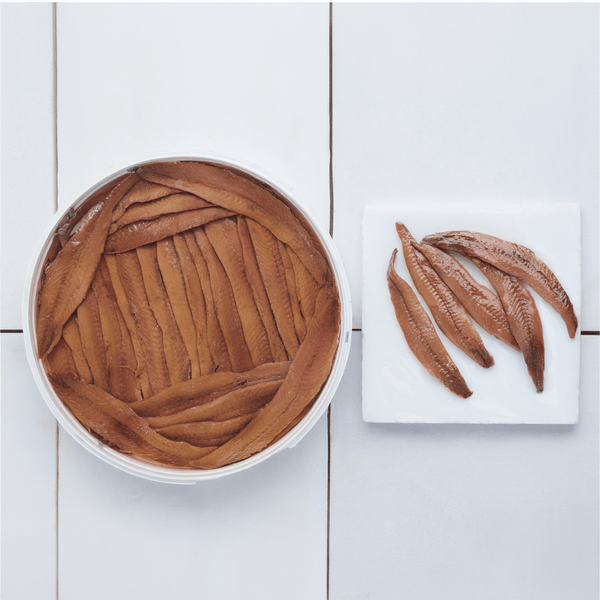
- Packaged in EVOO: for preservation + additional flavor profile.
Autolysis: the science behind the flavor
Autolysis is the "self-digestion" of fish by its own enzymes. Muscle cathepsins (D, B, L), normally inactive in live fish, are activated in a saline environment and break down muscle proteins into short peptides and free amino acids.
Free glutamate (one of the amino acids generated) is responsible for umami, the fifth taste. An anchovy cured for 12+ months has 480 mg/100g of free glutamate versus 5 mg/100g in fresh anchovy — an almost 100x increase.
Additionally, volatile aldehydes (cured cheese aromas), short fatty acids (fermented notes), and nucleotides (inosinate synergistic with glutamate) are generated.
Similarities with other fermented cured products
The Basque-Cantabrian anchovy technique shares principles with international cured products:
- Iberian acorn-fed ham: enzymatic autolysis of porcine muscle for 24-48 months
- Parmigiano Reggiano cheese: fermentation + autolysis for 24-48 months
- Thai fish sauce (nam pla): anchovy fermentation for 12 months
- Roman garum: historical antecedent — Romans fermented anchovies in exactly the same way 2,000 years ago
Key variables: temperature and time
Optimal temperature: 18-22°C. Warmer temperatures accelerate fermentation but degrade quality. Colder temperatures slow it down and produce a "green" flavor.
Curing time:
- 6-8 months → standard anchovy, moderate flavor
- 9-12 months → premium anchovy (size 0-00), deep flavor
- 12-14 months → "gran reserva" or "special selection" anchovy
- >14 months → risk of excess (bitter taste)
The perfect time depends on the size of the fish: large anchovies (size 0-00) need more time than small ones.
Frequently asked questions
Is the anchovy raw?
Why does anchovy ferment without rotting?
Cured anchovy vs. fermented anchovy: is there a difference?
Can anchovy be fermented at home?
Why does anchovy fermentation take so long compared to smoked salmon?
Does fermented anchovy have probiotics?
To conclude
Anchovy fermentation is one of the oldest gastronomic processes in the Mediterranean: the Phoenicians and Romans already mastered it 2,500 years ago. Today it remains fundamentally the same, which is a testament to the technique being optimal from the start. Cantabrian anchovy size 00 cured for 12 months = a year-long microbiological journey condensed into each fillet.