Summary: Why is ling so often confused with cod? Identifying the species: distinctive characteristics of each fish Authentic cod: Gadus morhua Ling: the most common impostor Pollock: another source of confusion Gastronomic differences: beyond physical appearance How to identify real cod at the point of sale Reading the label: keys to not being deceived Visual inspection of the product The economic impact of these confusions in the market Practical tips for smart shopping Specialty stores vs.
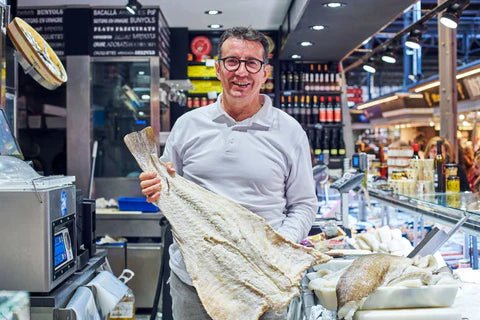
At Bacalalo, we have been selecting each piece of cod at the Mercat del Ninot since 1990.
- Why is ling so often confused with cod?
- Identifying the species: distinctive characteristics of each fish
- Authentic cod: Gadus morhua
- Ling: the most common impostor
- Pollock: another source of confusion
- Gastronomic differences: beyond physical appearance
- How to identify real cod at the point of sale
- Reading the label: keys to not being deceived
- Visual inspection of the product
- The economic impact of these confusions in the market
- Practical tips for smart shopping
- Specialty stores vs. large distributors
- Key questions when making a purchase
Why is ling so often confused with cod?
It's happened to you, hasn't it? You go to the supermarket looking for cod and you find a label that simply says "cod" but the price seems too good to be true. Or perhaps you've noticed that this "cod" looks slightly different from what you remember. You're not crazy. What you probably have in front of you is ling, one of the fish most commonly confused with authentic cod.
The confusion between ling and cod is no coincidence. Both belong to the same taxonomic family, the Gadidae, and share physical characteristics that can deceive even experienced buyers. However, the differences in taste, texture, and price are considerable.
In Spain, legislation allows for a certain ambiguity in labeling that contributes to this confusion. While true cod (Gadus morhua) comes mainly from cold North Atlantic waters such as Iceland and Norway, ling (Molva molva) is caught in wider areas and its commercialization is significantly cheaper.
Identifying the species: distinctive characteristics of each fish
Authentic cod: Gadus morhua
The true protagonist of traditional Spanish dishes has unmistakable characteristics once you know what to look for. Its elongated and robust body can reach up to 150 centimeters in length, although commercial specimens usually measure between 60 and 90 centimeters.
The coloration of genuine cod varies from greenish to brownish tones on the back, with irregular spots that create a characteristic mottled pattern. Its belly is noticeably lighter, almost whitish. But there is one detail that never fails: the well-defined lateral line that runs along its entire side, slightly curved above the pectoral fins.
The fins of Gadus morhua are another crucial identifying element. It has three dorsal fins and two anal fins, all with a distinctive rounded shape. Its caudal fin is almost straight or slightly notched, never deeply forked.
Ling: the most common impostor
Molva molva is considerably more elongated and slender than cod. Its serpentine body can exceed 150 centimeters, but its build is noticeably thinner. This morphological difference translates into a distinct meat texture once processed.
Its coloration tends towards more uniform tones, generally brownish or grayish, without the mottled pattern so characteristic of cod. The lateral line is less pronounced and straighter. It has two dorsal fins instead of three, and the second is considerably longer, extending almost to the tail.
A revealing detail: ling has a small barbel on its lower jaw, similar to cod, but its position and size differ slightly. These nuances may seem insignificant, but they mark the difference between a gourmet product and a cheaper alternative.
Pollock: another source of confusion
Pollachius pollachius adds another layer of complexity to this identification. Its appearance is perhaps the most differentiated of the three, with a darker and more uniform coloration, tending towards intense greenish or brownish tones.
Its lower jaw is prominent, projecting beyond the upper one, which gives it a distinctive profile. It lacks a barbel, a characteristic that immediately differentiates it from cod and ling. Its fins are proportionally larger and its tail has a more pronounced notch.
Gastronomic differences: beyond physical appearance
The organoleptic differences between these species are fundamental to understanding why authentic cod maintains its premium status in world gastronomy.
"The texture of true cod is unique: firm yet tender, with flakes that separate perfectly when cooked, creating that mouthfeel that characterizes great traditional dishes."
Gadus morhua cod develops dense musculature due to the extreme conditions of cold Nordic waters. This characteristic translates into meat with higher protein content and a muscular structure that allows for perfect desalting, a fundamental process in traditional cod production.
Ling, on the other hand, has a softer and less structured texture. Its flesh tends to fall apart more easily during cooking, and its ability to absorb and release salt during the desalting process is inferior. This results in dishes with less intense flavor and poorer final presentation.
Pollock offers an intermediate gastronomic experience. Its flesh is firmer than ling but less structured than authentic cod. Its flavor is milder, which can be appreciated by certain palates but lacks the aromatic complexity of genuine cod.
| Characteristic | Cod (Gadus morhua) | Ling (Molva molva) | Pollock (Pollachius pollachius) |
|---|---|---|---|
| Texture | Firm and flaky | Soft and less structured | Intermediate |
| Flavor | Intense and complex | Mild and simple | Moderate |
| Desalting | Excellent absorption/release | Limited capacity | Good capacity |
| Approximate price | High (premium product) | Economical | Medium |
Related products from Bacalalo


How to identify real cod at the point of sale
Reading the label: keys to not being deceived
Spanish legislation allows for denominations that can be confusing to the consumer. The key is to look for specific information beyond the generic trade name.
The scientific name is your best ally. Always look for "Gadus morhua" on the product label. Any other scientific name indicates a different species. "Molva molva" corresponds to ling, while "Pollachius pollachius" identifies pollock.
The catch area also provides valuable clues. The highest quality authentic cod comes from FAO areas 27 (Northeast Atlantic), particularly from Icelandic and Norwegian waters. Be wary of fishing areas that are too generic or imprecise on the label.
Visual inspection of the product
For fresh or whole frozen products, direct observation allows for fairly accurate species identification. Count the dorsal fins: three dorsal and two anal fins indicate genuine cod.
The thickness of the fish is another indicator. Cod has a more robust and compact body, while ling is noticeably more slender and elongated in proportion to its weight.
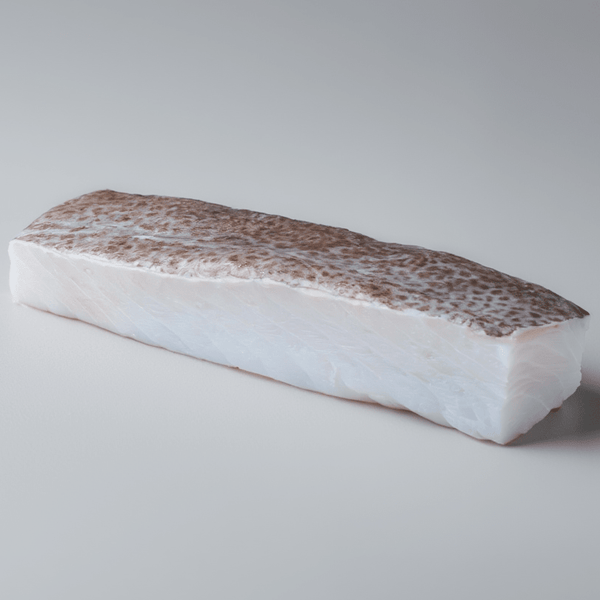
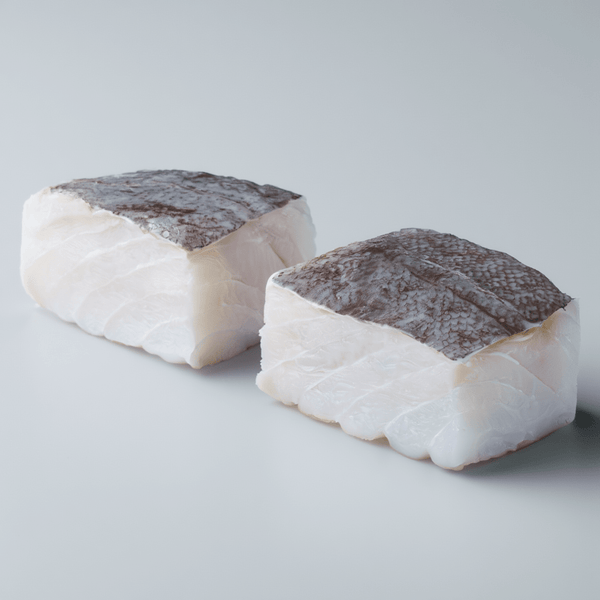
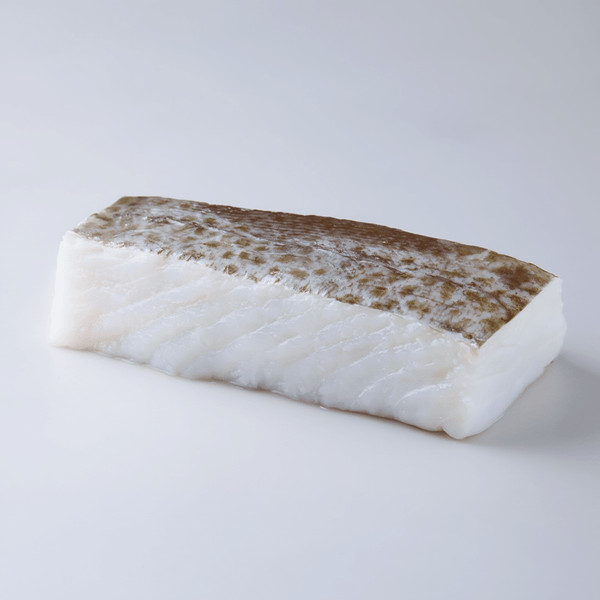
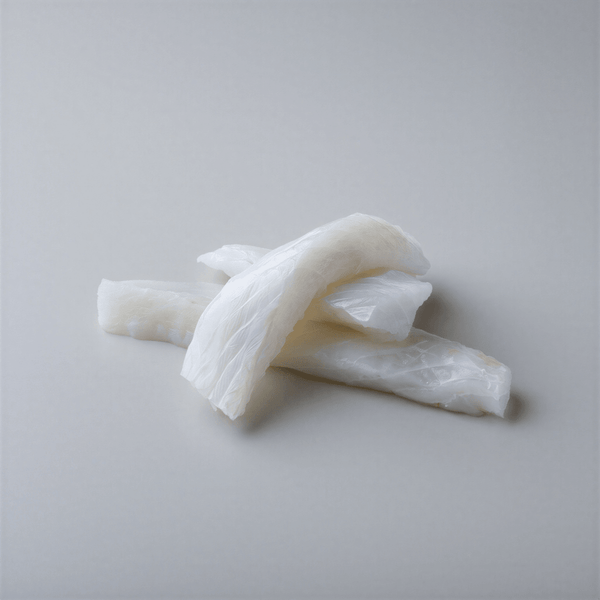
For already processed loins, observation is more complicated but not impossible. The color of cod meat is whiter and pearly, with a muscular structure that shows well-defined flakes. Ling tends towards slightly more yellowish tones and a less differentiated structure.
🔒 The solution: buy with species guarantee
At Bacalalo we only sell Gadus morhua from Iceland. Every order includes certified origin traceability. We have been selecting authentic cod at the Mercat del Ninot in Barcelona since 1990.
⭐ 4.9/5 · 24-48h refrigerated shipping to all of Spain
The economic impact of these confusions in the market
The price differences between these species are substantial and reflect not only the quality of the product, but also its availability and demand in the international market.
Gadus morhua cod from Iceland or Norway can cost between three and five times more than ling in the wholesale market. This difference is maintained, though attenuated, at the final point of sale. When an establishment offers "cod" at exceptionally low prices, it is likely to be an alternative species.
Fishing sustainability also influences these prices. Cod stocks are subject to strict fishing quotas, while other gadoid species can be fished with fewer restrictions, which explains part of the cost difference.
- Gadus morhua cod (premium): €25-40/kg retail
- Molva molva ling: €8-15/kg in specialized establishments
- Pollachius pollachius pollock: €12-20/kg depending on quality and presentation
- Processed products: differences extend up to 300-400% between species
Practical tips for smart shopping
Specialized stores vs. large retailers
Artisan codfish shops and specialized fishmongers offer significant advantages in transparency and quality. These establishments usually work directly with specialized importers and can guarantee product traceability.
In large retail, the situation is more complex. Commercial margins push towards cheaper products, and staff training in species identification may be limited. However, some chains have developed premium lines that do guarantee the authenticity of the cod.
Key questions when making a purchase
Don't hesitate to ask directly about the origin and species. A professional seller should be able to provide you with precise information about the fish's provenance and its exact scientific name.
Specifically ask about the preservation and processing method. Authentic cod requires more careful and prolonged desalting processes, which is reflected in the establishment's technical knowledge.
Inquire about sanitary and freshness guarantees. Premium products usually have additional certifications and complete traceability from origin to point of sale.
Transparency regarding weights, desalting times, and preservation recommendations indicates a level of professionalism that generally corresponds to the authenticity of the product offered.
Discover our selection of salted cod at Bacalalo.
→ See our selection of desalted cod from Iceland
Conclusions
- Why do they confuse ling with cod so much?: It's happened to you, hasn't it?
- Identifying species: distinctive characteristics of each fish: The true protagonist of traditional Spanish dishes has unmistakable characteristics once you know what to look for.
- Gastronomic differences: beyond physical appearance: The organoleptic differences between these species are fundamental to understanding why authentic cod maintains its premium status in gastronomy.
- How to identify real cod at the point of sale: Spanish legislation allows for denominations that can be confusing for consumers.
- The economic impact of these confusions in the market: The price differences between these species are substantial and reflect not only the quality of the product, but also its availability and demand in the market.
- Practical tips for smart shopping: Artisan codfish shops and specialized fishmongers offer significant advantages in transparency and quality.
Frequently Asked Questions
What is false cod called?
Summary: Why is ling so often confused with cod? Identifying species: distinctive characteristics of each fish Authentic cod: Gadus morhua Ling: the most common impostor Pollock: another source of confusion Gastronomic differences: beyond physical appearance How to identify real cod at the point of sale Reading the label: keys to avoid being deceived...
What is the difference between cod and ling?
A revealing detail: ling has a small chin barbel on its lower jaw, similar to cod, but its position and size differ slightly. These nuances may seem insignificant, but they make the difference between a gourmet product and a more economical alternative.
What is the name of the fish that is similar to cod?
Summary: Why is ling so often confused with cod? Identifying species: distinctive characteristics of each fish Authentic cod: Gadus morhua Ling: the most common impostor Pollock: another source of confusion Gastronomic differences: beyond physical appearance How to identify real cod at the point of sale Reading the label: keys to avoid being deceived...
What are the differences between ling and cod?
Summary: Why is ling so often confused with cod? Identifying species: distinctive characteristics of each fish Authentic cod: Gadus morhua Ling: the most common impostor Pollock: another source of confusion Gastronomic differences: beyond physical appearance How to identify real cod at the point of sale Reading the label: keys to avoid being deceived...