In short: Caviar comes EXCLUSIVELY from sturgeon (Acipenseridae family). 27 species, 4 main ones: Beluga, Osetra, Sevruga, and Sterlet. Today, 99% is from aquaculture. Every legal can carries a CITES code.
Table of Contents
Caviar comes from sturgeon (and only sturgeon)
Caviar is the unfertilized roe of sturgeon, a prehistoric fish from the Acipenseridae family that appeared 250 million years ago. Sturgeon is one of the oldest living animals: virtually unchanged since the time of the dinosaurs.
The roe of any other fish CANNOT be called caviar in the European Union (EC regulation 1224/2009). What is sold as "salmon caviar," "red caviar," or "trout caviar" are technically "roe"—they can be excellent products but they are not caviar.
The 27 sturgeon species and the 4 main ones
There are 27 living sturgeon species, but only 4 produce premium commercial caviar:
Beluga (Huso huso): the most expensive and prestigious. Large roe caviar (3-4 mm), light gray to almost white. Delicate, buttery flavor. Weighs 8-12 g per roe. Price: 150-400 €/100g.
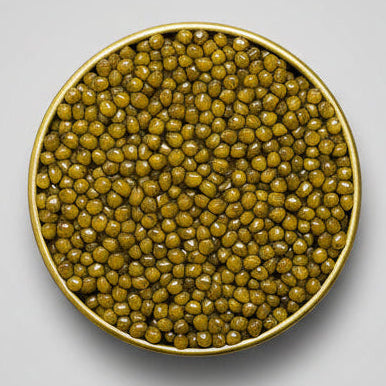
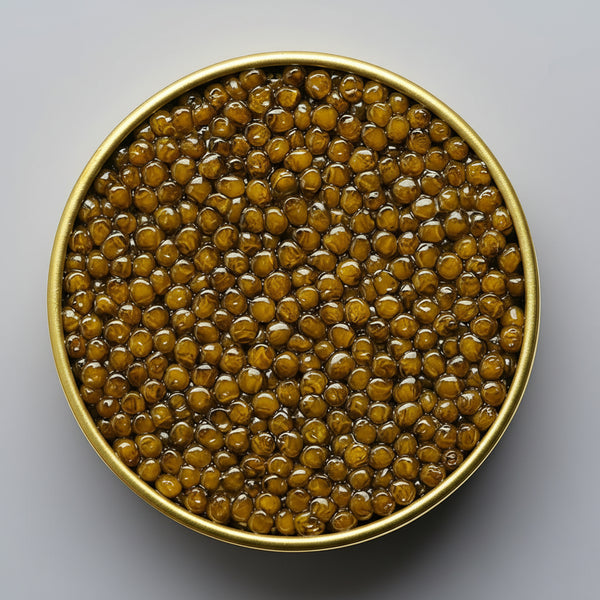
Osetra (Acipenser gueldenstaedtii): the most popular and balanced. Medium roe (2-3 mm), golden to dark brown. Nutty, hazelnut flavor. Price: 60-180 €/100g.
Sevruga (Acipenser stellatus): intense caviar, small roe (1.5-2 mm), dark gray. Deep, marine flavor. Price: 50-120 €/100g.
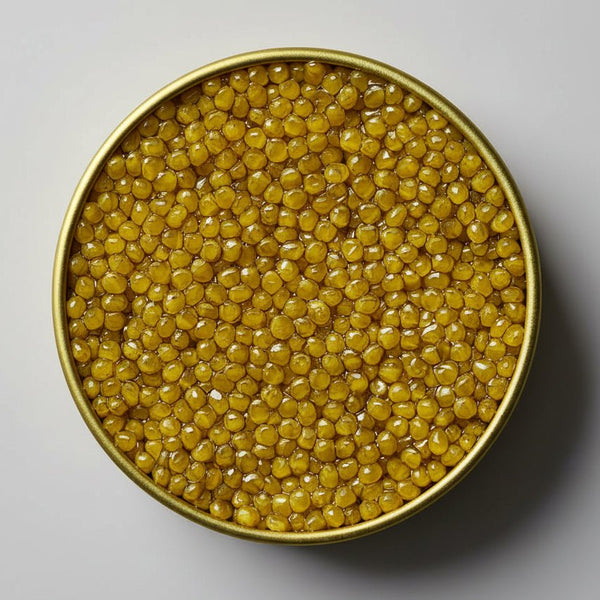
Sterlet (Acipenser ruthenus): the smallest, once exclusive to tsars. Tiny roe (1 mm), pale gold. Very rare. Price: 200-500 €/100g.
Where caviar geographically comes from
Historically, caviar came from the Caspian Sea, whose waters passed through 4 producing countries (Russia, Iran, Azerbaijan, Kazakhstan). But where caviar comes from today is very different: the situation changed radically due to overfishing in the 20th century, and today most of it comes from controlled aquaculture:
- Caspian Sea: Iran is the main producer today. Russia's production is very reduced.
- China: largest global producer via industrial aquaculture.
- France (Aquitaine): Sturia caviar, recognized quality.
- Italy (Calvisius): aquaculture caviar from Lake Garda.
- Bulgaria, Israel, Uruguay, USA: secondary producers.
"Caspian caviar" remains the most prestigious due to tradition and the particular water conditions (medium salinity, constant temperature).
The step-by-step production process
Summarized in 8 key steps:
- Sturgeon farming for 7-20 years depending on the species until the females reach sexual maturity.
- Determining sex and maturity with periodic ultrasounds or biopsies. 50% are males (not suitable), of the females, only 50% mature for roe.
- Slaughter or non-lethal extraction: traditionally, the female is slaughtered. Modern methods allow manual extraction without killing the fish.
- Roe extraction: careful separation from the ovarian membrane.
- Gentle washing with cold water without losing integrity.
- Malossol salting (4-5% salt) — traditional Russian technique.
- Packaging in cans with a unique CITES code.
- Curing for 60 days at 0°C before distribution.
CITES and traceability: how to buy legally
All legal caviar in the EU has a CITES code that allows tracing: species, geographical origin, producer, production date, and exact quantity. The code appears on the lid of the can.
If you buy caviar without a CITES code, it is almost certainly illegal (poaching from the Caspian or unauthorized production). In addition to the legal aspect, the lack of CITES indicates a lack of quality control—you don't know what you are eating.
Caspian Caviar with CITES
Legal caviar imported from the Caspian (Iran), with CITES code on each can. Full traceability. Beluga, Osetra, and Sevruga available.
Frequently Asked Questions
What fish does caviar come from?
How many sturgeon species are there?
Where does caviar geographically come from?
Wild or farmed caviar?
Why is it so expensive?
What is the production process like?
What is CITES certification?
Where does caviar come from?
Where is caviar sourced from today?
To conclude
Caviar is a technically fascinating product: roe from a prehistoric fish, subjected to a 19th-century salting process, regulated by international conventions. When buying caviar, always check the CITES code. If it doesn't have one, be suspicious—and it's better to opt for recognized suppliers such as Caspian caviar with full traceability.
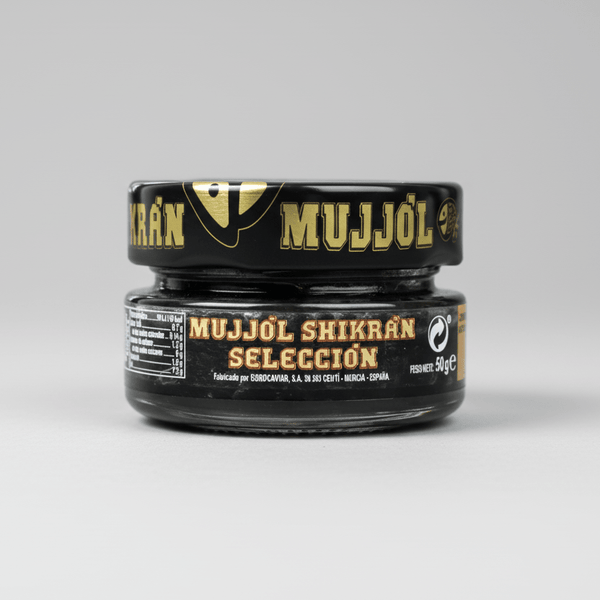
Shikran premium caviar
Premium caviar with all legal certifications. The gourmet quality you expect, with the traceability you deserve.