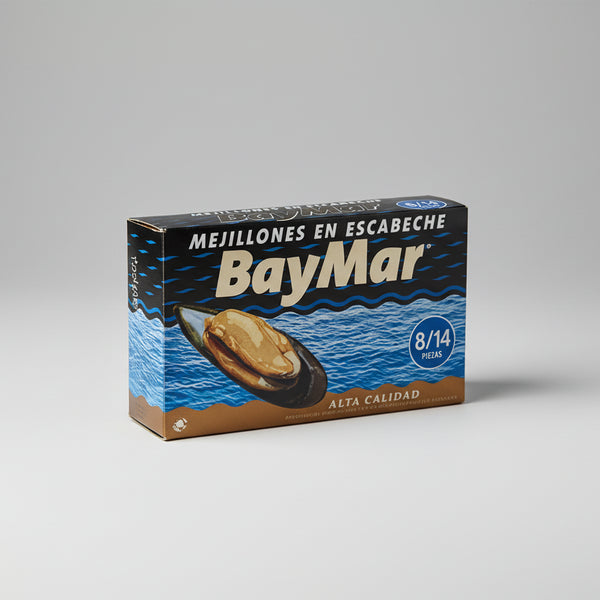


We compare Mercadona's (Hacendado) canned goods with gourmet/artisanal ones across 5 categories: anchovies, tuna, sardines, mussels, and cockles. The difference isn't just price — it's raw material, oil, process, and flavor. We'll tell you when it's worth paying more and when the cheaper product will suffice.
Table of contents
The canning market in Spain
Spain is the largest consumer of canned fish in Europe and the second largest producer after Portugal. The sector generates around 4.5 billion euros annually, with Galicia, Cantabria, and the Basque Country as the major production hubs. There are over 200 active canneries, ranging from giants like Jealsa (owner of Rianxeira) to small family workshops producing 500 cans a day.
The market is divided into two worlds that barely intersect:
Mass-market canned goods. Private labels from Mercadona, Lidl, Carrefour, and Dia account for 55-60% of sales volume. The objective is price: offering a decent product at the lowest possible cost. Raw materials are bought at auction or imported, the process is optimized for speed and yield, and the profit margin per can is mere cents.
Artisanal/gourmet canned goods. Brands like Olasagasti, Los Peperetes, Real Conservera Española, Conservas de Cambados, Don Bocarte, or Ramon Peña represent 10-15% of the volume but a much higher percentage in value. Selected raw materials, manual processes, extra virgin olive oil, and a product that improves with time — like a good wine.
Mercadona: its private labels in detail
Mercadona works with a "supplier-partner" model — exclusive or semi-exclusive manufacturers who produce under the Hacendado brand. In canned fish, its main suppliers are:
Frinsa (Ribeira, A Coruña): cockles, mussels, tuna. It is the largest cannery in Galicia. It produces for Hacendado and also has its own brand. Correct industrial quality.
Jealsa/Rianxeira (Boiro, A Coruña): tuna and bonito. One of the largest canneries in the world. It processes over 200,000 tons of tuna annually.
Herpac (Barbate, Cádiz): anchovies and boquerones (marinated anchovies). Herpac is an interesting case — it makes remarkably high-quality products under its own brand, but the Hacendado version has ingredients and processes adjusted to the price point.
What Hacendado canned goods have in common: sunflower oil (instead of olive) in most references, medium-small sizes, raw material of variable origin (not always Spanish), and a long shelf life. They are safe, legal, and functional products. They are not products to be savored.
What artisanal canneries offer
Artisanal canneries operate with a different philosophy: the can is the end of the process, not the beginning. The difference is built at every step:
Seasonal raw materials. Albacore tuna is processed only in summer (the fishing season, June-October). Galician sardines are at their best between July and November. Cantabrian anchovies, in spring. This means stopping production when there is no quality raw material — something unthinkable for a factory that needs to produce 365 days a year.
Manual handling. Anchovies are cleaned, salted, and filleted by hand. Mussels are selected one by one. Sardines are de-headed manually. This artisanal work is slow (an anchovy filleter cleans 15-20 kg/day) but allows for detecting defects that a machine cannot see.
Extra virgin olive oil. EVOO adds flavor, protects the preserve, and improves over time. Sunflower oil is neutral — it neither adds nor subtracts. For preserves you're going to keep for months or years, the oil matters.
Maturation. The best preserves improve with time. A can of Cantabrian anchovies gains complexity during 6-12 months of maturation. A can of sardines in EVOO aged 2-3 years has an incomparably deeper flavor than a freshly canned one. This does not happen with sunflower oil.
Artisanal preserves from selected producers: Olasagasti, and more. See gourmet preserves at Bacalalo
Category comparison
Anchovies
| Aspect | Hacendado (Mercadona) | Artisanal (e.g., Olasagasti, Don Bocarte) |
|---|---|---|
| Price per 50g can | €1.50-2.20 | €5-12 |
| Anchovy origin | Variable (Argentina, Morocco, Cantabrian Sea) | Cantabrian Sea (spring season) |
| Oil | Olive (not EVOO) or sunflower | EVOO |
| Maturation | 3-6 months | 8-18 months |
| Texture | Firm, sometimes fibrous | Buttery, melts in the mouth |
| Flavor | Salty, one-dimensional | Complex, umami, salted butter |
Anchovies are where the difference is most striking. A Cantabrian anchovy matured for 12 months in EVOO has absolutely nothing to do with one from Mercadona. It's like comparing acorn-fed Iberian ham with processed ham.
Bonito / Tuna
| Aspect | Hacendado | Artisanal (e.g., Olasagasti, Zallo) |
|---|---|---|
| Species | Skipjack tuna (Thunnus albacares) | Albacore tuna (Thunnus alalunga) |
| Price 112g can | €1.20-2.00 | €4-8 |
| Oil | Sunflower | EVOO |
| Texture | Compact, dry | Juicy, flakes apart |
| Flavor | Neutral, metallic | Delicate, buttery |
Important note: "skipjack tuna" and "albacore tuna" are different species. Albacore tuna (Thunnus alalunga) has white meat and a finer texture. Skipjack tuna (Thunnus albacares) has pinkish meat and is drier. Mercadona mainly sells skipjack tuna labeled as "tuna," not "albacore tuna."
Sardines and small sardines
| Aspect | Hacendado | Artisanal (e.g., Ramon Peña, Los Peperetes) |
|---|---|---|
| Price per can | €0.80-1.50 | €3-7 |
| Size | Variable, often large | Small sardine (small), selected |
| Oil | Sunflower or vegetable | EVOO or olive oil |
| Texture | Soft, noticeable bones | Firm, almost imperceptible bones |
| Maturation | None | Improves 1-3 years in can |
Mejillones (Mussels)
Mercadona's canned mussels (usually in escabeche) cost €1-2 per can and are decent. Artisanal ones (€3-6) use larger, fleshier Galician farmed mussels, in homemade escabeche with La Vera paprika, sherry vinegar, and real spices. The difference lies in the escabeche as much as in the mussel itself.
Berberechos (Cockles)
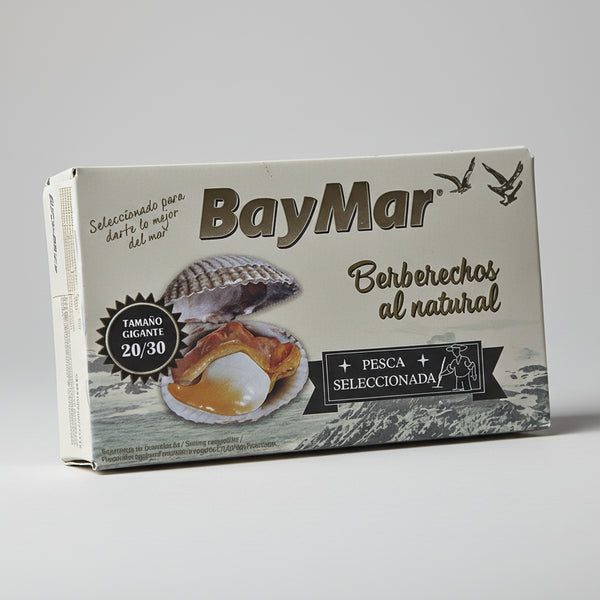
We've already covered this in detail: size 55/65 (Mercadona) vs 25/30 (Rías Gallegas). The difference is 15x in price per piece and out of this world in flavor.
Sardines, small sardines and Olasagasti preserves with EVOO, direct from the Cantabrian Sea. See Olasagasti preserves
Overall price-quality table
| Category | Mercadona (€) | Gourmet (€) | Price factor | Flavor factor |
|---|---|---|---|---|
| Anchovies (50g) | 1.50-2.20 | 5-12 | 3-5x | Vast |
| Bonito/Tuna (112g) | 1.20-2.00 | 4-8 | 3-4x | Notable |
| Sardines (120g) | 0.80-1.50 | 3-7 | 3-5x | Large |
| Mussels (115g) | 1.00-2.00 | 3-6 | 2-3x | Moderate |
| Cockles (120g) | 0.80-1.80 | 4-12 | 4-7x | Enormous |
When it's worth paying more
Yes, it's worth it:
- Anchovies to eat alone or on toast. The difference is so great there's no debate.
- Cockles as an appetizer. A 25/30 Galician size vs a 65+ Dutch one are different products.
- Sardines or tuna for a special occasion or to enjoy simply with bread.
- Any preserve you're going to eat directly from the can, without cooking.
Not necessarily worth it:
- Tuna for a salad or a sandwich with many ingredients. Industrial tuna does the job.
- Mussels for a recipe with a strong sauce that masks the original flavor.
- Any preserve you're going to cook intensely (pies, pizzas, sauces).
The rule is simple: the more prominent the preserve is in the dish, the more it's worth investing in quality.
The 5 canned goods every seafood lover should try
1. Cantabrian anchovies in EVOO, 12+ months maturation. The gold standard. If you only try one premium preserve in your life, make it this one. Buttery, umami, with that touch of saltiness that calls for crystal bread and nothing else.
2. Albacore tuna in olive oil, summer season. White, juicy flakes that fall apart with a fork. Nothing like canned skipjack tuna. Perfect with piquillo peppers.
3. Small sardines in EVOO, 2-3 years maturation. Aged small sardines develop a deep, buttery flavor with nutty notes. They are a well-kept secret of the canning world.
4. Natural cockles, size 20/25 from Rías Gallegas. Plump, briny, with that clean sea flavor only the rias can provide. You eat one and want ten more.
5. Mussels in artisanal escabeche. Large Galician farmed mussels, in escabeche with La Vera paprika, bay leaf, and wine vinegar. It's the perfect appetizer with a cold beer.
You'll find all these preserves in our selection. No intermediaries. See sardines and small sardines
Frequently asked questions
Are Mercadona's canned goods bad?
They are not bad — they are what they are: mass-market products at a low price. They comply with regulations, are safe and functional. But they are not comparable in taste, texture, or raw material to artisanal preserves. It's like comparing a utility car with a premium one: both get you there, but the experience is different.
Do gourmet preserves expire?
They have a best-before date, not an expiration date. A well-made preserve (in EVOO, airtight) not only doesn't spoil but improves with time. There are collectors who keep cans of sardines or anchovies for 5-10 years. The key is to store them in a cool, dry, dark place.
Can the oil from the can be reused?
The olive oil from a good preserve absorbs the flavor of the fish and is an ingredient in itself. Use it to dress salads, dip bread, or as the base for a vinaigrette. The sunflower oil from industrial preserves has no culinary interest.
How do I know if a preserve is truly artisanal?
Look for: cannery name (not just factory code), specific fish origin (not generic), extra virgin olive oil (not "vegetable oil"), indicated size, and canning date (not just best-before date). Artisanal canneries are transparent with this information because it is their main selling point.
How many servings of canned fish should I eat per week?
The WHO recommends 2-3 servings of fish per week. Canned goods count as a serving (100-150 g). They are rich in omega-3, protein, and minerals. The only caution is with tuna (mercury): no more than 2 cans/week for adults, less for children and pregnant women.
Why are Galician preserves more expensive than those from the rest of Spain?
Galicia combines high-quality local raw material (rias, Cantabrian coast), 150 years of canning tradition, skilled labor, and a production model that prioritizes quality over volume. Canneries from other areas (Barbate, Bermeo) also make excellent products — it's not exclusive to Galicia, but Galicia concentrates the highest density of premium canneries.
Keep exploring
Discover our premium selection
Seafood products selected with discernment since 1990 at Mercat del Ninot, Barcelona. Refrigerated shipping in 24-48h.