Summary: Fresh fish lasts 1-2 days in the refrigerator (0-4 °C), 3-6 months in the freezer (-18 °C), and up to 12 months vacuum-sealed and frozen. Dry salted cod is a special case: it can last for months at room temperature. The keys are temperature, wrapping, and speed from purchase.
Table of Contents
In the refrigerator: times by fish type
The refrigerator doesn't preserve fish; it slows down spoilage. And it slows it down less than you might think. The ideal temperature for fresh fish is 0-2 °C, but most domestic refrigerators are at 4-5 °C. That 3-degree difference can halve the shelf life of fish.
Fish spoilage is a bacterial process. When a fish leaves the water, psychrotrophic bacteria (which grow at low temperatures) begin to break down trimethylamine-N-oxide (TMAO) present in the muscle. The result is trimethylamine (TMA), the compound responsible for the classic "fishy smell." At 0 °C, this process takes 5-7 days to become noticeable. At 5 °C, it takes 2-3 days.
Fresh white fish (cod, hake, monkfish, sole): 1-2 days in the refrigerator. These are the most delicate because their lean meat offers less resistance to autolytic enzymes.
Fresh oily fish (sardines, anchovies, mackerel, bonito): maximum 1 day. The unsaturated fat in oily fish oxidizes quickly, generating aldehydes and ketones that produce rancid flavors. Sardines (Sardina pilchardus) bought in the morning should be cooked that same evening.
Fresh salmon (Salmo salar): 1-2 days. If you buy it for sashimi or tartar, use it the same day or freeze immediately.
Seafood (shrimp, prawns, mussels): 1 day maximum. Shellfish spoil even faster than fish. If you're not going to cook them today, freeze them.
Pro tip: When you get home, take the fish out of its original packaging, pat it dry with paper towels, wrap it in clean paper, and place it in the coldest part of the refrigerator (usually the bottom section, above the vegetable drawer). Put a bag of ice underneath if your refrigerator doesn't go below 4 °C. This method can extend the shelf life by 1-2 days.
In the freezer: preparation and times
The freezer is your best ally for preserving fish, but only if you use it correctly. Freezing incorrectly is almost worse than not freezing at all, because it gives you a false sense of security while the product deteriorates due to freezer burn and crystallization.
The fundamental rule: freeze quickly and at -18 °C minimum. Freezing speed matters because it determines the size of the ice crystals that form within the muscle. Large crystals (slow freezing) break muscle fibers and cause loss of texture and juiciness upon thawing. Small crystals (fast freezing) preserve the structure.
Preparation before freezing:
- Clean the fish completely: remove guts, scales, and any blood.
- Pat dry with paper towels. Surface water forms frost.
- Portion before freezing. Don't freeze an entire piece if you're only going to use half — each thaw-refreeze cycle destroys quality.
- Wrap tightly with plastic wrap pressed against the fish (no air pockets) and then in a zip-top freezer bag, expelling all air.
- Label with the date and type of fish. In a full freezer, everything looks alike.
Maximum freezing times at -18 °C:
- Lean white fish (cod, hake, monkfish): 6 months
- Fatty oily fish (salmon, sardines, mackerel): 2-3 months (fat oxidizes even when frozen)
- Seafood (shrimp, prawns): 3-4 months
- Cephalopods (squid, octopus): 3-4 months
These times assume a standard 3-4 star domestic freezer. Industrial freezers at -35 °C can double these periods.
Thawing: Always in the refrigerator, never at room temperature. Place the fish on a plate with a rack (to drain liquid) and leave for 12-24 hours depending on thickness. A 3 cm cod loin needs about 18 hours. In a hurry? Put it in an airtight bag submerged in cold running water — it takes 1-2 hours. The microwave is the last option: it partially cooks and creates uneven textures.
Vacuum sealing: the best home option
If you buy fish regularly, a vacuum sealer is probably the best investment you can make for your kitchen. We're not talking about professional devices costing 500 euros — a domestic sealer costing 60-80 euros works perfectly.
Vacuum sealing multiplies the shelf life of fish because it removes oxygen, which is the main catalyst for two destructive processes:
- Lipid oxidation: Oxygen reacts with unsaturated fatty acids (especially abundant in oily fish), producing compounds that smell and taste rancid. Without oxygen, this process almost completely stops.
- Aerobic bacterial growth: Most bacteria that spoil fish are aerobic. Without oxygen, their growth is drastically reduced (though not eliminated — anaerobic bacteria are still active, which is why cold is still necessary).
Times with vacuum sealing:
- Refrigerator (0-4 °C): 4-5 days for fresh fish (vs. 1-2 without vacuum)
- Freezer (-18 °C): 9-12 months for white fish, 4-6 months for oily fish (vs. 6 and 2-3 without vacuum)
Vacuum sealing also prevents freezer burn (those white, dry spots that appear on frozen fish). Freezer burn is simply sublimation: the ice on the surface of the fish directly evaporates into gas, leaving dehydrated areas. Without air around it, there is no sublimation.
Our dry salted cod from Iceland arrives vacuum-sealed and does not need a freezer. The combination of salt and natural dehydration preserves it for months at room temperature. It is the oldest and most effective way to preserve fish.
Signs of spoilage: when to discard it
Don't rely solely on the package date. Trust your senses. Fish clearly tells you when its time has passed, if you know what to look for:
Smell: Fresh fish smells of the sea, salty breeze, even cucumber or seaweed. When it starts to spoil, the "fishy" smell we all know appears — that's trimethylamine (TMA). If it smells strongly of ammonia, discard it without hesitation. That smell indicates advanced protein decomposition.
Texture: Press the fillet with a finger. If the mark immediately springs back, the fish is fresh. If the mark remains (the muscle has lost elasticity), it is spoiled. The surface should not be slimy or sticky — sliminess indicates bacterial proliferation on the surface.
Color: Fresh fish has vibrant, defined colors. Salmon flesh is intense pink-orange; cod flesh is translucent white. If you see yellowish, brownish, or grayish tones where they shouldn't be, the fish is oxidizing.
Eyes: In whole fish, the eyes are the most reliable indicator. Bright, convex (bulging) eyes with black pupils = fresh. Sunken, opaque eyes with gray pupils = spoiled.
Gills: They should be bright red to intense pink. Brown, gray, or slimy gills are an unequivocal sign that the fish has been out of water for too long.
A general rule: if in doubt, throw it out. The savings from not discarding a suspicious piece of fish do not outweigh histamine poisoning or pathogenic bacteria.
Complete preservation chart
| Type of fish | Refrigerator (0-4 °C) | Freezer (-18 °C) | Vacuum + freezer |
|---|---|---|---|
| Fresh cod (Gadus morhua) | 1-2 days | 6 months | 9-12 months |
| Hake (Merluccius merluccius) | 1-2 days | 6 months | 9-12 months |
| Salmon (Salmo salar) | 1-2 days | 2-3 months | 4-6 months |
| Sardines (Sardina pilchardus) | 1 day | 2-3 months | 4-6 months |
| Tuna (Thunnus thynnus) | 1 day | 2-3 months | 4-6 months |
| Shrimp/prawns | 1 day | 3-4 months | 6-8 months |
| Monkfish (Lophius piscatorius) | 1-2 days | 6 months | 9-12 months |
| Dry salted cod | Months (not needed) | Indefinite | Not necessary |
| Smoked salmon (unopened) | Until expiration date | 2-3 months | 4-6 months |
| Canned goods (unopened) | Not needed | Not needed | Not needed |
| Canned goods (opened) | 2-3 days (in container) | Not recommended | 3-5 days |
Salted cod: a special case
Salted cod (Gadus morhua) is an anomaly in the world of fish preservation. While all fresh fish spoils in days, salted and dried cod can last months at room temperature. This is no accident — it's a preservation technology that the Vikings perfected over 1,000 years ago.
The process works through two simultaneous mechanisms:
- Salt: Salting reduces the water activity (aw) of the muscle below 0.75, a level at which most bacteria cannot survive. The salt concentration in salted cod is 18-25%, enough to create a lethal osmotic environment for microorganisms.
- Dehydration: Drying reduces the moisture content from 80% (fresh cod) to 40-50% (dry salted cod). Less water = less medium for bacterial growth.
How to store salted cod at home:
- Unsoaked: In a cool, dry place, wrapped in paper or in a ventilated container. It can last for months. Do not put it in a sealed plastic bag — it needs to breathe to avoid generating moisture.
- Soaking: Once you begin the soaking process (submerging it in cold water for 24-48 hours with water changes), the clock starts ticking. Soaked cod = fresh fish for preservation purposes. You have 2-3 days in the refrigerator.
- Soaked and vacuum-sealed: If you soak more than you're going to use, vacuum-seal and freeze the leftover portions. They will keep perfectly for 6-9 months.
At Bacalalo, we work with dry cod from Iceland cured for months in sea salt. It arrives vacuum-sealed, ready to be soaked at home. We also have already soaked cod and ready-to-eat canned goods if you prefer convenience.
Opened canned goods: what to do
An unopened can lasts for years. Literally. Commercial sterilization (115-121 °C for 20-90 minutes depending on the product) destroys all bacteria and spores, and the hermetic seal prevents recontamination. Canned fish with a "best before" date can be perfectly fine years after that date — it's an indication of optimal quality, not safety.
But the moment you open the can, the rules completely change:
Never leave fish in the opened can. The tin of the can oxidizes quickly upon contact with air and can transfer metallic flavors to the product. Furthermore, an opened can is not airtight.
Transfer to a glass or food-grade plastic container with a lid. If the canned good came in oil, make sure the oil covers the fish — it's its protection.
Opened canned goods times in the refrigerator:
- Anchovies in oil: 5-7 days (high salt and oil help)
- Tuna/bonito in oil: 2-3 days
- Sardines in oil: 2-3 days
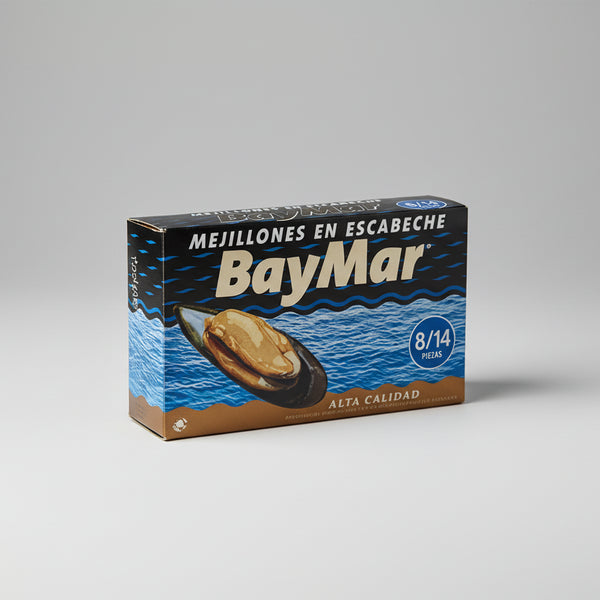
- Marinated mussels: 2-3 days
A trick for canned anchovies: if you only use a few fillets, make sure the remaining ones are completely covered in oil. If necessary, add olive oil from your pantry. Anchovies exposed to air darken and lose flavor within hours.
Discover our premium selection
Carefully selected seafood products since 1990 at Mercat del Ninot, Barcelona. Refrigerated shipping in 24-48h.
Conclusion
Properly preserving fish is not complicated, but it requires understanding one principle: time is against you from the moment the fish leaves the water. Every hour counts, and the difference between excellent and mediocre fish is often simply how you treated it between purchase and cooking.
The rules are few and clear: fresh in the refrigerator for a maximum of 2 days, freeze quickly if you're not going to use it, vacuum seal if you can, and when you open a can, transfer it to another container. Salted cod is the glorious exception: a product designed a thousand years ago to be preserved without modern technology and still works perfectly.
The best preservation strategy is, in reality, the simplest: buy what you're going to cook in the next 1-2 days and keep good canned goods in the pantry for the rest.
Frequently asked questions
Can I refreeze fish that I have already thawed?
Technically yes, if you thawed it in the refrigerator (never at room temperature) and no more than 24 hours have passed. But the quality suffers enormously: each freeze-thaw cycle breaks more muscle fibers, leading to a loss of texture and juiciness. The professional recommendation: do not refreeze. Portion before the first freezing.
How long does smoked salmon last once opened?
3 to 5 days in the refrigerator, as long as you keep it well wrapped in its own packaging or in plastic wrap pressed against the product. If you notice the edges darkening or drying out, trim them — the inner part may still be in good condition. Once opened, consume it as soon as possible: smoking is not sterilization.
What temperature should my refrigerator be at to store fish?
Ideally between 0 and 2 °C for fish. Most domestic refrigerators are at 4-5 °C, which is acceptable but not optimal. If your refrigerator has a "fresh drawer" or "0-degree" zone, use that zone exclusively for fish and meat. A 5-euro refrigerator thermometer can save you a lot of trouble.
Are expired canned goods dangerous?
The "best before" date on canned goods indicates optimal quality, not safety. A can with an intact can (no dents, swelling, or rust) can be safe years after that date. However, the texture and flavor gradually degrade. If the can is swollen, leaking, or you open it and it smells strange, discard it immediately — it could contain botulinum toxin.
Is it necessary to freeze fish for making sushi at home?
Yes, it is mandatory under European regulations (EC Regulation 853/2004). Fish intended for raw consumption must be frozen at -20 °C for at least 72 hours or at -35 °C for 24 hours to eliminate Anisakis larvae (Anisakis simplex). This applies to sushi, sashimi, ceviche, tartar, and any preparation without complete cooking.
Is home vacuum sealing as effective as industrial vacuum sealing?
Not exactly. Industrial vacuum sealers extract more air (up to 99.5% vs. 85-90% for home sealers) and use thicker bags. But for home use, the practical difference is small. A home vacuum sealer costing 60-80 euros with good quality embossed bags will give you 80% of the industrial result, which is still enormously superior to cling film or a zip-lock bag.
How do I know if frozen fish has freezer burn?
Look for white, dry, rough spots on the surface of the fish. They look like frost patches but don't disappear when touched — these are areas where the ice has sublimated, leaving the tissue dehydrated. Fish with freezer burn is not dangerous, but these areas will have a dry texture and a cardboard-like taste. You can trim off the affected parts if the rest is fine.