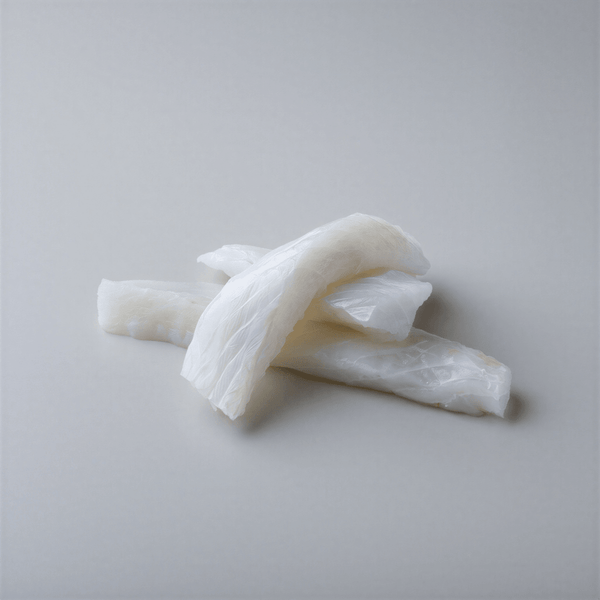
To freeze fresh fish correctly, you must clean it, dry it, and vacuum seal it or place it in an airtight bag at -18°C or colder. Each species has a different maximum storage time: white fish lasts 6-8 months, blue fish 2-4 months, and shellfish 3-6 months. Always thaw in the refrigerator, never at room temperature. Freezing also eliminates anisakis.
Table of Contents
Why how you freeze matters
Fish is one of the foods most sensitive to freezing. Its muscle has a high water content (65-80%) and a delicate protein structure. When you freeze it, the water turns into ice crystals. The size of these crystals determines the final quality:
Rapid freezing (industrial, -30°C to -40°C): forms small crystals that cause minimal damage to cells. Thawed fish is almost indistinguishable from fresh.
Slow freezing (domestic, -18°C): forms large crystals that pierce cell membranes. When thawed, broken cells release liquid—that pink puddle on the tray. The result: softer texture, more diluted flavor, less attractive appearance.
You can't change the capacity of your home freezer. But you can optimize the process to minimize damage. The three factors under your control are: fish preparation, packaging method, and freezer temperature.
Preparing fish before freezing
1. Clean immediately. Eviscerate the fish as soon as you get home. Viscera are the main source of bacteria and enzymes that degrade meat, even at freezing temperatures. Fish frozen with viscera deteriorates much faster.
2. Wash with cold water. Rinse under cold running water to remove any blood, viscera, and loose scales. Do not let it soak.
3. Dry thoroughly. Excess surface water forms an ice layer that causes freezer burn (those dry white spots). Dry with paper towels inside and out.
4. Portion. Freeze in individual or meal-sized portions. Thawing a large block to use only a part and refreezing the rest is a serious mistake. If you buy 1 kg of fillets, freeze in 200-300 g packages.
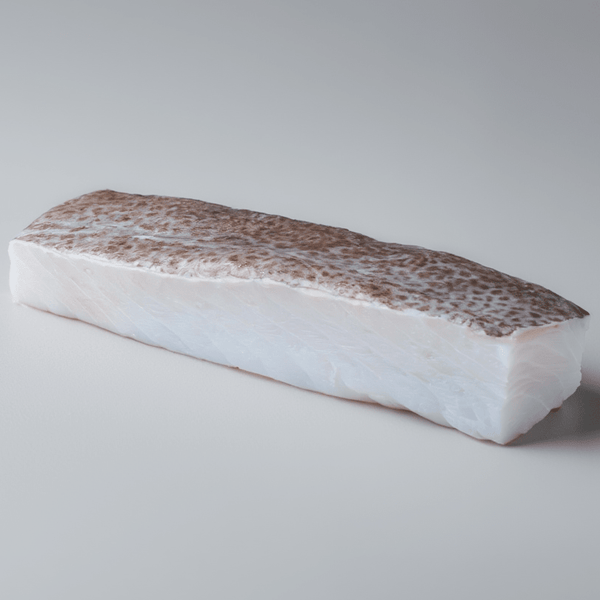
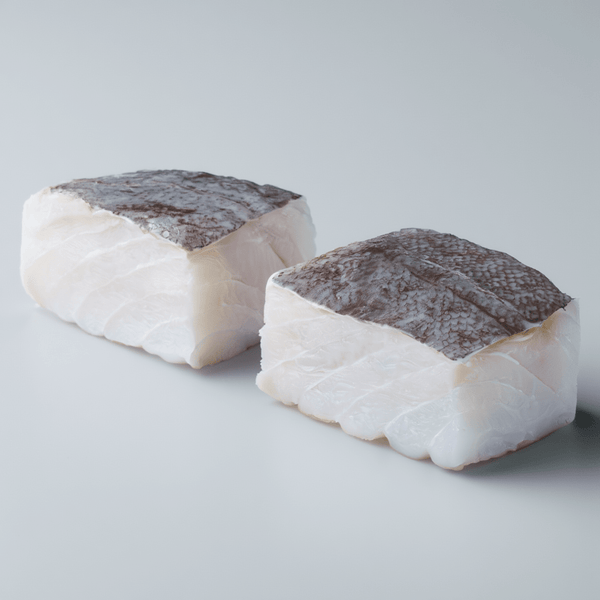
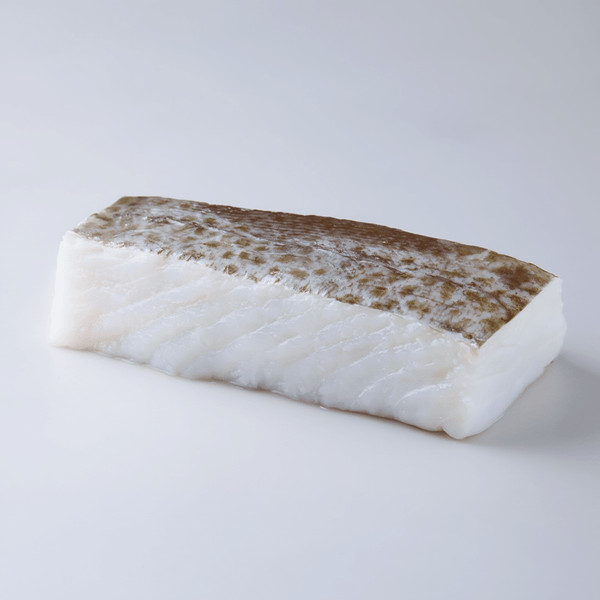
5. Decide the format. You can freeze fish whole (cleaned), in fillets, in loins, or in slices. Flat and uniform formats freeze (and thaw) faster and more evenly than thick and irregular pieces.
Wrapping: cling film, bag, or vacuum seal
The enemy of frozen fish is air. Oxygen causes fat oxidation (rancidity), and air currents inside the freezer cause freezer burn (sublimation of surface ice).
| Method | Protection | Cost | Maximum duration | Recommended for |
|---|---|---|---|---|
| Cling film (2-3 layers) | Basic | 0.05 €/piece | 1-2 months | Quick use |
| Zip-lock bag with air expelled | Good | 0.10-0.20 €/piece | 3-4 months | General use |
| Vacuum bag (vacuum sealer) | Excellent | 0.20-0.40 €/piece | 6-12 months | Large purchases, long storage |
| Container with water (glaze) | Very good | Reusable | 4-6 months | Irregular pieces |
Homemade glazing (icing with water) is an adaptable professional trick: put the fish in a container, cover it with cold water, and freeze. The ice forms an airtight protective layer around the fish. It's the simplest method for large or irregularly shaped pieces.
Vacuum sealing is the best option if you freeze frequently. A home vacuum sealer costs 30-80 €, and the bags about 0.15-0.30 € each. It removes 99% of the air, prevents freezer burn and oxidation, and doubles the shelf life compared to cling film.
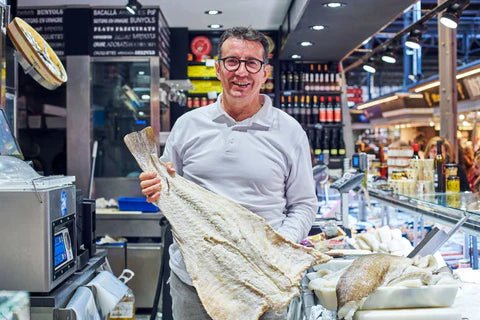
Dried cod, thanks to its dehydration, is the exception: it can be stored for months without a freezer. See dried cod at Bacalalo
Maximum storage times by species
These times are for domestic freezing at -18°C in a vacuum-sealed or tightly closed bag. With cling film, reduce times by 30-50%.
| Species | Type | Maximum time | Notes |
|---|---|---|---|
| Cod | Lean white | 6-8 months | Excellent for freezing, low fat |
| Hake | Lean white | 6-8 months | One of the best for keeping |
| Sole / Megrim | Lean white | 6-8 months | Freeze whole or in fillets |
| Monkfish | Lean white | 6 months | In loins or medallions |
| Sea Bream / Sea Bass | Semi-fat white | 4-6 months | Whole eviscerated or filleted |
| Salmon | Fatty blue | 2-3 months | Fat oxidizes faster |
| Sardine | Fatty blue | 2-3 months | Always eviscerate first |
| Mackerel | Fatty blue | 2-3 months | Very susceptible to rancidity |
| Anchovy | Semi-fat blue | 2-4 months | For anchovies in vinegar: freeze whole |
| Tuna (loins) | Fatty blue | 2-3 months | Vacuum sealing essential due to oxidation |
| Octopus | Cephalopod | 3-6 months | Freezing improves texture |
| Shrimp / Prawns | Crustacean | 3-6 months | Last longer with shells on |
| Mussels (cooked) | Mollusc | 3-4 months | Freeze already cooked and shelled |
| Clams | Mollusc | 2-3 months | Freeze raw, opened by steaming |
General rule: white fish (low in fat) lasts twice as long as blue fish (high in fat). Fat oxidizes even when frozen, leading to rancid flavors. This is why salmon and mackerel tolerate prolonged freezing the least.
Proper thawing: the other half of the process
Perfect freezing can be ruined by improper thawing. Options, from best to worst:
1. In the refrigerator (0-4°C). The best method. Slow (12-24 hours for a 300-500g piece, 24-36 hours for large pieces) but maintains texture. Place the fish on a rack inside a plate to catch thawing liquid. Patience pays off.
2. In cold water. For emergencies. Place the fish (in its sealed packaging) in a bowl with cold running water or by changing the water every 30 minutes. Time: 1-3 hours depending on size. Do not use hot water — it thaws unevenly and promotes bacterial growth.
3. In the microwave (defrost function). Last resort. Microwaves defrost very unevenly — the edges cook while the center remains frozen. Only viable for small pieces and if you plan to cook immediately.
What you should NEVER do: thaw at room temperature. Fish at 20-25°C for 2-3 hours is a perfect breeding ground for bacteria. The surface thaws first and can be at a risk temperature (5-60°C) for hours while the center is still frozen.
Anisakis: freezing kills larvae
Freezing is one of two reliable methods to eliminate anisakis larvae (Anisakis simplex). The other is cooking at a temperature above 60°C in the center of the piece.
Regulation (EC) 853/2004 states that fish intended for raw or semi-cooked consumption must be frozen at -20°C for a minimum of 24 hours. In Spain, AESAN recommends 5 days in a home freezer as a precaution (3-star freezers may not reach a true -20°C).
Mandatory freezing before: sushi, sashimi, ceviche, carpaccio, anchovies in vinegar, marinated fish, gravlax.
No prior freezing needed for: fish that will be fully cooked, canned goods (sterilized), freshwater farmed fish (trout), bivalve mollusks (mussels, clams, cockles).
Bacalalo's desalinated cod is ready to cook directly. No anisakis worries. See desalinated cod
Mistakes that ruin texture
Mistake 1: Freezing non-fresh fish. Freezing does not improve quality — it preserves it. If the fish was already deteriorating, it will be worse when thawed. Only freeze fish you would eat today.
Mistake 2: Not eviscerating beforehand. Viscera contain enzymes and bacteria that continue to act (slowly) even at -18°C. Fish frozen with viscera deteriorates 2-3 times faster.
Mistake 3: Refreezing. Thawing and refreezing multiplies fluid loss (and texture loss). Each cycle breaks more cells. The result is dry, mealy, tasteless fish. If you thaw too much, cook it and then freeze the cooked dish — never refreeze raw.
Mistake 4: Putting hot fish in the freezer. If you've cooked fish and want to freeze it, first cool it to room temperature (maximum 2 hours) and then put it in the freezer. Putting something hot raises the freezer temperature and affects everything inside.
Mistake 5: Overloaded freezer. Cold air needs to circulate. An overstuffed freezer freezes slower (large crystals = worse texture). Leave space between items when freezing, and once solid, you can regroup them.
Mistake 6: Ignoring freezer burn. Those white, dry spots on fish are dehydrated areas due to cold. They are not dangerous but ruin the texture and flavor. The solution: airtight packaging (vacuum-sealed or glazed).
Frequently asked questions
How long does frozen fish last in the freezer?
It depends on the species and packaging. Vacuum-sealed white fish: 6-8 months. Vacuum-sealed oily fish: 2-3 months. With cling film, reduce by 30-50%. After these times, it's not dangerous but the quality significantly declines.
Can cooked fish be frozen?
Yes. A fish stew, baked hake, or fish broth can be frozen well for 2-3 months. Cool to room temperature (maximum 2 hours), pack in an airtight container leaving a finger's width of space, and freeze.
Does frozen fish lose nutritional properties?
Very little. Proteins, minerals, and omega-3 fatty acids remain intact. There might be a small loss of water-soluble vitamins (B, C) in the thawing liquid, but it's minimal (5-10%). Nutritionally, frozen is practically the same as fresh.
Is it better to freeze whole or in fillets?
It depends on future use. Whole: better protection (skin acts as a barrier), but slower to thaw and you need to clean it afterwards. In fillets: more practical, thaws quickly, but more surface exposed to air. For long storage, whole and vacuum-sealed. For frequent use, fillets in portions.
Do No-Frost freezers dehydrate fish more?
Yes. No-Frost freezers remove moisture from the internal air to prevent frost. This accelerates freezer burn in poorly wrapped foods. With vacuum sealing or glazing, there's no problem, but with simple cling film, fish dehydrates faster in a No-Frost freezer.
Can I tell if "fresh" fish from the supermarket was previously frozen?
Sometimes. By law, fish defrosted at the fishmonger must be labeled as "defrosted". But this isn't always followed. Clues: soft texture, dull color, sunken eyes, and especially, excess liquid in the tray. If in doubt, ask the fishmonger directly.
Keep exploring
Discover our premium selection
Carefully selected seafood products since 1990 at Mercat del Ninot, Barcelona. Refrigerated shipping in 24-48h.