Cooking salmon seems simple until it comes out dry, undercooked inside, or with rubbery skin. Here are 8 proven techniques for every cut: pan-seared, oven-baked, en papillote, homemade smoked, raw (sashimi and tataki), confit, air-fried, and marinated. Includes an exact cooking time chart based on thickness so you never fail.
Before cooking: what you should know about salmon
Updated March 2026. After decades working with seafood products, we've learned that quality makes all the difference.
Salmon is a fatty fish with an intramuscular fat content of between 10% and 15%. This fat is your ally: it provides flavor, juiciness, and a margin for error. But it also means that the line between "perfect" and "overdone" is narrower than it seems.
The ideal internal temperature for cooked salmon is 52-55 degrees C at the center. At this temperature, the proteins have denatured just enough for the texture to be silky and the layers to flake easily. Above 60 degrees C, the proteins contract, expel water, and the salmon becomes dry and fibrous.
Cuts and their ideal cooking methods
- Loin (thickest part): ideal for oven-baking, pan-searing, confit. Slower, more even cooking.
- Tail (thinner part): cooks faster. Better for en papillote or marinades.
- Belly: the fattiest part. Perfect for tataki or quick searing.
- Whole fillet: versatile, works with all techniques.
- Steaks (darnes): with central bone. Ideal for oven-baking or pan-searing.
Golden rule: take salmon out of the fridge 20 minutes before cooking. Cold salmon in the center cooks unevenly, leaving it raw inside and overcooked outside.
Pan-seared salmon: the basic technique done right
Pan-searing is the quickest technique and the one most people do wrong. The classic mistake: cold salmon on a lukewarm pan, without drying, and flipping it three times.
Step by step
- Pat the salmon dry with paper towels. Surface moisture prevents the Maillard reaction (browning).
- Heat the skillet or griddle over medium-high heat. Add a drizzle of olive oil or a knob of butter.
- Place the salmon skin-side down. Press lightly for the first 30 seconds to prevent it from curling.
- Cook for 3-4 minutes on the skin side without moving it. You'll see the cooking progress up the sides.
- Flip and cook for 1-2 minutes on the other side. The center should remain slightly translucent.
- Remove and let rest for 1 minute. Residual cooking will finish the job.
For crispy skin: press the skin against the pan and be patient. It needs 3-4 minutes without moving it. If you try to lift it and it sticks, it's not ready. Once the skin is crispy, it will release on its own.
Oven-baked salmon: times and temperatures
Oven-baking is the most reliable technique for large quantities and for those who prefer not to fuss. There are two approaches:
Classic oven (200 degrees C)
Preheat the oven to 200 degrees C. Place the salmon on a baking sheet lined with parchment paper, season with salt, pepper, and a drizzle of olive oil. Bake according to thickness:
- 2 cm fillet: 10-12 minutes
- 3 cm fillet: 14-16 minutes
- 4 cm loin: 18-20 minutes
Slow oven (120 degrees C)
For a softer, more unctuous result, bake at 120 degrees C for 25-30 minutes. The salmon will have an almost confit-like texture, without an exterior crust. Ideal if you're not looking for browning but maximum juiciness.
White sheen trick
The white substance that appears on the surface of salmon when cooked is albumin, a protein that coagulates with heat. To minimize it: immerse the salmon in brine (1 tablespoon of salt per cup of water) for 10 minutes before baking. This slows down the exudation of albumin.
Salmon en papillote: mess-free cooking
En papillote is a French technique that involves cooking inside a sealed packet (parchment paper or aluminum foil), where the steam from the fish itself and the vegetables creates gentle, aromatic cooking.
How to do it
- Cut a large rectangle of parchment paper (about 40x30 cm).
- Place a base of thinly sliced vegetables in the center: zucchini, leek, julienned carrot.
- Place the salmon on top. Season. Add a splash of white wine or lemon juice and some herbs (dill, tarragon).
- Seal the packet by folding the edges of the paper to form a half-moon, creasing well to prevent steam from escaping.
- Bake at 180 degrees C for 15-18 minutes (for a 2-3 cm fillet).
- Serve the sealed packet on the plate. When opened, the aroma is spectacular.
It's a perfect technique for light dinners and for effortlessly impressing. The salmon is juicy and the vegetables are al dente.
Homemade smoked salmon: cold and hot
Smoking transforms salmon into a completely different product. There are two methods:
Hot smoking (60-80 degrees C)
You'll need a smoker or a covered grill. Use wood chips (oak, apple, cherry) that smoke at a low temperature.
- Cure the salmon with salt and sugar (2:1 mix) for 4-8 hours in the fridge.
- Rinse, pat dry, and let air-dry for 1-2 hours until it forms a sticky film (pellicle).
- Smoke at 60-80 degrees C for 1-3 hours, depending on thickness.
- The result is cooked, smoked salmon with a firm, flaky texture.
Cold smoking (below 30 degrees C)
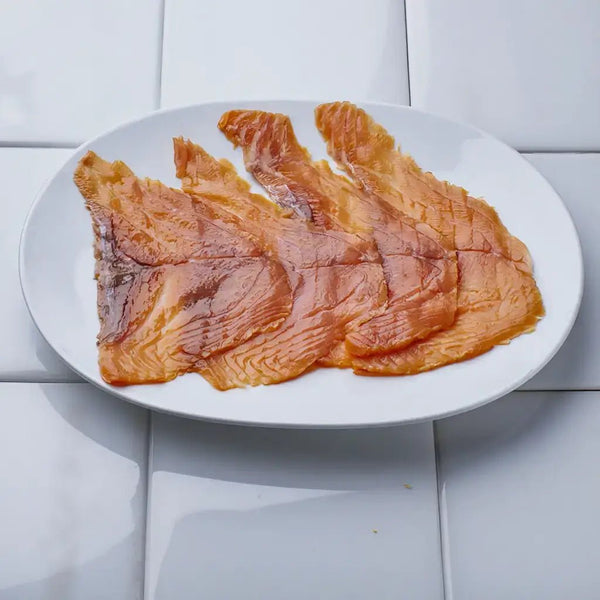
This is what produces the smoked salmon we know from stores. It requires specialized equipment to generate smoke without heat. The process takes 12-24 hours and the salmon is not cooked: it remains raw and smoked, with a silky texture.
For homemade cold smoking, there are cold smoke generators that can be attached to any container. But professional results require practice and temperature control.

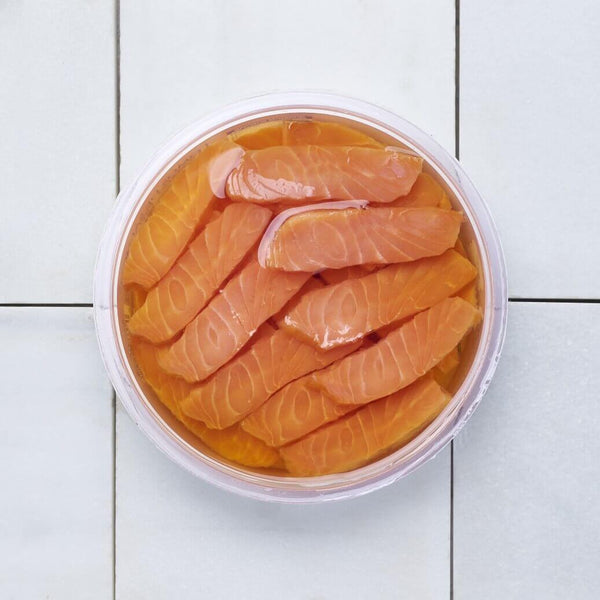
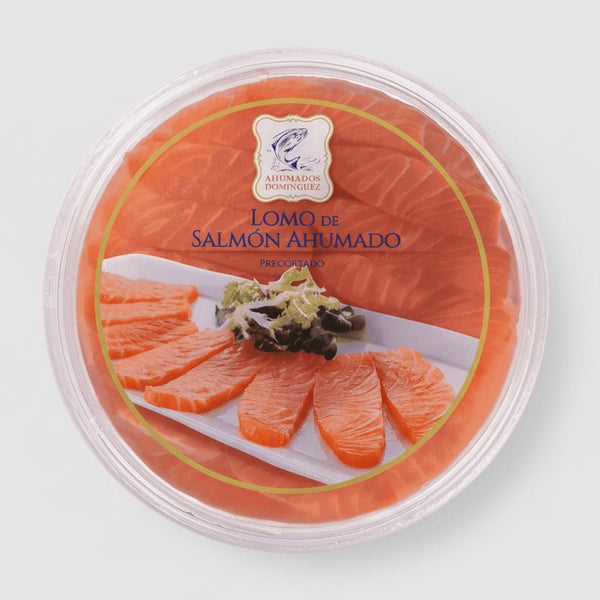
Gourmet Premium Smoked Salmon Loin in Oil from Norway - 1000g
Raw salmon: sashimi, tataki, and ceviche
Raw salmon is a delicacy if prepared with the correct precautions.
Food safety
Salmon can contain anisakis. By law in Spain, any fish consumed raw or semi-raw must have been previously frozen at -20 degrees C for at least 5 days (domestic freezer) or at -35 degrees C for 15 hours (industrial freezing). Buy salmon labeled "suitable for raw consumption" or freeze it yourself.
Sashimi
Cut slices 3-5 mm thick with a very sharp knife, at a 45-degree angle against the grain. Serve with soy sauce, wasabi, and pickled ginger. The key is freshness and temperature: serve directly from the fridge.
Tataki
Sear the outside of the salmon loin on a very hot griddle for 15-20 seconds per side. The inside remains completely raw. Slice into 1 cm rounds and dress with ponzu sauce, toasted sesame, and green onion.
Ceviche
Cut the salmon into 1.5 cm cubes. Marinate in lime juice for 15-30 minutes (longer and it "cooks" too much). Add red onion, cilantro, chili, and a touch of tiger's milk. Serve immediately.
Slow-cooked salmon confit
Confit produces the smoothest, most unctuous salmon you can make at home. The technique involves cooking it submerged in oil at a low temperature.
Classic method
- Season the salmon and let it rest for 15 minutes.
- Place the fillets in a pan or pot where they fit snugly.
- Cover with extra virgin olive oil (you can reuse it afterward).
- Heat over low heat until the oil reaches 50-55 degrees C. Use a thermometer.
- Maintain this temperature for 20-25 minutes.
- The salmon will be cooked but with a melt-in-your-mouth texture.
Sous vide method
If you have a sous vide machine: vacuum-seal the seasoned salmon, cook at 52 degrees C for 30 minutes. The result is identical to classic confit but cleaner and more precise.
Air-fried salmon: quick and crispy
The air fryer has become a star appliance for cooking salmon. The circulation of hot air achieves a crispy surface with hardly any added fat.
Basic recipe
- Preheat the air fryer to 200 degrees C for 3 minutes.
- Season the salmon and brush it with a little oil.
- Cook at 200 degrees C for 7-10 minutes depending on thickness.
- No need to flip it.
Variations
- Teriyaki salmon: brush with teriyaki sauce for the last 2 minutes
- Panko-crusted salmon: cover with panko mixed with garlic and parsley, spray oil on top
- Cajun salmon: season with Cajun spices before cooking
The air fryer is especially good for individual fillets of 150-200g. For large pieces, the oven is still a better option.
Marinated salmon: gravlax and quick marinades
Gravlax (Scandinavian cured)
Gravlax is salmon cured in salt, sugar, and dill, without cooking or smoking. The result is a silky salmon, lightly salted, with a delicate herbaceous aroma.
- Mix 2 tablespoons coarse salt, 2 tablespoons sugar, and a bunch of chopped dill.
- Cover the salmon on both sides with the mixture.
- Wrap in plastic wrap and place a weight on top (a plate with cans).
- Refrigerate for 24-48 hours, flipping once.
- Remove the cure, rinse lightly, and slice thinly.
Serve with mustard and dill sauce (hovmastersas), rye bread, and lemon.
Quick marinades (30 minutes - 2 hours)
- Asian marinade: soy, mirin, grated ginger, garlic — 30 minutes
- Mediterranean marinade: olive oil, lemon, oregano, capers — 1 hour
- Sweet marinade: honey, Dijon mustard, apple cider vinegar — 1 hour
Master chart of cooking times by technique and thickness
| Technique | Temperature | 2 cm fillet | 3 cm fillet | 4 cm loin |
|---|---|---|---|---|
| Pan-seared | Medium-high heat | 3+1 min | 4+2 min | 5+2 min |
| Classic oven | 200 C | 10-12 min | 14-16 min | 18-20 min |
| Slow oven | 120 C | 20-22 min | 25-28 min | 30-35 min |
| En Papillote | 180 C | 12-14 min | 15-18 min | 20-22 min |
| Air fryer | 200 C | 7-8 min | 9-10 min | 11-13 min |
| Confit | 52-55 C | 15-18 min | 20-25 min | 25-30 min |
| Sous vide | 52 C | 25 min | 30 min | 35 min |
| Hot smoked | 60-80 C | 45-60 min | 1-1.5 h | 1.5-2 h |
Note: pan-searing times are expressed as "skin + flip". All times assume salmon at room temperature (20 min out of the fridge). If the salmon comes straight from the cold, add 2-3 minutes.
5 mistakes that ruin salmon
- Not drying the surface: moisture creates steam instead of browning. Result: rubbery skin and boiled flesh.
- Pan not hot enough: if it doesn't sizzle when you place the salmon, the pan isn't ready.
- Constantly moving the salmon: every time you move it, you interrupt the formation of the crust. Place it and leave it still.
- Overcooking: salmon continues to cook off the heat. Remove it when the center is still slightly translucent.
- Seasoning too far in advance: salt draws out water. Season just before cooking, except for intended marinades or cures.
Frequently asked questions
How long does salmon cook on the griddle?
For a 2-3 cm thick fillet, 3-4 minutes on the skin side and 1-2 minutes on the other side, over medium-high heat. The center should be slightly translucent. The total time is 5-6 minutes.
How do I know when salmon is done?
Press the fillet with your finger: if it gives slightly and the layers begin to separate, it's ready. With a thermometer: 52-55 degrees C in the center. Visually: the intense pink color turns opaque pale pink on the outside, but the center retains a translucent pink.
Can you eat salmon with the skin on?
Yes, and it's recommended. Properly pan-seared salmon skin is crispy and provides additional omega-3s. The key is to cook it on a hot surface so it becomes crispy, not rubbery.
How many calories does cooked salmon have?
Cooked salmon provides approximately 200-210 calories per 100g, with about 20g of protein and 12-14g of fat (mostly omega-3s). It is one of the most nutritious fish available.
What technique is best for frozen salmon?
The oven and air fryer are the best options for cooking salmon from frozen. Add 5-7 extra minutes to the usual time. Pan-searing is not recommended because the outside will overcook before the inside thaws.
How to prevent salmon from sticking to the pan?
Three keys: a very hot pan, enough oil, and dry salmon. Place the salmon skin-side down and do not touch it for the first 3 minutes. If it sticks, it's not ready: wait 30 more seconds and it will release on its own.
Premium Gourmet Smoked Salmon Loin in Oil from Norway - 1000g
Artisan smoked salmon | Recipe: salmon poke | Recipe: salmon tataki
🛒 Related Bacalalo Products
⭐ 4.9/5 · Cold shipping 24-48h · Since 1990 at Mercat del Ninot
Conclusions
Cooking salmon well doesn't require complicated techniques, but rather understanding how this fatty fish behaves with heat. The universal rule: less is more. Less time, less temperature, less handling. The salmon will thank you by remaining juicy and flavorful.
If you had to stick with just one technique, pan-frying with crispy skin is the most versatile. But en papillote and air fryer are perfect allies for everyday cooking. And if you want to impress, confit and tataki are in another league.
Related articles: