Cod collar in green sauce is one of the most unknown gems of Basque cuisine. This gelatinous, collagen-rich piece melts in your mouth with an intensity of flavor that no other cut of cod can match. I'll explain exactly what cod collar is, why it's so special, and how to prepare it in green sauce using the "koxkera" technique for an authentic result.
Contents
- What is cod collar and why is it so special
- Cod anatomy: where the collar is located
- Ingredients for 4 people
- Step-by-step: cod collar in green sauce
- The koxkera technique: how to thicken the sauce
- Difference between cod collar and kokotxas
- Where to buy quality cod collar
- Variations and accompaniments
- Frequently Asked Questions
- Conclusions
What is cod collar and why is it so special
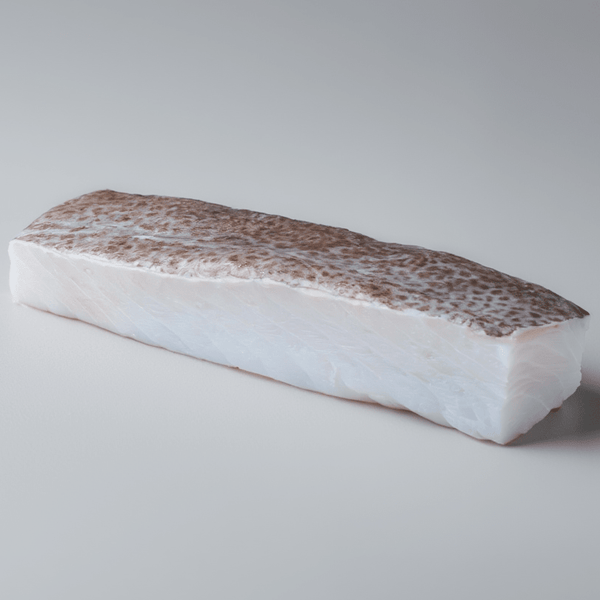
Cod collar is the piece that connects the head to the loin of the fish. It is an anatomical transition area that accumulates an extraordinary amount of collagen, natural gelatin, and intramuscular fat. Culinarily speaking, it is the most flavorful part of the entire cod.
If the loin is the noble and clean part, the collar is the part with soul. Its texture is unique: when cooked, the collagen transforms into gelatin, creating a creaminess that coats the palate. It's the same reason why an osso buco is better than a sirloin for a stew: connective tissue, far from being a defect, is the secret to flavor.
In Basque cuisine, cod collar has the status of a delicacy. Good restaurants in Bilbao and San Sebastián offer it as a star dish, and it's not uncommon for it to cost more than the loin. Because those who have tried it know there's no turning back.
A piece for connoisseurs
Cod collar is not a popular cut outside the Basque Country and some gastronomic circles. Most people buy cod loins or flakes and are unaware that this piece exists. This is, paradoxically, an advantage: being less in demand, its price is more accessible than that of kokotxas, and its flavor is just as spectacular.
At Mercat del Ninot, we have been advising customers for decades who come asking for loin and leave with collar after trying it. It's a conversion that always happens in the same direction.
Cod anatomy: where the collar is located
To understand the collar, you need to understand the structure of cod:
- Head: Contains the kokotxas (lower jaw), snout, and cheeks. Small, very gelatinous pieces.
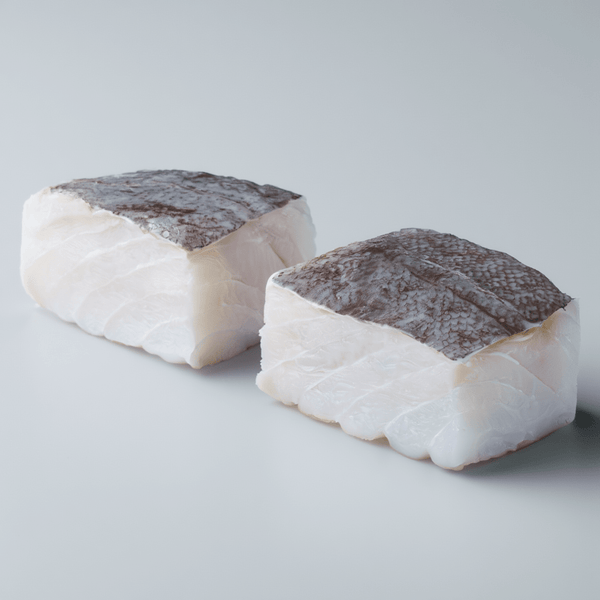
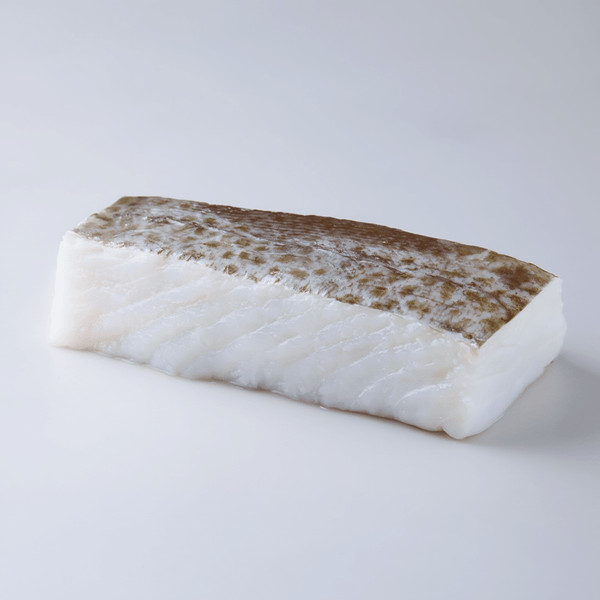
- Collar: The area immediately behind the head. A thick, triangular piece with a lot of collagen and large bones that are easy to remove. It weighs between 200 and 400 g depending on the size of the cod.
- Loin: The central, clean piece, with defined flakes. It is the most commercial part.
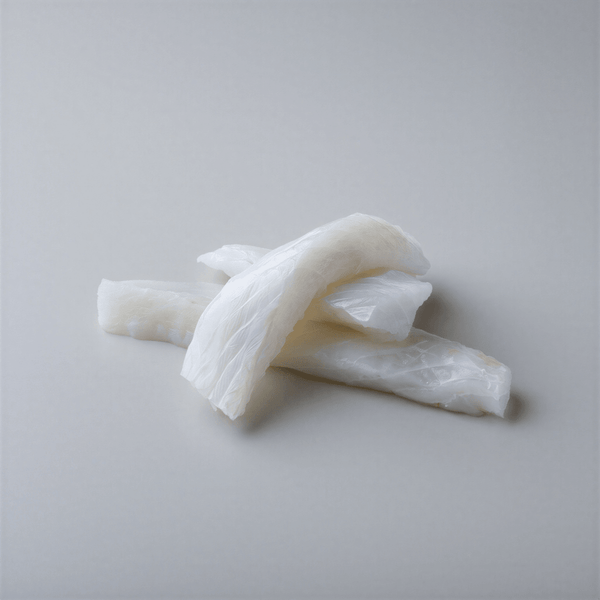
- Tail: Thinner and more fibrous. Ideal for flaking or brandade.
- Tripe (stomach): The stomach lining. Gelatinous texture, highly prized in haute cuisine.
The collar is visually distinguished by its more irregular shape than the loin, its variable thickness, and the presence of cartilage and large bones that are easily removed after cooking. Do not try to clean them before cooking: these cartilages add gelatin to the juice.

Desalted Cod Kokotxas - 500g
Available at Bacalalo.com with refrigerated 24-48h shipping
Ingredients for 4 people
- 4 desalted cod collars, 200-250 g each
- 6 tablespoons of extra virgin olive oil
- 4 cloves of garlic, thinly sliced
- 1 dried cayenne pepper (optional, for a subtle spicy touch)
- 200 ml of fish broth (or homemade fumet)
- 1 large bunch of fresh parsley (about 40 g, leaves only)
- 150 g fresh or frozen peas
- 8 asparagus tips (optional)
- 2 tablespoons all-purpose flour
- 100 ml dry white wine
- Salt (adjust at the end, cod already has residual salt)
About the fish broth
If you have cod bones and heads, make a quick fumet: 20 minutes of cooking with onion, leek, carrot, and a splash of white wine. Strain and use. This broth exponentially enhances the green sauce. If you don't have it, a quality commercial fish broth works, but add less salt to the recipe.
Step-by-step: cod collar in green sauce
Step 1 — Prepare the base sofrito (5 minutes)
In an earthenware casserole dish or a wide, shallow pan, heat the olive oil over medium-low heat. Add the sliced garlic and the chili. Cook for 2 minutes, stirring constantly, until the garlic is lightly golden. Do not burn it: burnt garlic will make the whole sauce bitter.
Remove the chili (it has already released its spice). Add the flour and stir for 30 seconds until it integrates with the oil without forming lumps.
Step 2 — Create the green sauce base (5 minutes)
Increase the heat to medium and add the white wine. Let the alcohol evaporate for 1 minute, stirring. Gradually add the fish broth, stirring constantly. Finely chop half of the parsley and add it. Lower the heat and let the sauce simmer gently for 3 minutes.
Step 3 — Cook the cod collars (12-15 minutes)
Place the cod collars in the casserole dish with the skin facing up, partially submerged in the sauce. Cover the casserole dish and cook over low heat for 12-15 minutes. After 8 minutes, add the peas and asparagus tips if using.
During cooking, move the casserole dish with gentle circular movements every 3-4 minutes (the "vaivén" or rocking motion). This movement is essential for the gelatin from the collar to emulsify with the sauce and thicken it naturally. Do not use a spoon: the wrist movement is the correct technique.
Step 4 — Thicken the sauce (the koxkera)
When the cod collars are cooked (the flesh separates easily from the central bone), check the sauce. It should have a texture between liquid and creamy, with a characteristic sheen. If it is too liquid, slightly increase the heat and continue the "vaivén" for 2-3 more minutes. The gelatin from the collar should have naturally thickened the sauce.
Step 5 — Finishing touch
Remove from heat. Finely chop the remaining parsley and sprinkle it generously over the cod collars. Let it rest for 2 minutes before serving: the sauce will continue to thicken off the heat.
Serve directly in the earthenware casserole dish if you used one. Cod collar in green sauce is eaten with bread, lots of bread, so as not to leave a single drop of sauce.
The koxkera technique: how to thicken the sauce
The koxkera (or Basque green sauce) is one of the great techniques of Spanish cuisine. Its secret is not any artificial thickener: it is the natural gelatin of the fish which, by means of the circular movement of the pot (the "vaivén"), emulsifies with the olive oil and creates a silky and shiny sauce.
Keys to making it work:
- Low heat. If the sauce boils vigorously, the emulsion breaks.
- Constant movement. Shake the pot every few minutes with a wrist rotation. Do not stir with a spoon.
- Gelatinous pieces. The collar and kokotxas are ideal pieces because they release more gelatin. A clean loin will not thicken the sauce in the same way.
- Patience. The emulsion takes 8-10 minutes to form. Don't rush it.
If the sauce still doesn't thicken, there's an emergency trick: dissolve half a teaspoon of cornstarch in a tablespoon of cold water and add it to the sauce. But with quality cod collar, it shouldn't be necessary.
Difference between cod collar and kokotxas
| Characteristic | Collar | Kokotxas |
|---|---|---|
| Location | Between head and loin | Chin (lower part of the head) |
| Size | 200-400 g per piece | 15-30 g per piece |
| Texture | Gelatinous + meaty | Very gelatinous, almost melting |
| Flavor | Intense, complex | Delicate, mild |
| Price | Moderate | High (scarce piece) |
| Bones | Large, easy to remove | Boneless |
| Best preparation | Green sauce, baked, stew | Green sauce, battered, tempura |
If kokotxas are the caviar of cod, the collar is its Iberian ham: more substantial, with more character, and with an unbeatable value for money.
Where to buy quality cod collar
Cod collar is not sold everywhere. Supermarkets rarely offer it because it is a piece that requires expertise to cut and desalinate correctly. You will find it at:
- Specialized cod fishmongers — Like us at Mercat del Ninot. We custom-cut the collar and desalinate it traditionally.
- Municipal markets — Traditional cod stalls usually have it if you ask.
- Specialized online stores — Refrigerated shipping, with desalinating included.
When buying cod collar, make sure the flesh is white and firm, with no yellowish areas (a sign of oxidation). The thickness should be at least 4 cm at the widest part. And make sure it is properly desalted: a salty collar will ruin any recipe.
Variations and accompaniments
Baked cod collar with roasted potatoes
Place the cod collar on a bed of thinly sliced potatoes (3mm), julienned onion, and green pepper. Drizzle with oil and white wine. Bake at 180°C for 35-40 minutes. The potatoes absorb the gelatinous juices from the cod collar and are extraordinary.
Cod collar in choricero pepper sauce
Replace the parsley with the flesh of 4 rehydrated choricero peppers. The result is a Vizcaina sauce adapted to the cod collar, with more body and a spectacular dark red color.
Recommended accompaniments
- Boiled potatoes crushed with a fork and a drizzle of oil (the classic Basque style)
- Crusty country bread for dipping in the sauce
- Roasted piquillo peppers as a side garnish
Frequently Asked Questions
Does cod collar have many bones?
It has large bones that are easy to locate. The central bone is removed in one piece after cooking. It does not have the fine, treacherous bones of other areas of the fish. It is a much easier piece to eat than it seems.
Can I use loin instead of collar for this recipe?
You can, but the result will be different. The loin does not have the gelatin of the collar, so the sauce will not thicken naturally and you will need more flour or cornstarch to thicken it. The flavor will also be less intense. If you only have loin, the recipe works, but it loses its essence.
How long does it take to cook cod collar?
Between 12 and 15 minutes over low heat, covered. It depends on the thickness. You know it's ready when, pressing gently with a spoon, the flesh separates from the bone without resistance. Do not overcook it or it will lose its texture.
What exactly is "koxkera"?
It is the Basque technique for thickening sauces by means of the circular movement of the pot ("vaivén"). The fish gelatin emulsifies with the oil and broth, creating a creamy sauce without the need for cream, butter, or thickeners. It is the basis of green sauce and pil-pil sauce.
Can cod collar in green sauce be frozen?
I don't recommend it. The emulsified sauce breaks when thawed, and the cod collar loses its gelatinous texture. It's a dish that should be eaten freshly made. If you have leftovers, eat it the next day by reheating it very gently over low heat.
Is cod collar more expensive than loin?
Generally no. Cod collar is usually more economical than loin because it is less known and has a less "clean" presentation. It is one of the best value-for-money cuts of cod. In high-end restaurants, however, it can be priced even higher than the loin.
What wine pairs well with cod collar in green sauce?
Txakoli is the classic choice and works perfectly. Also a young Albariño or a Verdejo from Rueda. If you prefer something with more body, a Godello from Valdeorras complements the richness of the sauce. Avoid red wines with this dish.
🛒 Related products from Bacalalo
⭐ 4.9/5 · Cold shipping 24-48h · Since 1990 at Mercat del Ninot
Conclusions
Cod collar in green sauce is one of those dishes that separate amateurs from true food lovers. It's not the prettiest part of the cod, nor the best known, but it is, without question, the most flavorful.
The combination of its gelatinous texture with the Basque green sauce creates a dish of such depth of flavor that cannot be achieved with any other cut. And the koxkera technique, although it requires practice, is accessible to any home cook with patience.
If you've never tried cod collar, I invite you to give it a try. It's likely that you'll never look at a cod loin the same way again.
Related articles:
Marc González Sáez — Bacalalo, Mercat del Ninot, Barcelona. Since 1990.