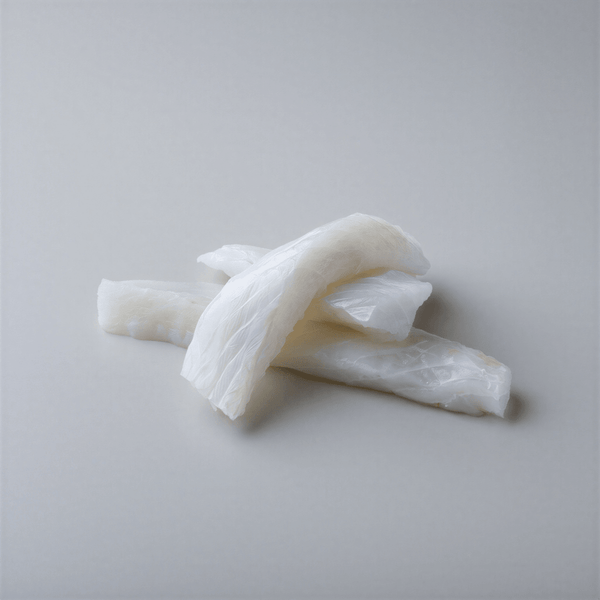
Cholga is a Chilean bivalve mollusc that looks like a mussel but isn't. It's bigger, tastier, and virtually unknown outside of South America. This guide explains what cholga is, how it differs from mussels, how to cook it, and why it deserves attention.
Table of Contents
What is Cholga
Updated March 2026. Since 1990, we have hand-selected every product. This guide reflects that experience.
Cholga (Aulacomya atra) is a bivalve mollusc that inhabits the coasts of the South Pacific, mainly Chile and Argentina. It is a relative of the European mussel but belongs to a different genus. Its size is the first indication that we are not dealing with a common mussel: cholga can reach 15-20 cm in length, while the Mediterranean mussel rarely exceeds 8 cm.
In Chile, it is an everyday product, especially in the Los Lagos and Aysén regions. It is consumed fresh, smoked, dried (cholga seca), or canned. It is a staple of Chilota cuisine (from Chiloé Island) and is part of emblematic preparations such as curanto.
In Europe, it is practically unknown, although it occasionally appears in Latin American product stores, usually in dried or canned form.
Species and Biology
Verifiable data about cholga:
- Scientific Name: Aulacomya atra (Molina, 1782)
- Family: Mytilidae (same as mussels)
- Distribution: South Pacific coast, from Peru to Tierra del Fuego, and Argentine Atlantic coast to Patagonia
- Habitat: rocky intertidal and subtidal zones, up to 50 meters deep
- Size: 10-20 cm in length (two or three times that of European mussels)
- Shell: dark brown to black, ribbed, more elongated and less curved than the mussel
- Feeding: filter feeder (phytoplankton and suspended organic matter)
- Harvesting: mostly wild collection (diving) and natural banks. Emerging aquaculture exists.
Cholga is mainly harvested by shellfishing divers in southern Chile, who work in cold waters (8-12°C) collecting them one by one. It is an artisanal, hard work regulated by seasonal closures to protect the population.
Cholga vs Mussel vs Choro: Clear Differences
In Chile, there are three similar bivalves that are constantly confused. Here are the differences:
- Cholga (Aulacomya atra): the largest (10-20 cm). Ribbed, elongated shell. Orange meat, intense flavor. Consumed fresh, dried, and smoked.
- Choro (Choromytilus chorus): medium-large size (8-15 cm). Smooth shell, with an iridescent green edge. Milder meat. It is the quintessential "Chilean mussel".
- Chorito / Chilean Mussel (Mytilus chilensis): the smallest (5-8 cm). Similar in size to the European mussel. Black-bluish shell. Massively cultivated in aquaculture.
In Europe, our mussel (Mytilus galloprovincialis) is comparable in size to the Chilean chorito, but its flavor and texture are different — more iodized, more mineral.

Natural Clams Rías Gallegas 28/30 Pieces Dardo Gourmet Preserve - 266g
Available at Bacalalo.com with refrigerated shipping in 24-48h
Comparison Table
| Characteristic | Cholga | Choro | European Mussel |
|---|---|---|---|
| Species | Aulacomya atra | Choromytilus chorus | Mytilus galloprovincialis |
| Size | 10-20 cm | 8-15 cm | 5-10 cm |
| Shell | Ribbed, brown-black | Smooth, iridescent green | Smooth, black-bluish |
| Meat | Large, orange | Medium, pale | Small, orange/cream |
| Flavor | Intense, sweet, mineral | Mild, buttery | Iodized, mineral |
| Production | Wild collection | Wild + aquaculture | Intensive aquaculture |
| Price (Chile) | Medium-high | Medium | N/A |
| Availability Europe | Very low (import) | Low | High |
Flavor and Texture: What to Expect
If you've never tried cholga, here are the flavor coordinates:
Fresh: intense sea flavor, with a sweetness that European mussels don't have. The meat is firm, with a texture more reminiscent of an oyster than a mussel. The size allows you to chew and appreciate the texture — it's not a quick bite like a small mussel.
Smoked: probably the most accessible form outside of Chile. Smoked cholga has a deep flavor, with notes of smoke, sea, and a caramelized touch. The texture is denser, almost chewy like a soft caramel. It's addictive.
Dried (cholga seca): dehydrated in the sun or by smoke. It's more of a cooking ingredient than a product to eat directly. It's rehydrated in water or broth and used in stews, broths, and soups. The flavor is immensely concentrated — a handful of dried cholgas flavors a whole pot.
How to Prepare Cholga
Cleaning (fresh cholga)
- Scrape the outside of the shell with a knife to remove barnacles and algae.
- Remove the byssus (the "beards" it uses to cling to rocks) by pulling towards the hinge.
- Wash under plenty of cold water.
- Discard any that are open and don't close when tapped — they are dead.
Basic Cooking
Steamed: place the cholgas in a pot with 2 fingers of water (or white wine), cover, and cook over high heat for 5-7 minutes until they open. They are larger than mussels, so they need more time. Discard any that don't open.
Rehydration (dried cholga)
Submerge dried cholgas in warm water for 2-4 hours. Change the water once. The soaking water is a concentrated sea broth — don't discard it, use it as the base for the dish.

Natural Japanese Clams Baymar 16/22 Rías Gallegas - 115g
Available at Bacalalo.com with refrigerated shipping in 24-48h
4 Cholga Recipes
1. Steamed Cholgas with White Wine and Garlic
The simplest preparation. Sauté sliced garlic and chili in oil. Add the cleaned cholgas and a glass of white wine. Cover and cook for 5-7 minutes. Serve in the broth with bread for dipping and fresh parsley. It's essentially steamed mussels, but with a mollusc three times larger and with more flavor.
2. Cholgas à la Parmesan
Steam the cholgas until they open and remove the empty half-shell. On each cholga in its half-shell, place a teaspoon of a mixture of breadcrumbs, grated Parmesan, minced garlic, and parsley. Drizzle with olive oil. Gratin in the oven for 5 minutes at 220°C until the cheese is golden. It's a spectacular appetizer due to the size of each piece.
3. Dried Cholga Broth (Caldillo de Cholga Seca)
Classic Chilota recipe. Rehydrate 200g of dried cholgas. Sauté onion, garlic, carrot, and celery. Add the cholgas with their strained soaking water, cubed potatoes, and a splash of white wine. Cook for 20 minutes over low heat. Serve with fresh cilantro and ají. It's a comforting broth with a sea flavor that no fumet can match.
4. Smoked Cholgas with Onion Salad
Canned smoked cholgas served on a bed of thinly sliced red onion, tomato, cilantro, and lemon juice. A drizzle of oil and pebre (Chilean sauce of tomato, cilantro, ají, and onion). It's a perfect cold dish for summer, with intense flavors that don't require cooking.
Where to Find Cholga Outside of Chile
Fresh cholga is virtually impossible to find in Europe. Realistic options:
- Canned smoked cholga: available in Chilean and Latin American product stores. It is the most accessible and flavorful way for a first contact.
- Dried cholga: found in specialty stores for Andean products. It keeps for months at room temperature and is an extraordinary ingredient for broths.
- Frozen cholga: some specialized importers bring frozen cholga from southern Chile. The quality is acceptable if defrosted correctly (refrigerator, 24h).
- Local alternative: if you can't find cholga, the large Galician mussel from rafts is the closest European substitute in size, although the flavor is different.
In our canned food collection you can find seafood alternatives of similar quality.
Nutritional Value
| Nutrient (per 100g of meat) | Fresh Cholga | Smoked Cholga | European Mussel (reference) |
|---|---|---|---|
| Calories | 85-95 kcal | 180-220 kcal | 86 kcal |
| Proteins | 14-16 g | 20-24 g | 12 g |
| Fats | 2-3 g | 8-12 g | 2 g |
| Iron | 6-8 mg | 8-10 mg | 4 mg |
| Zinc | 2-3 mg | 3-4 mg | 1.6 mg |
| Omega-3 | 0.5-0.8 g | 1.0-1.5 g | 0.4 g |
| Selenium | 40-55 µg | 50-65 µg | 45 µg |
Cholga stands out for its high iron content (almost double that of European mussels) and protein. The smoked version concentrates nutrients but also calories and sodium.

Natural Clams 20/30 Rías Gallegas Dardo Premium Preserve - 120ml
Seafood Collection — All seafood available at Bacalalo: fresh, canned, and smoked. Real product, known origin. View seafood
🛒 Related Bacalalo Products
⭐ 4.9/5 · Cold shipping 24-48h · Since 1990 at Mercat del Ninot
Frequently Asked Questions
Does cholga taste the same as mussels?
No. Cholga has a sweeter and more intense flavor than European mussels, with less iodine and more mineral notes. The texture is firmer and meatier. If you like mussels, you'll find cholga to be an amplified version, but they are distinct flavors.
Does cholga pose any food safety risks?
Like all filter-feeding molluscs, cholga can accumulate toxins from red tides (toxic algal blooms). In Chile, health authorities (SERNAPESCA) monitor extraction areas and establish closures when red tides occur. Always buy cholgas from controlled sources, never from informal collection.
Can I cultivate cholgas in the Mediterranean?
Not viably. Cholga is a cold-water species (8-14°C) adapted to the South Pacific. Mediterranean temperatures (15-28°C) are outside its optimal range. Furthermore, introducing non-native species into marine ecosystems carries serious ecological risks and is regulated.
What is curanto and what role does the cholga play?
Curanto is an ancestral Mapuche-Huilliche cooking method from Chiloé Island. A hole is dug in the ground, heated with stones, and seafood (cholgas, choros, clams), meats (pork, chicken), potatoes, and chapaleles (potato dough) are cooked, covered with nalca leaves. The cholga is one of the essential shellfish. The process lasts 2-3 hours and feeds entire communities. It is part of Chile's Cultural Heritage.
How much does cholga cost in Chile?
Fresh cholga costs between 2,000 and 4,000 Chilean pesos per kilo (approximately 2-4 euros) in southern Chilean markets. Smoked or dried cholga is more expensive: 8,000-15,000 pesos/kg (8-15 euros). In Europe, import prices multiply these values by 3-4.
Is cholga sustainable?
Wild cholga is regulated by closed seasons and quotas in Chile, but pressure on natural beds is high. Cholga aquaculture is in its initial phase and is a more sustainable long-term option. If you buy cholga, look for suppliers who certify origin and compliance with closed seasons.
Cholga is one of those products that shows that the world of seafood is much broader than the European market reveals to us. A mollusk that is larger, tastier, and more nutritious than our mussels, rooted in a gastronomic culture (that of Chiloé) that has been taking advantage of it for centuries.
If you have access to smoked or dried cholga, try it. It's a taste experience unlike anything from the Mediterranean. And if you ever travel to southern Chile, a plate of steamed cholgas by the sea is one of the most honest gastronomic experiences there is.
Marc González Sáez · Bacalalo · Mercat del Ninot, Barcelona (since 1990)
Related articles: Canned Goods Collection · Seafood Collection