


Summary
Beluga caviar has a reputation built over centuries: it is the rarest caviar, the largest-grained, and invariably associated with extreme luxury. In this guide: What Beluga Caviar Is and Why It Is So Expensive, The Legal Issue: CITES and the Spanish Market, Beluga Caviar Price in Spain in 2026.
Beluga Caviar: Price in Spain and Where to Buy It
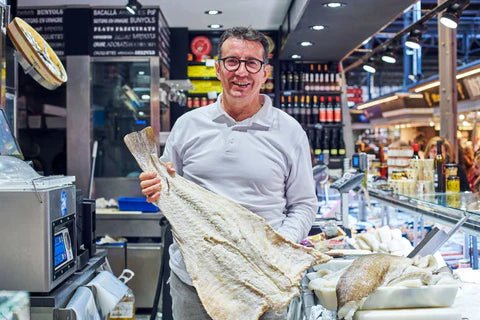
Beluga caviar has a reputation built over centuries: it is the rarest caviar, the largest-grained, and invariably associated with extreme luxury. At Bacalalo, a gourmet shop in Barcelona's Mercat del Ninot since 1990, we are frequently asked where to buy it in Spain and how much it actually costs. The answer requires some important nuances because the beluga caviar market in Spain is more complex than it appears. This guide explains everything with real data.
What Beluga Caviar Is and Why It Is So Expensive
Beluga caviar comes from the beluga sturgeon (Huso huso), the largest freshwater fish in the world: adult specimens can reach 6 meters in length and 1,500 kg in weight. The female beluga takes between 20 and 25 years to produce roe of sufficient quality, making it the product that takes the longest to create among all those appearing on any restaurant menu in the world.
The characteristics that define beluga roe:
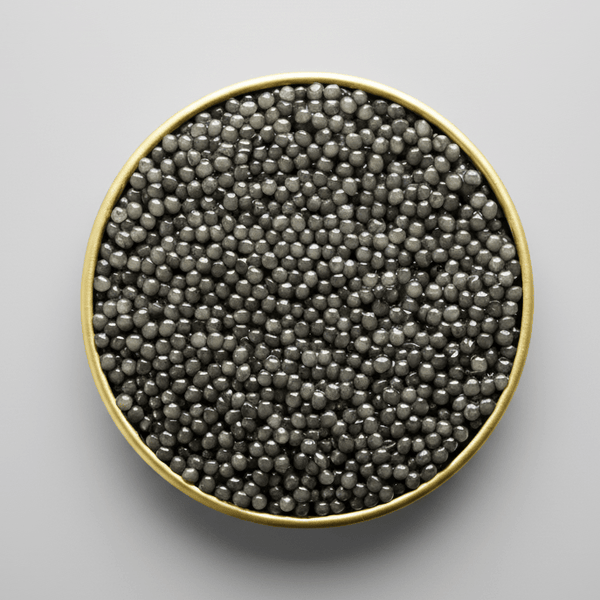
- Size: 3.5 to 4.5 mm in diameter. The largest among the three classic caviars.
- Color: Pearl gray to almost black. The lighter, more iridescent shade indicates greater maturity and is more prized.
- Flavor: Smooth, creamy, with lactic notes and a very delicate marine aftertaste. The least "intense" flavor of the big three, paradoxically the most subtle.
- Texture: Very thin membrane that melts with almost no pressure, releasing a very fatty and unctuous interior.
The combination of extreme rarity (the beluga sturgeon is critically endangered), the very long maturation time, and global demand from high-net-worth buyers determines the price of beluga caviar in Spain and the rest of the world.
The Legal Issue: CITES and the Spanish Market
Wild beluga is a species protected by the CITES Convention (Appendix I since 1997). Its capture and international trade are prohibited without specific permission. In practice, the trade of wild beluga caviar is illegal in the European Union.
What is legally sold as beluga caviar in Spain comes from two sources:
- Beluga fish farms: Mainly in Iran, Germany, Italy, Uruguay, and Belgium. These facilities raise beluga sturgeon in controlled conditions. It takes 15-20 years for specimens to produce quality roe, which explains why even farmed beluga is extraordinarily expensive.
- Beluga x Siberian hybrids (Huso huso x Acipenser baerii): Known as "Hybrid Sturgeon Caviar" or "Beluga Hybrid." It is marketed as a more affordable alternative to pure beluga, with an intermediate flavor profile. Significantly lower price: 80-150 euros for 30 g.
Be wary of any seller offering "authentic beluga caviar" at prices far below the market: it's either a blend or a product with traceability issues.
Beluga Caviar Price in Spain in 2026
The price of beluga caviar in Spain varies significantly depending on the origin and purchase channel. Real ranges in 2026:
- Iranian farmed beluga (30 g): 150-280 euros
- European farmed beluga (30 g): 120-220 euros
- Hybrid Beluga (30 g): 70-130 euros
- Farmed beluga (125 g): 550-1,000 euros
- Farmed beluga (500 g): 2,000-4,000 euros
Beluga caviar prices dropped significantly between 2010 and 2020 with the rise of fish farms, but have stabilized or risen slightly since 2022 due to increased demand in Asian markets and rising energy costs for aquaculture facilities.
Bacalalo Products

Mújol Shikrán Selección - Premium Roe with Smo...
6,95 €

"The Great Beluga Gift" Assortment
227,91 €

Black Mullet Shikrán 550g - Smoked Herring and...
27,95 €

Sevruga Caviar
100,00 €
Refrigerated shipping 24-48h throughout the Peninsula
Where to Buy Beluga Caviar in Spain with Guarantee
Buying beluga caviar requires more care than other caviars for three reasons: the high price makes the category a target for fraud, the cold chain is critical, and legal traceability must be impeccable. Recommended channels:
Specialized gourmet shops
These are the safest option. A specialized caviar shop knows its suppliers, can verify traceability, and guarantees the cold chain. In Barcelona, Mercat del Ninot and other city markets have specialized stalls. In Madrid, Mercado de San Miguel or stores like El Corte Inglés Gourmet offer a selection of quality caviar.
Specialized online stores with refrigerated shipping
Online caviar commerce is perfectly viable if the seller uses refrigerated 24-48 hour transport with temperature control. Always demand: CITES number, country of origin, fish farm of origin, packaging date, and European health certificate. A serious seller will provide this information without issue.
Certified direct importers
For large quantities (events, restaurants, catering), direct importers from European or Iranian fish farms offer better prices and greater quality control. Brands like Kaviari (France), Petrossian (France), or Sturia (France) have distribution in Spain.
Iranian Beluga vs. European Beluga: Which to Choose?
The most frequent discussion among beluga caviar enthusiasts is whether Iranian is superior to European. The honest answer is that it depends on the producer and the year:
- Iranian farmed beluga: Iran has decades of experience with Caspian sturgeon. Their fish farms reproduce conditions very similar to the natural habitat: cold waters at 14-17 °C, low density, feeding based on natural fish. The resulting caviar has a more complex and mineral profile. Higher price due to transport and the perception of authenticity.
- European beluga (Germany, Italy, Belgium): European facilities have a logistical advantage and, in some cases, very competitive quality. Germany has some of the most technologically advanced fish farms. Traceability is usually perfect due to European regulations.
For most consumers, the difference between quality Iranian beluga and quality European beluga is smaller than the price suggests. A good European beluga at 150 euros for 30g can be more satisfying than a mediocre Iranian beluga at 250 euros.
How to Serve Beluga Caviar
Beluga caviar, due to its more delicate flavor, requires the most minimalist presentation of all caviars:
- Serving temperature: 0-4 °C. Take it out of the fridge 5-10 minutes before, no more.
- Container: Mother-of-pearl spoon is mandatory. Metal ruins beluga faster than any other caviar due to its greater sensitivity to oxidation.
- Accompaniment: As little as possible. A very neutral cracker, unsalted, or the simplest blini. Crème fraîche, in minimal amounts, is the most that should be added. No chives, no hard-boiled egg: they would overpower the flavor that has waited 20 years to mature.
- Drink: Very dry Blanc de Blancs Champagne or quality, well-chilled Russian vodka (Beluga Noble, Stolichnaya Elit). Both have the acidity and neutrality not to compete with the caviar.
- Quantity: 10-15 g per person as an appetizer. For a complete experience where caviar is the focus, 30-50 g per person.
Bacalalo Products
Mújol Shikrán Selección - Premium Roe with Smo...
6,95 €
"The Great Beluga Gift" Assortment
227,91 €
Black Mullet Shikrán 550g - Smoked Herring and...
27,95 €
Sevruga Caviar
100,00 €
Refrigerated shipping 24-48h throughout the Peninsula
🛒 Products mentioned in this article
⭐ 4.9/5 · Cold shipping 24-48h · Since 1990 in Mercat del Ninot
Frequently Asked Questions about Beluga Caviar in Spain
Is it legal to buy beluga caviar in Spain?
Yes, it is perfectly legal to buy beluga caviar in Spain as long as it comes from a fish farm and the seller has all the CITES documentation in order. Wild Caspian beluga caviar cannot be legally traded in the EU. Always buy with an invoice and demand proof of origin documentation.
How much does the most expensive beluga caviar in the world cost?
The most exclusive beluga caviar on the market in 2026 is Iranian "Almas," from albino sturgeon over 100 years old, with almost white roe. It is sold in 24-karat gold tins and its price can exceed 20,000 euros per kilo (2,000 euros for 100 g). It is a product of extreme rarity produced in minimal quantities annually.
Is Beluga caviar worth it compared to Osetra?
It depends on what you're looking for. Beluga has a smoother, creamier flavor, larger roe, and a more "pure" experience. Osetra has more taste complexity with nutty notes. Many caviar experts prefer Osetra for its stronger personality. If you're looking for the most exclusive experience in terms of rarity and size, Beluga is unmatched. If you're looking for the greatest gastronomic pleasure per euro spent, Osetra wins.
Can Beluga caviar be used in cooking, or is it only eaten on its own?
Beluga caviar, due to its price and delicacy, is almost exclusively reserved for tasting on its own or with minimal accompaniments. Using it in elaborate cooking would be a waste of its nuances. For preparations like pasta, sushi, or tartar where heat or strong flavors are present, Osetra or Sevruga are more suitable and much more economical options.
How can I tell if the Beluga caviar I buy is authentic?
Four verifications: 1) The labeling must indicate species (Huso huso), originating fish farm, and CITES registration number. 2) The price per gram cannot be significantly lower than the market (less than 5 euros/g is a red flag). 3) The color should be a uniform gray, not intense black. 4) The texture in the mouth: a very fine membrane that dissolves without pressure. If the roe is firm and doesn't dissolve, it's probably not pure Beluga.
What alternative exists to Beluga caviar for those who cannot afford it?
Quality Osetra caviar, at 60-150 euros per 30g, offers a top-tier caviar experience at a third of the price of Beluga. Sevruga, at 40-100 euros per 30g, has a more iodized personality than Beluga. For more economical alternatives, quality trout roe at 20-35 euros per 100g is an honest option with a different but equally enjoyable flavor profile.
Discover our premium selection
Carefully selected seafood products since 1990 at Mercat del Ninot, Barcelona. Refrigerated shipping in 24-48h.



![Las 10 Mejores Conservas de España [Ranking 2026] - Bacalalo](http://bacalalo.com/cdn/shop/articles/las-10-mejores-conservas-de-espana-ranking-2026-5147433.jpg?v=1772706733&width=480)

