For centuries, caviar has been the most exclusive ingredient in haute cuisine. Michelin-starred restaurants elevate it to a work of art, combining it with ingredients that enhance its briny flavor and unique texture. In this article, we reveal 4 recipes inspired by iconic dishes from star-rated restaurants, adapted so you can recreate them at home with top-quality caviar. From classic egg and caviar to sophisticated tuna tartare, discover how to work with this ingredient like a true chef.
Why caviar is the king of Michelin cuisine
When we talk about haute cuisine, few ingredients have the symbolic and gastronomic power of caviar. Michelin-starred restaurants use it not merely as an adornment, but as the central axis of dishes that seek a balance between texture, flavor, and visual elegance.
Caviar provides an explosion of umami, briny notes from the sea, and a texture that bursts in the mouth. Chefs like Martín Berasategui, the Roca brothers, or Quique Dacosta integrate it into their tasting menus as a key element. The reason is simple: no other ingredient offers so much sensory complexity in such a small volume.
In recent years, the democratization of farmed caviar has made this ingredient more accessible without losing quality. Today, you can get excellent quality Osetra or Baerii caviar without having to mortgage your kitchen. The important thing is knowing how to handle it correctly.
The golden rule of caviar in haute cuisine
Michelin chefs follow one maxim: caviar is never cooked. It is always added at the end, cold or at room temperature, on a base that contrasts in texture (creamy, crunchy, or gelatinous). The ideal serving temperature is between 0 °C and 4 °C, directly from the container on ice.
Another fundamental rule: never use metal utensils. Metal oxidizes the roe and alters its flavor. Chefs use mother-of-pearl, bone, or wooden spoons. This detail makes the difference between a correct dish and an extraordinary one.
Types of caviar and which to choose for each recipe
Not all caviars are the same, and each variety has characteristics that make it more or less suitable for certain preparations:
- Beluga: large roe (3-4 mm), pearl gray to anthracite color. Delicate, buttery flavor, with nutty notes. Ideal to serve alone or with blinis. The most expensive and exclusive.
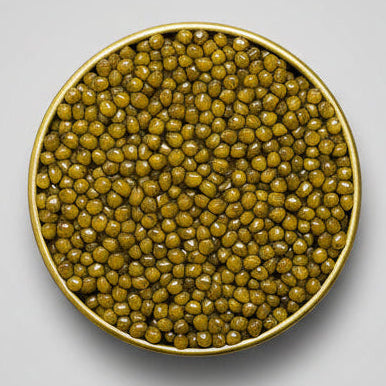
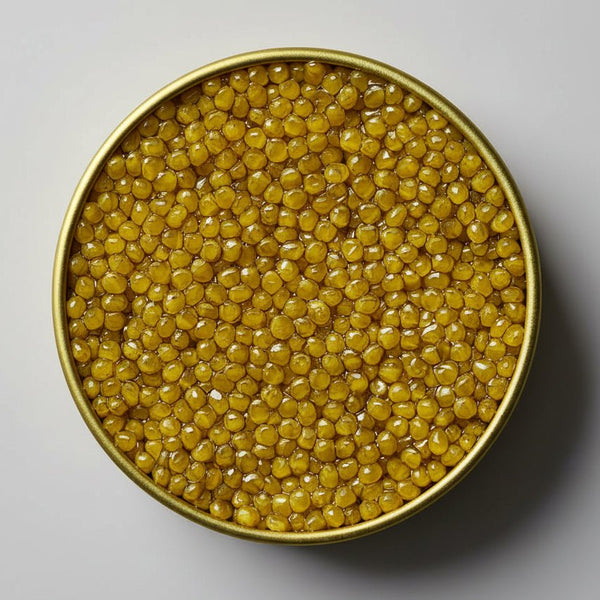
- Osetra: medium roe (2-3 mm), golden to dark brown color. Complex flavor with notes of nut and sea. Perfect for combining with egg and potato. Excellent value for money.
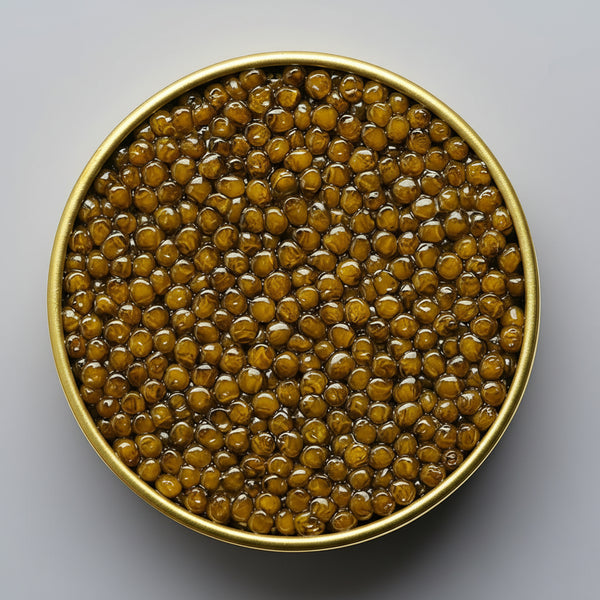
- Baerii (Siberian): small to medium roe, intense black color. Pronounced, more briny flavor. Ideal for tuna tartare and dishes with character. The most versatile in cooking.
- Sevruga: small roe, dark gray color. Intense and persistent flavor. For palates seeking potency. Pairs well with neutral bases like crème fraîche.

Box "Russian Whim" · Introduction to luxury
Available at Bacalalo.com with refrigerated 24-48h shipping
Recipe 1: Sous-vide egg with caviar and potato foam
This is probably the most iconic combination in contemporary Michelin cuisine. The liquid yolk of the sous-vide egg creates a perfect contrast with the saltiness of the caviar, while the potato foam provides creaminess and neutrality.
Ingredients (4 servings)
- 4 organic free-range eggs (maximum quality, essential)
- 60 g Osetra caviar
- 300 g starchy potato
- 100 ml heavy cream (35% fat)
- 50 g butter
- Fresh chives
- Maldon sea salt
- Freshly ground white pepper
Step-by-step preparation
- Sous-vide egg: Preheat a water bath (sous vide or a pot with a thermometer) to 63 °C. Place the eggs in their shells and hold for exactly 45 minutes. If you don't have a sous vide, cook in water over very low heat (barely bubbling) for 40 minutes.
- Potato foam: Boil peeled potatoes in salted water for 25 minutes. Drain and pass through a fine potato ricer. Add diced butter and hot cream. Work with a spatula until you get a very fine and silky purée. Season with salt and white pepper. Reserve in a piping bag.
- Assembly: Place a generous base of potato foam in the center of a preheated deep plate. Carefully crack the egg onto the foam (the egg white will be barely set, the yolk liquid). Top with a generous spoonful of Osetra caviar (15 g per person). Finish with finely diced chives and a flake of Maldon salt.
Michelin trick: The Roca brothers add a few drops of black truffle oil between the potato and the egg. The result is absolutely spectacular, but optional: the caviar already provides enough complexity.
Recipe 2: Truffled potato cream with Osetra caviar
Inspired by Joël Robuchon's legendary dish, this cream elevates the humble potato to haute cuisine territory. The key lies in the proportion of butter (yes, it's a lot) and the quality of the truffle.
Ingredients (4 servings)
- 400 g Ratte potatoes (or Kennebec)
- 120 g cold butter, diced
- 150 ml hot whole milk
- 30 g black truffle (or 10 ml quality truffle oil)
- 50 g Osetra or Baerii caviar
- Chives and fleur de sel
Preparation
- Boil the unpeeled potatoes in salted water for 30 minutes. Peel while hot (use gloves) and pass through a fine ricer twice.
- Add the cold diced butter, stirring vigorously with a wooden spatula. The cold emulsion is what gives it that characteristic satiny texture.
- Add the hot milk little by little until you get the desired consistency: it should be creamy but with body, never liquid.
- Grate the black truffle directly over the hot cream and mix.
- Serve in preheated bowls and top with a spoonful of caviar and finely chopped chives.
This dish demonstrates that haute cuisine does not require impossible techniques. It requires exceptional product and respect for proportions. Butter is the silent protagonist; caviar, the visible star.
Recipe 3: Red tuna tartare with caviar and yuzu soy sauce
Tuna tartare with caviar is a classic of Japanese-Mediterranean fusion cuisine served in restaurants like Pakta (Barcelona, 1 Michelin star) or Kabuki (Madrid, 1 star). The combination of two raw seafood products creates a symphony of textures and flavors.
Ingredients (4 servings)
- 400 g wild bluefin tuna (loin, sashimi grade)
- 40 g Baerii caviar
- 2 tablespoons low-sodium soy sauce
- 1 tablespoon yuzu juice (or lime if not available)
- 1 teaspoon toasted sesame oil
- 1 ripe avocado
- Toasted black sesame seeds
- Fresh wasabi (or quality tube wasabi)
- Wonton chips or puffed rice
Preparation
- Tuna cut: Cut the tuna into 1 cm cubes with a very sharp knife. A clean cut is essential: never crush the fish. Work with very cold tuna (10 minutes in the freezer beforehand).
- Dressing: Mix soy sauce, yuzu, and sesame oil. Add to the tuna and mix gently. Marinate for 5 minutes in the refrigerator (no more, or the protein will "cook").
- Avocado base: Mash half an avocado with a few drops of lime and a hint of wasabi. Spread as a base on the plate.
- Assembly: Place the tartare over the avocado using a plating ring. Top with 10 g of caviar per plate, black sesame seeds, and a dab of wasabi. Serve with wonton chips.
Chef's note: The quality of the tuna is non-negotiable. It must be suitable for raw consumption, with full traceability. At Bacalalo, we work with wild bluefin tuna that meets all sashimi grade standards.
Recipe 4: Buckwheat blinis with caviar and crème fraîche
Blinis are the classic vehicle for caviar. Originating in Russia, these small fermented buckwheat crêpes offer a neutral base with a hint of bitterness that complements the saltiness of the caviar. It's the perfect appetizer for a celebratory dinner.
Ingredients (for 20-24 blinis)
- 100 g buckwheat flour
- 50 g all-purpose flour
- 200 ml lukewarm milk
- 7 g fresh yeast (or 3 g dry)
- 2 eggs (separate whites and yolks)
- 30 g melted butter
- 1 pinch salt and sugar
- 200 ml crème fraîche
- 80-100 g caviar (of choice)
- Fresh chives
Preparation
- Dissolve the yeast in the lukewarm milk with the sugar. Let stand for 10 minutes until foamy.
- Mix the flours with the salt. Add the yolks and the milk with yeast. Work until a smooth batter is obtained. Cover and let rise for 1 hour at room temperature.
- Beat the egg whites until stiff peaks form. Incorporate into the batter with gentle, enveloping movements.
- Heat a non-stick pan with a little butter. Pour spoonfuls of batter to form 5-6 cm discs. Cook for 2 minutes per side over medium heat.
- Serve the blinis warm with a teaspoon of crème fraîche, a generous teaspoon of caviar, and chopped chives.
Michelin trick: At Arzak, they serve blinis with a base of green apple gelée under the crème fraîche. The acidity of the apple cuts through the fat and enhances the saltiness of the caviar. Try it: it's a radical change.
Michelin techniques for serving caviar
Beyond recipes, starred restaurants apply specific techniques that make all the difference:
Temperature and timing
Caviar should be taken out of the refrigerator 5 minutes before serving. No more. It should never warm up completely: the roe loses firmness and the flavor becomes more metallic. Timing is critical: caviar is always placed at the last second, just before the dish reaches the diner.
Quantities per person
In Michelin restaurants, the standard portion ranges from 10 to 30 grams per person, depending on the type of dish:
- Appetizer/snack: 5-10 g (blinis, canapés)
- Starter: 15-20 g (egg with caviar, creams)
- Main course: 25-30 g (tartare, fish with caviar)
- Pure tasting: 30-50 g (caviar only with blinis and crème fraîche)
The art of contrast
Michelin chefs always look for at least two simultaneous contrasts:
- Temperature: hot base + cold caviar
- Texture: creamy + burst of roe
- Flavor: neutral/sweet + salty/briny
Pairing: champagne, vodka, and beyond
The classic pairing for caviar is well-known, but sommeliers at starred restaurants are breaking new ground:
- Champagne Blanc de Blancs: The eternal classic. The acidity and bubbles cleanse the palate between bites. Look for a Brut Nature or Extra Brut with no dosage.
- Ice-cold vodka: The Russian tradition. Serve vodka at -18 °C in frozen glasses. Its neutrality enhances the notes of the caviar.
- Junmai Daiginjo sake: The current trend in restaurants like Nobu and Pakta. Delicate, floral, with umami that amplifies that of the caviar.
- Cava Gran Reserva: The quality Spanish alternative. A Corpinnat with long aging offers complexity similar to champagne at a lower price.
- Craft Pilsner beer: The surprise. A dry, well-carbonated Pilsner works extraordinarily well. Several Michelin chefs recommend it.

Iranian Imperial Beluga Caviar 00
Available at Bacalalo.com with refrigerated 24-48h shipping
Mistakes that ruin caviar (and how to avoid them)
Even with the best product, these mistakes can ruin the experience:
- Using a metal spoon: Metal oxidizes the roe and leaves a bitter taste. Use mother-of-pearl, bone, wood, or plastic.
- Cooking it: Heat destroys the texture and flavor of caviar. Always raw, always at the end.
- Excessive lemon: A few drops can work, but too much acid masks the nuances of caviar. Less is more.
- Overpowering accompaniments: Raw onion, excessive capers, or strong spices compete with caviar instead of complementing it.
- Opening the tin in advance: Once opened, caviar oxidizes quickly. Open just before serving and consume immediately.
- Incorrect storage: Always in the coldest part of the refrigerator (0-4 °C), upside down if possible, so that the fat evenly coats the roe.
- Buying insufficient quantity: Nothing worse than a scarce caviar dish. Calculate a minimum of 10 g per person for an appetizer and 20 g for a main course.
Frequently asked questions
What caviar do Michelin restaurants use?
Most Michelin restaurants in Spain work with European farmed caviar, mainly Osetra and Baerii. Brands like Riofrío (Granada), Caviar de l'Alt Empordà, or Prunier are common. Iranian Beluga is reserved for the highest-level and most budget-conscious restaurants.
How much caviar do I need per person?
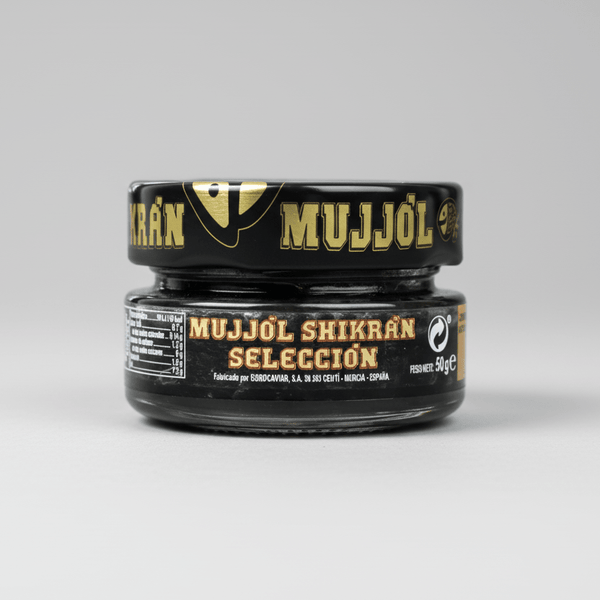
For an appetizer, estimate 10-15 g per person. For a dish where caviar is the star, 20-30 g. For a pure tasting (caviar only with blinis), 30-50 g. A 50 g jar is ideal for 2-4 people as a starter.
Can caviar be frozen?
It is not recommended. Freezing ruptures the membranes of the roe, and when thawed, they lose their characteristic texture, becoming mushy. Consume caviar fresh, between 0°C and 4°C, and once opened, within the next 24-48 hours.
What is the difference between caviar and salmon roe?
Authentic caviar comes exclusively from sturgeon (genus Acipenser). Salmon roe, trout roe, lumpfish roe, or tobiko are "substitutes" or fish roe, but not caviar. The difference in taste, texture, and price is enormous: caviar has complex notes of nuts, sea, and umami that roe from other fish cannot achieve.
How much does quality caviar cost?
Good quality Baerii caviar ranges from €40 to €80 for 30g. Osetra is between €60 and €120 for 30g. Beluga can exceed €200 for 30g. At Bacalalo, we work with a selection that offers the best value for money on the market.
Can I make these recipes without cooking experience?
Absolutely. The 4 recipes we present are simplified for home cooking. The simplest (blinis with caviar) takes no more than 30 minutes. The most elaborate (sous vide egg) requires a kitchen thermometer, but the technique is accessible to any level.
Which champagne pairs best with caviar?
A Brut Nature Blanc de Blancs (100% Chardonnay) is the safest choice. The minimal dosage allows the bubbles to cleanse the palate without competing with the caviar. Brands like Ruinart, Pierre Gimonnet, or Pol Roger are excellent options. If you prefer Cava, a Corpinnat Gran Reserva works surprisingly well.
Conclusions
Caviar is not just a luxury ingredient: it's a sensory experience that the best chefs in the world have turned into art. With the techniques and recipes we've shared, you can recreate that experience at your own table. The key is always the product: good caviar needs few accompaniments, but it needs the right ones.
From the sous-vide egg to the classic blinis, every recipe we've presented respects the Michelin philosophy: exceptional product, precise technique, and respect for the ingredient. You don't need a starred restaurant to enjoy it; you need quality product and a desire to pay attention to every detail.
Explore our caviar selection and start cooking like a Michelin-starred chef. Since 1990 at Mercat del Ninot, Bacalalo has selected every product with the same criteria as the best restaurants in Spain.