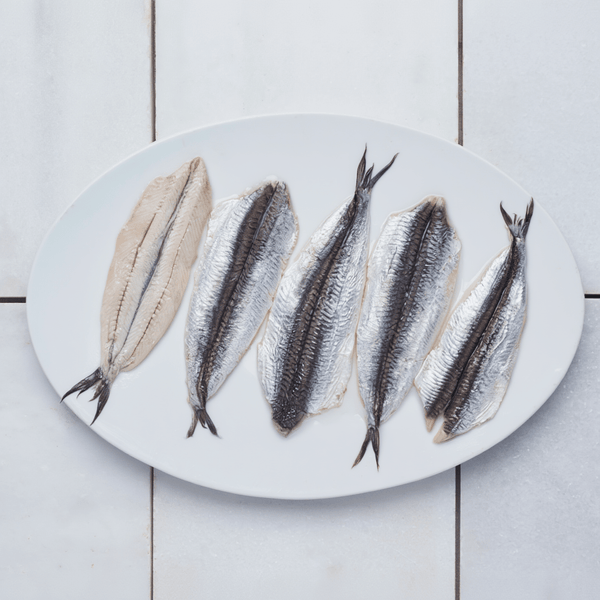
Premium anchovies have starred in some of the most memorable moments of MasterChef Spain. From the outdoor challenge in Getaria to the elimination challenges with Cantabrian anchovies, this humble oily fish has proven that it can shine in haute cuisine. We review the recipes that surprised the judges and show you how to replicate them: gourmet vinegar-marinated anchovies, perfectly fried anchovies, anchovies stuffed with seafood mousse, and crispy tempura anchovies. Four preparations, four levels of difficulty, one extraordinary ingredient.
Anchovies in MasterChef: The Unexpected Ingredient
If there's one ingredient that defines popular Spanish cuisine, it's the anchovy (boquerón). Economical, abundant, and incredibly versatile, it has been the star of legendary challenges on MasterChef Spain, demonstrating its gastronomic potential far beyond a typical bar snack.
In season 7, the judges challenged the contestants to elevate vinegar-marinated anchovies to a restaurant-quality dish. Only three contestants achieved a result that Pepe Rodríguez described as "memorable." The key, according to the judges, was understanding that the anchovy is not a minor ingredient: it is a seasonal product with a complex flavor that deserves technical respect.
Jordi Cruz has repeatedly stated that "perfect fried anchovies are harder to achieve than a signature dish with caviar." And he's right: frying is a technique that seems simple but requires absolute precision in temperature, time, and prior preparation.
Why anchovies are perfect for haute cuisine
- Intense flavor: The anchovy has one of the most complex flavor profiles among oily fish. Iodine notes, a noble bitterness, and balanced fat.
- Versatility: Raw (marinated in vinegar), fried, baked, stuffed, in tempura, pickled, on pizza, in pasta. There are no limits.
- Perfect size: Its small size allows it to be used as an individual bite, ideal for tasting menus and gourmet tapas.
- Accessible price: In season (April-October), it is one of the most affordable fish on the market, allowing for experimentation without breaking the bank.
Boquerón vs. Anchoa: The Eternal Confusion
Before diving into the recipes, let's clarify the most common confusion in Spanish gastronomy:
- Boquerón: the fresh fish (Engraulis encrasicolus). It is consumed fresh, fried, marinated in vinegar, or cooked.
- Anchoa: the same fish, but subjected to a salting and curing process for a minimum of 6 months in barrels with salt. The anchovies in oil that we buy in cans are cured boquerones.
In other words, every anchovy was once a boquerón, but not every boquerón becomes an anchovy. The curing process completely transforms the flavor, texture, and color of the fish.
In the following recipes, we will be working with fresh boquerón, unless otherwise specified. If you are looking for recipes with premium canned anchovies, you will find dedicated articles on our blog.
Recipe 1: Gourmet Vinegar-Marinated Anchovies with Black Garlic Emulsion
Vinegar-marinated anchovies are the quintessential Spanish tapa. But the version we present here goes several steps further: a controlled marinade, a black garlic emulsion that provides umami, and a restaurant-style presentation.
Ingredients (4 servings)
- 500 g fresh anchovies (very fresh, bright eyes)
- 300 ml quality apple cider vinegar
- 100 ml Sherry vinegar
- 3 fresh garlic cloves
- 4 black garlic cloves
- 100 ml extra virgin olive oil
- Fresh flat-leaf parsley
- Maldon salt
- Sweet paprika from La Vera (optional)
Preparation
- Cleaning: Remove the head and intestines from each anchovy. Open them like a book (from the back) by removing the central bone. Wash under the tap and pat dry with paper towels. This step requires patience but is essential.
- Pre-freezing: Freeze the cleaned anchovies at -20 °C for 72 hours. This is mandatory by health regulations for raw consumption.
- Marinating: Thaw the anchovies in the refrigerator. Place them in a glass container with the skin facing up. Cover with the vinegar mixture. Refrigerate for exactly 6 hours (no more, no less: too much vinegar "cooks" the flesh and makes it rubbery).
- Black garlic emulsion: Blend the black garlic with 50 ml of olive oil until a fine cream is obtained. Strain through a fine-mesh sieve. This emulsion adds the gourmet touch: deep umami without the harshness of raw garlic.
- Assembly: Drain the anchovies. Arrange them on a plate with thinly sliced fresh garlic and chopped parsley. Dress with extra virgin olive oil. Place dots of black garlic emulsion around. Finish with a flake of Maldon salt and, if desired, a touch of paprika from La Vera.
The MasterChef secret: The judges particularly value the control of the marinating time. 6 hours is the perfect point: the anchovy remains white but juicy, firm but tender. Over-marinating results in a rubbery texture; under-marinating, a raw taste without the necessary acidity.

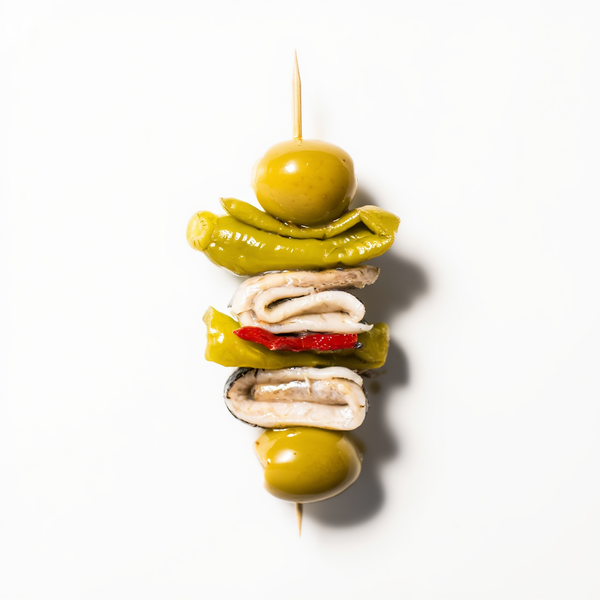
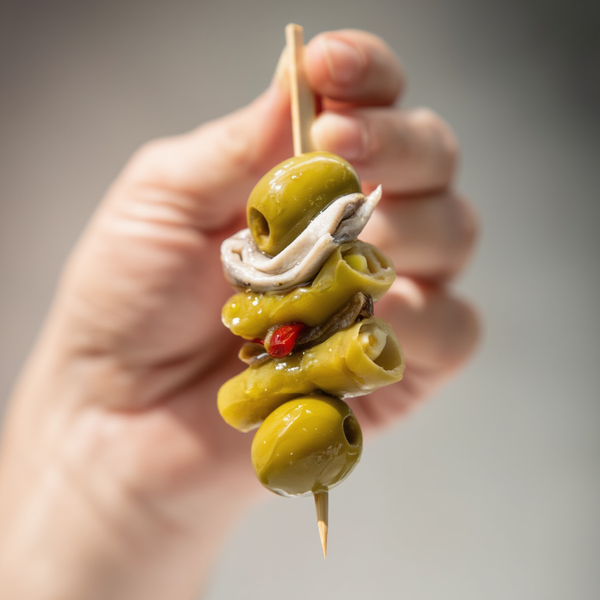
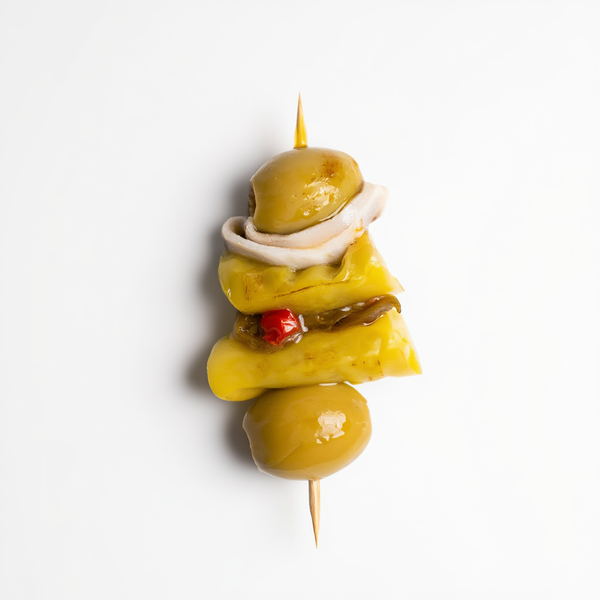
Green Olives Stuffed with Anchovies Family Size - 1.5 kg | A92
Available on Bacalalo.com with refrigerated delivery in 24-48h
Recipe 2: Perfect Fried Anchovies (The Technique That Makes the Difference)
Frying anchovies seems easy. It's not. Achieving a crunchy anchovy on the outside, juicy on the inside, without excess oil and with that perfect golden touch requires mastering three variables: prior preparation, oil temperature, and exact frying time.
Ingredients (4 servings)
- 600 g medium-sized fresh anchovies
- Wheat flour for coating (or a mix of 70% wheat + 30% chickpea for extra crispiness)
- Mild olive oil or sunflower oil for frying (minimum 1 liter)
- Fine salt
- 1 lemon
Preparation (the MasterChef technique)
- Cleaning: Remove heads and intestines. DO NOT open them like a book for frying: leave them whole, just gutted. Wash and dry VERY thoroughly with paper towels. Moisture is the number one enemy of good frying.
- Pre-salting: Salt the anchovies 15 minutes before flouring. Salt draws out surface moisture and adds flavor. Dry again with paper after salting.
- Flouring: Place the flour in a deep plate. Quickly pass the anchovies (in batches of 8-10) through the flour. Shake off the excess: the layer should be very thin, almost invisible. Excess flour = heavy, soggy fried food.
- Oil temperature: This is the most important part. The oil should be at exactly 190 °C. Use a thermometer. If you don't have one, the trick is to add a pinch of flour: if it bubbles immediately and rises to the surface, it's ready. If it burns, it's too hot.
- Frying: Place the anchovies in small batches (maximum 8-10 pieces). Fry for 90 seconds. No more. Remove with a slotted spoon to paper towels. There is no second frying for anchovies: they are so small that a single pass is enough.
- Immediate serving: Fried anchovies are served immediately. Every minute they spend out of the oil, they lose crispiness. Serve with lemon wedges.
Professional tip: If you want the extreme crispiness of Andalusian bars, add a tablespoon of cornstarch to the flour and a pinch of baking soda. Cornstarch adds crispiness and baking soda helps with browning.
Recipe 3: Anchovies Stuffed with Spider Crab Mousse
This is the signature recipe, the kind you would present in a MasterChef elimination challenge. Anchovies opened like a book, filled with a delicate spider crab mousse, breaded with panko, and perfectly fried. A bite that combines sea and sophistication.
Ingredients (4 servings)
- 16 large anchovies (filleted, boneless)
- 200 g spider crab meat
- 100 g cream cheese
- 1 tablespoon chopped chives
- Zest of half a lemon
- Salt and white pepper
- 2 beaten eggs
- Panko (Japanese breadcrumbs)
- Oil for frying
Preparation
- Spider crab mousse: Blend the spider crab meat with the cream cheese, chives, lemon zest, salt, and pepper. It should form a consistent but spreadable mousse. Refrigerate for 30 minutes.
- Filling: Place an open anchovy skin-side down. Put a teaspoon of mousse in the center. Close with another anchovy, skin-side up, forming a sandwich. Press gently to seal.
- Breading: Dip each anchovy "sandwich" in beaten egg, then in panko, pressing to ensure it adheres well.
- Frying: Fry in oil at 180 °C for 2 minutes, flipping once. The panko should be golden and crispy, the mousse hot and creamy inside.
- Presentation: Serve 4 units per person, resting on a mild aioli sauce or a lemon mayonnaise. Garnish with sprouts and a pinch of paprika.
Recipe 4: Anchovy Tempura with Yuzu Mayonnaise
Japanese tempura applied to Spanish anchovies is a fusion that MasterChef chefs adore. The ultra-light and crispy tempura batter envelops the anchovy without being heavy, allowing the fish's flavor to be the star.
Ingredients (4 servings)
- 400 g anchovies (cleaned, filleted)
- For the tempura: 100 g wheat flour, 30 g cornstarch, 200 ml very cold sparkling water, 1 egg yolk
- For the yuzu mayonnaise: 1 egg yolk, 200 ml sunflower oil, 2 tablespoons yuzu juice (or lime), salt
- Oil for frying
- Shichimi togarashi or spicy paprika
Preparation
- Yuzu mayonnaise: Whisk the yolk with the oil in a thin stream (by hand or with a mixer). When it emulsifies, add the yuzu juice and salt. Refrigerate.
- Tempura batter: Mix the sifted flour and cornstarch. Add the yolk and VERY cold sparkling water (put it in the freezer 20 minutes beforehand). Mix briefly with chopsticks, leaving lumps. Lumps are good: a perfect tempura batter is NOT smooth.
- Frying: Heat oil to 180 °C. Hold each anchovy by the tail, dip it in the batter, and directly into the oil. Fry for 60-90 seconds until the tempura is crispy and pale (not golden: good tempura is almost white).
- Serving: Serve immediately on paper towels, with yuzu mayonnaise and a touch of shichimi togarashi or spicy paprika.
MasterChef Tips for Working with Anchovies
After analyzing more than 50 MasterChef challenges featuring anchovies, these are the tips the judges constantly repeat:
- Freshness above all: The anchovy must have bright eyes, firm flesh to the touch, and a clean sea smell (not fishy). If it smells strong, don't buy it.
- Gentle cleaning: Use your fingers, not a knife, to remove the central bone. A knife can tear the flesh. With practice, you can clean 10 anchovies per minute.
- Dry, dry, dry: Jordi Cruz repeats this maxim in every frying challenge. Residual moisture in the fish causes the oil to splatter and the coating to become soggy. Pat dry with paper towels until no trace of moisture remains.
- Do not mix techniques: Anchovies for marinating in vinegar are butterflied; those for frying are left whole (only gutted). Each technique has its specific prior preparation.
- Oil temperature: 180-190 °C for classic fried anchovies, 180 °C for tempura. If the oil is not hot enough, the anchovy absorbs fat. If it's too hot, it burns on the outside and remains raw on the inside.
Nutritional Profile of Anchovies
Anchovy (boquerón) is one of the most nutritious and healthy oily fish available:
| Nutrient | Per 100 g | % Daily Value |
|---|---|---|
| Calories | 131 kcal | 6.5% |
| Protein | 20.4 g | 41% |
| Total Fat | 5.2 g | 8% |
| Omega-3 (EPA+DHA) | 1.4 g | >100% |
| Vitamin B12 | 3.7 µg | 154% |
| Vitamin D | 7 µg | 47% |
| Selenium | 36 µg | 65% |
| Phosphorus | 196 mg | 28% |
| Calcium (if eaten with bone) | 148 mg | 15% |
It particularly stands out for its omega-3 and vitamin B12 content, both essential for cardiovascular and neurological health. As a small fish, it has very low mercury levels, making it safe for frequent consumption, including for pregnant women and children.

Cantabrian Anchovy Exclusive in Olive Oil Selected Fillets - 160g
Available on Bacalalo.com with refrigerated delivery in 24-48h
Frequently Asked Questions
How long should anchovies be marinated in vinegar?
The optimal time is 6 hours in the refrigerator. Less than 4 hours does not guarantee complete "cooking" by the vinegar. More than 8 hours hardens the flesh and makes it rubbery. If you want a milder result, you can reduce it to 5 hours; if you prefer it firmer, increase it to 7. But 6 is the perfect point.
Is it mandatory to freeze anchovies before making them in vinegar?
Yes, it is mandatory by Spanish health regulations (Royal Decree 1420/2006). They must be frozen at -20 °C for at least 72 hours to eliminate anisakid larvae. There are no shortcuts: this step is not optional, it is a matter of food safety.
Which oil is best for frying anchovies?
Mild olive oil (0.4°) is the king of Andalusian frying. If you prefer a more neutral flavor, use high-oleic sunflower oil. Never use extra virgin olive oil for frying: its smoke point is lower and its intense aromas compete with the anchovy. The oil should be abundant and replaced after 3-4 uses.
What is the difference between tempura and regular batter?
Tempura uses very cold sparkling water and is barely mixed (leaving lumps), which creates an ultralight and crispy coating. Classic batter uses beaten egg and flour (heavier) or just flour (Andalusian style). Tempura adds no flavor of its own; batter does. For anchovies, tempura highlights the fish's flavor more.
What is the season for fresh anchovies?
The high season for anchovies in Spain runs from April to October, with peak quality between May and July. They can be found in winter, but with less fat (and therefore less flavor). For anchovies in vinegar and fried anchovies, always look for in-season anchovies: the difference is notable.
Can these recipes be made with frozen anchovies?
For anchovies in vinegar: yes, in fact, it is mandatory to freeze them first. For frying and tempura: fresh anchovies are always preferable, but if you only find frozen ones, thaw slowly in the refrigerator and dry VERY well before cooking. The extra moisture from thawing is the main problem.
What is the difference between anchovy and anchovy in vinegar?
Anchovies in vinegar are marinated in acetic acid (vinegar) for hours and consumed without maturation. Anchovies are salt-cured for a minimum of 6-12 months. These are completely different processes that produce different products in terms of flavor, texture, and preservation. Anchovies in vinegar last 2-3 days; anchovies in oil, months.
🛒 Products used in this recipe
Cantabrian Anchovies "00" Gourmet Selection
Premium 00 caliber, artisan preparation
38,90€
View product →⭐ 4.9/5 · Cold shipping 24-48h · Since 1990 at Mercat del Ninot
Conclusions
Anchovies prove that gastronomic greatness doesn't require expensive ingredients or impossible techniques. MasterChef has taught us season after season: a humble product treated with respect and technique becomes haute cuisine.
From anchovies in vinegar with black garlic emulsion to tempura with yuzu mayonnaise, the four recipes we've shared allow you to explore the full potential of this oily fish. The key is always the same: product freshness, precise technique, and immediate serving.
If you want to take it a step further and discover what happens when anchovies transform into premium cured anchovies after months of maturation, visit our Cantabrian anchovy collection. Since 1990 at Mercat del Ninot, at Bacalalo we select each anchovy with the discernment that only over 30 years of experience provides.