

Black and White Cod is a gourmet recipe that combines the nobility of salt cod with the intensity of black truffle and porcini mushrooms. A haute cuisine dish that you can prepare at home using the pil-pil technique and finished with truffle oil. In this article, we guide you step-by-step through this recipe that merges seafood with the best forest mushrooms, creating a spectacular visual and flavor contrast. Marc González Sáez, from Mercat del Ninot in Barcelona, teaches you a recipe that has been serving the most discerning palates since 1990.
The Concept: Black and White on the Plate
The name "black and white" is not arbitrary. It is a declaration of visual and gastronomic intent. The white is provided by the cod: its pearly flesh, the creamy and pale pil-pil emulsion. The black comes from the sautéed porcini mushrooms — dark, meaty, with a wet forest aroma — and the grated black truffle that crowns the dish like a final perfume.
This recipe was born in the kitchens of Basque haute cuisine, where the combination of cod and wild mushrooms has a long tradition. Chefs like Martín Berasategui and Pedro Subijana have explored this fusion, demonstrating that cod does not need seafood ingredients to shine: forest products complement it masterfully.
The contrast is not just visual. The cod provides marine salinity, flaky texture, and natural gelatin. The porcini mushrooms add earthy umami, meaty texture, and deep flavor. The truffle elevates everything with its penetrating aroma, which is at once mineral, musky, and slightly fatty. Together, they create a dish that stimulates all the senses.
Ingredients (4 servings)
For the cod
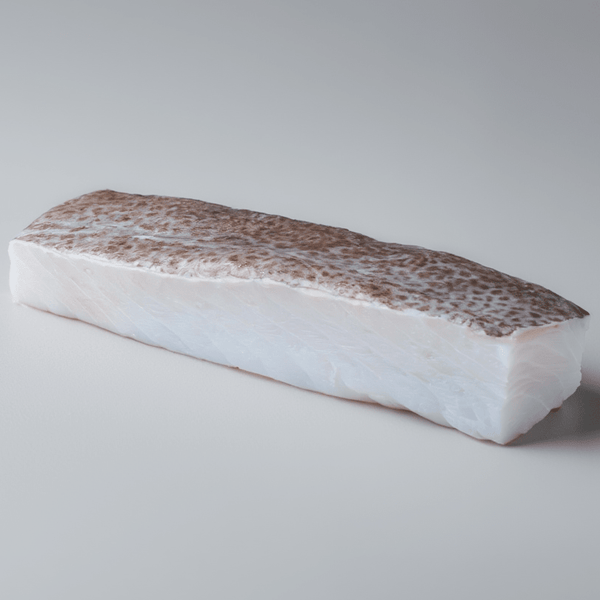
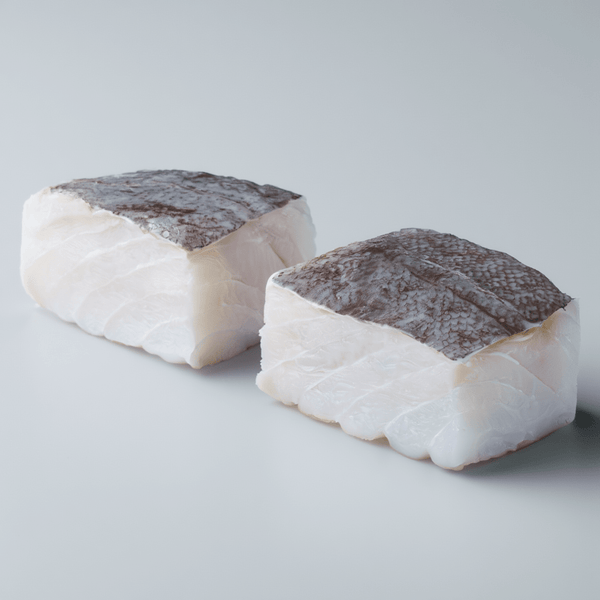
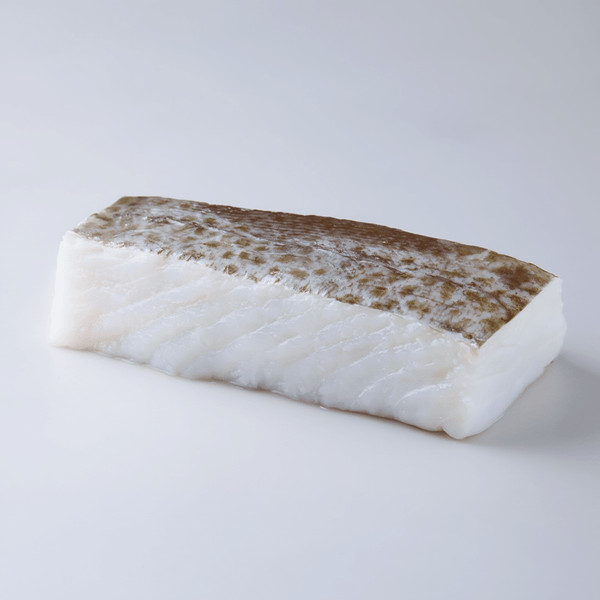
- 4 desalted cod loins, about 180-200g each, thick and with skin
- 200 ml mild extra virgin olive oil (Arbequina or mild Picual)
- 4 cloves garlic, sliced
- 1 dried chili (optional)
For the porcini and truffle
- 400 g fresh porcini mushrooms (Boletus edulis) (or 80 g rehydrated dried porcini)
- 2 winter black truffles (Tuber melanosporum), about 30-40g in total
- 2 tablespoons black truffle oil
- 1 small red onion, finely chopped
- 2 cloves garlic, minced
- 30 g butter
- Fresh parsley, chopped
- Salt and black pepper
Truffle and Porcini: Kings of the Forest
Understanding these ingredients is key for the dish to work.
Porcini mushrooms (Boletus edulis) — also called ceps or king boletes — are probably the most prized mushrooms in the world, along with truffles. Their texture is meaty, firm, almost like steak. Their flavor is intensely umami: earthy, nutty, with a sweet undertone. Fresh ones are available in autumn (September-November) and in spring in some areas. Out of season, dried porcini are an excellent alternative: they concentrate the flavor and only need 30 minutes of soaking in warm water. That filtered soaking water is liquid gold for sauces.
Black truffle (Tuber melanosporum) is the diamond of gastronomy. Its aroma is unmistakable: earthy, musky, with notes of garlic, honey, and cocoa. Winter truffle (December-March) is the most intense and the most expensive, with prices ranging from €800 to €2,000/kg. For this recipe, you need a small amount — 30-40g is enough — because truffle is not a main ingredient but a flavor enhancer. It is grated at the last moment, never cooked (heat destroys its volatile aromatic compounds).
If fresh truffle is out of budget, good quality truffle oil (made with real truffle, not synthetic 2,4-dithiapentane flavoring) is a worthy alternative. Read the label: it should say "olive oil with black truffle," not "truffle aroma."
The Pil-Pil Technique for this Recipe
Pil-pil is the quintessential Basque technique for cod. It involves confiting cod at a low temperature in olive oil and then emulsifying that oil with the fish's natural gelatin, creating a creamy sauce without adding any thickeners. It is the most elegant sauce in Spanish cuisine.
For pil-pil to work, you need:
- Cod with skin: the skin is rich in collagen which, when heated, turns into gelatin. Without skin, the emulsion will not form.
- Low temperature: between 60 and 70 °C. If the oil smokes or bubbles, it is too hot. The cod should confit slowly, never fry.
- Circular motion: once the cod is removed, the oil is moved in constant circles in the casserole (preferably earthenware) until it emulsifies. Some recipes move the casserole; others use a sieve to stir. Patience is key.
For more details on the pil-pil technique, consult our complete guide to cod pil-pil.

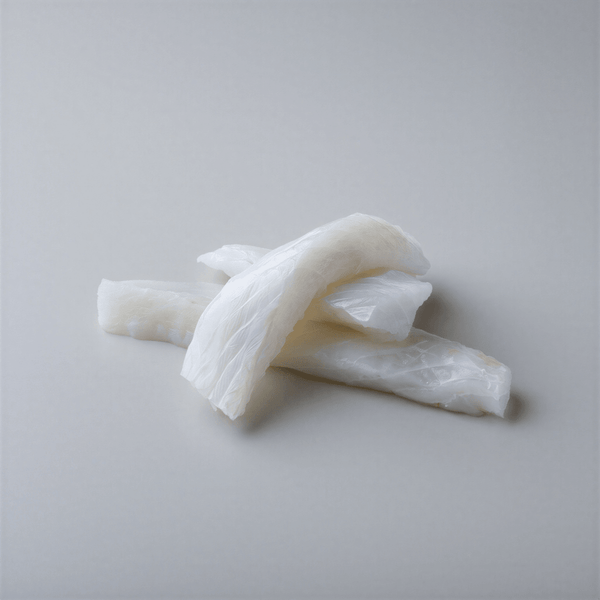
Pil-pil starts with the cod.
Available at Bacalalo.com with refrigerated 24-48h shipping
Complete Step-by-Step Preparation
Step 1: Prepare the porcini mushrooms (15 minutes)
If using fresh porcini, clean them with a damp cloth or a soft brush. Never submerge them in water: they absorb liquid like sponges and lose texture. Cut the caps into 5-6 mm thick slices. If the stems are firm, cut them into cubes.
In a large skillet over high heat, warm the butter with a tablespoon of olive oil. When the butter foams, add the porcini in a single layer (do this in batches if necessary). Do not move them for 2 minutes: they need to sear and brown. Flip them over and brown for another 2 minutes. Add the minced garlic and red onion, reduce the heat to medium, and cook for 3-4 more minutes until the onion is translucent. Season with salt, pepper, and parsley. Set aside.
Step 2: Confit the cod and make the pil-pil (20 minutes)
In an earthenware casserole (if possible) or a heavy-bottomed pan, heat the 200 ml of olive oil over very low heat. Add the sliced garlic and, if desired, the chili. When the garlic begins to lightly brown, remove and set aside (we will use it for garnish).
Place the cod loins in the oil skin-side up. The oil should be at about 60-65 °C: if you use a thermometer, perfect; otherwise, the oil should shimmer slightly but not bubble. Confit for 8-10 minutes on the first side. You will see the flesh turn opaque and begin to release a white gelatin. Flip it over (skin-side down) and confit for 4-5 more minutes.
Carefully remove the loins and set them aside on a warm plate, covered with aluminum foil. Now for the emulsion: with the casserole off the heat (or on minimum heat), start moving the oil in constant circles. You can use a fine mesh sieve or the casserole itself with a back-and-forth motion. In 3-5 minutes, the oil will begin to thicken and whiten, forming the pil-pil sauce. If it doesn't emulsify, add a teaspoon of the gelatinous juice released by the cod on the plate and continue stirring.
Step 3: Assemble the dish (5 minutes)
Briefly reheat the porcini mushrooms in their pan. Heat the cod loins for 1 minute in the pil-pil sauce (without boiling). Now, grate the fresh black truffle with a fine grater or truffle slicer.
Restaurant-Style Plating
The plating of this dish is part of the experience. Use white or dark plates to maximize contrast:
- Place a base of pil-pil sauce in the center of the plate with a spoon, forming a generous pool.
- Place the cod loin in the center, skin-side up.
- Distribute the sautéed porcini mushrooms around and partially over the cod.
- Grate the black truffle generously on top — the thin slices should fall like flakes.
- Finish with a drizzle of truffle oil, the golden sliced garlic, and a sprig of fresh parsley.
The aroma of freshly grated truffle, combined with the warm pil-pil and porcini, creates a sensory experience that justifies every minute of preparation.
Variations and Adaptations
With dried porcini mushrooms
Rehydrate 80g of dried porcini mushrooms in 300ml of warm water for 30 minutes. Drain them and filter the soaking water through a sieve lined with kitchen paper. Use this water to enrich the sauce: add 2-3 tablespoons to the pil-pil while emulsifying. Rehydrated porcini have a more concentrated flavor than fresh ones, so you need less quantity.
Without fresh truffle
Replace fresh truffle with 2 generous tablespoons of quality truffle oil (real truffle, not synthetic) and a teaspoon of black truffle paste. The result will not be identical, but it will maintain the essence of the dish for a fraction of the cost.
With mixed mushrooms
If you can't find porcini, combine seasonal mushrooms: chanterelles (girolles), black trumpets, and king oyster mushrooms. Each adds a different nuance, and the overall effect is extraordinary. Avoid common button mushrooms, which have too much water and too little flavor for this dish.
Wine Pairing
A dish of this caliber deserves a wine of equal standing:
- Aged white wine: a barrel-fermented Rioja white (Viura + Malvasía) or a white Burgundy (Chardonnay). The wood aging complements the earthy notes of the truffle and porcini.
- Champagne Blanc de Blancs: the crisp acidity and fine bubbles cleanse the palate between bites of the unctuous pil-pil.
- Godello from Valdeorras: mineral, fresh, with notes of white fruit and a hint of smokiness that harmonizes with the mushrooms.
🛒 Related products from Bacalalo
⭐ 4.9/5 · Refrigerated shipping 24-48h · Since 1990 at Mercat del Ninot
Frequently Asked Questions
When is black truffle season?
The most aromatic winter black truffle (Tuber melanosporum) is in season from December to March. Summer truffle (Tuber aestivum), which is milder and more economical, runs from May to September. For this recipe, winter truffle is ideal, but summer truffle works if you compensate with more truffle oil.
Can I use frozen porcini mushrooms?
Yes, but with nuances. Frozen porcini release a lot of water when thawing. Do not thaw them beforehand: place them directly in a very hot pan and let the water evaporate before they start to brown. The texture will be slightly inferior to fresh ones, but the flavor remains good.
Why isn't my pil-pil emulsifying?
The most common causes are: oil too hot (the emulsion breaks), cod without skin (lack of gelatin), or lack of patience (it needs to be moved for several minutes). If it doesn't emulsify, remove the oil to a bowl, add a teaspoon of gelatinous water from the cod, and gradually reincorporate the oil while stirring, as if making mayonnaise.
Is truffle cooked or added raw?
Fresh black truffle is always added raw, grated at the last moment over the warm dish. The residual heat of the dish releases the truffle's volatile aromas. If you cook it, it loses 60 to 80% of its aroma. Truffle oil is also added at the end, never during cooking.
How much does it cost to prepare this recipe?
The cost varies depending on the truffle. Without fresh truffle (using only quality truffle oil, about €15/bottle), the dish costs around €35-€45 for 4 people. With fresh winter truffle (30-40g at about €1,200/kg), add another €35-€50. Fresh porcini in season cost €20-€40/kg. It is an occasion dish, no doubt.
What is the difference between natural and synthetic truffle oil?
Natural truffle oil is made with olive oil infused with real truffle. It has a complex, subtle aroma, with earthy and mineral nuances. Synthetic oil uses 2,4-dithiapentane, a chemical compound that mimics the smell of truffle but with a flat, artificial, and intense profile. Read the label: if it says "truffle aroma" or "flavoring," it's synthetic. Look for "olive oil with black truffle (Tuber melanosporum)."
Black and white cod is a dish that demands respect for every ingredient. There are no shortcuts: good desalted cod, quality porcini, authentic truffle, and the patience of a well-made pil-pil. The result is a Michelin-star-worthy restaurant dish that, with the right instructions, you can replicate in your kitchen. As we say at Mercat del Ninot: in true cooking, the best dishes are those that let the product speak for itself.