Creamy cod and sea urchin rice is a dish where the product speaks for itself: a creamy rice with cod bone broth, confit fillets, and sea urchin roe melted in the final cooking. Creaminess, depth of flavor, and an iodized touch that connects directly with the Mediterranean. It's not a difficult rice dish, but it demands impeccable raw ingredients. I'll show you step-by-step how to achieve that Michelin-starred restaurant texture in your kitchen.
Why the cod + sea urchin combination works
Cod and sea urchins share something fundamental: marine umami. But they express it in completely different ways. Cod provides body, meaty texture, and a soft, deep salinity. Sea urchins provide an iodized, sweet, and creamy explosion that is impossible to replicate with any other ingredient.
When you combine them in a creamy rice, something special happens. The cod broth (made with bones and skin) gives the rice a gelatinous and unctuous base. The rice absorbs that richness and transforms it into creaminess. And the sea urchin roe, added at the end, melts with the residual heat and creates a silky, orange-colored finish, with a flavor unlike anything else.
It is a dish eaten in restaurants such as Quique Dacosta, Rías de Galicia, or Can Jubany, where seafood rice dishes are their signature. But the technique is not complex: what makes the difference is the quality of the product and respect for the cooking times. Nothing more.
Complete ingredients (4 servings)
For the cod broth
- Bones and skin from 500 g of desalinated cod (reserve the fillets for the dish)
- 1 liter of water
- 1 leek (green part)
- 1 carrot
- 1 celery stalk
- 1 bay leaf
- 5 black peppercorns
For the rice
- 320 g Bomba rice (or Calasparra)
- 1 medium onion, very finely chopped
- 2 cloves of garlic, minced
- 100 ml dry white wine
- 50 ml liquid cream 35% fat
- 30 g cold butter (for the final whisking)
- Extra virgin olive oil
- Saffron (a few threads, optional but recommended)
- Salt
For the confit cod
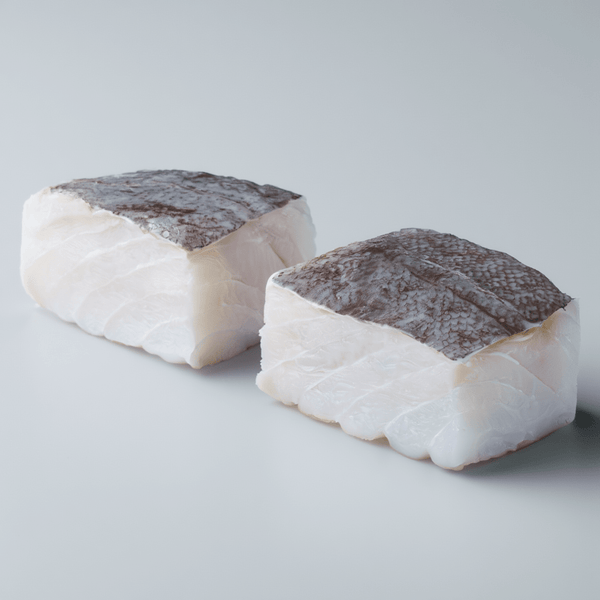
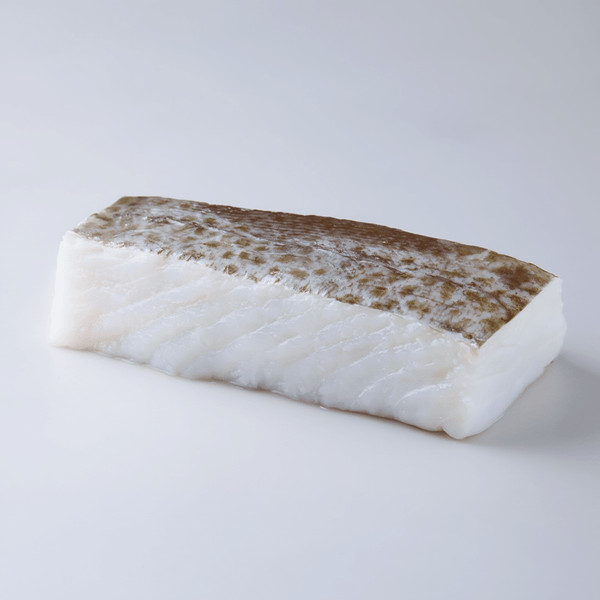
- 400 g desalinated cod loin (in 4 portions)
- 200 ml extra virgin olive oil
- 2 cloves of garlic
- 1 sprig of thyme
For the finishing
- 12 sea urchin roe (3 medium sea urchins, or buy cleaned roe)
- Fresh chives, chopped
- Extra virgin olive oil for finishing
- Freshly ground black pepper

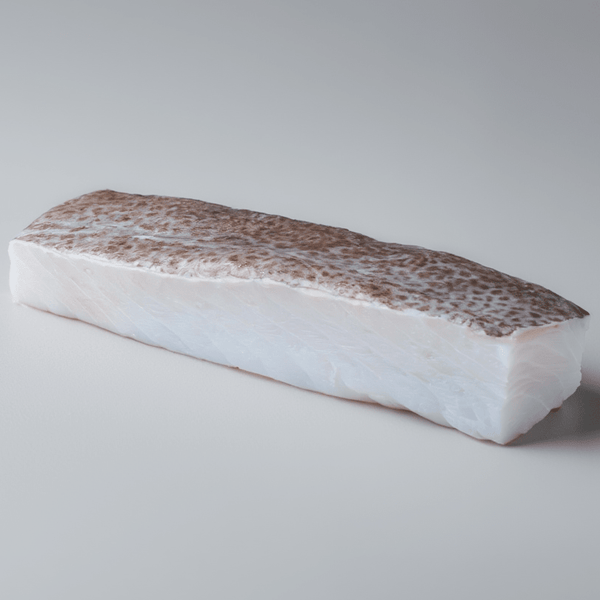
Smoked Cod in Oil, Thin Slices - 1000g
Available on Bacalalo.com with refrigerated 24-48h shipping
Step 1: The cod bone and skin broth
The broth accounts for 80% of this rice dish's success. Without a good broth, you'll have tasteless rice no matter how much sea urchin you add.
- Remove skin and bones from the cod fillets. Reserve the clean fillets for confiting. The skin and bones are your gold.
- In a pot, place the skins, bones, leek, carrot, celery, bay leaf, pepper, and cold water. Medium heat: bring to a gentle boil (never bubbling, or the broth will be cloudy).
- Once it comes to a boil, reduce heat to minimum. Skim off any impurities that rise to the surface. Cook for 30-35 minutes. No more: cod bones release bitterness after 40 minutes.
- Strain with a fine sieve or cheesecloth. You should have about 800-900 ml of slightly gelatinous broth, with a color between pale gold and ivory. Keep warm.
Professional tip: If you want to enhance the flavor, roast the bones in the oven at 180°C for 10 minutes before making the broth. Roasting adds a more complex base flavor with caramelized nuances. It's an extra step that pays off.
Step 2: Soffritto and the start of the rice
- In a wide casserole (like a shallow paella pan or clay pot), heat 3 tablespoons of olive oil over medium heat.
- Sauté the very finely chopped onion for 8-10 minutes until translucent and soft. It should not brown: we are looking for sweetness, not caramelization.
- Add the minced garlic and sauté for 1 more minute.
- Increase heat to medium-high. Add the Bomba rice and sauté for 1-2 minutes, stirring so it gets coated in oil (the "nacarado" or pearling). The grains should look slightly translucent at the edges.
- Pour in the white wine and stir until the alcohol evaporates (30-40 seconds).
- Add the saffron threads if using (previously toasted for 10 seconds in a dry pan and crumbled).
Step 3: Cooking the rice and the cream technique
This is where we separate homemade rice from restaurant rice. The key technique is the gradual addition of broth, like a risotto, but with Bomba rice that absorbs more liquid and retains texture better.
- Add a first ladle of hot broth (about 200 ml). Stir gently. Reduce heat to medium-low.
- When the rice has absorbed almost all the broth, add another ladle. Repeat the process. Total cooking time: 16-18 minutes for Bomba rice.
- At 12 minutes, taste a grain: it should be cooked on the outside but with a hard core (al dente). This is the moment to add the liquid cream.
- Pour in the cream and mix. The cream does two things: fat that coats the grains (creaminess) and a milky background that softens the marine intensity of the broth.
- At 16 minutes, remove from heat. The rice should be perfectly cooked, neither loose nor clumpy, with a consistency between creamy and soupy. Resting will allow it to set.
The final whisking: Off the heat, add the 30 g of cold butter cut into cubes and stir in circular motions for 30 seconds. The cold butter creates an emulsion that gives the rice that silky restaurant texture. It's the same principle as the "mantecare" in Italian risotto.
Step 4: Confit cod at low temperature
While the rice is cooking, prepare the cod. Confit is the perfect technique because it gives a juicy, silky texture that flakes but without losing structure.
- Put the olive oil in a saucepan with the crushed garlic cloves and thyme. Heat to 65-70 °C (critical temperature: above 80 °C the cod dries out).
- Introduce the cod fillets. They should be completely covered in oil.
- Cook for 12-15 minutes at a constant temperature. You can check doneness by piercing with a toothpick: it should go in without resistance but the cod should maintain its shape.
- Remove and reserve on absorbent paper. Do not break the fillets: we want whole pieces to place on the rice.
Step 5: Sea urchins and finishing
This is the stellar moment. The sea urchin roe is not cooked: it melts with the residual heat of the rice. Any direct cooking will ruin them (they become rubbery and lose flavor).
- Divide the creamy rice among 4 warm deep plates.
- Place a confit cod fillet in the center of each plate, lightly broken to show the flaked texture.
- Distribute 3 sea urchin roe per plate around the cod. The heat from the rice will temper them without cooking them.
- Finish with a drizzle of quality extra virgin olive oil, chopped chives, and a touch of black pepper.
- Serve immediately. This dish doesn't wait: sea urchins oxidize quickly and the rice loses creaminess as it cools.
The creamy rice technique: professional tips
A perfect creamy rice has rules that always apply, regardless of the ingredients:
- Rice:broth ratio: for creamy rice, 1:3 (320 g rice, 960 ml broth). For soupy rice, 1:3.5. For dry paella, 1:2.5.
- Bomba or Calasparra rice: these are the only ones that withstand long cooking without overcooking. Regular round grain rice overcooks in 12 minutes and the grain bursts.
- Broth always hot: if you add cold broth, you stop the cooking and the grain does not absorb evenly. Keep the broth in a pot nearby, over low heat.
- Stir, but gently: creamy rice needs stirring to release starch (which is what creates the creaminess). But if you stir too much, the grain breaks and becomes pasty.
- 2-minute rest: after whisking, cover the rice and wait 2 minutes before plating. The rice settles and the final texture is more uniform.
- Warm plate: always serve on preheated plates (2 minutes in the oven at 60 °C). A creamy rice in a cold plate loses temperature and texture in the first minute.
Pairing
This rice calls for a full-bodied, acidic wine that cuts through the richness without competing with the sea urchin.
- Albariño with crianza (Rías Baixas): salinity, body, and acidity. The best option.
- Godello del Bierzo: more structure than Albariño, with mineral notes that connect with the sea urchin.
- Champagne Brut: if you want to celebrate. The bubbles cleanse the palate between each spoonful and Champagne has the perfect acidity to pair with sea urchins.
- Chablis Premier Cru: minerality, acidity, a touch of oak butter that harmonizes with the whisking of the rice.
Variations and substitutions
- Without sea urchins: substitute with trout roe or salmon roe. It's not the same, but they provide a saline burst and an interesting texture. Or use a tablespoon of grated bottarga (cured mullet roe) over the rice.
- With cod tripe: add cod tripe cut into strips to the soffritto. They provide a gelatinous texture that enhances creaminess.
- Black version: add a tablespoon of squid ink to the broth. The rice turns black, dramatic, and the contrast with the orange sea urchins is visually spectacular.
- With kokotxas: substitute the confit fillets with cod kokotxas "al pil pil." The gelatin from the kokotxas melts with the rice, and the result is even more unctuous.

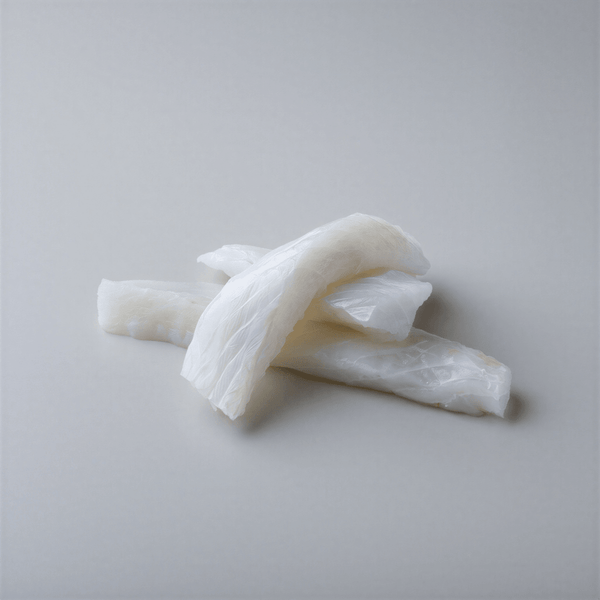
Universal Dry Shredded Cod - 500g
Available on Bacalalo.com with refrigerated 24-48h shipping
Frequently asked questions
Can canned or preserved sea urchins be used?
Canned sea urchins (like Japanese uni paste) work for flavor, but the texture is not comparable. If you can't find fresh sea urchins, use uni paste by mixing it directly with the rice during the whisking phase (off the heat). It adds flavor but you lose the visual effect and the burst of each roe in the mouth.
Can this rice be made in a Thermomix?
The cod broth yes (20 min / 100 °C / speed 1, then strain). The rice in a Thermomix turns out well but loses some of the creaminess achieved in a wide casserole with natural evaporation. If using a Thermomix: 16 min / 100 °C / spoon speed / reverse turn, with the hot broth added all at once.
How much bomba rice per person for a creamy rice dish?
The standard measure is 80 g of bomba rice per person as a main course. If it's a starter, 60 g is enough. For this cod and sea urchin rice, which is hearty, 80 g as a single dish is perfect.
Are the sea urchins cooked or served raw?
They are served raw (or rather, tempered). The sea urchin roe is placed on the hot rice immediately after plating: the residual heat tempers and slightly melts them without cooking. Directly cooking a sea urchin (boiling, frying, or heavily grilling) ruins its texture and flavor. They are a product eaten raw or barely tempered.
Can creamy rice be made in advance?
It is not recommended. Creamy rice loses its texture in 15-20 minutes: the starch gelatinizes and goes from creamy to pasty. It's a last-minute dish. What you can prepare beforehand is the broth (up to 48 hours in the fridge) and the confit cod (up to 24 hours). The rice is made just before serving.
What is the difference between creamy, mellow, and soupy rice?
The difference lies in the proportion of broth and the final texture. Creamy: the rice flows slowly when tilting the plate (ratio 1:3). Mellow: somewhat looser, with a little visible broth between the grains (1:3.2). Soupy: abundant visible broth, eaten with a spoon (1:3.5 or more). This cod and sea urchin rice is creamy bordering on mellow.
🛒 Related products from Bacalalo
Extra Desalinated Cod Muzzle — 900g
Icelandic Gadus morhua, artisanally desalinated
44,90€
View product →⭐ 4.9/5 · Refrigerated shipping 24-48h · Since 1990 at Mercat del Ninot
Conclusions
Creamy cod and sea urchin rice is not an everyday dish: it's a dish to celebrate, to impress, to remember. It's the kind of preparation that demonstrates that Spanish seafood cuisine, when made with quality products and technique, is unrivaled in the world.
The key is not to complicate what doesn't need to be complicated: a good cod fish bone broth, rice cooked patiently, perfectly confited cod, and intact, fresh sea urchin roe, carefully placed. Each component is simple. The magic is in the sum.