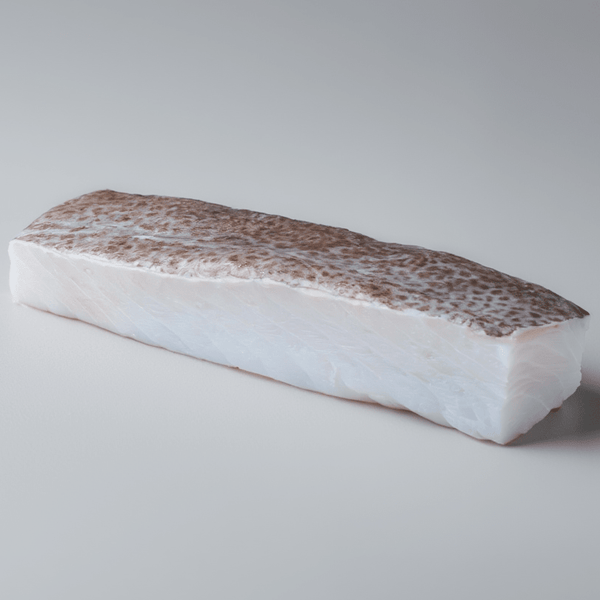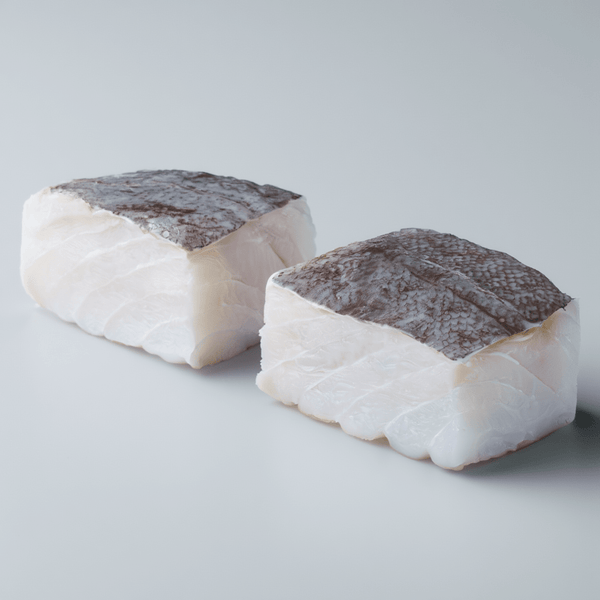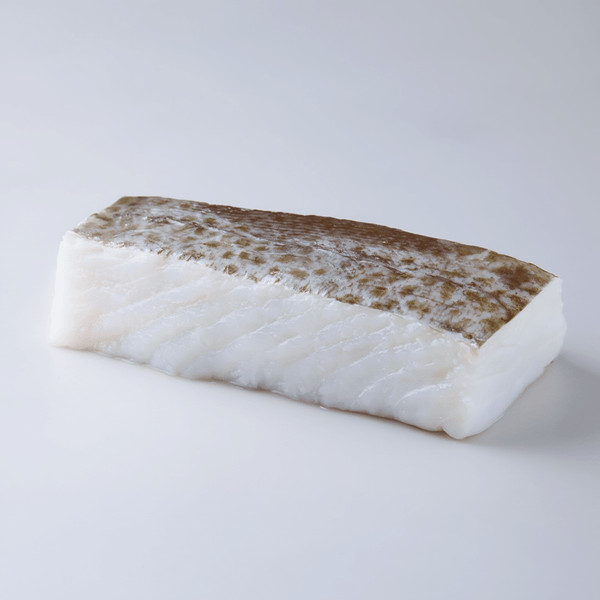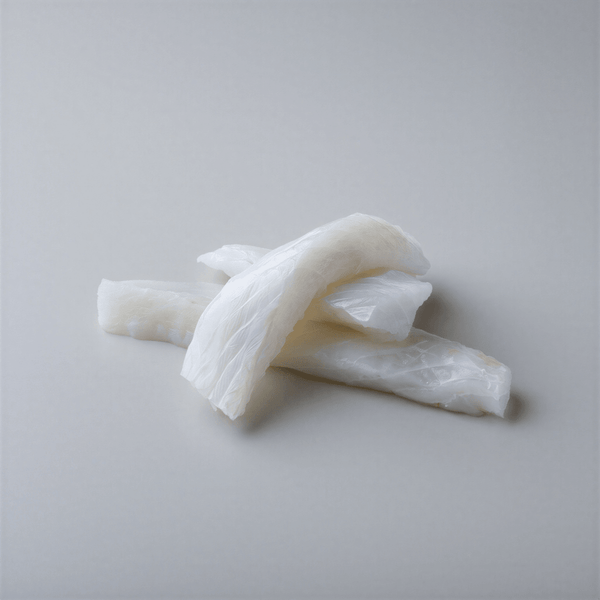
Cod from Iceland vs. Norway: same species (Gadus morhua), two distinct stocks. Iceland: waters 4–8 °C, year-round fishing, individual transferable quota since 1990, catch ~210,000 t/year. Norway: arctic waters -1 to 4 °C, two stocks (migratory Skrei and coastal), catch ~340,000 t/year. In terms of texture, Icelandic cod is slightly fattier and whiter; Norwegian cod is firmer. Both are excellent when salted—Icelandic cod dominates the Catalan and Portuguese markets, while Norwegian cod dominates the Basque and Northern European markets.
Same species, two distinct stocks
Icelandic cod and Norwegian cod are the same species: Gadus morhua. The difference lies in the biological stock (reproductively isolated populations living in different waters) and the fishing culture of each country.
| Characteristic | Iceland | Norway |
|---|---|---|
| Scientific name | Gadus morhua | Gadus morhua |
| FAO Area | 27.Va | 27.I and 27.IIa (Barents) / 27.IIa (coastal) |
| Water temperature | 4–8 °C | -1 to 4 °C (arctic) / 4–7 °C (coastal) |
| Typical depth | 100–400 m | 50–600 m |
| Annual catch 2026 | ~210,000 t | ~340,000 t total |
| Individual quota | ITQ (transferable) | Fleet quotas |
| Management system since | 1990 | 1976 (Russia cooperation) |
| MSC certification | Yes (entire fishery) | Yes (Norwegian-Arctic stock) |
Real biological differences
Three biological traits differentiate the cod from the two stocks:
- Fat content: Icelandic cod has slightly more intramuscular fat (1.0–1.4 g/100 g) than coastal Norwegian cod (0.8–1.5 g/100 g) or Arctic Skrei (0.4–0.8 g/100 g). This gives it a juicier texture when cooked.
- Muscle color: Icelandic cod tends to be perceptibly whiter, especially when desalted. A visible but small difference.
- Average size: Icelandic cod typically has catch sizes of 3–8 kg; coastal Norwegian cod 2–6 kg; Skrei 4–10 kg (it is the largest due to its advanced maturity).
Fishing and management: Icelandic ITQ vs. Norwegian cooperation
Iceland implemented the ITQ (Individual Transferable Quotas) system in 1990: each vessel receives a fixed annual quota based on historical data, transferable among operators but limited by the national total. It is considered a global model for sustainable management. The FAO has cited it as a case study since 2003.
Norway has managed the Norwegian-Arctic stock since 1976 through the Joint Norwegian-Russian Fisheries Commission, as the stock crosses the maritime border between the two countries. Annual quotas are negotiated bilaterally. The coastal Norwegian stock is managed unilaterally by Norway.

Compared traditional processing
Traditional salted-dried:
- Icelandic: dry salt stacked in cold cellars for 21–28 days, then partially air-dried. The process favors a loose texture and whiteness.
- Norwegian: brine + dry salt, with drying in controlled chambers. A slightly faster and more uniform process. Firmer texture.
Modern industrial: both countries use similar processes today (saturated brine + controlled drying). The difference between individual brands is usually greater than between countries.
Preferred cuts:
- Iceland exports more in "split" pieces (butterfly, opened flat).
- Norway exports more in fillets or clean loins.
Verifiable organoleptic differences
In blind tastings comparing equivalent desalted pieces (same cut, same desalting time):
| Attribute | Icelandic | Norwegian |
|---|---|---|
| Flesh color | Pearly white | Creamy white |
| Raw texture | Loose, flaky | Firm, compact |
| Cooked texture | Creamy, separates easily | Firm, holds shape |
| Flavor | Mild, sweet marine | More concentrated, mineral salinity |
| Behavior in pil-pil | Good emulsion | Excellent emulsion due to collagen |
| Behavior on the grill | Tends to fall apart | Holds shape |
Market shares in Spain
Approximate data from Mercat Central Mercabarna and AECOC 2024:
- Catalonia and Levante: ~65% Icelandic cod, ~25% Norwegian, ~10% others.
- Basque Country and Cantabria: ~55% Norwegian, ~30% Icelandic, ~15% others.
- Central Madrid: ~50% Icelandic, ~40% Norwegian, ~10% others.
- Andalusia and South: ~55% Norwegian, ~30% Icelandic, ~15% Faroe/Brazil.
The pattern reflects historical routes: Catalonia accessed Icelandic cod via Portugal since the 16th century; the Basque Country traded directly with Norway via Bilbao-Bergen.
Which origin to choose per recipe
| Recipe | Recommended origin | Reason |
|---|---|---|
| Esqueixada | Icelandic | Loose texture + visual whiteness |
| Brandada | Icelandic | Emulsifies better due to slightly higher fat content |
| Catalan fritters (Bunyols catalanes) | Icelandic | Tradition and dough texture |
| Empedrat | Icelandic | Catalan tradition |
| Pil-pil | Norwegian | Basque tradition + firmness |
| A la vizcaína | Norwegian | Basque tradition + cooking endurance |
| Bacalao a la llauna | Indifferent | Any quality cod works |
| Baked cod (gratinated) | Norwegian | Maintains shape under sauce layer |
| Cod omelet | Indifferent | Shredded, not distinguishable |
| Catalan fritters | Icelandic | Tradition + flavor in dough |
Which is better? An honest conclusion
📌 Honest note: There is no universal "best." It depends entirely on the recipe and your palate. If you're cooking Catalan traditional dishes, Icelandic cod is historically more suitable. If it's Basque tradition, then Norwegian. In 9 out of 10 blind tastings with people without culinary training, an Icelandic premium cod is indistinguishable from an equally high-quality Norwegian cod when properly cooked.
What does change significantly are the extremes of quality within each origin: an industrial Icelandic cod from a young fish can be clearly worse than an artisanal Norwegian cod of extra size. The range of quality within one origin is much greater than the difference between origins.


Related articles
- Cod from Norway vs. Iceland — an honest comparison
- Types of cod: Gadus morhua, Skrei, Iceland, and Faroe
- View the entire Bacalalo cod collection
- Desalted cod ready to cook
- Traditional salted dried cod
Frequently asked questions
Is there a genetic difference between Icelandic and Norwegian cod?
No, both are Gadus morhua. There is a population difference, however: they are reproductively isolated stocks (different seas, they do not interbreed). There are slight differences in genetic markers (Hauser & Carvalho 2008 studies) but they are not subspecies. The real difference lies in their habitat: water temperature, diet, and lifestyle (migratory vs. sedentary).
Which one tastes better?
It's a matter of preference and recipe. Icelandic cod: whiter flesh, slightly fattier (1.0–1.4 g/100 g), flakier texture. Ideal for esqueixada, brandada, cold salads. Norwegian cod: firmer flesh, slightly leaner (0.6–1.0 g/100 g), withstands intense cooking better. Ideal for pil-pil, llauna, frying.
Which is more expensive: Icelandic or Norwegian cod?
Historically, Icelandic cod has been more expensive in the Mediterranean market due to Portuguese and Catalan demand. In 2026, wholesale prices have equalized: both ~€5.5–7/kg for whole dried-salted cod for professional consumption. For final consumption, it depends more on the brand, cut, and processing than on the origin.
Which is more sustainable?
Both have MSC certification. Iceland stands out for implementing individual transferable quotas (ITQ) since 1990, considered a global model. Norway manages the Norwegian-Arctic stock through bilateral cooperation with Russia (Joint Norwegian-Russian Fisheries Commission) since 1976. ICES rates both stocks as within safe biological limits in 2025.
Does Icelandic cod always come from Iceland, or is it fished in other waters?
The label "Icelandic cod" refers to the stock fished in the Icelandic EEZ (200 miles around the island). The vessels can be Icelandic, but also Danish, British, or Norwegian with quotas. MSC traceability guarantees FAO 27.Va (Iceland) catch area versus 27.I and 27.II (Norway-Barents).
What is the difference in processing between the two?
Traditional Icelandic processing: dry salt stacked in cold cellars for 21–28 days, then partially air-dried. Traditional Norwegian processing: brine + dry salt, dried in controlled chambers. The modern industrial difference is minimal: both use similar processes today. What does change is the cut: Iceland exports more "split" (butterfly) pieces, Norway more clean fillets/loins.
Which is used more in Spain?
Catalonia and Levante: Icelandic dominates (60–70% traditional market share). Basque Country and North: Norwegian dominates (50–60%). This is due to historical routes: Catalan trade with Iceland was consolidated via Lisbon from the 16th century; Basque trade accessed Norway directly.
For making fritters or brandade, which one to use?
For fritters: either works if well desalinated. We recommend flaked Icelandic dried-salted cod due to its better ability to absorb flavor in the dough. For brandade: Icelandic for its creamier texture when emulsified. For more details, in the Bacalalo catalog, we work with both origins selected according to the cut.
And for a recipe like bacalao a la vizcaína?
Basque tradition = Norwegian cod. The Vizcaína sauce was historically made with cod that arrived via Bilbao from Bergen, Norway. Desalinated Norwegian loin or cheek better maintains the integrity of the loin during cooking with the sauce.
Is there a difference in mercury content?
Not relevant. Both are white fish with low trophic levels, with an average mercury content of 0.05–0.12 mg/kg (well below the EU limit of 0.3 mg/kg for cod). AESAN includes cod in the green list recommended for pregnant women and children without origin restrictions.