Summary: Golden cod — or bacalhau à Brás — is Portugal's most iconic cod dish. Strips of rehydrated cod, crispy potato sticks, caramelized onion, and creamy scrambled eggs melt together in a comforting dish that can be prepared in under 45 minutes. This is the original Portuguese recipe, with the tricks that make all the difference.
Table of Contents
- History of Bacalhau à Brás: From Lisbon Tavern to National Dish
- Ingredients for Golden Cod (Serves 4)
- Step-by-Step Recipe
- The Secret: The Scrambled Egg Technique
- Chef's Tips for Perfect Golden Cod
- Variations of Bacalhau à Brás
- Pairing: What Wine to Serve
- Nutritional Information
- Frequently Asked Questions
- Conclusion
History of Bacalhau à Brás: From Lisbon Tavern to National Dish
Portugal boasts over 1,000 cod recipes — or so popular tradition claims. Among them all, bacalhau à Brás (golden cod) is probably the most beloved and best represents the Portuguese people's centuries-old relationship with cod.
The dish originated in the Bica neighborhood of Lisbon in the late 19th century. According to the most widely accepted version, a tavern owner named Brás created the recipe as a way to use leftover shredded cod, combining it with fried potatoes and eggs. It was tavern food, humble and practical, intended for dock workers and locals.
What began as a way to utilize leftovers became a gastronomic emblem. Today, bacalhau à Brás appears on the menus of Michelin-starred restaurants in Lisbon and Porto, is served in the most traditional taverns of Alentejo, and is one of the dishes Portuguese families prepare on Christmas Eve along with bacalhau da consoada.
The key to its success is the same as that of many great dishes: simple ingredients, precise technique, and a result that surpasses the sum of its parts. The cod provides umami and texture, the potato sticks crispiness, the onion sweetness, and the scrambled eggs bind everything with a creaminess that makes the dish addictive.
In Spain, golden cod has become popular mainly in areas bordering Portugal and in cities like Barcelona, where the cod tradition runs deep. At our stall in the Mercat del Ninot, since 1990, we have seen this recipe transform from a Portuguese rarity into a classic that customers request week after week.
Ingredients for Golden Cod (Serves 4)
Main Ingredients
- 400g shredded salt cod (flakes or shredded fillets)
- 500g potatoes (frying variety, such as Agria or Kennebec)
- 2 large onions, thinly julienned
- 6 large eggs, at room temperature
- 3 cloves garlic, thinly sliced
- 100 ml extra virgin olive oil
- Salt and freshly ground black pepper
For Garnish and Serving
- Portuguese black olives (Galega or Elvas type)
- Plenty of fresh parsley, chopped
Notes on Ingredients
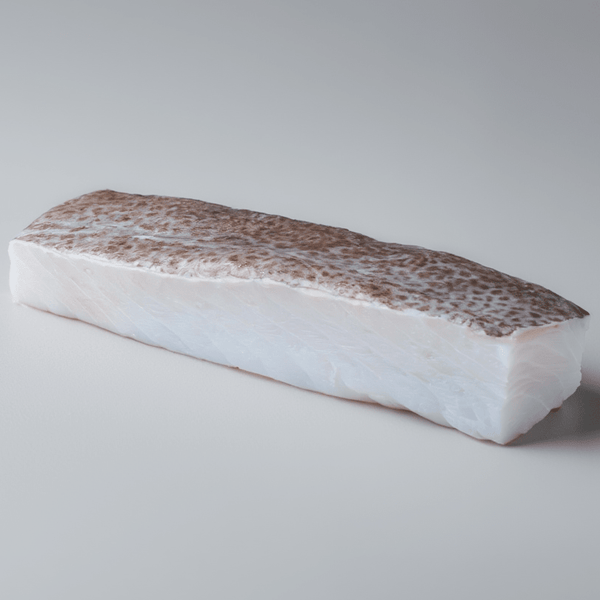
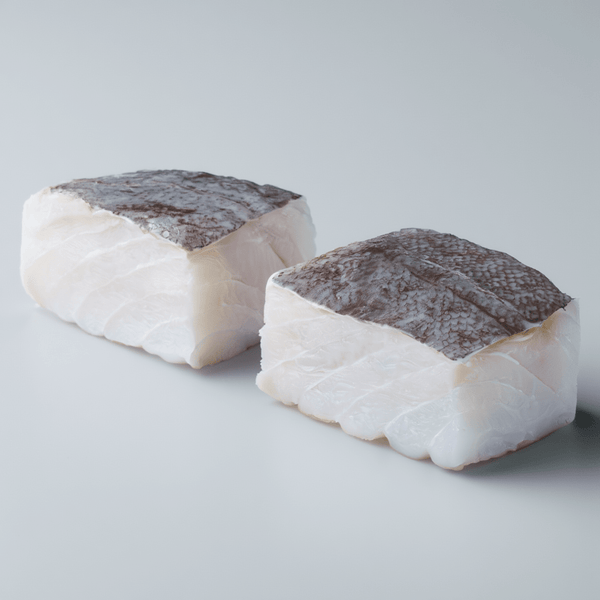
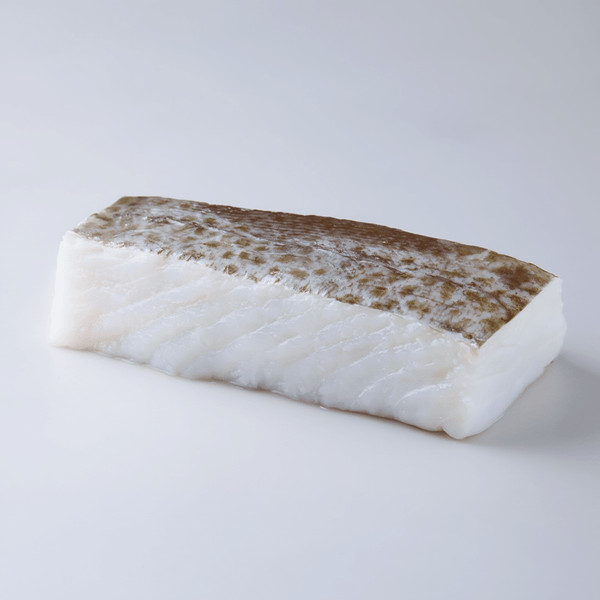
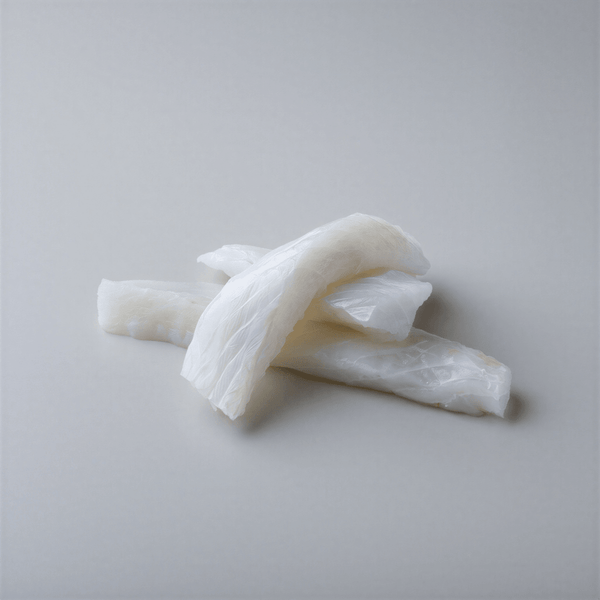
Cod: Ideally, high-quality dried cod — loin or thick flakes — that you have properly desalted for 48 hours. Ready-to-use desalted cod from the supermarket works, but the flavor and texture are not comparable. Dried cod from Iceland has longer fibers and shreds better, giving the dish its characteristic golden thread-like texture.
Potatoes: In Portugal, potato sticks (palha) are used — very thin strips fried until crispy. You can make them at home with a mandoline or use good quality commercial potato sticks. The crispiness of the potato is fundamental; without it, the dish loses its identity.
Eggs: Six eggs for 4 people. The proportion is deliberately generous: the eggs are what bind the mixture. They should be at room temperature to set evenly.
Ideal Cod for this Recipe


Step-by-Step Recipe
Step 1: Desalt and Shred the Cod (48 hours beforehand)
If starting with dried cod, desalt it in cold water in the refrigerator for 48 hours, changing the water every 8-12 hours (minimum 4 changes). Flakes desalt faster than whole loins — 24-36 hours might be enough. Taste a small piece: it should be flavorful but not salty.
Once desalted, drain the cod well and shred it with your hands following the muscle fibers. The pieces should be irregular strips, like thick threads. Do not chop it with a knife — the charm of bacalhau à Brás lies in those long strips that brown and interlace with the potatoes.
Remove all bones and skin. Dry the shredded cod with paper towels: the drier, the better it will brown.
Step 2: Prepare the Potato Sticks
Peel the potatoes and cut them into very thin strips (2-3 mm thick) with a mandoline or knife. Wash them in cold water to remove starch — this is key for them to be crispy, not soft.
Dry the potato strips with a clean cloth. Fry them in abundant oil at 180°C until they are golden and crispy. Drain them on paper towels and season lightly with salt and pepper. If using commercial potato sticks, you skip this step — but homemade ones are a different experience.
Step 3: Brown the Cod
In a wide pan or earthenware pot, heat the olive oil over medium-high heat. Add the sliced garlic and sauté for 30 seconds until lightly golden. Remove and set aside.
In the same oil, add the well-drained shredded cod. Sauté over medium-high heat for 4-5 minutes, stirring frequently, until lightly browned at the edges. The cod strips should get some color without drying out — that golden point is what gives the dish its name.
Step 4: Add the Onion
Lower the heat to medium-low. Add the thinly julienned onion to the cod. Cook, stirring, for 8-10 minutes until the onion is transparent and slightly caramelized. Don't rush this step — well-sautéed onion adds a sweetness that balances the cod's flavor.
Step 5: Incorporate Potatoes and Eggs (the Crucial Moment)
This is the step that defines the dish. Add the crispy potato sticks to the cod and onion mixture. Mix carefully — the potatoes should integrate without breaking too much.
Beat the eggs in a bowl with a pinch of black pepper. Remove the pan from the heat (or lower it to the absolute minimum) and pour the beaten eggs over the mixture. Stir with gentle, enveloping movements for 2-3 minutes. The eggs should partially set, creating a creamy texture that coats all the ingredients without becoming an omelet.
Important: The eggs should NOT set completely. The residual heat from the pan and ingredients is sufficient. If you cook them too much, the dish will be dry and clumpy instead of creamy and juicy.
Step 6: Plate
Serve immediately in the earthenware pot itself or on individual plates. Garnish with the reserved golden garlic, Portuguese black olives, and plenty of fresh chopped parsley. Some cooks add a few strips of hard-boiled egg on top as an additional garnish.
Golden cod is served hot, directly from the pan to the table. It's not a dish that improves with resting.
The Secret: The Scrambled Egg Technique
If there's one step that separates a mediocre golden cod from an extraordinary one, it's how you handle the eggs. In Portugal, chefs have a non-negotiable rule: eggs are set with residual heat, never over direct flame.
The correct technique is:
- Beat the eggs just before using them. Don't leave them beaten and waiting — they lose air and won't be as creamy.
- Remove the pan from the heat before adding the eggs. The accumulated heat in the pan, cod, and potatoes is more than enough.
- Pour the eggs and stir with a wooden spatula using wide, enveloping movements. Do not stir aggressively.
- Stop when the eggs are 80% set. They will continue to set off the heat (residual cooking). The result should be creamy, shiny, with the eggs barely set, coating the cod and potato strips.
In the most traditional taverns of Lisbon, such as the iconic Tasca do Chico in Bairro Alto, bacalhau à Brás arrives at the table with the eggs still slightly trembling — a sign that they are perfectly cooked. If the eggs are firm and dry, the dish has been overcooked.
This technique is exactly the same as used for Gordon Ramsay's scrambled eggs or French scrambled eggs: low heat, patience, and stopping earlier than you think.
Chef's Tips for Perfect Golden Cod
- Shred by hand, never with a knife. Irregular strips following the cod's fiber absorb more flavor and brown better than chopped pieces.
- Dry the cod well before browning. Moisture prevents browning and causes the cod to boil instead of fry.
- Don't skimp on olive oil. Portugal is generous with oil, and this dish needs it. Oil is an ingredient, not just a cooking medium.
- Thinly julienned onion, not chopped. Julienned onion integrates with the cod strips and potatoes. Chopped onion creates a clumpy texture.
- Homemade potato sticks > commercial. Homemade ones, thinly cut with a mandoline and fried immediately, offer a crispiness and flavor that bagged ones can't match. But if you're short on time, good quality commercial ones work.
- Room temperature eggs. Cold eggs from the fridge lower the pan's temperature and set unevenly.
- Serve immediately. Golden cod doesn't wait. In 5 minutes, the potatoes lose their crispiness and the eggs overcook. From pan to table, without delay.
- The earthenware pot makes a difference. It retains heat evenly and allows the eggs to set slowly with residual heat. A steel pan cools too quickly.
Variations of Bacalhau à Brás
Bacalhau à Brás com natas (with cream)
A rich and decadent variant popular in northern Portugal (Porto). 2-3 tablespoons of cooking cream are added to the beaten eggs before incorporating them. The result is even creamier and richer. Ideal for winter days.
Bacalhau à Brás with olives and capers
The most Mediterranean version. Chopped black olives and capers are added directly to the mixture in step 5, before the eggs. Capers provide an acidic touch that cuts through the richness of the dish.
Gratin bacalhau à Brás
After mixing the eggs, transfer to an oven dish, sprinkle with grated Parmesan cheese, and gratinate for 3-4 minutes under the grill. It's not traditional, but it's delicious — the golden cheese crust adds another layer of texture.
Version with bell pepper
Some Algarve recipes include roasted red bell pepper cut into strips along with the onion. It adds sweetness and color. This is a legitimate variation found in many taverns in southern Portugal.
Pairing: What Wine to Serve with Golden Cod
Golden cod is a dish with personality: rich, flavorful, with layers of umami from the cod, sweetness from the onion, and the richness of the eggs. It needs a wine that can balance all of that.
Whites (the classic choice)
- Vinho Verde: The quintessential Portuguese option. Its vibrant acidity and slight effervescence cut through the richness and cleanse the palate. An Alvarinho from Minho is perfect.
- Albariño (Rías Baixas): The Galician cousin of Alvarinho. Same profile: fresh, acidic, mineral. A natural pairing with any cod dish.
- Encruzado (Dão): For those seeking more complexity. A full-bodied white with notes of white fruit and minerality that stands up to the dish's intensity.
Reds (for those who prefer it)
- Young Touriga Nacional (Douro): A young Portuguese red, without excessive oak, with red fruit and soft tannins. Works surprisingly well.
- Mencía (Bierzo): Light, fresh, and with good acidity. It doesn't compete with the dish, it accompanies it.
Other options
- Portuguese craft beer: A very cold lager or a craft pilsner. In Lisbon's taverns, more people drink beer than wine with bacalhau à Brás.
- Sparkling water: Don't underestimate this option. Carbonation cleanses the palate between bites and doesn't compete with the dish's flavors.
Nutritional Information
Approximate values per serving (1/4 of the recipe):
| Nutrient | Amount | % DV* |
|---|---|---|
| Calories | 485 kcal | 24% |
| Protein | 32 g | 64% |
| Total Fat | 28 g | 36% |
| — Saturated | 6 g | 30% |
| — Monounsaturated | 16 g | — |
| Carbohydrates | 26 g | 9% |
| Fiber | 3 g | 12% |
| Sodium | 680 mg | 30% |
| Omega-3 | 0.4 g | — |
*Daily values based on a 2,000 kcal diet.
Golden cod is a dish high in protein thanks to the cod and eggs, with mostly healthy fats from olive oil. Potatoes provide carbohydrates. It is a complete dish that needs no accompaniment — perhaps a side salad or a prior soup.
Frequently Asked Questions
What is the difference between golden cod and bacalhau à Brás?
They are the same dish. Golden cod is the name used in Spain; bacalhau à Brás is the original Portuguese name. The recipe is identical: shredded cod, potato sticks, onion, and scrambled eggs. The name "golden" refers to the color the cod acquires when sautéed in olive oil.
Can I use fresh cod instead of salted cod?
Technically yes, but the result will not be the same. Salted and desalted cod has a firmer texture and a more concentrated umami flavor than fresh cod. The salting and subsequent desalting process transforms the fish protein, giving it that ability to flake into long strands which is essential for bacalhau à Brás. With fresh cod you will get something delicious but different.
How long does it take to make bacalhau à Brás?
Active preparation takes about 20 minutes and cooking about 25 minutes, for a total of 45 minutes. This does not include the 48 hours of desalting the cod, which is done in advance. If you use pre-desalted cod and commercial straw potatoes, you can have it on the table in 30 minutes.
Can bacalhau à Brás be reheated?
It can, but it loses a lot. The straw potatoes soften and the eggs overcook. If you have leftovers, the best way to reheat it is in a pan over low heat with a drizzle of olive oil and an extra beaten egg to restore its creaminess. Never in the microwave — it turns rubbery. The ideal is to cook just the right amount.
What type of cod is best for bacalhau à Brás?
The best is Icelandic dried cod (Gadus morhua), with long, thick fibers that flake perfectly into strands. Dried cod flakes are the most practical format — they are already chopped and desalt faster. Avoid frozen "desalted" supermarket cod: it has too much water and does not brown well.
Why are my eggs dry and not creamy?
Because you are cooking them too much. The secret is to remove the pan from the heat before adding the eggs and let them set with only the residual heat. Stir with gentle movements and stop when they are 80% set — the residual heat will do the rest. If you cook them over direct heat or leave them for too long, they will inevitably dry out.
Does original bacalhau à Brás contain cream?
The original recipe does not contain cream. The classic bacalhau à Brás from Lisbon uses only cod, straw potatoes, onion, eggs, and olive oil. The version with cream (natas) is a variation from northern Portugal, especially popular in Porto, which is creamier. Both versions are legitimate, but the original is without cream.
Can I bake the straw potatoes instead of frying them?
You can, but it's not the same. Baked potatoes are drier and don't have the crispness of frying. If you want to reduce fat, a better alternative is to use an air fryer: cut the potatoes thin, spray them with a little oil, and air fry at 190°C for 8-10 minutes. They won't reach the level of classic deep-frying, but they come much closer than baked ones.
What kind of olives are used in bacalhau à Brás?
In Portugal, black olives of the Galega variety are used, small, wrinkled, and with a mild flavor. Elvas olives are also traditional. In Spain, black Aragón olives or Cáceres olives are excellent substitutes. The important thing is that they are black, cured, and with a mild flavor — green olives or Kalamata olives change the dish's profile too much.
Is bacalhau à Brás a healthy dish?
It is a balanced and nutritious dish: high in protein (cod + eggs), with mostly healthy fats from olive oil and omega-3 from cod. Carbohydrates come from potatoes. A serving provides about 485 kcal. It is not a light dish, but it is not excessive either — it is a complete meal that needs no accompaniment other than a salad.
🛒 Products used in this recipe
"Discover Bacalalo" Assortment
Our best-selling pack — ideal for first-time buyers
€19.90
View product →⭐ 4.9/5 · Chilled delivery 24-48h · Since 1990 at Mercat del Ninot
Conclusion
Bacalhau à Brás is one of those dishes that prove great cuisine doesn't require exotic ingredients or impossible techniques. Cod, potatoes, onion, and eggs — four pantry ingredients that, well executed, produce a dish that rivals any restaurant preparation.
The key, as we've seen, lies in three points: shredding the cod by hand (never with a knife), browning the potatoes well (crispy, not soft), and, most importantly, mastering the eggs (off the heat, with residual heat, stopping sooner than you think). Master these three points and you'll have a bacalhau à Brás worthy of Lisbon's best taverns.
If you want the best possible result, start with good cod. The shredded dried cod from Iceland that we select at Bacalalo are perfect for this recipe: long fibers, uniform desalting, and a flavor that has been convincing chefs at Mercat del Ninot for over 35 years.