Summary: Canned tuna is the most consumed seafood product in Spain — over 3 kg per person annually — but most buyers choose out of habit, not criteria. This guide explains the real differences between types of canned tuna (olive oil, sunflower oil, escabeche, in brine), the distinction between skipjack tuna and albacore tuna (bonito del norte) that many confuse, the worthwhile brands in Spain, verified nutritional data, and how to read a label to know exactly what you are buying. Over 2,200 words with no filler.
Content
Types of canned tuna: olive oil, sunflower oil, escabeche, and in brine
When you open a can of tuna, the canning liquid is not a secondary detail — it defines the flavor profile, the final texture, and the culinary use of the product. Not all canned tunas are the same, and the difference starts with what surrounds the fish inside the can.
Tuna in olive oil
The premium format par excellence in Spain. Olive oil — preferably extra virgin — provides a round flavor, a juicier texture, and superior preservation. The tuna absorbs some of the oil during maturation in the can, which means that with each passing month, the flavor intensifies and the tissues become more tender. A can of tuna in extra virgin olive oil aged for 2-3 years is nothing like a freshly canned one.
The oil also has its own nutritional value: oleic acid, polyphenols, and vitamin E. Don't discard it when opening the can — use it to dress salads or spread on toast. If the manufacturer has used good oil, that liquid is liquid gold with a taste of the sea.
Tuna in sunflower oil
The most economical option and the best-selling in conventional supermarkets. Sunflower oil has a neutral flavor profile, which means it neither adds nor detracts from the tuna — it simply preserves it and keeps it hydrated. The problem is that it also does not contribute to flavor maturation as olive oil does. A 2-year-old can of tuna in sunflower oil tastes virtually the same as a 2-month-old one.
Nutritionally, sunflower oil is rich in omega-6 and poor in omega-9. It's not bad per se, but the Western diet already has an excess of omega-6 relative to omega-3, so if you can choose, olive oil is a better option from a lipid balance perspective.
Tuna in escabeche
Escabeche is a traditional Spanish preparation that combines oil, vinegar, paprika, and spices. Tuna in escabeche has an intense, slightly acidic, and spicy flavor profile. It is a product ready to be consumed directly from the can as a tapa or appetizer, although it also works well in salads with strong flavors (red onion, pickles, capers).
Preservation in escabeche is excellent — vinegar is a powerful natural preservative. However, the acidity can mask the real quality of the fish, which is why some manufacturers use their less select pieces for the escabeche line. Not always, but it's worth reading the label carefully.
Tuna in brine
Preserved only in water and salt (and sometimes a little vegetable broth). It is the option with the lowest caloric intake and preferred by those seeking clean protein: high protein content, minimal fat, and zero carbohydrates. The downside is that the texture is drier and the flavor less complex than in the oil versions.
Tuna in brine is the best base for recipes where you will add your own dressings and sauces. For eating directly from the can with a fork, honestly, olive oil wins hands down in terms of taste experience.
Premium canned tuna at Bacalalo
We work with canneries from the Cantabrian Sea that select their pieces one by one. Albacore (bonito del norte) in extra virgin olive oil, belly (ventresca) and loins — all with complete traceability from the fish market. See gourmet canned goods selection →
Skipjack tuna vs. albacore (bonito del norte): the real difference
This is the most common confusion in the canned goods aisle, and brands do not help to clarify it. "Skipjack tuna" (atún claro) and "albacore" (bonito del norte) are not the same, and the difference is not just in name — it's in species, flavor, texture, and price. Here is the unvarnished comparison.
| Characteristic | Skipjack tuna (Yellowfin) | Albacore (Thunnus alalunga) |
|---|---|---|
| Species | Thunnus albacares (yellowfin) | Thunnus alalunga (albacore) |
| Meat color | Pink to light brown | White to cream |
| Texture | Firmer and more compact | More tender, flakes apart |
| Flavor | More intense, slightly metallic | Mild, delicate, buttery |
| Fat content | 1-3% | 6-8% |
| Catching area | Tropical oceans (Indian, Pacific) | Cantabrian Sea and North Atlantic (coastal fishing) |
| Fishing gear | Purse seine, industrial longline | Trolling (hook and line, one by one) |
| Season | Year-round (global) | June to October |
| Average price (112g can) | 1.50-3.00 € | 3.50-7.00 € |
| Legal designation | "Atún claro" (Skipjack tuna) | "Bonito del norte" (Albacore, protected designation) |
The key is this: only Thunnus alalunga caught in the Cantabrian Sea or the North Atlantic can be labeled as "bonito del norte". It is a regulated designation, not a commercial name. If a can simply says "bonito" without "del norte", it could be another species from another ocean.
Skipjack tuna is a perfectly valid product — it has more protein per gram, is more affordable, and works very well in salads and sandwiches where it will be mixed with other ingredients. But if you are looking to eat canned fish directly from the can as a tapa, with good bread and nothing else, albacore (bonito del norte) is in another sensory category. The intramuscular fat makes all the difference.
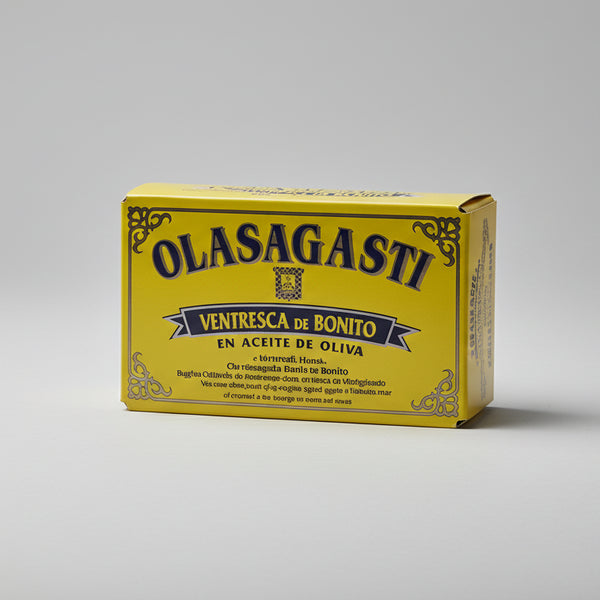
There is also tuna belly (ventresca), which is the ventral part of the fish — the fattiest and most prized in gastronomy. Albacore belly (ventresca de bonito del norte) is, possibly, the most exquisite canned fish you can buy in Spain. If you haven't tried it, it's worth the experience at least once.
How to read a canned tuna label
The label of a can of tuna contains valuable information that most people ignore. Knowing how to read it is the difference between buying with discernment and buying by advertising inertia. Here's what you should look for:
1. Sales designation
This is the first thing that appears and the most important. "Tuna" is not the same as "skipjack tuna" (atún claro) or "albacore" (bonito del norte). Each name corresponds to a different species with different prices and qualities. If the can simply says "tuna," it is probably skipjack (Katsuwonus pelamis), the cheapest species with lower organoleptic quality.
2. Type of covering liquid
Look for "extra virgin olive oil" as the optimal covering liquid. If it just says "olive oil" (without extra virgin), it is refined olive oil mixed with virgin — lower quality. If it says "vegetable oil" without specifying, it is almost certainly sunflower or soy.
3. Product presentation
The differences matter and affect the price:
- Loins or fillets: large whole pieces — the premium presentation
- Trunk: transverse slices of the loin — good value for money
- Flakes or shredded: remnants from the cutting process — ideal for salads and pies but not for direct consumption
4. Catching area (FAO)
Regulations require indicating the FAO fishing area. The most relevant for quality tuna in the Spanish market are:
- Area 27 (Northeast Atlantic): where Cantabrian albacore (bonito del norte) is fished
- Area 34 (Central-East Atlantic): skipjack tuna and other tuna species, variable quality
- Areas 51 and 57 (Indian Ocean): imported skipjack tuna, generally cheaper
5. Fishing gear
If the can specifies "hook and line fishing," "trolling," or "pole and line," it's a good sign — these are selective methods that catch fish one by one, without damaging the meat. "Purse seine" and "longline" are industrial methods that work but involve more handling of the product.
6. Packing date vs. expiration date
Counterintuitive fact: canned fish in olive oil improves with time. A can with a packing date from 2-3 years ago has had more time to mature, and the flavor will be rounder and more complex. Don't always buy the most recent can — for premium canned goods, the older one is often the best.
Selected canned goods with complete traceability
Every canned product we sell at Bacalalo includes information on origin, fishing gear, and cannery. No unnecessary intermediaries, from the Cantabrian fish market to your table. Explore the selection of canned goods →
The best canned tuna brands in Spain
The Spanish market for canned tuna is huge and diverse. From supermarket brands to artisanal canneries with over a century of history. This classification is not a "best to worst" ranking — it's a segmentation by product type and use, which is more useful for choosing.
Premium artisanal segment
Small or medium-sized canneries from the Cantabrian Sea that work with albacore (bonito del norte) caught with selective methods and packed in extra virgin olive oil. Limited production, manual selection, long maturation. Here the product is at its best.
- Conservas Zallo: a Basque reference in albacore (bonito del norte). Large loins, exceptional texture. Their ventresca is among the best in Spain.
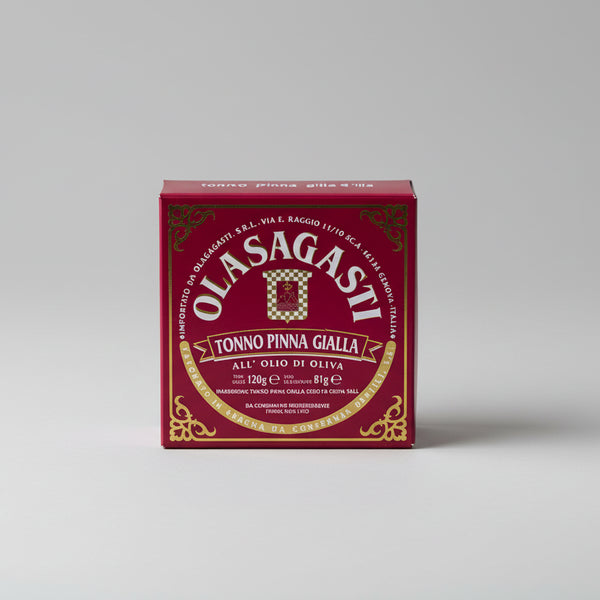
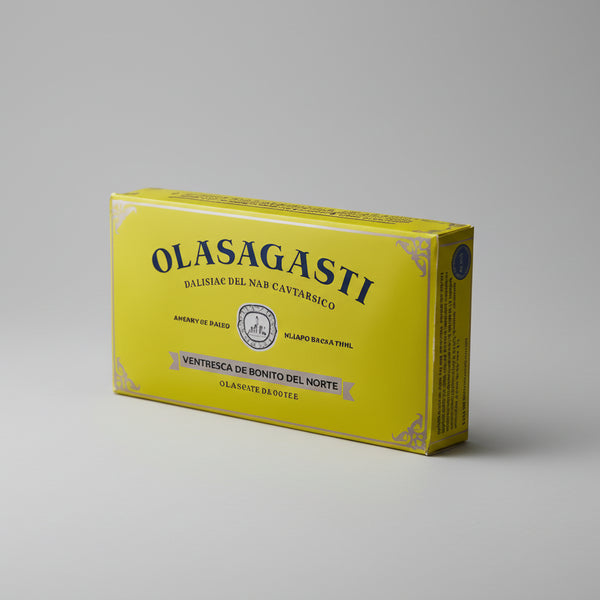
- Conservas Olasagasti: Getaria, over 100 years old. Albacore (bonito del norte) caught by trolling, very consistent quality.
- Don Bocarte: anchovy specialists, but their albacore (bonito del norte) is outstanding. Superior caliber and rigorous selection.
- Conservas Güenaga: Bermeo. Pure artisanal format, limited production, exceptional albacore belly (ventresca de bonito).
Accessible premium segment
Brands with wide distribution that maintain a quality standard above the supermarket average. A good entry point to albacore (bonito del norte) if you've never tried a premium canned product.
- Ortiz: the most recognized premium brand in Spain. Consistently high-quality albacore (bonito del norte) and anchovies. Very wide distribution.
- Arroyabe: a century-old cannery from Bermeo. Possibly the best value for money in the segment.
- La Brújula: brand of the Real Conservera Española cannery. Carefully crafted product, elegant packaging.
Supermarket segment
Large distribution brands. The product is adequate for daily use (salads, sandwiches, pasta), but don't expect the experience of a premium canned product:
- Calvo: volume leader in Spain. Wide range, competitive prices. Functional quality.
- Isabel: strong in skipjack tuna. Good product for the price.
- Albo: a step above Calvo/Isabel, especially in their albacore (bonito del norte) line.
Private labels: are they worth it?
Private labels from Mercadona (Hacendado), Lidl (Nixe), Carrefour, and other supermarkets are manufactured by the same canneries that produce well-known brands, but with different specifications: smaller pieces, lower quality oil, shorter maturation time. For salads and recipes where tuna is mixed with other ingredients, they suffice. For eating directly from the can, there's no comparison with the premium segment.
Nutritional table: tuna in olive oil vs. in brine
The nutritional data for canned tuna vary depending on the species and the covering liquid. This table compares the average values per 100 g of drained product — that is, without counting the covering liquid — based on the food composition tables from BEDCA (Spanish Food Composition Database).
| Nutrient | Tuna in olive oil | Tuna in brine | Albacore in oil |
|---|---|---|---|
| Calories (kcal) | 198 | 103 | 220 |
| Proteins (g) | 25.5 | 23.5 | 24.0 |
| Total Fats (g) | 10.5 | 0.8 | 13.2 |
| — Saturated (g) | 1.8 | 0.2 | 2.3 |
| — Monounsaturated (g) | 5.9 | 0.2 | 6.8 |
| — Polyunsaturated (g) | 2.1 | 0.3 | 2.9 |
| Omega-3 DHA+EPA (mg) | 350 | 280 | 620 |
| Carbohydrates (g) | 0 | 0 | 0 |
| Sodium (mg) | 320 | 380 | 290 |
| Vitamin D (µg) | 3.2 | 2.8 | 4.1 |
| Selenium (µg) | 72 | 80 | 68 |
Quick interpretation:
- If you're looking for maximum protein with minimal calories: tuna in brine. Unbeatable protein/calorie ratio.
- If you're looking for omega-3 and flavor: albacore (bonito del norte) in oil. Almost double the omega-3 of skipjack tuna, and the monounsaturated fats from olive oil add cardiovascular benefits.
- If you're looking for balance: skipjack tuna in olive oil. Good protein intake, quality fats, pleasant flavor.
A fact rarely mentioned: the selenium in tuna is an antioxidant that partially counteracts the effects of mercury present in fish. It is one of the natural mechanisms that make eating oily fish safe within recommended amounts (3-4 servings per week according to AESAN).
Quick recipes with canned tuna
Canned tuna is one of the most versatile ingredients in the pantry. These five recipes can be prepared in less than 15 minutes and demonstrate that a good can of tuna can be the basis of a serious meal, not just an emergency resource.
1. Albacore salad with tomato and red onion
Cut two ripe tomatoes into thick slices. Add half a red onion, thinly sliced. Place drained albacore (bonito del norte) loin on top, flaked by hand (not with a fork — irregular flakes hold dressing better). Dress with the oil from the can itself, a pinch of fleur de sel, and a few drops of Sherry vinegar. 5 minutes, zero cooking, restaurant-quality result.
2. Tuna toast with piquillo peppers
Toast a slice of country bread. Spread a thin layer of cream cheese or butter. Place well-drained tuna in olive oil on top and a piquillo pepper cut into strips. A few drops of extra virgin olive oil and black pepper. This appetizer works as a starter for any meal.
3. Pasta with tuna, capers, and lemon
Cook pasta al dente. In a pan, heat the oil from the tuna can with a sliced garlic clove. When the garlic is golden, remove it and add the flaked tuna, two tablespoons of capers, and the zest of half a lemon. Mix with the pasta, add a splash of extra virgin olive oil, and fresh parsley. 12 minutes in total.
4. Galician tuna empanada
Tuna empanada is one of the most popular dishes in Galician cuisine. Sauté onion and green pepper, add crushed tomatoes, and reduce. Mix with drained canned tuna. Fill an empanada dough (homemade or store-bought), close, brush with egg, and bake at 200°C for 25-30 minutes. The key is that the filling is well-seasoned and not too wet.
5. Canned tuna tartare, Japanese style
For those who want something different: flake tuna in oil into small pieces. Mix with soy sauce, sesame oil, grated ginger, and a touch of sriracha. Serve over warm sushi rice with sliced avocado and toasted sesame seeds. It's not a traditional raw tartare, but the result is surprising.
Bacalalo gourmet canned goods pack
Albacore (bonito del norte), ventresca, Cantabrian anchovies, and tuna mojama — a selection of seafood preserves selected since 1990 at Mercat del Ninot in Barcelona. Ideal for gifting or setting up a gourmet pantry with discernment. View gourmet canned goods pack →
Frequently asked questions
How many cans of tuna can you eat per week?
According to AESAN (Spanish Agency for Food Safety and Nutrition), adults can consume 3-4 servings of oily fish per week, including canned tuna. A serving is equivalent to about 50-70 g of drained tuna (a small can). Pregnant and breastfeeding women and children under 10 years old should limit tuna consumption due to its mercury content — AESAN recommends avoiding large species like bluefin tuna and limiting canned skipjack tuna to 2-3 servings per week in these groups.
Does canned tuna really expire?
Technically, canned tuna has a best-before date, not a strict expiration date. If the can shows no dents, swelling, or rust, the product is safe for quite some time after that date. For canned goods in olive oil, the flavor even improves with time — artisanal canneries sell "vintages" of albacore (bonito del norte) with several years of maturation as a premium product. That said, once opened, the contents should be consumed within 24-48 hours and stored in the refrigerator, preferably transferred to a glass container (do not leave in the open can).
Is tuna better in a can or in a glass jar?
The glass jar has two objective advantages: it allows you to see the product before opening it (size, color, presentation) and it does not transfer any metallic taste to the contents. The can, on the other hand, protects better from light — an important factor for the preservation of olive oil, which degrades with light exposure. In practice, the quality of the tuna depends more on the raw material and the production process than on the packaging. Both formats are perfectly valid for premium canned goods.
What is the difference between skipjack tuna, white tuna, and albacore (bonito del norte)?
"Skipjack tuna" (atún claro) is Thunnus albacares (yellowfin), a tropical tuna with pink meat and firm texture. "Albacore" (bonito del norte) is Thunnus alalunga caught in the Cantabrian Sea or North Atlantic, with white meat and tender texture. "White tuna" (atún blanco) is a commercial term sometimes used as a synonym for albacore (bonito del norte), but it is not a regulated designation with the same precision — it is always safer to look for "bonito del norte" on the label if you want a guarantee of species and origin.
Does canned tuna contain mercury?
Yes, all tuna contains mercury to a greater or lesser extent — it is a heavy metal that accumulates in the marine food chain (bioaccumulation). Bluefin tuna has the highest levels because it is a large and long-lived predator. Canned skipjack tuna has significantly lower levels — around 0.12 ppm (parts per million) on average, well below the 1.0 ppm limit set by the EU. Albacore (bonito del norte) is in a similar range to skipjack tuna. In recommended quantities (3-4 servings/week for adults), the nutritional benefit of tuna far outweighs the mercury risk.
Can opened canned tuna be frozen?
Technically yes, but it is not recommended. Freezing alters the texture of canned tuna — when thawed, the meat becomes softer and loses the flaked structure that characterizes a good loin. If you have leftover tuna from an opened can, it is best to store it in the refrigerator in an airtight glass container with its own oil and consume it within 24-48 hours. If you need to store it longer, use the leftover tuna to make a pâté or a sauce — processes where the original texture matters less.
How much does good canned tuna cost?
It depends on the segment. A can of private-label skipjack tuna (80g drained) costs between €1.00 and €1.80. A can of recognized-brand skipjack tuna in olive oil costs around €2.00-€3.50. Albacore (bonito del norte) in extra virgin olive oil from an artisanal cannery ranges from €4.50 to €8.00 per 112g can. And premium albacore belly (ventresca de bonito del norte) can exceed €10 per can. The price difference is proportional to the difference in experience — if you've never tried artisanal albacore after only eating supermarket tuna, the first time is eye-opening.
Conclusion: choose canned tuna with discernment, not out of habit
Canned tuna is an extraordinary food — high-quality protein, omega-3, culinary versatility, and a shelf life that allows you to always have a quality product in your pantry. But the difference between a mediocre can and a premium can is abysmal, and now you know why.
The three criteria that most impact the final quality are: the species (albacore > skipjack tuna > other tunas), the covering liquid (extra virgin olive oil > olive oil > sunflower oil), and the presentation (loins > trunk > flakes). If you optimize these three variables and learn to read the label, each purchase will be better than the last.
At Bacalalo, since 1990, we have been selecting seafood preserves with the same criteria we apply to cod: verifiable origin, verifiable quality, and zero concessions to empty marketing. It's not faith — it's verifiable factors.