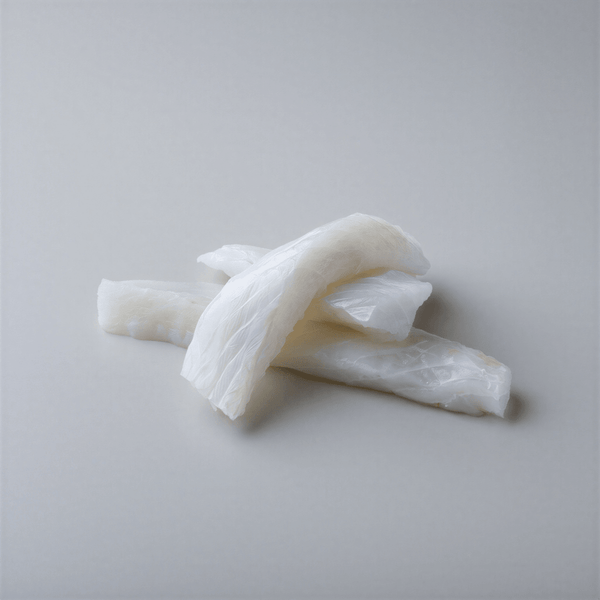
Anisakis is the fish parasite that most concerns Spanish consumers, and with good reason: Spain is the second country in the world with the most cases of anisakiasis (after Japan). But when we talk about salted and desalted cod, the reality is very different from what most people believe. The salting process at concentrations above 20% for weeks effectively destroys anisakis larvae. Here I explain with scientific data what anisakis is, when it is truly dangerous, why salted cod is safe, and how to prevent any risk with any fish.
What is anisakis: parasite biology
Anisakis (Anisakis simplex) is a parasitic nematode, a roundworm that lives in the digestive tract of marine mammals (whales, dolphins, seals). Its larvae, which are between 1 and 3 cm long and whitish-translucent, are found in marine fish as part of their natural life cycle.
The anisakis life cycle works like this:
- Eggs are expelled into the sea with the feces of infected marine mammals.
- The eggs hatch and the larvae are ingested by small crustaceans (krill).
- Fish that eat these crustaceans become infected. The larvae migrate from the fish's stomach to its musculature (the meat we eat).
- When a marine mammal eats that fish, the larvae mature into adult worms in its stomach, closing the cycle.
Humans are an accidental host: we are not part of the natural anisakis cycle. When we eat raw or undercooked fish with live larvae, they try to penetrate the mucosa of our stomach or intestine, causing an inflammatory (anisakiasis) or allergic reaction. The larva cannot complete its cycle in humans and eventually dies, but the damage it causes can be significant.

How anisakis reaches fish
Anisakis is present in practically all the world's oceans. It is not a problem of contamination or lack of hygiene: it is natural marine biology. Any wild marine fish that feeds on other fish or crustaceans can have anisakis.
Factors influencing the presence of anisakis:
- Fishing area: the North Atlantic (where cod is fished) has a high prevalence of anisakis. The Mediterranean also, especially on the western coast.
- Fish species: predatory fish (hake, cod, bonito, mackerel) have more anisakis than herbivores.
- Size and age: larger and older fish are more likely to be parasitized (they have eaten more prey throughout their lives).
- Part of the fish: larvae first concentrate in the viscera (stomach, intestines) and then migrate to the musculature. Rapid evisceration after capture significantly reduces the number of larvae in the meat.
- Wild-caught vs aquaculture: farmed fish fed with feed (not wild fish) have a practically zero risk of anisakis.
Symptoms of anisakiasis in humans
Anisakiasis manifests in two main forms:
Gastric anisakiasis (the most common)
Occurs when the larva tries to penetrate the stomach lining. Symptoms appear 1-12 hours after eating the infected fish:
- Severe abdominal pain (cramping)
- Nausea and vomiting
- Sometimes, diarrhea
- In severe cases, the larva can perforate the gastric wall (rare but serious)
Allergic reaction to anisakis
Some people develop an allergy to anisakis proteins, not to the live parasite. This is important because it means that even with dead larvae (due to cooking or freezing) they can have an allergic reaction. Symptoms include:
- Urticaria (hives on the skin)
- Angioedema (swelling of lips, eyelids)
- In severe cases, anaphylaxis (systemic allergic reaction)
Anisakis allergy is relatively common in Spain: it is estimated that up to 5-8% of the Spanish population has antibodies against anisakis (which indicates previous exposure), although not all develop symptoms.

Salted cod: why it is safe
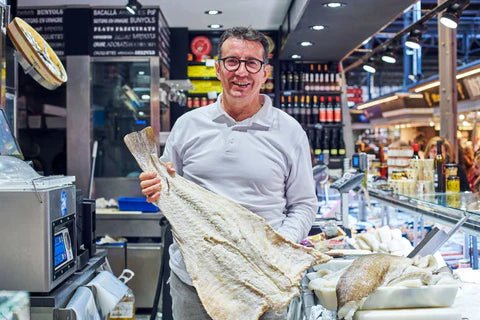
Here comes the part that most interests our customers, and the answer is clear: properly processed salted cod is safe from anisakis.
The reason is scientific. Anisakis larvae need an environment with certain humidity and a low salt concentration to survive. The cod salting process creates exactly the opposite conditions:
- Salt concentration: cod is cured in salt at concentrations of 20-25% (by weight). Scientific studies (EFSA, 2010) have shown that salt concentrations above 9% maintained for 6 weeks kill 100% of anisakis larvae. Commercial salted cod remains in salt for months.
- Dehydration: salt extracts moisture from the fish, reducing water activity (Aw) below 0.75. Anisakis larvae need an Aw above 0.85 to survive.
- Time: cod remains in salt for weeks or months, well beyond the time needed to eliminate any larvae.
A study published in the Journal of Food Protection (2005) confirmed that Anisakis simplex larvae in salted cod with more than 20% NaCl died completely in less than 21 days. Commercial cod is kept in salt much longer than that.
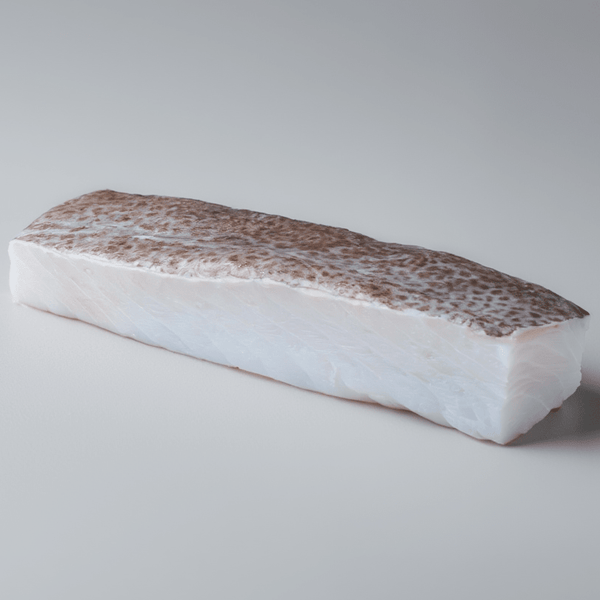
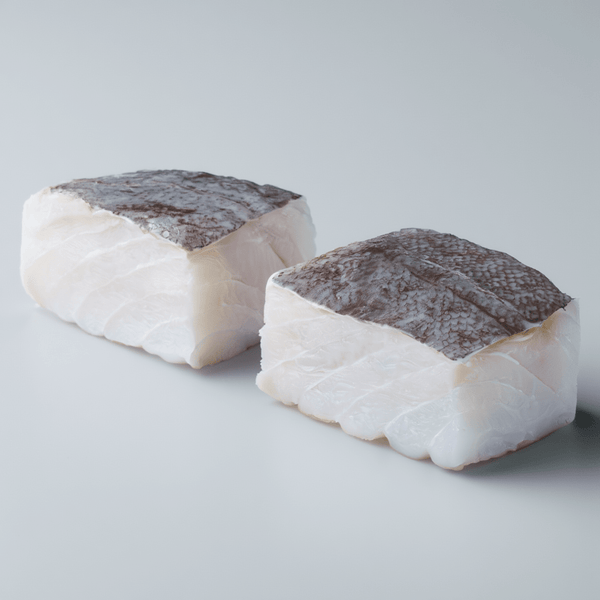
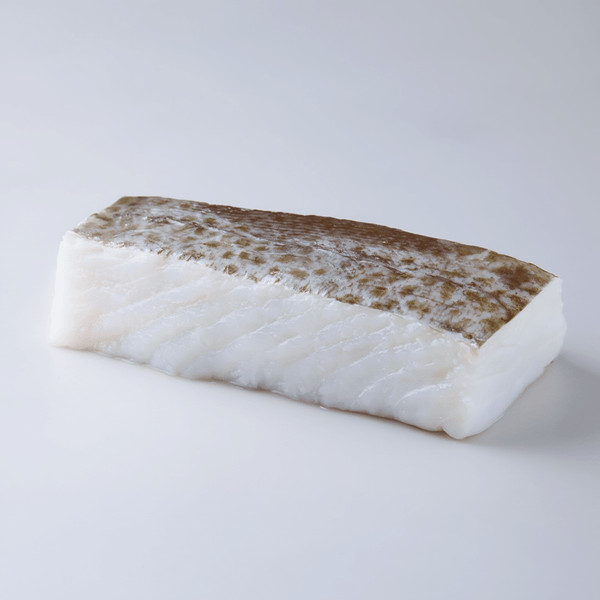
And desalted cod? Desalted cod starts from salted cod (where the larvae are already dead). The desalting process in water does not "resurrect" dead larvae. Therefore, desalted cod is equally safe.
Safety table: methods that eliminate anisakis
This table summarizes the scientifically validated methods for eliminating anisakis larvae:
Methods that DO eliminate anisakis
- Freezing at -20 °C for 5 days: kills 100% of larvae. It is the legal standard in the EU for fish to be eaten raw or lightly cooked.
- Freezing at -35 °C for 15 hours: rapid industrial method.
- Cooking at +60 °C in the center of the product for 1 minute: sufficient to kill the larvae. Most cooking methods (boiling, baking, frying) far exceed this temperature.
- Cooking at +70 °C in the center for 10 seconds: the conservative standard.
- Salting at 20%+ for 21+ days: traditional method for salted cod.
- Marinating in vinegar (6% acetic acid) for 35 days: not practical but effective.
Methods that DO NOT eliminate anisakis
- Short marinating in vinegar or lemon: anchovies in vinegar (marinated for hours or days) DO NOT kill larvae if the fish has not been previously frozen. This is a real problem in Spain.
- Cold smoking: cold smoked salmon (below 60 °C) does not eliminate larvae. It must be frozen beforehand.
- Microwave: irregular heating, can leave cold spots where larvae survive.
- Washing fish: water does not kill larvae that are already inside the meat.
- Acidic sauces (ceviche): lemon or lime acid does not kill anisakis larvae. Ceviche requires previously frozen fish.
The 7 most common myths about anisakis
Myth 1: "Salted cod has anisakis"
False. The cod salting process (20%+ salt for weeks/months) eliminates anisakis larvae. Salted and desalted cod is safe for consumption without the need for additional prior freezing.
Myth 2: "If I cook fish well, I don't need to freeze it"
True, but with nuances. If you cook fish to over 60 °C in the center, the larvae die. The problem is that many preparations (sushi, sashimi, ceviche, carpaccio, anchovies in vinegar, tataki) do not reach that temperature. For these preparations, prior freezing is mandatory.
Myth 3: "Vinegar kills anisakis"
False in home preparations. Anchovies in vinegar marinated for hours or days do not eliminate larvae. More than 35 days in concentrated vinegar would be needed. That is why Spanish law requires freezing fish before making anchovies in vinegar.
Myth 4: "Farmed fish has anisakis"
Generally false. Farmed fish fed with processed feed (not wild fish) have a practically zero risk of anisakis. Farmed salmon, gilthead bream, sea bass, trout, and turbot are very safe options.
Myth 5: "If I don't see worms in the fish, it's clean"
False. Anisakis larvae are small (1-3 cm) and can be coiled inside the meat, invisible to the naked eye. In addition, they can be translucent, confusing them with fish fibers. Visual inspection reduces the risk but does not eliminate it.
Myth 6: "Anisakis is only found in cheap fish"
False. The presence of anisakis does not depend on the price but on the species, habitat, and fishing method. A premium wild salmon can have more anisakis than a sardine. A trap-caught tuna can be parasitized like any other wild fish.
Myth 7: "Freezing for 24 hours at -20 °C is enough"
Insufficient according to regulations. European regulation (EC Regulation 853/2004) requires freezing at -20 °C for a minimum of 5 days (120 hours), or at -35 °C for 15 hours. Domestic freezers that do not reach a true -20 °C need more time (7 days minimum). Check that your freezer has 4 stars (****), which indicates that it reaches a minimum of -18 °C.
Spanish regulations: what the law says
Spain has specific regulations on anisakis, among the strictest in Europe, motivated by the high incidence of anisakiasis in the country:
- Royal Decree 1420/2006: obliges catering establishments to pre-freeze fish that is to be served raw or lightly cooked (sushi, ceviche, anchovies in vinegar, carpaccios, etc.).
- Mandatory freezing: -20 °C for at least 24 hours (the Spanish standard, more lax than the European 5-day standard) or -35 °C for 15 hours.
- Consumer information: restaurants must inform customers about the risks of anisakis and the preventive measures taken. Many do so with a mandatory sign.
- Exceptions: no prior freezing is required for farmed fish fed with feed, bivalve molluscs (mussels, clams, oysters), freshwater fish, and salted products such as salted cod (provided the salt concentration is sufficient).
Which fish have more risk and which less
Higher risk of anisakis
- Hake: one of the fish with the highest prevalence (up to 80-90% of parasitized specimens in some areas of the Cantabrian Sea)
- Fresh cod: high prevalence as a cold-water predator
- Mackerel and horse mackerel: highly parasitized, especially in summer
- Bonito and tuna: large predators with high probability
- Anchovy/sardine: high risk when consumed in vinegar without prior freezing
- Wild salmon: high prevalence
Lower risk or no risk
- Salted/desalted cod: salting process eliminates larvae
- Salted anchovies: cured in salt for months (similar process to cod)
- Bivalve molluscs (mussels, clams, oysters): are not hosts of anisakis
- Cephalopods (octopus, squid, cuttlefish): very low risk
- Farmed fish with feed: salmon, gilthead bream, sea bass, trout, turbot
- Freshwater fish: no anisakis in freshwater
- Canned tuna: sterilized at high temperature
Prevention in the kitchen: practical guide
These are the golden rules for avoiding anisakis at home:
- Buy gutted fish: larvae migrate from the viscera to the flesh after the fish's death. Rapid gutting after capture significantly reduces the number of larvae in the edible part.
- Visually inspect: examine the fish meat for larvae (whitish threads 1-3 cm long). It is especially easy to detect them in dark-fleshed fish (mackerel, bonito). In white fish (hake) they are more difficult to see.
- Freeze if you are going to eat raw or lightly cooked: sushi, sashimi, ceviche, carpaccio, anchovies in vinegar, tataki, cold smoked. Minimum 5 days at -20 °C in a 4-star freezer.
- Cook to sufficient temperature: for cooked preparations, ensure the center of the fish reaches 60 °C for at least 1 minute. A kitchen thermometer is the most reliable tool.
- Salted cod is exempt: if you buy salted cod from reliable suppliers, you do not need to freeze it or worry about anisakis.
- Salted anchovies are exempt: the curing process in salt for months (like our Cantabrian anchovies) eliminates any larvae.